EUR/USD Price Forecast - Euro to Dollar Steadies at 1.1610 as Traders Weigh Fed Cut and Eurozone Inflation Surge
The euro edges higher against the dollar after German HICP jumps to 2.6% and the U.S. ISM PMI slumps to 48.2. | That's TradingNEWS
EUR/USD Price Forecast - Euro to Dollar Consolidates Near 1.1600 as Inflation and Fed Expectations Shape Market Momentum
The EUR/USD pair remains tightly coiled around the 1.1600 level, reflecting a market caught between divergent central bank outlooks and softening U.S. economic data. During Tuesday’s European session, the pair traded near 1.1610, after touching a two-week peak at 1.1650, as the dollar found temporary support from rising Treasury yields while the euro held firm on optimism around Eurozone inflation resilience. The U.S. Dollar Index (DXY) recovered to 99.10, stabilizing after a steep drop last week, yet remains 4% below its mid-November high, keeping the euro’s tone slightly constructive.
Eurozone Data Anchors Euro Strength While U.S. Economy Falters
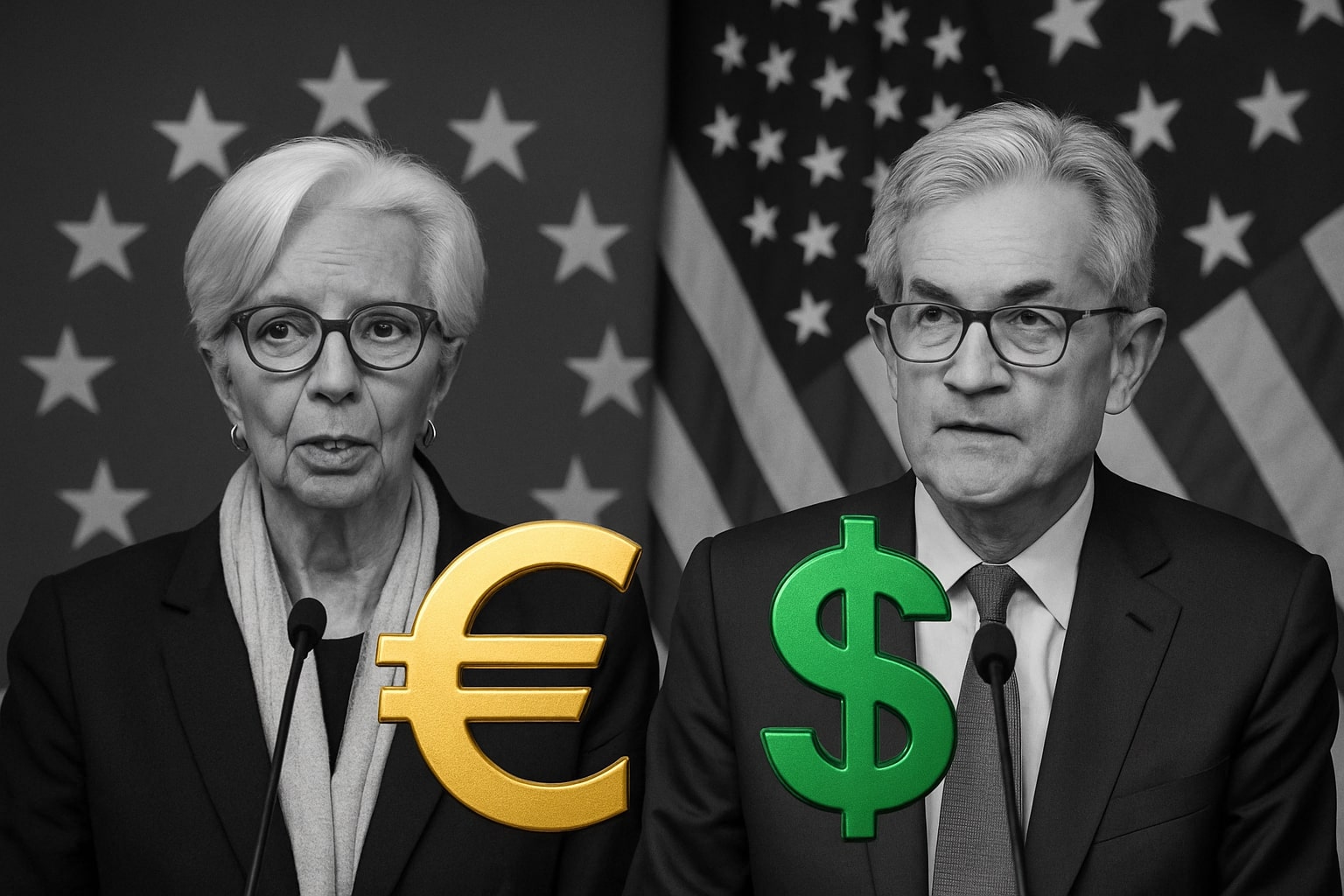
The euro’s recent rebound is underpinned by improving regional inflation dynamics. Germany’s HICP rose 2.6% YoY in November, beating expectations of 2.4%, while the bloc-wide CPI is forecast at 2.1% YoY, with core inflation holding near 2.5%. These readings support the ECB’s stance that policy rates are “appropriately restrictive,” with President Christine Lagarde reaffirming that no near-term cuts are planned. By contrast, U.S. data continues to erode the greenback’s advantage. The ISM Manufacturing PMI dropped to 48.2, marking the ninth consecutive month of contraction. New orders and employment indexes both weakened, signaling that industrial demand remains sluggish despite prior fiscal stimulus. The deterioration in factory output raised market odds of a December 25-basis-point Fed rate cut to 87%, up from 71% a week earlier.
Fed Policy Divergence Becomes EUR/USD’s Core Catalyst
The Federal Reserve enters its blackout period with the next policy decision due on December 17. Markets anticipate at least one more rate cut this year and multiple through 2026. This dovish bias contrasts with the ECB’s commitment to hold rates steady, giving EUR/USD a medium-term tailwind. Strategically, traders are adjusting positions ahead of Fed Chair Jerome Powell’s upcoming remarks. Yield spreads between the U.S. 10-year (4.12%) and German Bund (2.28%) have narrowed to a four-month low of 184 basis points, supporting euro stability. Any confirmation of a December cut could push EUR/USD above 1.1700, especially if Eurozone CPI remains firm.
Geopolitics and Risk Sentiment Add a Secondary Layer
Lingering geopolitical developments continue to affect the dollar’s safe-haven demand. Progress in Russia-Ukraine ceasefire discussions and relative calm in Middle Eastern energy markets have diminished the dollar’s defensive appeal. The euro, meanwhile, benefits from stronger capital flows into European equities, with the DAX 40 up 1.7% this week and the Euro Stoxx 50 adding 0.9%, as investors price a mild recovery in manufacturing and services output.
Technical Landscape: EUR/USD Awaits Breakout Confirmation
The EUR/USD pair remains confined within a symmetrical triangle that has narrowed over the past three weeks. The pair’s immediate resistance lies at 1.1656–1.1670, while support holds at 1.1542–1.1550. A confirmed daily close above 1.1669 would signal a bullish breakout, targeting 1.1720, followed by 1.1830—the upper resistance band identified by long-term moving averages. Conversely, failure to hold above 1.1600 risks a drop toward 1.1550 and possibly the psychological 1.1500 floor. The 20-day EMA sits near 1.1605, while the 100-day SMA converges with the 200-day SMA at 1.1520, forming a major support cluster. The RSI remains neutral around 56, indicating room for directional extension. Momentum oscillators hint at latent upside pressure, though a decisive catalyst is still required.
Short-Term Trading Dynamics Reflect Market Indecision
Intraday traders observe choppy action between 1.1590–1.1650, mirroring subdued volatility ahead of key Eurozone and U.S. releases. A sustained bid above 1.1600 could strengthen bullish conviction, aligning with accumulation signals seen on the 4-hour chart, where candles continue to reject breakdowns below the 20-period EMA. Stochastic indicators hover midrange, supporting the case for consolidation before a potential breakout into the 1.1700 zone. Conversely, short sellers remain active near 1.1653, where the descending trendline from October repeatedly capped rallies. A breakdown under 1.1590 would renew downside exposure, opening the door for 1.1556 and then 1.1500, which has served as a double-tested base throughout November.
Macro Flow and Central Bank Sentiment Drive Strategy
Institutional positioning suggests measured bullish bias on the euro. Data from EBS and CFTC reveal a 6% increase in net long contracts over the past week, totaling 62,300 lots, the highest since September. Hedge funds are rotating modestly out of long USD exposure, reflecting the shift toward policy divergence. ECB officials, including Joachim Nagel, reiterated confidence in maintaining current rates, stressing that inflation moderation remains gradual but steady. Meanwhile, former White House economist Kevin Hassett’s potential nomination as Fed Chair, viewed as dovish under a possible Trump-led administration, introduces longer-term downside risk for the dollar.
Global Bond Volatility Adds Pressure to the Dollar
Yields surged globally after Bank of Japan Governor Ueda hinted at a December rate hike, triggering a brief bond selloff that lifted global yields. The U.S. 2-year yield rose to 4.48%, while Japan’s 10-year yield touched 0.96%, its highest since 2012. The ripple effect stabilized DXY temporarily, but euro resilience remained intact. The market interpreted the volatility as a short-term correction rather than a structural shift, especially given steady European macro data.
Read More
-
Yen Stalls at 160 Despite a 3% JGB and Tokyo Core CPI at 2.0% — Intervention Sits at 164, Friday's Payrolls Decide
02.09.2026 · TradingNEWS ArchiveEnergy
-
SPY Stalls Below Its Record As A 4.63% Earnings Yield Loses To A 4.74% Treasury
03.09.2026 · TradingNEWS ArchiveStocks
-
Bitwise Holds 286.8M XRP At A $480M Cost And $393M Of Value — The Category Bought Every Dip And Is Still Underwater
03.09.2026 · TradingNEWS ArchiveCrypto
-
Natural Gas Stalls Under $3 As Record 111.5 Bcf/d Production Absorbs Every Bullish Signal
03.09.2026 · TradingNEWS ArchiveCommodities
-
Dow 53,461, S&P 500 7,702 And Nasdaq 26,392 Climb On Waller's Dovish Turn — HOOD Explodes 14.9%
03.09.2026 · TradingNEWS ArchiveMarkets
-
Yen Rips Four Yen In A Session As Japan Takes Control Of The Dollar — Brent At $97.62 Could Not Stop It
03.09.2026 · TradingNEWS ArchiveForex
Key Economic Releases and Near-Term Catalysts
The next decisive data points for EUR/USD include the Eurozone HICP (Dec 3) expected at 2.1% YoY, where a higher print may boost the euro beyond 1.1700, and the ADP Employment Change (Dec 4) projected at +121K versus the prior +113K, where a miss would strengthen the euro. The ISM Services PMI (Dec 4) is forecast at 51.9; a sub-50 reading would trigger renewed USD weakness. The Fed Decision (Dec 17) is anticipated to confirm a 25bps cut, with markets already pricing in three cuts in 2026.
Medium-Term Outlook and Structural Factors
The euro’s recovery from 1.0450 early this year to 1.1600 represents a +1,150-pip advance, reversing over half of the 2024 decline. The 1.1500 level has repeatedly served as a critical inflection point, marking both November’s double-bottom and the Q3 pivot low. The longer-term chart suggests a base formation that could transition into an extended uptrend if 1.1700 breaks decisively. However, risks remain tied to global energy volatility and potential ECB missteps if inflation proves stickier. On the U.S. side, a continued slide in manufacturing and labor could accelerate rate-cut cycles, pushing the pair toward 1.1830 within Q1 2026.
Verdict: EUR/USD Remains a Tactical Buy With Controlled Risk
The data-driven divergence between the Fed’s easing path and the ECB’s stability bias underpins a constructive stance on EUR/USD. As long as the pair holds above 1.1540, buyers retain structural control. Upside targets are 1.1700, 1.1740, and 1.1830, while protective stops remain justified below 1.1460. Verdict — BUY EUR/USD. Technical resilience, supportive Eurozone inflation data, and dovish Fed signals collectively justify a bullish outlook into year-end, with medium-term potential toward 1.1830–1.1900 if inflation holds above 2% and Fed policy confirms the expected December cut.