GBP/USD Bounces to $1.3258 as Starmer Quits — but the Relief Rally Is a Trap With 1.30 in the Bears' Sights
The pound reversed from a near-2026-low $1.3181 to lead the majors after Starmer's orderly exit and Burnham's fiscal reassurance | That's TradingNEWS
Key Points
- GBP/USD fell to $1.3181 then rallied to $1.3258 (+0.38%) as Starmer resigned and successor-favorite Burnham pledged to keep Reeves' fiscal rules.
- The bounce is fragile: two Fed hikes are now 58.5% likely (up from 17.1%), the dollar index sits near 101, and gilts yield 4.85%.
- $1.3159 (the March 2026 low) is the floor and the 20-EMA at 1.3360 the cap; analysts flag 1.30 as the bear target into Thursday's PCE.
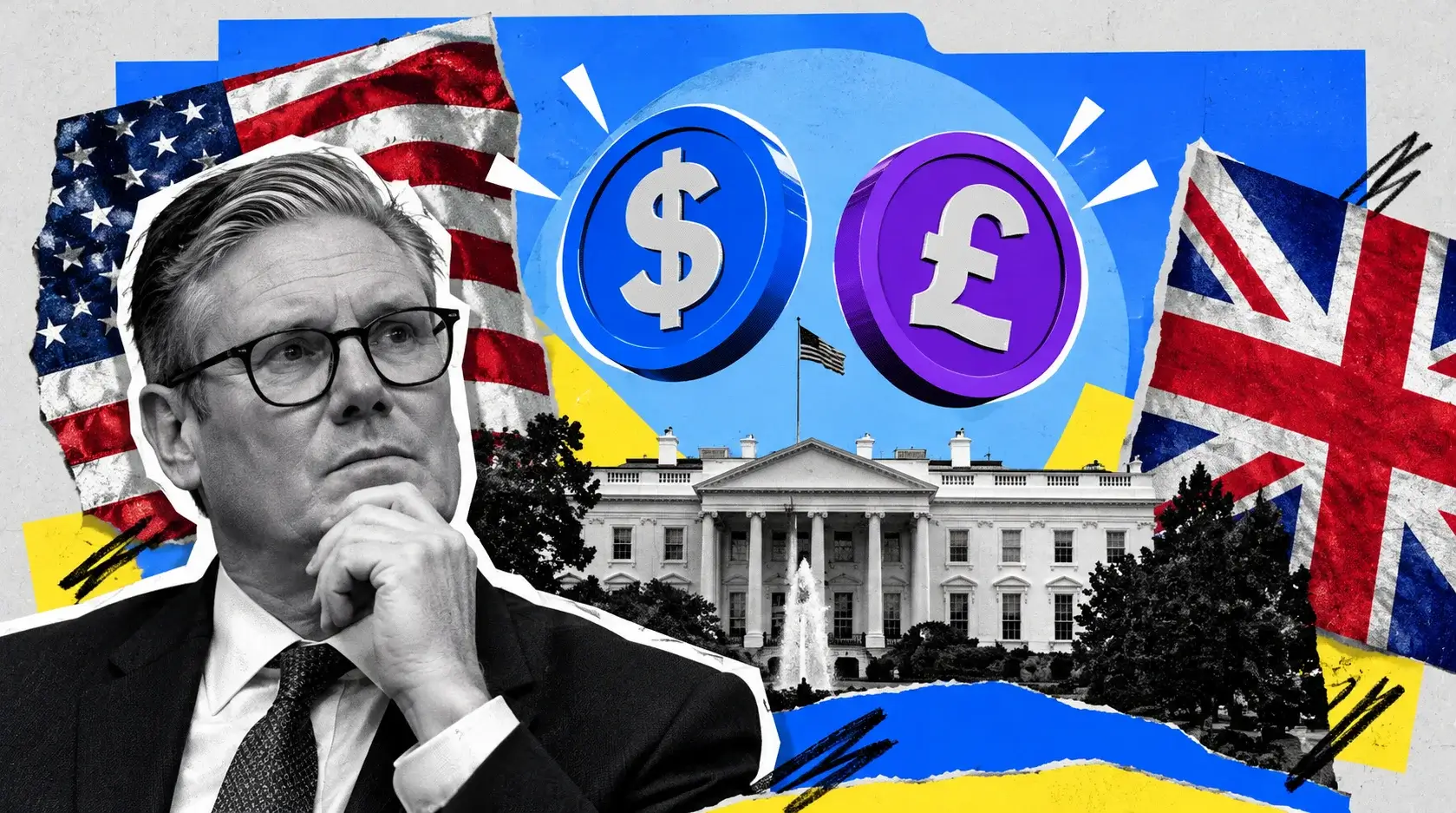
GBP/USD did something counterintuitive Monday: it rallied on the resignation of the British Prime Minister. Cable opened under pressure, sliding to an intraday low of $1.3181 — within a whisker of the 2026 low of $1.3159 set in March — then reversed sharply higher to trade above $1.3258, up about 0.38% on the day. By the American session, the pound was the strongest major currency on the board, gaining 0.14% against the euro and ticking higher against the dollar after erasing its early losses.
The trigger was political theater turned to resolution. Prime Minister Keir Starmer announced his resignation outside 10 Downing Street, ending weeks of speculation, and the market welcomed it. The logic is "buy the certainty": the resignation removed the uncertainty that had been weighing on sterling, and the likely successor — Andy Burnham, the Mayor of Manchester — moved quickly to reassure investors he would respect existing fiscal rules. A market that had been selling the pound on political turmoil bought it back once the turmoil had a resolution.
The thesis here is that the relief rally is a trap. The bounce is real, but it is a reaction to a single moment of certainty inside a summer that will be defined by uncertainty. Starmer remains caretaker PM, leadership nominations do not open until July 9, and a new leader will not be in place until Parliament returns in September. That is months of political and fiscal limbo ahead, and Citi's traders are already flagging that the pound will be negative through the leadership process. The relief is fragile.
The dominant force, as with the euro, is the dollar. The pound is squeezed between a hawkish Federal Reserve lifting the greenback and a summer of UK leadership and fiscal uncertainty pressing on sterling. CME FedWatch odds of at least two Fed hikes this year jumped to 58.5% from 17.1% a week ago after Kevin Warsh's hawkish debut, and the dollar index sits near 101. Cable's bounce is happening despite the dollar, not because of any sustainable pound strength — and that is a precarious foundation.
The levels frame the trade. The 2026 low at $1.3159 is the floor cable is hovering just above, the 20-period EMA at 1.3360 caps the upside, and analysts are openly flagging a test of the big 1.30 level as the bear target. The pound bounced on Starmer's exit, but it is bouncing within a downtrend, near multi-month lows, with both a hawkish Fed and a leaderless government bearing down on it. The relief is real; the trend is not the pound's friend.
The Resignation: How Starmer Fell
To understand cable's reaction you have to understand how Starmer fell, because the orderly nature of his exit is exactly why the pound rallied rather than collapsed. Less than two years after winning a landslide election victory that promised to end the chaos in British politics, Starmer announced he would resign, with a new leader to be in place by the time Parliament returns in September. He pledged to support whoever replaces him and to remain as caretaker Prime Minister until the contest concludes.
The collapse was months in the making. Starmer's position came under serious question after a severe defeat in the May local elections across England, Scotland, and Wales — a result that delivered a sounding victory to Nigel Farage and exposed the government's eroding support. Internal dissent festered, and more than 100 Labour MPs, roughly a quarter of the parliamentary party, publicly called on him to resign or set a timeline for his departure. A Prime Minister who has lost a quarter of his own MPs has lost the ability to govern.
The decisive blow came Friday, when Andy Burnham, the Mayor of Manchester and the best-positioned candidate to replace Starmer, won the Makerfield by-election with a much larger majority than expected. That victory handed Burnham the parliamentary seat required to mount a formal leadership challenge, transforming him from an external critic into an internal threat. With Burnham now in Parliament and the party in open revolt, Starmer faced the prospect of ministers resigning before Tuesday's cabinet meeting — and chose to jump rather than be pushed.
The Trump intervention added a surreal note. President Trump posted on Truth Social on Sunday that Starmer "will resign," criticizing his policies on immigration and energy and urging the UK to "OPEN NORTH SEA OIL." The post, unconventional as it was, accurately telegraphed the outcome, and it fed into the narrative that Starmer's government had become isolated and untenable. Whether the post influenced events or merely predicted them, it underscored how visibly Starmer's authority had crumbled.
For the forecast, the manner of Starmer's fall matters more than the fall itself. A chaotic, contested collapse would have hammered the pound; an orderly, telegraphed resignation with a clear succession path and a fiscally reassuring favorite produced the opposite — a relief rally. The market had spent five days selling the pound down roughly 1.6% in anticipation, so the actual resignation was a "sell the rumor, buy the news" event. The resignation removed an overhang, but it opened a new one: the leadership contest that now stretches across the summer.
The Relief Reversal: Why the Pound Rallied on Bad News
The most instructive feature of Monday's tape is the reversal — cable falling to $1.3181 then rallying above $1.3258 — and understanding why a Prime Minister's resignation lifted the currency is the key to forecasting the pound from here. The answer is that markets hate uncertainty more than they hate bad outcomes, and Starmer's resignation, however dramatic, replaced an uncertain situation with a clearer one.
The "buy the certainty" dynamic is the mechanism. For weeks, sterling had been weighed down by the open question of whether Starmer would survive, when he might go, and what would follow. That uncertainty was the overhang. Once he announced a clear timeline — nominations opening July 9, a new leader by September — the market could begin pricing a known process rather than an unknown crisis. The reduction in uncertainty, even at the cost of a leadership change, was a net positive for the pound in the immediate reaction.
The successor reassurance amplified the relief. Andy Burnham, the front-runner, moved quickly to calm fears about fiscal recklessness, reiterating that he would adhere to the existing fiscal rules set by Chancellor Rachel Reeves. Given that Burnham's background in Corbyn's shadow cabinet and his record advocating public ownership of water and transport had raised fears of a left-wing, spendthrift turn, his commitment to fiscal discipline soothed investors. The market gave him its provisional approval, and that approval lifted the pound.
The "widely expected" factor muted the downside. As Citi noted, the market reaction was relatively modest precisely because the resignation was a largely expected outcome — financial markets had anticipated Starmer's departure following the senior-Labour pressure and the Makerfield result. When an event is fully priced in advance, its occurrence produces little additional selling, and the relief of resolution can dominate. The five-day, 1.6% pre-positioning meant the actual news had limited fresh downside and room for a relief bounce.
For the forecast, the relief reversal is real but built on a fragile foundation. The pound rallied because uncertainty fell and the successor reassured, but both of those supports are conditional. The uncertainty has not vanished — it has shifted from "will Starmer go" to "what will the new government do," a question that stretches across the summer. And the Burnham reassurance is a pledge, not a policy. The relief bounce is the market exhaling after a long-anticipated event, not a vote of confidence in the pound's trajectory. It is the kind of bounce that fades as the new uncertainty sets in.
The Burnham Question: Reassurance or "Radical Burnhamism"?
The single biggest variable for the pound over the summer is who replaces Starmer and how they govern, and the front-runner, Andy Burnham, embodies both the bull and bear cases. The Mayor of Manchester is the best-positioned candidate, having secured the parliamentary seat needed to run, and Citi expects the contest to center on Burnham and Health Secretary Wes Streeting, with Burnham the clear favorite. The market's read on Burnham will drive sterling through the leadership process.
The bull case rests on Burnham's reassurance. He has strived to project a moderate profile, repeatedly committing to adhere to Chancellor Reeves' fiscal rules and easing fears of fiscal recklessness. If Burnham governs along a similar fiscal trajectory to the one he inherits — maintaining discipline on spending and borrowing — the better outcome for the pound would materialize, with continuity providing stability. The market has, for now, given him the benefit of the doubt, and his fiscal commitments are the reason the pound rallied rather than fell on the succession news.
The bear case is "Radical Burnhamism." Burnham's background in Corbyn's shadow cabinet and his track record advocating bringing water and transport under public control raise the specter of a left-wing turn toward higher spending, more borrowing, and looser fiscal policy. Sterling is vulnerable to any sign that Burnham governs to the left of his reassurances, because fiscal recklessness is the single biggest threat to the pound's stability. The gap between his moderate campaign positioning and his more interventionist history is the risk the market is watching.
The uncertainty around his platform deepens the risk. Reports note that Burnham is yet to flesh out a policy platform and does not yet know who his top team will be, which means his fiscal commitments remain aspirational rather than concrete. Allies believe a messy, expensive leadership challenge is unnecessary given his overwhelming support, but until he takes power and reveals actual policies, the market is trading on promises. The romance between Burnham and investors could end once he governs, and that transition risk hangs over the pound.
For the forecast, the Burnham question is the swing variable through the summer. If he maintains his fiscal reassurances and the leadership transition is smooth, the pound could stabilize and the relief rally could hold. If he tilts left, reveals an interventionist platform, or the contest turns messy, sterling faces renewed pressure toward its 2026 low and beyond. The market has priced the optimistic Burnham scenario for now, which means the risk is asymmetric — disappointment on the fiscal front would hit harder than continued reassurance would help. The pound is long a fiscal-discipline pledge that has yet to be tested.
Citi vs the Tape: Why the Bounce May Be a Trap
The clearest warning that Monday's relief rally is a trap comes from the analyst community, where the consensus is markedly more bearish than the price action. Citi, despite acknowledging the modest initial reaction, remains bearish on sterling, with its traders explicitly flagging that the pound would be negative through the leadership process. The bank's view is that the relief of Starmer's departure is temporary, and that political risk remains the key theme for UK markets throughout the summer.
The argument is that the uncertainty has shifted, not ended. Citi's logic is that while the resignation removed one source of uncertainty, the leadership battle introduces another, and as investors assess the policy implications of a potential Burnham government, sterling could face renewed pressure. The pound is benefiting from reduced uncertainty around Starmer's future in the immediate term, but the medium-term picture is one of prolonged political and fiscal limbo that weighs on UK assets. The bounce is the eye of the storm, not the end of it.
Other banks echo the caution. Commonwealth Bank's strategist warned that GBP/USD will remain under pressure this week because of elevated political uncertainty, which is also creating uncertainty around fiscal policy. KBC Bank noted that while sterling "keeps its cool for now," political and budgetary uncertainty could keep UK assets under pressure. The cross-desk consensus is that the relief is fleeting and the structural pressures — political, fiscal, and monetary — remain firmly in place.
The "summer of 2024 redux" fear is the specific concern. Analysts draw a parallel to Starmer's first summer in charge in 2024, when uncertainty over impending tax hikes stalled the economy. There is a real risk that another leadership cycle does the same — that the months of contest and the new government's eventual budget create a fear-and-uncertainty drag on growth and on the pound. A summer of leadership limbo followed by a new government preparing fiscal measures is the bearish scenario that the relief rally is ignoring.
For the forecast, the Citi-versus-tape divergence is a signal to fade the bounce. When the price action says relief but the analyst consensus says caution, the analysts often prove right over the medium term, because the price is reacting to a moment while the analysts are weighing the process. The most probable path, per the consensus, is that the relief rally fades as the leadership contest unfolds and the fiscal questions resurface, pulling cable back toward its 2026 low. The bounce is a selling opportunity in a downtrend, not the start of a recovery.
The Warsh Penalty: A Hawkish Fed Drives the Dollar
The pound's troubles are only half a UK story — the other half is the dollar, and the dollar is being driven by a hawkish Federal Reserve that has imposed what one analyst dubbed a "Warsh penalty" on sterling. The greenback has firmed sharply since Kevin Warsh's first meeting as Fed chair delivered a hawkish hold, and that dollar strength is the dominant force pressing cable lower, just as it is pressing the euro.
The Fed-hike repricing is dramatic. According to the CME FedWatch tool, the odds of the Fed delivering at least two interest rate hikes this year jumped to 58.5% — a sharp increase from just 17.1% a week ago. That repricing, triggered by Warsh's hawkish debut and the nine policymakers projecting hikes, has lifted the dollar index to near 101 and turned the greenback into the strongest major. When the market goes from pricing essentially no hikes to better-than-even odds of two in a single week, the dollar reprices violently higher, and every dollar pair feels it.
The mechanism is the rate differential and the carry. With the Fed at 3.50% to 3.75% and pricing hikes, while the Bank of England sits at 3.75% and is expected to hold or cut, the yield advantage favors the dollar at the margin and is widening. US inflation at 4.2% justifies the Fed's hawkishness, and higher US rates draw capital into dollar assets, lifting the greenback against the pound. Cable's bounce on Starmer's exit is happening in spite of this dollar strength, which is why it is so fragile — the dominant macro force is working against the pound.
The "Warsh penalty" framing captures the dynamic well. Sterling is being penalized not for anything the UK did monetarily, but for the Fed's hawkish turn lifting the dollar across the board. The pound's own central bank has been relatively cautious, but that caution matters less than the Fed's aggression when it comes to the cable rate. The dollar, not Downing Street, is in the driver's seat of GBP/USD, and as long as the Fed stays hawkish, the dollar leans on the pound regardless of UK politics.
For the forecast, the Warsh penalty means cable cannot sustainably rally while the Fed stays hawkish. The Starmer relief bounce, the Burnham reassurance, and any UK-specific positive are all swimming against the tide of a strengthening dollar. The pound needs the Fed to soften — for the two-hike pricing to unwind — before it can mount a durable recovery, and that requires US inflation to cool. Thursday's PCE print is the first test. Until then, the dollar's dominance caps every pound rally, and the Warsh penalty keeps cable pinned near its lows.
The BoE Side: Caution at 3.75%
The Bank of England is the pound's monetary anchor, and its current posture is one of caution that provides modest support without driving a rally. The BoE held its policy rate at 3.75% at its June 18 meeting in a 7-2 vote, with its next decision scheduled for July 30. The hold reflects a central bank balancing elevated UK inflation against subdued growth — a cautious middle path that neither lifts nor sinks the pound on its own.
The BoE's caution is a double-edged sword for sterling. On one hand, a central bank holding rates at 3.75% maintains a yield that supports the currency, and some analysts argue the pound will find support in Bank of England caution — the BoE's reluctance to cut aggressively keeps UK yields attractive. On the other hand, with the Fed pricing hikes while the BoE holds or leans toward eventual cuts, the rate differential is moving against the pound, which undermines that support. The BoE's caution helps at the margin but cannot offset the Fed's aggression.
The UK inflation-growth bind mirrors the eurozone's. Britain faces higher inflation and subdued growth simultaneously — the stagflationary squeeze that makes monetary policy difficult. As one analyst put it, the story is that the UK has not had enough growth while the dollar keeps rising, and sterling is likely to remain under pressure with higher inflation, higher rates, and a wait for the next round of news. A central bank hiking or holding into weak growth cannot tighten with confidence, which limits the pound's upside.
The 7-2 vote split signals internal disagreement. A two-member dissent at the June meeting indicates that some BoE policymakers favored a different path, which adds uncertainty to the rate trajectory ahead of the July 30 decision. Markets dislike central-bank ambiguity, and a divided committee makes the pound's monetary outlook harder to handicap. The July 30 meeting becomes a key event, both for the rate decision and for any guidance on how the BoE views the inflation-growth trade-off.
For the forecast, the BoE provides a floor but not a lift. Its caution at 3.75% keeps UK yields supportive enough to prevent a collapse, and the "support in BoE caution" thesis gives the pound a fundamental anchor. But the BoE cannot drive a rally against a hawkish Fed and a UK political crisis, and the moving rate differential works against sterling. The BoE is the reason cable holds near $1.32 rather than breaking decisively lower, but it is not enough to overcome the dollar's dominance. The July 30 decision is the next monetary catalyst, with the BoE's caution the pound's quiet support.
The Fiscal Overhang: Gilts, Borrowing, and Reeves' Rules
Beneath the political drama sits the deeper concern driving sterling weakness: the UK's fiscal position. Sterling's recent slide is not simply a reflection of political headlines — it is a sign that investors are seeking reassurance about Britain's economic future at a time when growth remains subdued and public finances remain under pressure. The fiscal overhang is the structural weight on the pound that the leadership crisis has brought into sharp focus.
The gilt market is where the fiscal worry shows up first. Britain's 10-year gilt yield sat at 4.85% Monday, a touch higher on the day, and analysts noted that the market is watching gilts more than the pound for signs of stress. The medium-term reaction, as one strategist put it, is that the market will get nervous at some point about fiscal policy. Rising gilt yields signal investor demand for higher compensation to hold UK government debt, a direct expression of fiscal concern, and a sustained rise would pressure both the bond market and the currency.
The borrowing picture is the source of the anxiety. The incoming Prime Minister inherits a government that has already borrowed more than was expected for this point in the new fiscal year — a fiscal starting position that constrains the new leader's options and raises the risk of either tax hikes or more borrowing, both of which can unsettle markets. The fear is a repeat of 2024, when the prospect of significant tax hikes in Starmer's first budget stalled the economy. A new government facing an overshooting deficit may have to choose between austerity that hurts growth and borrowing that spooks the gilt market.
Burnham's fiscal pledge is the swing factor here. His commitment to adhere to Reeves' fiscal rules is precisely what calmed the gilt and currency markets on the resignation news, because it signals continuity rather than a fiscal blowout. But that pledge is untested, and if a Burnham government were to loosen the fiscal rules — the "Radical Burnhamism" scenario — gilt yields would spike and the pound would fall sharply. The entire relief rally rests on the assumption that the new government maintains fiscal discipline, an assumption that will be tested through the summer.
For the forecast, the fiscal overhang is the structural bear case for the pound that transcends the political headlines. Even after the leadership question resolves, the UK's subdued growth, overshooting borrowing, and the new government's eventual budget will weigh on sterling. The gilt market is the barometer to watch — a sustained rise in the 10-year yield above 4.85% would signal escalating fiscal stress and pressure the pound toward its lows. The fiscal picture is why analysts remain bearish despite the relief bounce, and why the pound's troubles run deeper than who occupies Downing Street.
Read More
-
Yen Stalls at 160 Despite a 3% JGB and Tokyo Core CPI at 2.0% — Intervention Sits at 164, Friday's Payrolls Decide
02.09.2026 · TradingNEWS ArchiveEnergy
-
QQQ Tests Its $715 Floor as a $4.18B Exodus Meets Burry’s Nasdaq-100 Puts — Upside to $746
16.10.2026 · TradingNEWS ArchiveStocks
-
Spot Bitcoin ETFs Post a $5.06M Trickle After a $261M Exit as IBIT ETF Carries the Category — October Redemptions Near $535M
16.10.2026 · TradingNEWS ArchiveCrypto
-
Henry Hub ($3.19) Caught Between a Shrinking Storage Surplus and Mild Late-October Weather — $3.10 to $3.35 Range
16.10.2026 · TradingNEWS ArchiveCommodities
-
USD/JPY Price Forecast — Dollar-Yen (157.79) Caught Between a 216-Basis-Point Yield Gap and Tokyo’s 160 Intervention Line
16.10.2026 · TradingNEWS ArchiveForex
The Levels: $1.3159 Floor, 1.3360 Cap, 1.30 Target
GBP/USD near $1.3258 is trading a defined map, and the levels capture the tension between the relief bounce and the structural downtrend. The critical floor is the 2026 low of $1.3159, set in March — the level cable slid toward Monday before reversing, touching $1.3181 intraday. That low is the line that defines the near-term thesis: hold it, and the relief bounce has room; break it on a daily close, and cable enters fresh 2026 lows with the path opening lower.
The immediate cap is the 20-period EMA at 1.3360, which cable trades below — a bearish near-term signal. As long as the pound remains under that moving average, the technical structure favors the sellers, and rallies toward 1.3360 are likely to be faded. The morning's symmetrical-triangle breakdown reinforced the bearish bias, suggesting the path of least resistance is lower despite the intraday bounce. Reclaiming 1.3360 would be the first sign that the relief rally has genuine momentum rather than being a dead-cat bounce.
The bear target is the big round number: 1.30. Analysts are openly flagging that cable could soon test the 1.30 level, a psychologically and technically significant line that would mark a substantial extension of the downtrend. A break of the $1.3159 floor would open the path toward 1.30, and from there the pound would be in territory not seen for some time. The 1.30 target is the bears' objective, predicated on the dollar staying strong and the UK fiscal-political situation deteriorating.
Monday's price action respected the range while showing the relief bounce. Cable fell to $1.3181, held above the $1.3159 floor, then rallied to $1.3258 — a recovery that demonstrated buyers stepping in near the lows but stalled well below the 1.3360 cap. That round trip is the signature of a market caught between a relief impulse and a structural downtrend, bouncing off support but unable to break resistance. The pound is range-bound between $1.3159 and 1.3360, sitting in the lower-middle after the bounce.
For the forecast, the levels reduce to a clean framework with a bearish bias. The floor is $1.3159, the cap is 1.3360, and the bear target is 1.30. Cable near $1.3258 is coiled between the 2026 low below and the 20-EMA above, with the relief bounce providing a temporary lift within a downtrend. The most likely path, given the dollar strength and the summer of UK uncertainty, is that the bounce fades and cable retests $1.3159, with a break opening 1.30. The line that defines the thesis is $1.3159 — hold it, and the bounce survives; lose it, and the bears get their 1.30 target.
The Summer Calendar: July 9 to September
The pound's path through the coming months will be dictated by a political calendar that guarantees prolonged uncertainty, and that calendar is the structural overhang on sterling. Starmer announced that leadership nominations will open July 9, with the contest to be completed before Parliament's summer recess and a new leader in place before Parliament returns in September. That is roughly three months of leadership limbo, during which the UK has a caretaker Prime Minister and an undefined policy direction.
The contest itself is the near-term uncertainty. Citi expects the leadership battle to center on Andy Burnham and Wes Streeting, with Burnham the favorite, though the Times reports that allies believe a messy, expensive challenge is unnecessary given Burnham's overwhelming support. If the contest is smooth and Burnham wins quickly with his fiscal reassurances intact, the uncertainty premium could fade. If it turns contested, drawn-out, or reveals a leftward policy tilt, the pound faces renewed pressure throughout the summer.
The post-contest budget is the deeper risk. Once a new leader takes power, attention will shift to fiscal policy — specifically, how the new government addresses the overshooting borrowing it inherits. The parallel to 2024, when tax-hike fears stalled the economy, is the bearish template: a new government preparing significant fiscal measures could trigger another period of economic caution and pound weakness. The leadership contest resolves one uncertainty only to hand off to another — the policy uncertainty of a new government's first budget.
The "limbo" dynamic is the immediate concern. As IG's strategist put it, the market is in limbo until nominations close, because it is entirely possible that the contest is not a clean coronation. That limbo — the gap between Starmer's announcement and a new leader's actual policies — is a vacuum that markets fill with uncertainty, and uncertainty is bearish for the pound. The caretaker period lacks the authority to make major decisions, leaving UK policy effectively frozen through the summer.
For the forecast, the summer calendar is a guaranteed source of recurring uncertainty that caps the pound. Each milestone — nominations July 9, the contest through the summer, a new leader by September, and then the eventual budget — is a potential catalyst for volatility, mostly skewed bearish. The relief rally on Starmer's exit ignores this calendar; the analysts who remain bearish are pricing it. The pound faces a summer of headline risk, and the path of least resistance through that calendar is lower, with each uncertainty milestone a potential trigger for a retest of the $1.3159 floor.
The Analyst Split: Citi Bears vs the BoE-Caution Bulls
The forecasting community is split on the pound, and the divergence captures the bull-bear debate precisely. The bearish camp, led by Citi, sees sterling under pressure through the leadership process, with political risk the key theme for the summer and the pound likely to test lower. Commonwealth Bank and KBC echo the caution, emphasizing the political and fiscal uncertainty that weighs on UK assets. The bears point to the dollar strength, the leadership limbo, and the fiscal overhang as a trifecta of pressure.
The more constructive camp focuses on the BoE and the modest reaction. Some analysts argue the pound will find support in Bank of England caution — the BoE's reluctance to cut keeps UK yields attractive — and Goldman Sachs has advised against selling pound-euro on politics, suggesting the political risk is overdone for the cross. The constructive view is that the resignation was widely expected, the reaction modest, and the worst of the political uncertainty may already be priced. Burnham's fiscal reassurance supports this camp.
The bear target is concrete: 1.30. The bearish analysts see cable testing the big round number, a substantial extension below the current $1.3258 and the $1.3159 2026 low. That target rests on the dollar staying strong, the leadership contest creating fiscal uncertainty, and the UK's growth and borrowing problems persisting. The 1.30 level is the bears' objective, and the proximity of the current price to the $1.3159 floor makes it a credible near-term risk if the relief bounce fades.
The cross-currency picture adds nuance. Against the euro, the pound actually firmed Monday, with GBP/EUR rising to around 1.1586 — its strongest major performance — even as it struggled against the dollar. That divergence reflects the dollar's broad strength: the pound can outperform the euro while still falling against the greenback, because the dollar is lifting against everything. The cable rate is more about the dollar than the pound, while GBP/EUR is the cleaner read on sterling's own strength, and there the pound held up.
For the forecast, the analyst split favors the bears on cable specifically. The constructive case has merit for GBP/EUR, where the pound's relative strength and Burnham's reassurance support the cross. But for GBP/USD, the dollar's dominance via the Warsh penalty, combined with the UK's political and fiscal uncertainty, tilts the balance toward the bears and a test of $1.3159 and potentially 1.30. The most probable path is that the relief bounce fades and cable drifts lower, with the BoE's caution providing a floor but not a recovery. The bears have the cable trade; the bulls have the euro cross.
This Week's Switch: PCE and the Dollar
For all the UK political drama, the single most important catalyst for GBP/USD this week sits on the US side: Thursday's PCE inflation print. Because cable is being driven primarily by dollar strength via the hawkish Fed, the inflation data that shapes the Fed's path is the dominant near-term switch — more important for the pound's direction than the leadership contest, at least until July 9.
A hot PCE print is the bearish scenario for cable. A firm inflation reading would cement the market's pricing of two Fed hikes — already at 58.5% odds — push the dollar index higher from 101, and widen the rate differential against the pound. In that world, the Starmer relief bounce fades quickly, the dollar's dominance reasserts, and cable retests the $1.3159 floor with the path opening toward 1.30. A hot print would mean both the dollar and the UK situation pressing the pound lower simultaneously.
A cool PCE print is the bullish scenario. A softer inflation reading would unwind some of the two-hike pricing, ease the dollar's strength, and give the pound room to extend its relief bounce. Combined with Burnham's fiscal reassurance and the BoE's supportive caution, a cool print could let cable challenge the 1.3360 cap and stabilize. A dovish surprise on US inflation is the pound's best near-term hope, because it would relieve the dollar pressure that is the dominant weight on the pair.
The asymmetry favors a sharper move on a hot print, given the setup. With the pound having just bounced on relief and the market having aggressively repriced toward two Fed hikes, a hot PCE that confirms the hawkish path would likely overwhelm the fragile relief rally and send cable lower. A cool print would help, but the UK's political and fiscal overhang would cap the upside even on dollar weakness. The pound is more vulnerable to bad news than positioned to benefit from good news, because its own fundamentals are weak.
For the forecast, Thursday's PCE is the switch that decides whether the relief bounce survives the week. A hot print kills it and sends cable toward $1.3159; a cool print extends it toward 1.3360. The dollar is in the driver's seat, and the inflation data is the steering wheel. Traders should watch PCE more than the leadership headlines this week, because the dollar's direction will dominate cable until the UK contest formally begins. The pound's fate is, for now, being decided in Washington more than in Westminster.
The Forecast: A Relief Bounce in a Downtrend
GBP/USD near $1.3258 is a relief bounce inside a downtrend, and that framing captures the entire forecast. The bounce is real: cable reversed from $1.3181 to $1.3258 as Starmer's orderly resignation removed an overhang, Burnham's fiscal reassurances calmed the markets, and the widely-expected nature of the exit muted the downside. The pound was the strongest major Monday, and the relief of certainty lifted it against a backdrop where it had been falling.
But the downtrend is intact and the relief is fragile. The dollar's dominance via the Warsh penalty — two Fed hikes now at 58.5% odds, the DXY near 101 — is the dominant force, and it works against the pound regardless of UK politics. The summer leadership calendar guarantees months of uncertainty, Citi and the analyst consensus remain bearish through the process, the fiscal overhang weighs via gilts at 4.85% and overshooting borrowing, and the "Radical Burnhamism" risk hangs over the succession. The bounce ignores all of this; the trend respects it.
The near-term map is a range with a bearish bias. The floor is the 2026 low of $1.3159, which cable held Monday. The cap is the 20-EMA at 1.3360, which it trades below. The bear target is 1.30, flagged openly by analysts. Cable near $1.3258 sits in the lower-middle of the $1.3159-to-1.3360 range after the relief bounce, coiled between the 2026 low and the moving-average resistance. The line that defines the thesis is $1.3159.
Thursday's PCE is the immediate switch. A hot print cements the two-hike pricing, lifts the dollar, and sends cable toward $1.3159 and potentially 1.30; a cool print eases the dollar and lets the relief bounce extend toward 1.3360. The dollar is in the driver's seat, and the inflation data is the steering wheel. Beyond this week, the July 9 nomination opening begins the leadership calendar that will dominate the pound through the summer, mostly skewed bearish.
The base case is that the relief bounce fades. The most probable path is that the Starmer-exit rally proves temporary, that the dollar's strength and the summer of UK uncertainty reassert themselves, and that cable drifts back toward $1.3159 with a break opening 1.30 — while the BoE's caution and Burnham's fiscal reassurance provide a floor that prevents a disorderly collapse. The pound bounced on certainty, but it is bouncing in a downtrend, near multi-month lows, squeezed between a hawkish Fed and a leaderless government. The dollar, not Downing Street, is in control. The line that defines the thesis is $1.3159 — hold it, and the bounce survives; lose it, and the 1.30 bear target comes into view. Everything between here and Thursday is positioning around that floor, with PCE the switch and the dollar the master.