GBP/USD Price Forecast: Sterling’s Four-Year High Collides With a Rebounding Dollar
Warsh Fed chair buzz knocks the pair from 1.3870 to 1.3725, with 1.3710 and 1.35 now critical lines for dip buyers and dollar bulls | That's TradingNEWS
GBP/USD: Sterling’s Four-Year High Meets A Re-Awakening Dollar
GBP/USD price map: from 1.3660 launch to 1.3870 spike and 1.3725 pullback
The week opened with GBP/USD already elevated around 1.3660, reflecting weeks of steady pound strength against a soft USD. Early trading was relatively contained, but by Tuesday the pair stopped drifting and started sprinting. A wave of dollar selling hit global FX, and GBP/USD ripped higher, with late-day trade pressing into the 1.3870 region and printing four-year highs above 1.3850.
That vertical move did not survive contact with reality. After the mid-week squeeze higher, sterling stopped climbing and spent much of the following sessions oscillating in a much tighter corridor, broadly around 1.3770–1.3790 into the Fed decision. By Friday, the imbalance flipped: the dollar staged a broad rebound, precious metals were hammered after record runs, and GBP/USD was forced back down to lows near 1.3725, erasing roughly 125–150 pips from the peak.
Even after that reversal, the pair remains in the upper band of its medium-term structure. Spot is still trading in price territory last occupied in late June–early July 2025, and well above the 1.3400 area touched on 21 January. One institutional roadmap now sketches a speculative band for the coming days between 1.35770 and 1.38110, which neatly brackets recent swing points and underlines that the move from 1.34 to 1.38 has been swift and aggressive.
Fed chair politics, Warsh/Marsh and their impact on GBP/USD
The key driver of the latest leg in GBP/USD was not a surprise UK data release but the evolving story around US monetary leadership. Early in the week, the greenback was under heavy pressure as markets leaned into the idea of a persistently easy Fed and a White House comfortable with a weaker USD. That backdrop helped fuel the surge from roughly 1.3660 to the 1.3870 region.
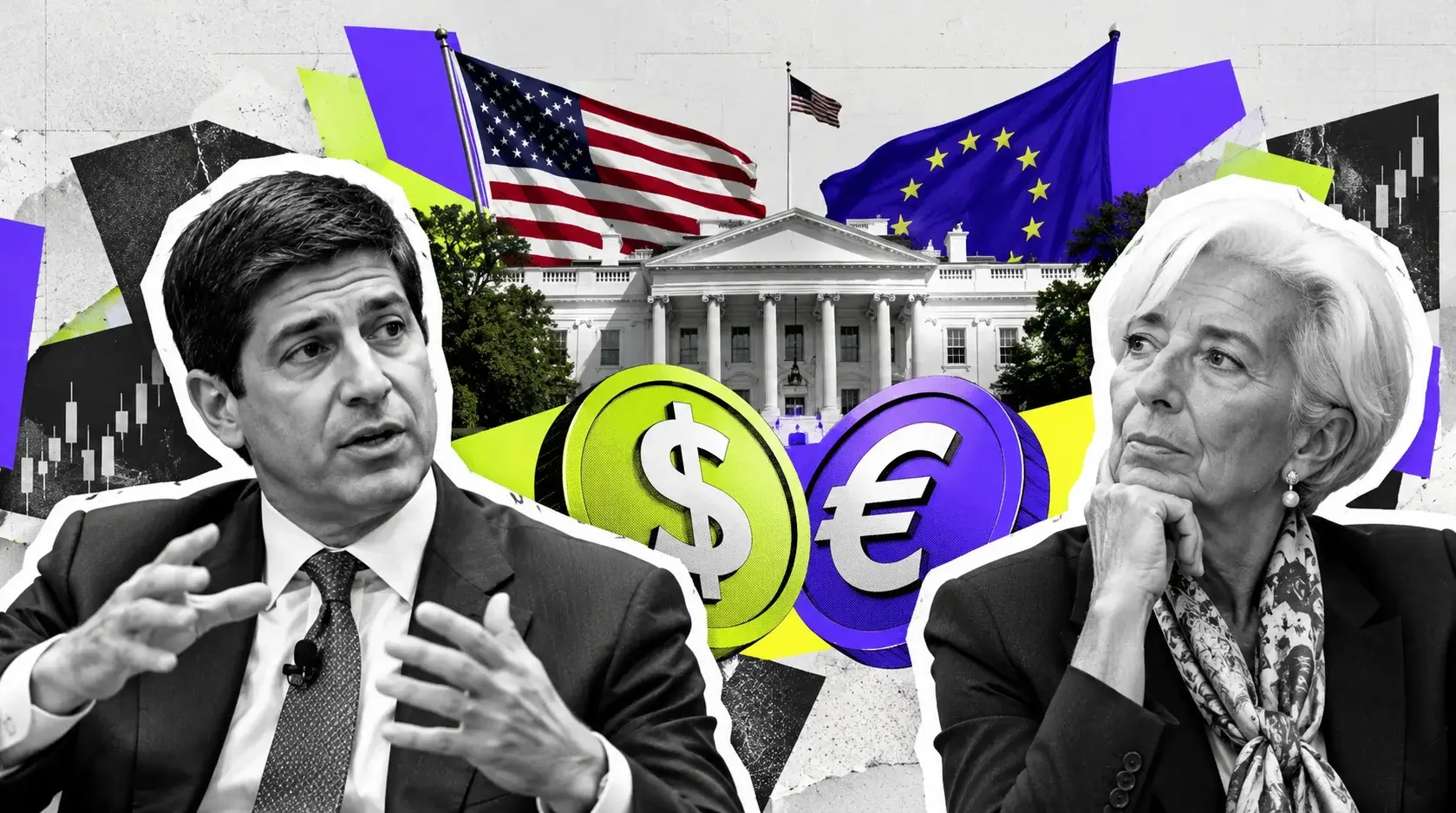
The tone shifted when reports emerged that President Trump would nominate Kevin Warsh (spelled Marsh in some market commentary) as the next Fed Chair. Warsh is associated with a more hawkish stance than the current market consensus but is also viewed as a defender of Fed independence. That combination matters: his perceived credibility reassures investors that policy won’t be dictated directly from the Oval Office, even if he ultimately supports lower rates over time.
Several bank desks converged on the same interpretation: the nomination reduces fears of overt political control, which is dollar-supportive in the short run, but his ability to persuade the rest of the FOMC could increase the probability of an eventual rate-cutting cycle. That paradox explains why GBP/USD dropped from above 1.3850 to lows near 1.3725 on Friday, while strategists still warn that any USD bounce driven purely by the name at the Fed may fade once the rate-cut debate re-asserts itself.
Read More
-
Yen Stalls at 160 Despite a 3% JGB and Tokyo Core CPI at 2.0% — Intervention Sits at 164, Friday's Payrolls Decide
02.09.2026 · TradingNEWS ArchiveEnergy
-
AMD ($560.68) Rebounds 10% From Its October Low on the Meta Helios Win — November 3 Report Holds the Key to $649
27.10.2026 · TradingNEWS ArchiveStocks
-
Ethereum ($2,312) Lags Bitcoin and AI Stocks as BitMine Nears Its 5% Cap — Break of $2,295 Opens $2,200
27.10.2026 · TradingNEWS ArchiveCrypto
-
Brent ($113.88) Trades a $2.35 Range as Houthi Strikes Meet Saudi-Iran Diplomacy — Break of $117 Unlocks $120
27.10.2026 · TradingNEWS ArchiveCommodities
-
Nasdaq Rips 1.3%, S&P 500 Hits 7,728, Dow Stalls as BA Drops to $171
27.10.2026 · TradingNEWS ArchiveMarkets
-
GBP/USD (1.3310) Can’t Cash In on 5.43% Gilt Yields as Budget Risk Meets a Firm Dollar — Break of 1.3274 Opens 1.3200
27.10.2026 · TradingNEWS ArchiveForex
Behavioral flows, positioning washout and the 1.3710 trigger in GBP/USD
The move in GBP/USD this week was not just about macro headlines; it was also a classic positioning clean-up. The earlier collapse in the dollar had drawn in aggressive short-USD trades across FX and long positions in assets like gold and silver. By the time GBP/USD was trading above 1.3850, speculative books were stuffed with dollar shorts that had been rewarded for days.
Once the Warsh story hit the tape, that positioning became a liability. Bank research highlighted that “no sensible market participant” wanted to head into the weekend holding oversized short-USD risk into a volatile geopolitical weekend. The result was a sharp reduction of exposure: traders took profits on sterling longs, cut back metals exposure after record highs, and bought back USD. This is exactly the kind of environment where levels like 1.3710 suddenly matter.
One major house flagged 1.3710 as the line in the sand: if GBP/USD breaks decisively below that area, the advance that started last week is considered exhausted. So far, price has tested the low 1.37 handle but has not yet carved out a sustained trade below that mark. How spot behaves around 1.3710 into the new week will show whether this was merely a positioning flush or the start of a deeper retracement towards the lower end of the 1.35770–1.38110 band.
Technical structure in GBP/USD: 1.35 support risk versus 1.3870 resistance
Technically, GBP/USD is flashing a clear message: the trend is up, but the immediate risk-reward for fresh longs is deteriorating. On the weekly chart, the key event was the break and close above 1.3750, followed by immediate selling pressure that left a shooting-star-style candle near the highs. That pattern reflects a failed extension above resistance and warns that buyers are no longer in full control above that band.
Upside, the first serious cap is now the 1.3870 zone, which coincides with the recent high and sits just above the 1.3850 four-year peak. Any renewed test of that area will meet locked-in sellers who missed the chance to exit on the first spike. A clean weekly close above 1.3870 would unlock the possibility of a run much deeper into uncharted territory, but the burden of proof has shifted to the bulls.
Downside, the immediate reference is the 1.3710–1.3725 band highlighted by intraday lows and bank commentary. A sustained break beneath that pocket strengthens the case for a move towards 1.35770, the lower boundary of the near-term projected range. Under that, the psychologically important 1.3500 level becomes the magnet; it aligns with prior resistance and would likely attract dip-buyers who missed the initial surge from 1.3400. As long as 1.3500 holds, the broader structure still favours sterling on a multi-week horizon, but the easy part of the move from 1.34 to above 1.38 has already played out.
Macro backdrop: post-Brexit pound strength versus a “sickly” US dollar
Beyond the week’s noise, the underlying macro story still leans mildly in favour of GBP versus USD, but with an important caveat: the higher sterling goes, the more sensitive it becomes to global risk shocks. Since the Brexit referendum, the pound has never fully regained its pre-2016 altitude, yet recent weeks show it “flexing its muscles” against what many now describe as a “sickly” dollar. The move to four-year highs above 1.3850 is part of that re-pricing.
On the UK side, the currency is being supported by a mix of factors: expectations that the Bank of England will be slower to cut rates than the Fed, reduced immediate political drama compared with previous years, and the perception that the UK economy has already absorbed much of the Brexit shock. The fact that GBP/USD is trading back at levels last seen in mid-2025 reinforces the idea that the market is willing to re-rate the pound closer to fair value rather than treat it as a permanent high-risk asset.
On the US side, repeated episodes of political interference rhetorics, open pressure on the Fed to deliver lower rates, and earlier comments from President Trump showing little concern about USD weakness have all weighed on the currency. The Warsh nomination story temporarily offsets that by signalling respect for Fed independence, but it does not erase the structural headwinds. If markets conclude that a Warsh-led Fed still leans towards an easing cycle, the current USD bounce could prove temporary.
The danger for sterling is that its strength is increasingly tied to broad risk-on sentiment. A sharp equity correction, a spike in volatility, or an escalation in geopolitical risk can quickly send money back into the dollar and the yen. The latest reversal from 1.3870 down to the 1.37 area after a single headline shows how fast positioning can unwind when the market narrative changes.
Trading stance on GBP/USD: tactical view and buy/sell/hold verdict
Given the combination of stretched price action, shifting Fed expectations, and still-supportive medium-term drivers for the pound, GBP/USD sits at an inflection point. The pair has logged a strong run from 1.3400 on 21 January to highs above 1.3850 in little more than a week, while sentiment in metals and other dollar-sensitive assets has swung from euphoria to panic. That kind of volatility argues against chasing upside into resistance.
At the same time, the structural backdrop has not flipped decisively in favour of the USD. The Warsh nomination may justify the move from 1.3870 back towards 1.3725, and even a slide towards the 1.35770–1.3710 zone, but it does not on its own create a long-lasting dollar bull trend if rate-cut expectations for later in the year remain in place. As long as 1.3500 holds, the medium-term structure still favours sterling over the dollar on a multi-month horizon.
Putting all of that together, the stance on GBP/USD is: verdict – HOLD, with a tactical bullish bias on dips. At current levels near the upper end of the 1.35770–1.38110 range and just below resistance at 1.3870, the pair does not offer an attractive entry for fresh longs. A deeper retracement towards 1.35770–1.3500 would be a more rational zone to re-evaluate buying GBP against USD, while a sustained break below 1.3500 would force a reassessment of that positive view.