GBP/USD Slips to 1.3079 as US Data Trumps Hawkish BoE; 1.3000 Floor Guards a 1.3200 Rebound Target
An 80% BoE December hike keeps 1.3000 intact; a close above 1.3117 opens 1.3200 | That's TradingNEWS
Key Points
- GBP/USD fell 35 pips to 1.3079, holding above Monday's 1.3000 low, its weakest since April 2025.
- Markets price an 80% chance the Bank of England lifts Bank Rate to 4.25% on December 17.
- UK CPI rose to 3.6% in October, a one-year high, while services inflation held at 3.7%.
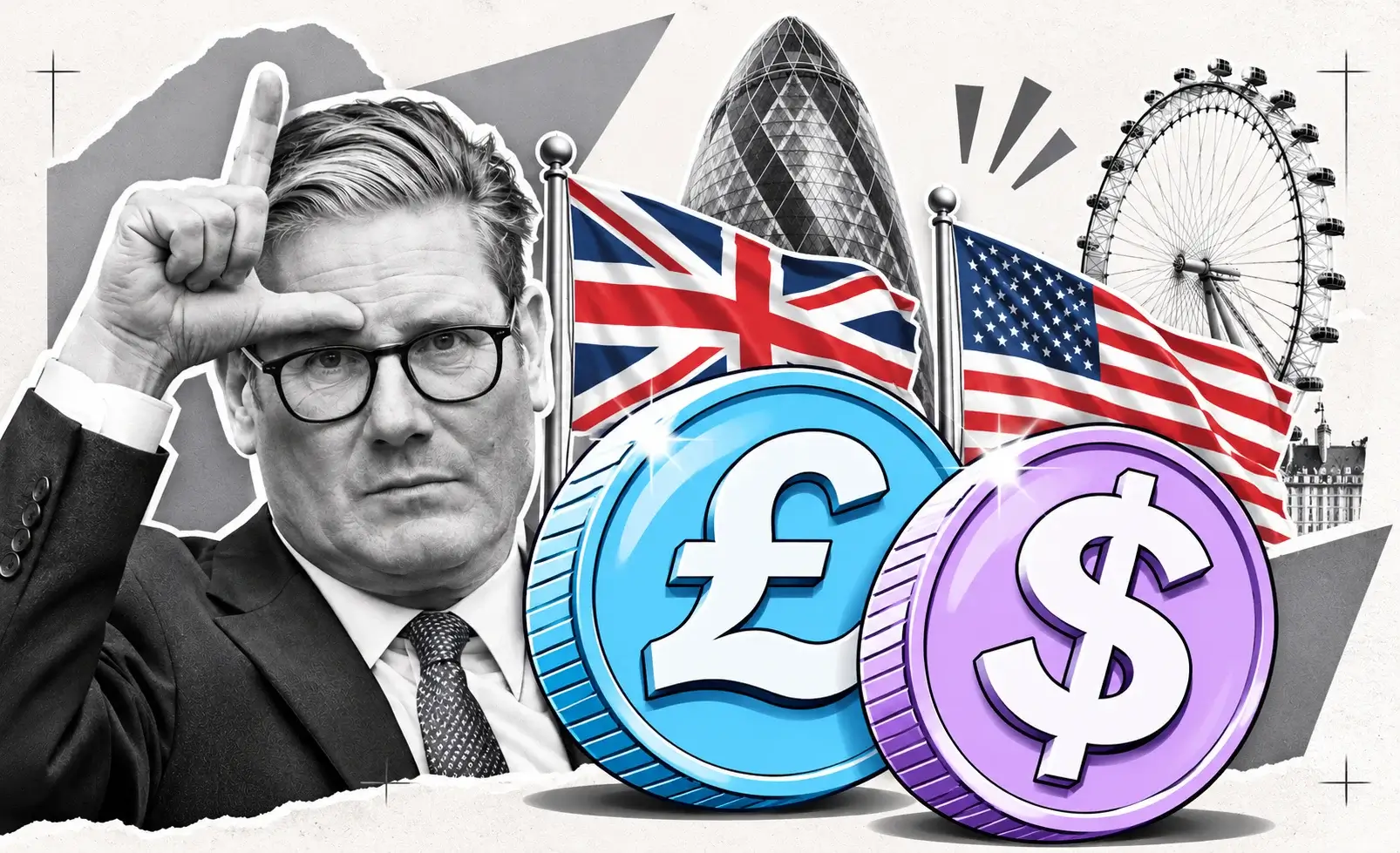
Sterling lost ground against the dollar on Wednesday, November 25, even though the Bank of England sounded hawkish. GBP/USD traded at 1.3079, down 0.26%, or 35 pips, from Tuesday's 1.3114 close. The pair opened at 1.3116, touched an early high of 1.3117 during Asian hours and slid steadily through the London session, reaching a low of 1.3064 after the U.S. inflation data. In New York trading it settled into a 1.3064 to 1.3080 band.
The pound's November trend is clearly bearish. On Monday, November 23, GBP/USD fell toward 1.3000, its weakest level since April 2025, as the dollar index hit a 19-month high. Tuesday's rebound to 1.3114 recovered a little over 100 pips. Wednesday has erased a third of that. The pair started 2026 at 1.3387, peaked near 1.3580 at the end of February, and held at 1.3420 at the end of September. At 1.3079 it is down 2.3% year to date, 3.7% below its February high and 2.5% below the end of September.
This forecast rests on one thesis. The Bank of England is now one of the most hawkish major central banks, and its policy rate already sits above the Federal Reserve's midpoint, but that rate advantage is not lifting the pound. U.S. growth at 4.3%, core PCE at a three-year high, a dollar index above 104 and a 98% probability of a December Fed hike are stronger forces in the short term. The Bank of England can match the Fed's pace, but it cannot overtake it while the U.S. economy grows four times faster than the U.K.
That leaves GBP/USD in a range set by the two central banks. Both are expected to hike in December: the Fed on December 9 and the Bank of England on December 17. If both deliver, their relative stance does not change. The pound's next move then depends on growth and energy. A resolution in the Middle East would lower U.K. inflation and reduce the need for more Bank of England hikes. More energy disruption would push U.K. inflation toward the 5% the Bank projects for mid-2027.
The upside target is 1.3200, 121 pips or 0.9% above current levels. It sits just above the 1.3174 level the pair held before the October inflation data on November 18 and below the 1.3250 area where it traded earlier in November. Reaching it needs 1.3000 to hold, the dollar index back below 103.72, and a December Bank of England hike confirmed by the U.K. data.
Session Map: 1.3117 to 1.3064, With the BoE Testimony Lost in the US Data
Wednesday unfolded in three phases. The first came overnight. GBP/USD opened at 1.3116 and drifted to 1.3089 by 4:00 a.m. GMT as caution set in ahead of the U.S. data and as the proposed U.S. tariffs on 14 trading partners hit Asian stocks. The pound held up better than Asian currencies, since the United Kingdom was not on the tariff list. Sterling traded at 1.3081 by 8:54 a.m. London time.
The second phase came in the London morning. GBP/USD slipped to 1.3066 by 10:17 a.m. GMT as the dollar index firmed toward 104. Equity markets turned risk-off after Nvidia extended its two-day decline, and the dollar's haven bid weighed on sterling. Through the European session the pound lost 50 pips from its overnight open.
The third phase came with the U.S. data at 1:30 p.m. GMT. October core PCE came in at 3.3% year over year against a 3.2% forecast, a three-year high. Third-quarter GDP was revised up to 4.3%. The December Fed hike moved to a 98% probability. GBP/USD touched 1.3064, its session low, before settling at 1.3079 to 1.3080.
The Bank of England testimony came in parallel with the U.S. data, and it got lost. Governor Andrew Bailey, Deputy Governor Clare Lombardelli and external Monetary Policy Committee member Catherine Mann told Parliament's Treasury Committee that they cannot ignore the threat to inflation from persistently high energy prices. They said the Bank would have to respond unless there is a sudden resolution in the Middle East that brings energy costs down. That is a clear signal for a December hike, and on a normal day it would have lifted the pound 30 to 50 pips. On Wednesday it barely moved the pair, because the U.S. data dominated.
The muted reaction to hawkish Bank of England comments is the clearest sign of where GBP/USD stands. The market already prices a December hike at 80%, so the testimony confirmed what was expected. U.S. data surprised on the hawkish side. In a market driven by surprises, the U.S. side wins.
The Bank of England at 4.00%: First Hike in Three Years, More Coming
The Bank of England turned hawkish this month. On November 5, the Monetary Policy Committee voted 8-1 to raise Bank Rate by 25 basis points to 4.00%, its first hike in more than three years. The Bank said the move was meant to limit how much rising energy costs spread into other prices. It projected U.K. inflation rising to 5% by the middle of 2027 from 3.5% at the time.
Bailey's message after the decision set the tone for December. He said the increase should not be seen as the first in an inevitable long sequence of hikes, but that unless the conflict in the Middle East is resolved, it does not seem likely to be the last. In the November Monetary Policy Report, he added that without real progress toward settling the conflict, risks to energy prices, and so to inflation, are to the upside.
Wednesday's testimony repeated the message with three voices. Bailey, Lombardelli and Mann all told the Treasury Committee that persistently high energy prices threaten inflation and that the Bank would have to respond unless energy costs fall sharply. Lombardelli and Mann are among the committee's more hawkish members, and Bailey has moved toward their view since the summer.
Rate markets price a December hike at 80%. That figure fell from 90% after the October inflation data on November 18, when core and services inflation came in softer than the Bank expected. The next decision is on December 17, eight days after the Fed and on the same day as the European Central Bank. A hike would take Bank Rate to 4.25%.
The Bank's rate is now above the Fed's midpoint. The Fed's target range is 3.75% to 4.00%, a midpoint of 3.875%, against Bank Rate at 4.00%. That 12.5-basis-point advantage for sterling is unusual: through most of 2025 and 2026, U.S. rates sat above U.K. rates. If both central banks hike 25 basis points in December, the gap stays at 12.5 basis points. If the Fed hikes again in January and the Bank of England waits until February, the gap closes to zero.
For GBP/USD, the Bank of England's stance provides a floor, not a lift. A hawkish Bank prevents the pound from falling as far as the euro, which faces a central bank with a deposit rate of only 2.50%. But a hawkish Bank cannot drive GBP/USD higher as long as the Fed matches every move and the U.S. economy grows much faster.
UK Inflation at 3.6%: Energy Drives the Headline, Services Hold Steady
U.K. inflation is high and rising, but not in the way that worries the Bank of England most. The Consumer Prices Index rose 3.6% in the 12 months to October, up from 3.5% in September and the highest in a year. It was the fourth straight monthly rise. Record diesel prices and the highest petrol prices since 2022 drove most of the increase, as the energy shock from the Middle East fed through to fuel costs.
The details softened the impact. The October reading came in slightly below the Bank of England's own 3.7% forecast. Services inflation, which the Bank watches most closely because it reflects domestic wage and price pressures, held at 3.7% instead of rising as expected. Core inflation was also steady. That mix tells the Bank that the energy shock has not yet spread broadly into wages and services, which is what would justify a long series of hikes.
The market response showed how much that matters. Before the data, swap markets priced a December hike at 90%. Afterward, the probability fell to 80%. GBP/USD weakened to 1.3174 against the dollar. Since then the pound has lost another 95 pips, though most of that came from the dollar's broader rally rather than U.K.-specific news.
The Bank projects inflation rising toward 5% by mid-2027. That forecast depends heavily on energy prices. Brent crude traded at $92.41 on Wednesday, up 1.1% on a Houthi claim against Saudi Arabia's Ras Tanura refinery, and 20% below its $116 level on November 1. If oil continues to fall as Gulf exports recover, U.K. inflation would peak below 5% and the Bank could stop after December. If oil rises again on new Middle East disruptions, inflation would reach or pass 5%, and the Bank would keep hiking into 2027.
The comparison with the United States matters for GBP/USD. U.S. headline PCE is at 3.8% and core at 3.3%. U.K. headline CPI is at 3.6% and services at 3.7%. The two economies face similar inflation levels, but the U.S. combines that inflation with 4.3% growth while the U.K. economy is growing much more slowly. That growth difference is why the Fed can hike without fear of recession, while the Bank of England has to weigh every hike against the risk of tipping a weak economy into contraction. Markets read that constraint as a limit on how far the Bank can go, and that caps sterling's upside.
US Data: Core PCE 3.3%, GDP 4.3% and a 98% Fed Hike
The U.S. side of GBP/USD is where Wednesday's move came from. October core PCE rose 0.3% month over month, in line with forecasts, but the annual rate came in at 3.3%, above the 3.2% forecast and up from 3.1% in September. It was the highest core reading in three years. Headline PCE rose 0.3% on the month, down from 0.5%, but climbed to 3.8% year over year.
Growth was stronger still. Third-quarter GDP was revised up to a 4.3% annualized pace in the final estimate, from 3.4% in the first estimate and above the 3.5% consensus. An economy growing at more than 4% with core inflation rising gives the Fed every reason to keep tightening.
Rate markets moved December hike odds to 98%, up from 96.4% before the data. That hike would take the Fed's range to 4.00% to 4.25%. January odds slipped slightly to 60% from 64%, so the market is reading the data as confirmation of the current path rather than a reason to price a longer cycle. March odds sit at 35%, down from above 50% a week ago, after Treasury Secretary Scott Bessent warned on Monday that the Fed could hurt growth by hiking too aggressively.
The growth gap is the dollar's strongest support against sterling. A 4.3% annualized U.S. growth rate attracts capital through equity flows, corporate investment and portfolio allocation. The U.K. has not grown anywhere near that pace in 2026. Even with the Bank of England's rate slightly above the Fed's midpoint, investors earn a similar yield in both markets but get far stronger growth in the United States. That pulls capital toward dollar assets.
Falling U.S. yields limited the dollar's gains. The 10-year Treasury yield dropped more than 6 basis points to 4.84%, its lowest since November 9, as investors moved into bonds during the equity selloff. Lower long-term U.S. yields reduce the return on holding dollar assets and cap the dollar's rally. That is part of why GBP/USD fell only 35 pips on a day when the U.S. data surprised hawkishly.
The next U.S. test is the November jobs report on December 4. A strong print would firm January Fed hike odds above 70% and push GBP/USD back toward 1.3000. A soft print would pull January odds below 50%, weaken the dollar and open a path to 1.3200.
Dollar Index at 104: Pinned Near a 19-Month High
The dollar index sets the backdrop for every major currency pair. DXY reached a 19-month high near 104.59 on Monday, the same day GBP/USD fell toward 1.3000 and EUR/USD hit its 2026 low of 1.0882. On Tuesday, the index pulled back below 104 and tested its 50-day moving average at 103.72 as traders took profits during the U.S. tech selloff. On Wednesday, it firmed within a 103.81 to 104.10 range, briefly regaining 104.00 as the risk tone soured.
Sterling makes up 11.9% of the dollar index, a much smaller share than the euro's 57.6%. GBP/USD therefore moves with DXY but less tightly than EUR/USD. On days when euro-specific news drives the index, sterling can move independently. On days when U.S. news drives the index, as on Wednesday, GBP/USD follows DXY closely.
The dollar index's levels give a useful map for GBP/USD. Resistance is at 104.40 to 104.70, Tuesday's high and Monday's 19-month peak. A break above 104.70 would point to 105.00 and match GBP/USD breaking below 1.3000. Support is at the 50-day moving average at 103.72, and below it at 103.15 to 103.30. A daily close below 103.72 would match GBP/USD reclaiming 1.3150 and opening 1.3200. A move to 103.15 would correspond to GBP/USD testing 1.3250.
The dollar's link to equities has shifted this month. Through most of November, the dollar rose with U.S. stocks as AI optimism drew capital into dollar assets. This week, the dollar has at times fallen with equities, as foreign investors sold U.S. tech shares and repatriated money. On Wednesday, the Nasdaq Composite fell more than 4% and the Nasdaq 100 crossed into a bear market, but the dollar index rose only to 104.10 before stalling. A dollar that cannot rally strongly during a U.S. equity bear market may be closer to its peak than its 19-month high suggests.
Read More
-
Yen Stalls at 160 Despite a 3% JGB and Tokyo Core CPI at 2.0% — Intervention Sits at 164, Friday's Payrolls Decide
02.09.2026 · TradingNEWS ArchiveEnergy
-
Dell Drops to $272 After a $54.9B Record Quarter; $132B Backlog Backs a $300 Rebound Target
25.11.2026 · TradingNEWS ArchiveStocks
-
XRP-USD Holds $0.914 Above the $0.88 Floor as ETFs Bleed All November; $1.00 Reclaim Opens a $1.03 Target
25.11.2026 · TradingNEWS ArchiveCrypto
-
WTI Jumps to $83.49 and Brent to $92.41 on Ras Tanura Claim; $86 WTI and $96 Brent Targets Before OPEC+ Sunday
25.11.2026 · TradingNEWS ArchiveCommodities
-
Stock Market Today: Nasdaq IXIC Sinks 4.2%, S&P 500 SPX Tests 7,000, Dow DJI Slips; 7,240 Reclaim Target
25.11.2026 · TradingNEWS ArchiveMarkets
-
EUR/USD Defends 1.0948 Above the 1.0882 Low as ECB Hike Matches the Fed; 1.1085 Rebound Target
25.11.2026 · TradingNEWS ArchiveForex
For the forecast, the dollar index is the swing factor. Sterling has its own support from the Bank of England, but it cannot rise against a dollar that keeps climbing. A break below 103.72 is the cleanest signal that the path to 1.3200 is open.
Fiscal Backdrop: A Bond-Friendly Budget Removes One Risk
U.K. fiscal policy has moved from a source of risk to a source of stability for sterling. Chancellor John Healey delivered his first Budget on October 28, 2026, and gilt markets reacted with cautious optimism. Gilts outperformed U.S. Treasuries by 5 basis points on the day. Healey kept the fiscal discipline set by his predecessor, Rachel Reeves, maintaining around £15 billion of headroom against the fiscal rules and targeting net debt below 83% of GDP.
The U.K. now has some of the tightest, and therefore most bond-friendly, fiscal plans of any G10 economy for the next few years. That matters for sterling. Through 2024 and 2025, budget uncertainty repeatedly hit gilts and the pound, with yields rising and the currency falling on fears of unfunded spending or rule changes. A credible budget that sticks to the rules removes that risk premium.
The contrast with Europe is sharp. France's budget uncertainty has weighed on the euro for months, and even this week's passage of amendments to the 2026 French budget leaves the fiscal picture fragile. The United States runs large deficits that continue to add Treasury supply. Against both, the U.K.'s fiscal position looks stable, which supports sterling against the euro in particular.
The fiscal picture also shapes Bank of England policy. Tight fiscal policy reduces demand in the economy, which helps the Bank bring inflation down without raising rates as much. In practice, that means the Bank can stop hiking sooner than it would with a loose budget. For the pound, that is a mixed signal: fiscal discipline supports gilts and confidence, but it also limits how high U.K. rates can go.
The Bank of England's Financial Stability Report on Thursday, November 26, adds another data point. It will assess risks to the U.K. financial system, including the impact of higher rates on households and businesses and the exposure of U.K. investors to the global equity selloff. A report flagging rising stress would weigh on the pound by raising doubts about how far the Bank can tighten. A calm report would support the December hike case.
For the forecast, fiscal stability is a floor under sterling, not a driver. It removes the downside tail that pushed GBP/USD sharply lower during past budget scares, but it does not provide a catalyst for a rally. The pound's direction still depends on the rate and growth balance with the United States.
Energy Shock: Diesel at Records, Brent Above $92
Energy is the single biggest driver of U.K. inflation and, by extension, of Bank of England policy. The war in Iran, which began on February 28, disrupted Gulf oil exports and pushed Brent close to $120 at its peak. U.K. diesel prices hit records this autumn, and petrol reached its highest level since 2022. Those costs drove headline CPI to 3.6% in October.
Oil prices have fallen sharply since then. Brent traded at $116 on November 1 and fell to the low $90s by mid-November as Gulf exports recovered. The International Energy Agency projects a global oil surplus in the fourth quarter of 2026 and a 3.8 million-barrel-per-day surplus in 2027. On Wednesday, Brent rose 1.1% to $92.41 after a Houthi claim against Saudi Arabia's Ras Tanura refinery, but it is still 20% below its November 1 level.
For the U.K., falling oil prices are a double-edged signal. Lower energy costs would bring inflation down faster than the Bank projects, reducing the need for more hikes after December. That would weaken the rate support for sterling. At the same time, lower energy costs would ease pressure on U.K. households and businesses, improving the growth outlook, which would support sterling.
The Bank of England's own statements make energy the deciding factor. Bailey, Lombardelli and Mann all told Parliament on Wednesday that the Bank would have to respond unless the Middle East conflict is resolved and energy costs fall. In practice, that means oil prices will determine whether the December hike is the last of the cycle or the second of several.
European natural gas adds to the U.K. picture. Gas prices rose 3% on Tuesday on colder weather forecasts. The U.K. relies heavily on gas for heating and electricity, so winter gas prices feed directly into household energy bills and inflation. A cold winter combined with Middle East supply risk would push U.K. inflation higher into early 2027.
For GBP/USD, the energy channel is complicated. Higher oil prices push U.K. inflation and Bank of England hike expectations up, which supports the pound through rates. But higher oil also worsens the U.K.'s trade balance and weighs on growth, which hurts the pound. In 2022, the growth effect won, and sterling fell sharply despite Bank of England hikes. In 2026, with the energy shock smaller and the fiscal position more stable, the rate effect has held up better, which is why GBP/USD sits at 1.3079, not near its 2022 lows.
Cross Rates: EUR/GBP Near 0.8370 and Sterling's Relative Strength
Sterling is weak against the dollar but holding up against most other currencies. EUR/GBP traded near 0.8370 on Wednesday, with EUR/USD at 1.0948 and GBP/USD at 1.3079. On Tuesday, EUR/GBP rose as the euro outperformed after German business confidence improved for a seventh straight month, with the Ifo index reaching 90.6, its highest in more than three years. On Wednesday, the cross was steady.
The relative rate story favors sterling against the euro. The Bank of England's rate is 4.00% against the European Central Bank's 2.50% deposit rate, a 150-basis-point gap in sterling's favor. Both central banks are expected to hike on December 17, keeping the gap intact. Through 2026, that gap has supported sterling against the euro even as both currencies fell against the dollar.
Growth tells a more balanced story. German GDP grew just 0.1% quarter over quarter in the third quarter, revised down from 0.2%, with investment falling 1.2% and exports down 0.8%. The U.K. has also struggled with weak growth, but its fiscal position is more stable than France's and its central bank is more hawkish than the ECB. That combination has kept EUR/GBP in a narrow range.
Against the yen and other Asian currencies, sterling has done well. The proposed U.S. tariffs on 14 trading partners, which exclude the U.K., hit Asian currencies hardest on Wednesday. Korea's Kospi fell 6.16% and tripped a circuit breaker. Sterling's position outside the tariff list is a relative advantage that will matter more if the tariffs are implemented in January.
Against commodity currencies, sterling's position is mixed. Oil exporters' currencies have held up as crude stayed above $80 for WTI and $90 for Brent, while sterling, as the currency of an energy importer, has lagged.
For the GBP/USD forecast, the cross rates show that the pound's weakness is mostly about the dollar. Sterling is holding its value against the euro and gaining against Asian currencies. Its decline against the dollar reflects U.S. strength, not U.K. weakness. If the dollar's rally stalls, sterling's relative strength elsewhere would carry GBP/USD higher quickly.
Technical Structure: 1.3000 Floor, 1.3114 Pivot, 1.3200 Target
The technical picture for GBP/USD is bearish but close to support. The pair has fallen from 1.3420 at the end of September to 1.3079, a 341-pip decline in eight weeks. It set a pattern of lower highs through November and touched 1.3000 on Monday, its weakest level since April 2025. Tuesday's rebound to 1.3114 was the first meaningful bounce in two weeks, and Wednesday has given back a third of it.
Support is clear. The first level is 1.3064, Wednesday's session low. Below it is 1.3000, the round number and Monday's low, which is the key floor for the forecast. A daily close below 1.3000 would open 1.2900 and point to the April 2025 lows. Below that, 1.2800 is the next major support.
Resistance is layered. The first level is 1.3114 to 1.3117, Tuesday's close and Wednesday's early high, which is the pivot for the near-term trend. A daily close above 1.3117 would show that Wednesday's dip was a pause in a rebound, not the start of a new leg lower. Above that sits 1.3174, the level the pair held before the October U.K. inflation data. The upside target is 1.3200, the round number just above that. A break above 1.3200 would open 1.3250 and then 1.3300, where the pair traded at the end of October.
The 1.3200 target is 121 pips, or 0.9%, above current levels. That is a modest move for GBP/USD, which covered more than 100 pips on Tuesday alone. Reaching it needs a daily close above 1.3117 first, which would confirm the rebound from 1.3000.
The levels are clear for traders. A daily close below 1.3000 cancels the recovery scenario and opens 1.2900. A daily close above 1.3117 confirms the rebound and opens 1.3174 and 1.3200. Between those levels, the pair is likely to drift with the dollar index during the thin Thanksgiving week.
Calendar Risk: Financial Stability Report, Payrolls, Fed and the BoE
The next three weeks hold a cluster of catalysts. Thursday, November 26, U.S. markets close for Thanksgiving, and Friday is a half-session. Currency markets stay open, but liquidity will be thin. The Bank of England's Financial Stability Report lands Thursday, and with U.S. traders away, U.K.-specific news can move sterling more than usual.
Tuesday, December 1, brings the November eurozone flash inflation data, which will move EUR/GBP and could spill into GBP/USD through the dollar. December 1 through 3 bring Nvidia chief executive Jensen Huang's congressional testimony. Calm testimony that stabilizes U.S. tech stocks would support risk appetite and the pound. Testimony that extends the equity selloff could push investors into the dollar.
Friday, December 4, brings the U.S. jobs report. A strong print would firm January Fed hike odds above 70% and push GBP/USD toward 1.3000. A weak print would pull January odds below 50%, weaken the dollar and open the path to 1.3200.
Wednesday, December 9, brings the Fed decision. A hike is priced at 98%, so the focus is on the statement and projections. A signal that the Fed is near the end of its cycle would weaken the dollar and support GBP/USD. A signal of more hikes would extend the dollar's rally.
Thursday, December 17, brings the Bank of England decision. A hike is priced at 80%. A hike with a hawkish message, signaling more increases in early 2027, would support sterling and push GBP/USD toward 1.3200. A hike with a cautious message, suggesting December could be the last, would cap the pound's upside. A hold would be a surprise and send GBP/USD toward 1.2900. The same day brings the European Central Bank decision, which will move EUR/GBP.
U.K. data between now and the December 17 meeting will shape the Bank's decision. November inflation, due in mid-December, is the most important release. A rise above 3.6%, especially if services inflation moves above 3.7%, would lock in the hike. A drop would revive doubts.
Verdict: Range-Bound Above 1.3000, With a 1.3200 Upside Target
GBP/USD's short-term verdict is bearish in trend but supported near 1.3000. At 1.3079, the pair is down 0.26% on the day, 2.3% year to date and 3.7% below its February high. It touched 1.3000 on Monday, its weakest level since April 2025. The dollar's advantages are clear: U.S. GDP growth at 4.3%, core PCE at a three-year high of 3.3%, a 98% probability of a December Fed hike, a dollar index near its 19-month high and a growth gap that draws capital to U.S. assets.
Sterling's supports are solid. The Bank of England's 4.00% rate already sits above the Fed's midpoint, and a December hike is priced at 80%. The governor and two other policymakers told Parliament on Wednesday that the Bank will respond to energy-driven inflation unless the Middle East conflict is resolved. U.K. inflation is at 3.6% and projected to reach 5% by mid-2027. The October Budget kept fiscal policy among the tightest in the G10, removing the risk premium that hurt the pound in earlier budget cycles. The U.K. is outside the proposed U.S. tariff list. And the dollar index could not break above 104.40 even with the Nasdaq 100 in a bear market and U.S. core inflation beating forecasts.
The forecast is two-sided with a clear hierarchy. The base case through the December 9 Fed and December 17 Bank of England decisions is a range between 1.3000 and 1.3174, with the dollar holding its edge but unable to extend it. The upside case is a move to 1.3200, set off by a soft U.S. jobs report on December 4, a Fed statement on December 9 that signals the end of its cycle, or a hawkish Bank of England hike on December 17. The downside case is a daily close below 1.3000, which opens 1.2900 and would need a strong U.S. jobs report, a cautious Bank of England, or a sharp fall in oil prices that removes the case for more U.K. hikes.
For a position holder, 1.3000 is the line that must hold and 1.3200 is the upside target, 121 pips or 0.9% above current levels, on a confirmed daily close above 1.3117. For a trader, the risk-reward favors buying near the 1.3000 to 1.3064 support zone with a stop below 1.2980, rather than chasing the pair into thin holiday trading, with the December 4 U.S. jobs report as the first real catalyst. GBP/USD's verdict for November 25 is bearish in trend, supported in rates, with a defined upside target of 1.3200 if 1.3000 holds through the two central bank meetings.