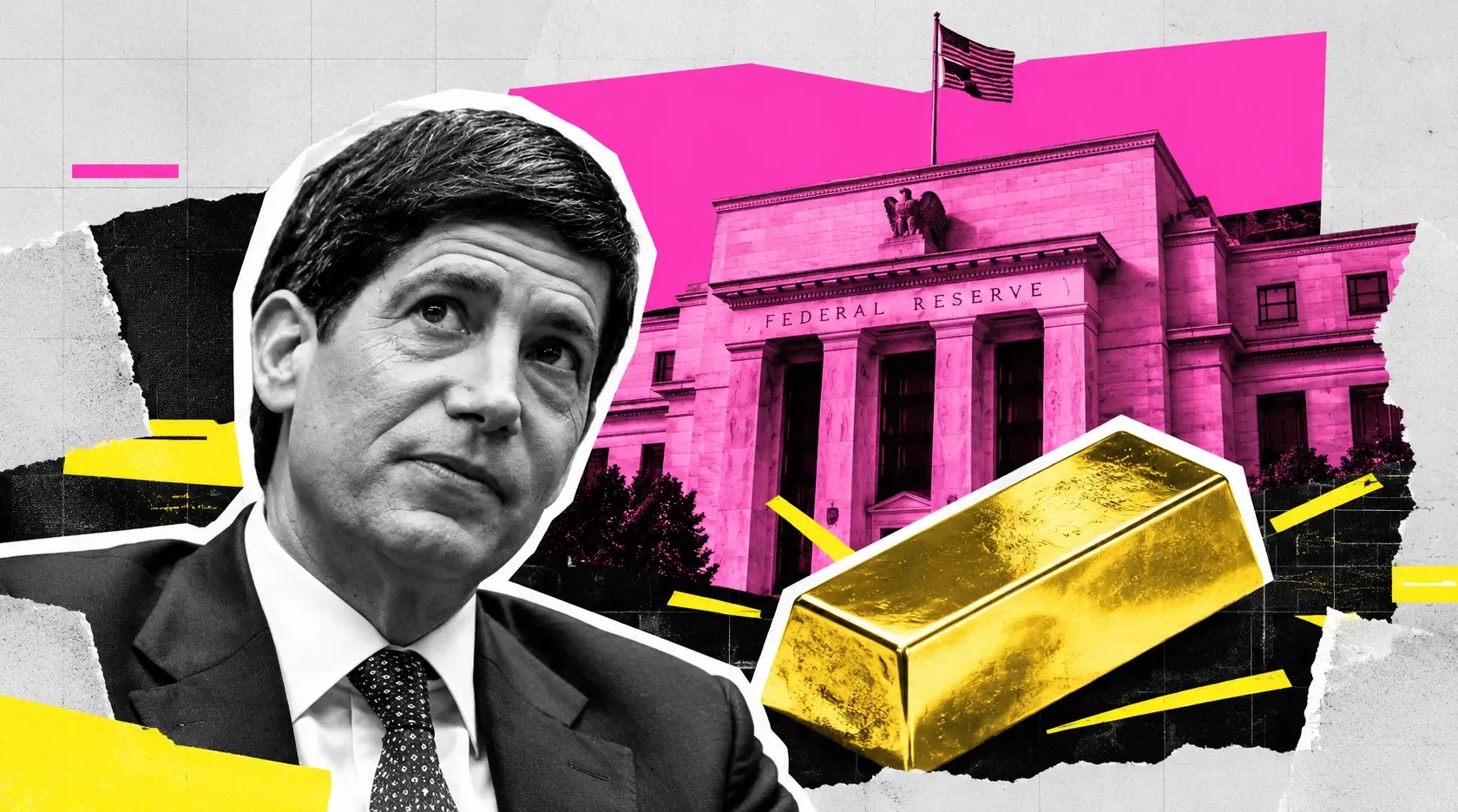
Gold (XAU/USD) Coils at $4,335 Into the Fed Decision — Haven Bid Fades, Central Banks Keep Buying the Dip
XAU/USD sits more than 22% below its $5,589 January record after the Iran peace deal pulled the last prop from the safe-haven trade | That's TradingNEWS
Key Points
- Gold holds $4,335, bouncing 6% off the $4,174 June 10 low but stalling below every major moving average and the $4,454 200-day SMA.
- Real yields near 0.25% and 70% December hike odds capped the metal; a hold-the-line dot plot would unwind hawkish bets and lift gold.
- Central banks bought 244 tonnes in Q1 with China adding 18 straight months; support sits at $4,174, then critical $4,100.
Gold walked into Tuesday doing the one thing safe havens aren't supposed to do during a war: nothing much, and slightly lower. XAU/USD sits near $4,335 on June 16, clinging to the $4,300 handle after a roughly 6% bounce over the prior week, with the metal's recovery losing steam almost the moment it cleared $4,300. The bid that should have carried gold to records during a Middle East conflict has instead been bleeding out for weeks, and the US-Iran peace deal just pulled the last prop from under it.
The setup is a standoff between a wrecked technical picture and a structural demand story that refuses to die. Gold got smoked from a January all-time high of $5,589 down to a June 10 low of $4,174 — a drop of more than 25% during the exact stretch when a shooting war in the Persian Gulf should have sent the metal soaring. That inversion of the textbook is the whole story. The haven trade broke because two larger forces — rising real yields and a hawkish Fed — overwhelmed the geopolitical bid. Now the war is ending, the haven premium is dissolving, and gold is left leaning on central-bank demand and a wall of bullish Wall Street targets while it waits on the only catalyst that matters this week.
That catalyst is the Federal Reserve. The FOMC decision, the updated dot plot, and Chair Kevin Warsh's debut press conference all land Wednesday, and gold's next directional leg hangs on them. The metal trades off real yields, and real yields trade off the Fed's signal on the rate path. Until Warsh speaks, XAU/USD is range-bound and rudderless — holding $4,335, well below every major moving average, with the desk on the sidelines waiting for the dot plot to break the tie. The quiet price action is hiding a coiled setup. The move out of it could be large.
The 25% Fall From $5,589
To grasp where gold sits, start with how far it has fallen. The metal printed an all-time record of $5,589 on January 28, 2026, the culmination of a multi-year bull run powered by de-globalization, relentless central-bank accumulation, and a flight from fiat currencies. Then it rolled over. From that $5,589 peak, gold ground steadily lower through the spring and accelerated into June, ultimately getting smoked to a $4,174.37 low on June 10 — its weakest level in roughly two months and a decline of more than 25% from the record. Even after the recent bounce to $4,335, the metal sits off more than 22% from its January high.
The damage to the trend is real. Gold has closed below its 200-day moving average for the first time since October 2023 — a structural break that flips the long-running uptrend into a corrective phase and puts trend-following money on the defensive. Over the month into the June low, gold shed more than 11% of its value, the kind of drawdown that forces leveraged longs out and reprices the entire near-term outlook. The metal that spent two years climbing a wall of geopolitical and monetary worry suddenly couldn't hold its ground.
The one number that keeps the bull case breathing: gold is still up nearly 25% year over year even after the crash. This isn't a collapse of the long-term thesis — it's a violent correction inside a structural bull market. The metal got ahead of itself on the run to $5,589, the macro backdrop turned against it, and the air came out fast. The $4,174 low on June 10 is now the line that defines whether this stays a correction or becomes something worse. The recent reclaim of $4,300 and the grind to $4,335 say the floor is holding for now. The peak-to-trough math says how much room there is to run if the macro flips back. The 200-day break says don't get complacent on the bounce.
Why Gold Got Smoked During a War
Here's the puzzle that defines 2026's gold tape: the metal fell roughly 25% during a Middle East war that began February 28, the exact kind of geopolitical shock that normally sends gold ripping. The Iran conflict — US and Israeli strikes, the near-closure of the Strait of Hormuz, oil above $114 — should have been rocket fuel for the haven trade. Instead gold rolled over. The reason is that three larger forces seized control of the metal and overwhelmed its safe-haven instinct.
The first force was inflation through the wrong channel. The war drove a 23.5% energy surge that pushed US consumer prices to 4.2% in May, the highest since April 2023. Normally gold loves inflation — it's the classic hedge. But this was energy-driven, supply-shock inflation, the kind that forces the central bank to tighten rather than ease. The market read hot inflation not as a reason to buy gold but as a reason to expect Fed hikes, and that flipped the metal's usual relationship on its head.
The second force was the Fed-rate pressure that followed. With CME FedWatch pricing roughly 70% odds of at least one hike by December, the cost of holding a yield-less asset like gold climbed. Every basis point the market added to the expected rate path was a basis point of opportunity cost for owning a metal that pays nothing. The third force was the dollar. Renewed risk aversion during the war's escalations drove a flight into the greenback, and a stronger dollar mechanically caps gold, which is priced in dollars. Oil above $90 and yields near 4.5% kept the whole selloff tethered to inflation-and-rates risk rather than haven demand. The war that should have lifted gold instead lit the inflation-and-tightening fire that burned it. That's the inversion at the heart of the move.
The Iran Deal Pulled the Last Prop
The peace deal that lit a fire under equities did the opposite for gold, and the mechanism is clean. Whatever residual haven premium was still propping the metal up evaporated the moment President Trump declared the US-Iran conflict resolved, with a signing ceremony set for June 19 in Switzerland and the Strait of Hormuz slated to reopen. The dollar's haven premium dissolved, risk-on rotation swept global markets, and the marginal dollar that might have flowed into gold flowed into stocks instead. Gold's recovery, which had clawed back about 6% off the June 10 low, lost steam the instant it crossed $4,300 as the initial enthusiasm about the deal faded and the market moved to the sidelines.
The deal cuts both ways for the metal, and that two-sided nature is why gold is stuck rather than crashing. On the bearish side, the end of the war removes the geopolitical fear bid and the dollar's safety premium — both negatives for the haven trade. On the bullish side, the oil collapse that followed the deal — West Texas Intermediate falling below $81 from above $90 — guts the energy-driven inflation that had been forcing the Fed hawkish. If the inflation pulse cools because crude is cheaper, the rate-hike pressure eases, real yields fall, and gold's biggest headwind reverses.
That tension is exactly why the metal is holding $4,335 rather than breaking decisively in either direction. The immediate effect of the deal is bearish — haven premium gone, risk-on everywhere. The second-order effect is potentially bullish — lower oil, cooler inflation, a less hawkish Fed. The market can't resolve which force wins until it sees the Fed's reaction to the new, lower-oil reality, and that arrives Wednesday. The Iran deal pulled the last prop from under the haven trade, but it also handed gold a longer-term lifeline through the inflation channel. Both effects are now baked into the $4,335 standoff.
Real Yields Are the Whole Game
Strip away the noise and gold trades off one variable above all others: real yields, the nominal Treasury yield minus inflation. Gold pays no coupon, so its appeal rises when real yields fall — when the return on cash and bonds, adjusted for inflation, is low or negative — and it suffers when real yields climb and the opportunity cost of holding a yield-less metal grows. Everything else, including the war and the dollar, ultimately filters through this channel.
Run the math on where real yields sit and the headwind is obvious. The 10-year Treasury yields roughly 4.45% and the 2-year around 4.03%. Against May CPI of 4.2%, the real 10-year yield works out to roughly 0.25% — positive, which is a meaningful drag on a metal that competes with cash. For most of gold's bull run, real yields were compressed or negative, which was the rocket fuel. As the war drove inflation up and the market repriced for Fed hikes, nominal yields held near 4.5% while the inflation that would have offset them was seen as transitory and energy-driven, keeping real yields positive and the pressure on gold intense.
This is why the Fed decision is the pivot and why the oil collapse matters so much. If the Iran deal lowers oil and cools inflation, the inflation side of the real-yield equation stays elevated in the near term while the Fed's hawkishness eases — but the bigger move comes if nominal yields fall as the market prices fewer hikes. Falling nominal yields against still-elevated inflation expectations would crush real yields and ignite gold. The 10-year already slid toward 4.45% from higher levels on the Iran-deal-driven rethink of Fed hikes, and that decline is the single most gold-supportive development in the macro picture. The metal's entire forecast reduces to one question: does Wednesday's Fed push real yields up or down? Up, and gold stays capped below $4,400. Down, and the floor at $4,174 becomes a launchpad.
The Dollar's Grip on the Metal
Gold is priced in dollars, which makes the greenback the other side of every move. A strong dollar mechanically suppresses gold by making it more expensive for holders in other currencies, while a weak dollar lifts it. Through the war, the dollar held a firm bid as renewed risk aversion drove flight-to-safety flows into US assets, with the dollar index sitting near 99.16 — and that strength was a persistent cap on the metal even when geopolitical fear should have been lifting it.
The Iran deal complicates the dollar picture in gold's favor. As the haven premium dissolves and risk appetite returns, the dollar's safety bid fades, which removes one of the suppressants that kept gold pinned during the war. A softer dollar on the back of receding risk premium and falling yields would give gold room to recover even as the geopolitical bid disappears. The two forces partially offset: less war fear is bearish for gold directly, but the dollar weakness that comes with less war fear is bullish for it.
The dollar's next move, like everything else, routes through the Fed. A hawkish Warsh and a dot plot pointing to hikes would strengthen the dollar as rate differentials widen in its favor, capping gold. A neutral or dovish-leaning message would soften the greenback and let gold breathe. The dollar index near 99 sits at a level where it could break either way depending on Wednesday's signal. For now the dollar's grip on gold has loosened slightly as the war premium unwinds, but it hasn't released. The metal needs the dollar to roll over to mount a real recovery, and that requires the Fed to validate the lower-rate path the bond market has started to price.
The Fed Decision Is the Pivot
Every thread in the gold story ties back to Wednesday. The June 16-17 FOMC meeting is Kevin Warsh's first as chair, it includes a fresh dot plot, and the market prices roughly a 97% probability of no rate change, leaving the funds rate at 3.50% to 3.75%. The rate decision is settled. The dot plot and Warsh's tone are not, and those are what will move gold.
The structure of the bet is asymmetric and well-defined. Current gold positioning reflects a hawkish market — money has been pricing roughly 70% odds of at least one hike by December, and that expectation is a big part of why the metal got crushed from $5,589 to $4,174. If Wednesday's median dot stays at hold for the year, that hawkish positioning is offside, and gold is likely to rally as the market unwinds the rate-hike bets baked into the price. If instead the median shifts to one hike by December, the near-term pressure on gold continues as the hawkish thesis gets confirmed. Either way, six weeks of accumulated rate uncertainty resolves in a single afternoon.
The wildcard is Warsh himself, sworn in May 22 as the 17th chair, generally seen as dovish in his leanings but inheriting a committee that has drifted hawkish, and openly skeptical of the dot plot he's now responsible for producing. His debut press conference will be parsed for any hint of how he views the inflation-and-energy backdrop and whether the oil collapse changes the committee's calculus. A chair who signals that cheaper crude eases the inflation path and reduces the case for hikes would be gold-bullish. A chair who emphasizes that 4.2% inflation demands vigilance regardless of oil would be gold-bearish. The metal sits at $4,335 with the entire range-bound standoff waiting on which Warsh shows up. The dot plot decides the direction; the press conference decides the magnitude.
The Asymmetry in Wednesday's Dot Plot
The dot plot deserves its own focus because it's where gold's near-term fate gets decided, and the risk-reward is genuinely lopsided. The March projections still carried a median path that pointed toward cuts in 2026 — a stance that almost certainly no longer reflects the committee's thinking after inflation hit 4.2% and energy prices surged. The market has already moved well past that, pricing hawkish, which means a chunk of the bad news is in gold's price at $4,335.
That creates the asymmetry. Because positioning is already hawkish, a dot plot that simply holds — that shows the committee at a neutral hold-for-the-year stance rather than penciling in hikes — would be a dovish surprise relative to expectations, and gold would likely rip higher as the hawkish bets unwind. The metal has been beaten down on hike fears that may prove overdone, so any signal that hikes aren't coming is a coiled-spring catalyst. The downside, by contrast, is more limited: if the median shifts to one hike by December, it largely confirms what the market already expects, so the additional gold pressure would be incremental rather than another leg down.
The deeper question is whether the oil collapse forces the committee to soften. The May CPI of 4.2% reflected peak war-premium energy prices. With crude now below $81 and Hormuz set to reopen, the June and July inflation prints should cool meaningfully, which undercuts the case for hikes. A forward-looking committee might acknowledge that in the dot plot, removing the hawkish tilt the market has priced. If it does, gold's biggest headwind reverses and the $4,174 low becomes a durable bottom. The setup favors gold bulls on a hold-the-line dot plot and only modestly hurts them on a one-hike shift. After a 25% crash, that asymmetry is the most encouraging thing on the gold tape heading into Wednesday — the pain is priced, and the surprise risk skews higher.
Central Banks Never Stopped Buying
Underneath the price wreckage, the structural demand story that powered gold's bull run is fully intact, and it's the floor beneath the correction. Central banks bought a net 244 tonnes of gold in the first quarter of 2026 — up 3% year over year — and didn't stop when the price fell, resuming with another 17 tonnes in April even as XAU/USD slid toward its lows. This is price-insensitive demand: sovereign buyers accumulating reserves as a matter of long-term policy, not chasing momentum. They buy the dips because the dips lower their average cost.
China is the anchor of this story, having added to its gold reserves for 18 consecutive months. That steady, relentless official-sector accumulation reflects a structural shift away from dollar-denominated reserves and toward hard assets — a de-globalization and de-dollarization trend that doesn't reverse on a 25% price correction or a single peace deal. The same forces that drove gold to $5,589 are still operating in the background while the market obsesses over the Fed and real yields. The official sector treats $4,335 not as a level to fear but as a level to buy.
This is the critical disconnect in the gold tape. The near-term price is hostage to real yields, the dollar, and the Fed — cyclical forces that pushed the metal down 25%. The long-term demand base is sovereign and structural, immune to those cyclical swings, and it kept buying through the entire crash. That's why the correction has found a floor at $4,174 rather than cascading toward $3,500: every dip brings in official-sector buying that absorbs the speculative selling. The central-bank bid is the reason the bull case survives even as the chart looks broken. The price reflects the cyclical pain. The tonnage reflects the structural conviction. The two will eventually reconcile, and history says they reconcile higher.
Read More
-
Yen Stalls at 160 Despite a 3% JGB and Tokyo Core CPI at 2.0% — Intervention Sits at 164, Friday's Payrolls Decide
02.09.2026 · TradingNEWS ArchiveEnergy
-
QQQ ETF ($706.22) Slides 7.4% Below Its High as the Market Reprices the AI Capex Bill — $686.57 Target if $700 Breaks
22.10.2026 · TradingNEWS ArchiveStocks
-
XRPI ($7.00) and XRPR ($10.74) Slide Toward 52-Week Lows as Spot XRP ETF Flows Stall at $708,510
22.10.2026 · TradingNEWS ArchiveCrypto
-
NG ($2.775) Decoupled From Europe’s €88 Gas Crisis as LNG Feedgas Hits 18.9 Bcf/d — $3.30 Upside on Cold Weather
22.10.2026 · TradingNEWS ArchiveCommodities
-
Dollar-Yen (157.35) Loses 157.65 as the Yen Rallies on Haven Demand — 155 Target if 156 Breaks
22.10.2026 · TradingNEWS ArchiveForex
Wall Street Still Sees $5,000 and Up
If the chart looks broken, the forecasts say it's a buying opportunity, and the gap between the two is enormous. Every major institutional year-end target sits well above the current $4,335: Goldman Sachs at $5,400, JPMorgan at roughly $6,000, Morgan Stanley at $5,200, and UBS at $5,500. Those numbers imply upside of 25% to 44% from current levels — a stunning vote of confidence from the same shops that watched gold crash 25% from its peak.
The logic behind those targets rests on the structural forces that haven't gone away. De-dollarization and central-bank accumulation provide a steady demand floor. The eventual resolution of the inflation-and-rate cycle — if the Fed is forced to ease once the energy shock passes and growth slows — would collapse real yields and reignite the metal. And the broader de-globalization trend, the fragmentation of the post-war financial order, keeps gold's role as a neutral reserve asset growing regardless of any single year's price action. The institutions are looking through the 2026 correction to a 2027 that they expect to be far higher.
The bearish counterpoint is real and shouldn't be dismissed. Some forecasters see gold drifting toward $4,370 to $3,816 by year-end if geopolitical calm holds and the Fed stays hawkish, with the possibility of further rate hikes capping any recovery. The near-term technical structure — gold below every major moving average with a failed 200-day — supports the cautious view. The honest read is that the institutional $5,000-plus targets are medium-term calls predicated on the rate cycle eventually turning, while the bearish near-term forecasts reflect the current hawkish reality. Both can be right on different timelines: gold grinds or chops in the $4,100-$4,500 zone through the hawkish phase, then re-rates toward the institutional targets when the Fed pivot finally arrives. The targets aren't a near-term price prediction. They're a statement that the structural bull market survived the correction.
The Technical Map: $4,100 Floor, $4,454 Ceiling
The chart is the bearish counterweight to the bullish demand story, and it's clearly defined. Gold trades below all of its major simple moving averages — the 21-day near $4,421, the 200-day around $4,454, the 50-day near $4,581, and the 100-day around $4,762 — with that cluster stacked above the price acting as a layered ceiling. When every moving average sits above spot, rallies read as corrective bounces within a broader downtrend, and each one becomes a supply zone where sellers reload. The Relative Strength Index sits around 43 to 44, below the midline, signaling lingering downside momentum without being deeply oversold — there's no technical exhaustion signal screaming for a reversal.
On the downside, the levels are stark. The June 10 low of $4,174 is the first support, and below it the line that matters most is $4,100 — a daily close beneath $4,100 would turn the selloff from a damaged correction into a deeper breakdown, opening the path toward $4,000 and a test of whether the structural bid holds at round-number support. As long as gold holds above $4,174 on a closing basis, the correction stays contained. Lose $4,100 and the technical damage compounds.
On the upside, the recovery has to climb a wall of resistance. The immediate hurdle is the June 9 high near $4,363, then the 21-day SMA at $4,421 and the critical 200-day SMA around $4,454 — reclaiming the 200-day is the single most important technical task, since that's the line whose breach defined the downtrend. Above $4,454, the Bollinger midline near $4,415 to $4,685 and the 50-day at $4,581 form a broader supply band. The near-term map is a range: $4,100 floor, $4,454 ceiling, with gold at $4,335 sitting in the middle waiting on the Fed to pick a side. A close above the 200-day would flip the structure constructive. A close below $4,100 would confirm the bears. Everything in between is chop.
Silver and the Miners Tell Their Own Story
The rest of the precious-metals complex offers a tell, and right now it's leaning bullish even as gold chops. Silver ripped roughly 4.5% to around $71 during the recent recovery, sharply outpacing gold's bounce — and silver's tendency to lead gold at turning points is well established. When the high-beta metal moves harder than gold on the upside, it often signals that risk appetite for the complex is returning ahead of the headline metal confirming it. Silver's outperformance is an early constructive signal that money is positioning for a precious-metals recovery rather than fleeing the space.
The mining equities — the leveraged play on the metal — are the other read. The major producers like Newmont and Barrick, along with the GDX miners ETF, amplify gold's moves in both directions: when the metal rallies, the miners' margins expand and the stocks rip harder than spot, and when gold falls, they get smoked worse. After gold's 25% crash, the miners have taken disproportionate damage, which sets up disproportionate upside if the metal recovers. The gold-tracking ETFs like GLD and IAU offer the cleaner one-to-one exposure, but the miners and silver are where the leverage and the early signals live.
The complex as a whole paints a picture of a sector that's been beaten down but is showing early signs of stabilization. Silver's 4.5% rip says the high-beta money is testing the recovery. The miners' compressed valuations say the leverage is coiled. Gold's grind at $4,335 says the headline metal is waiting for confirmation. If Wednesday's Fed delivers the dovish-relative-to-positioning surprise that the asymmetry favors, expect silver and the miners to lead the charge higher, with gold following. If the Fed disappoints, the leverage cuts the other way and the miners get hit hardest. The complex is positioned for a move; the Fed decides the direction.
Three Forces Pulling in Different Directions
Synthesize the whole picture and gold at $4,335 is the product of three forces in direct conflict, which is exactly why it's stuck. The first force is bearish and cyclical: positive real yields near 0.25%, a hawkish Fed pricing 70% odds of a December hike, a dollar that held firm through the war, and a technical structure with gold below every major moving average and a failed 200-day. These are the forces that crushed the metal from $5,589 to $4,174, and they haven't fully released.
The second force is bullish and structural: central banks buying 244 tonnes in Q1 and adding through the crash, China accumulating for 18 straight months, de-dollarization grinding forward, and a unanimous chorus of Wall Street targets between $5,200 and $6,000 that sit 25% to 44% above the current price. These forces never stopped operating, they treat the correction as a buying opportunity, and they form the floor that held at $4,174.
The third force is the swing factor that will break the tie: the Fed and the oil-driven inflation path. The Iran deal collapsed crude below $81, which should cool the energy-driven inflation that forced the Fed hawkish. If Wednesday's dot plot acknowledges that and softens, real yields fall, the dollar weakens, and the bullish structural forces win — gold reclaims the 200-day and runs toward the institutional targets. If the Fed stays hawkish on the 4.2% headline number, the bearish cyclical forces win and gold retests $4,174 and threatens $4,100. The standoff at $4,335 is these three forces in equilibrium, and the equilibrium breaks Wednesday. The structural bull case is intact and patient. The cyclical bear case is real and present. The Fed picks the winner.
The Forecast: Range-Bound Until Warsh Speaks
The forecast resolves into three scenarios, each gated by Wednesday's Fed. The bull case: the dot plot holds at a neutral stance rather than penciling in hikes, Warsh acknowledges that the oil collapse eases the inflation path, real yields fall, and the dollar softens. In that world the hawkish positioning that crushed gold unwinds, and the metal rips through the June 9 high at $4,363, reclaims the 21-day SMA at $4,421, and tests the critical 200-day at $4,454. A close above $4,454 flips the structure bullish and opens the path toward $4,581 and the broader recovery the institutional targets envision, with silver and the miners leading. The asymmetry favors this outcome because the pain is already priced.
The base case: the Fed holds, removes its easing bias, and strikes a neutral-to-mildly-hawkish tone that neither confirms imminent hikes nor signals relief. Gold stays trapped between $4,174 support and the $4,454 200-day ceiling, chopping in a $4,200-$4,400 range as the market digests the dot plot and waits for the next inflation print to confirm whether cheaper oil is cooling prices. The central-bank bid keeps the floor intact, the technical structure keeps rallies capped, and gold grinds sideways. This is the most probable near-term path given how locked the rate decision is.
The bear case: a hawkish surprise. The dot plot pencils in a December hike, Warsh emphasizes that 4.2% inflation demands vigilance regardless of oil, real yields climb, and the dollar firms. Gold loses $4,174 support, slides toward $4,100, and a daily close below that level turns the correction into a deeper breakdown targeting $4,000. The failed 200-day and sub-midline RSI would accelerate trend-following selling. The verdict: gold at $4,335 is a beaten-down metal with a broken chart and an unbroken structural demand story, coiled in a range until Warsh speaks. The asymmetry skews higher — hawkish fears are priced, so a hold-the-line dot plot is the bigger surprise. Hold $4,174 and the correction stays contained with upside risk. Lose $4,100 and the bears get their breakdown. The central banks are buying the dip. The chart says wait for confirmation. Wednesday breaks the tie.