Oil Crude Coils in the Low $80s on a Deal Nobody Has Read — Hormuz Reopening Is the $30 Binary
WTI and Brent sit at two-month lows after a 20% slide from above $114, with the war premium mostly bled out ahead of the June 19 Iran signing | That's TradingNEWS
Key Points
- WTI holds below $81 and Brent near $84, down ~20% from 2026 peaks, pricing a US-Iran ceasefire that signs June 19 in Switzerland.
- The Strait of Hormuz (one-fifth of global oil) stays effectively closed; the EIA still models Brent at $105 assuming no reopening.
- Demand cratered 1.1M b/d in 2026; a clean deal sends crude toward $70s, a failed signing snaps it back toward $90–$100.
Oil walked into Tuesday sitting on a war premium that's three-quarters gone and a deal that's three days from a signature. West Texas Intermediate holds below $81 on June 16, with Brent in the low-to-mid $80s near $84, both anchored near two-month lows after the US and Iran reached a ceasefire framework aimed at ending the Gulf conflict and reopening the Strait of Hormuz. Crude has shed roughly 20% from its 2026 peaks, and the entire descent traces to one thing: the market pricing the end of a war that hasn't formally ended.
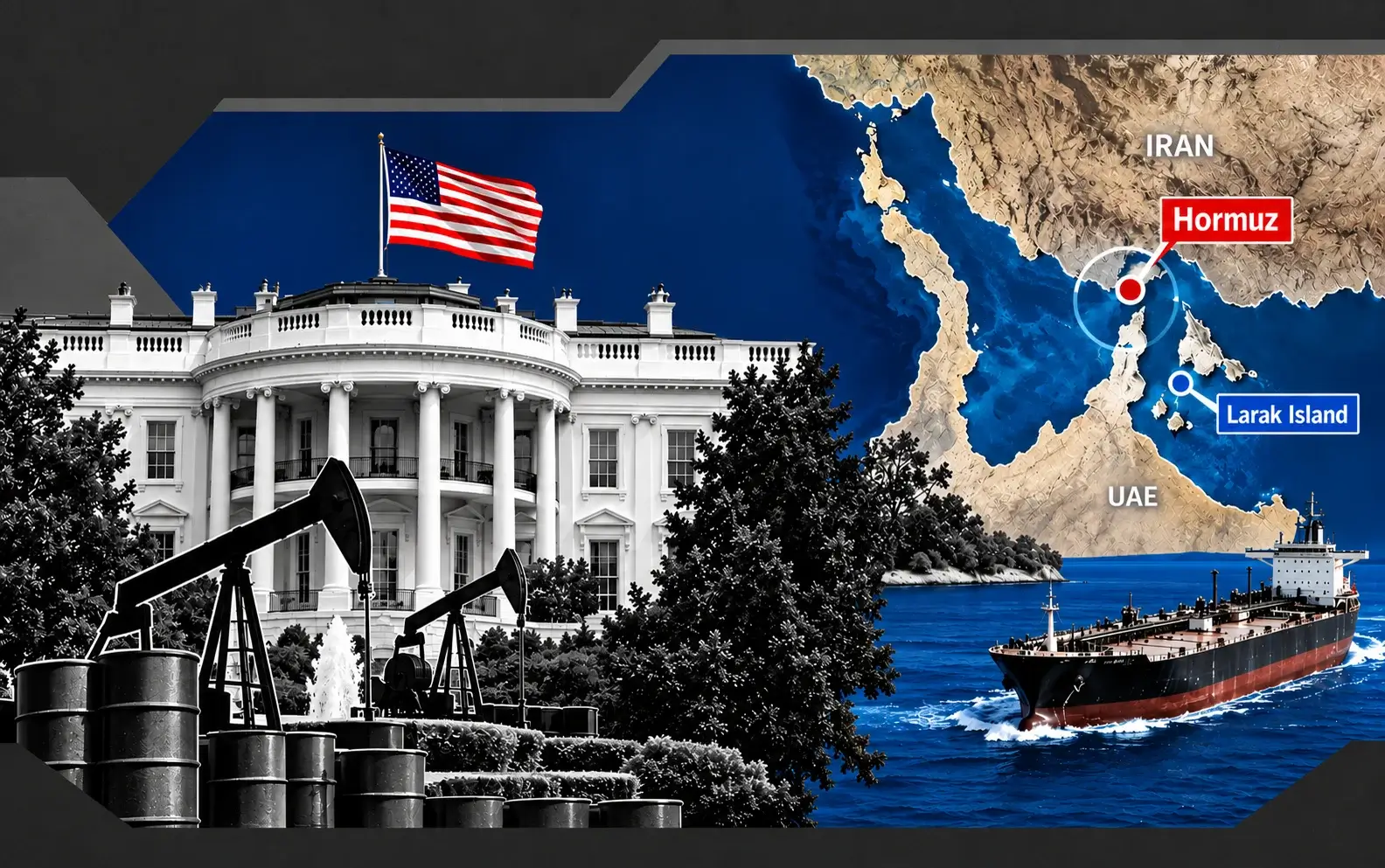
The setup is a standoff between the spot price and the supply reality. On one side, the tape has already priced the ceasefire — crude got smoked from above $114 to the low $80s on the assumption that Hormuz reopens and Persian Gulf oil starts flowing again. On the other side, the strait remains effectively closed, the signing is set for Friday in Switzerland, the deal text hasn't been released, and Iranian and US officials are still publicly disputing the terms. The market is trading a peace that exists on paper but not yet in the shipping lanes.
That gap is the whole forecast. If the deal signs Friday and tankers start moving through Hormuz, the remaining war premium bleeds out and crude pushes toward the $70s. If the signing slips or the terms unravel — and there's a real chance of that given the public disagreement over the text — the supply fear comes roaring back and oil spikes toward $100. At the low $80s, crude sits at the fulcrum of a binary event: a signature Friday that either confirms the de-escalation or exposes a market that priced peace too early. The war premium is mostly priced out. Whether the last of it leaves or comes flooding back depends on a piece of paper nobody has read.
From $114 to $80 — The War Premium Bleeds Out
To grasp where crude sits, trace the round trip. The conflict began on February 28, when US and Israeli forces launched strikes against Iran, and oil immediately repriced for a supply shock. Brent surged above $114 per barrel in March and WTI crossed $100 as the near-closure of the Strait of Hormuz — the chokepoint handling roughly a fifth of global oil shipments — stoked genuine fear of a 1970s-style energy crisis. The International Energy Agency compared the moment to the two oil shocks of that decade hitting at once. At the peak, both benchmarks were up more than 45% from their pre-conflict levels, with Brent's gain exceeding 50% at the worst of the panic.
Then the war premium started bleeding out as ceasefire talk gathered momentum. May was the turning point and the worst month for crude since the pandemic — Brent plunged nearly 19% and WTI fell 16.5% as the market grew optimistic that a deal would unlock Hormuz. The slide accelerated into June: Brent settled at $87.33 on June 12, then plunged over 4% toward $83 on Monday as the framework firmed, while WTI fell to around $80.96 and briefly traded below $80 for the first time since March. The two benchmarks have now given back roughly 20% from their 2026 peaks.
The math frames the stakes. Brent went from above $114 in March to the low-to-mid $80s in June — a decline of more than 25% from the absolute peak, even as the benchmark still sits above where it traded before the war began. WTI made a similar journey from above $100 to the low $80s. The war premium that inflated prices on supply fear has largely deflated on peace hope, but it hasn't fully cleared — crude remains elevated versus pre-conflict levels because Hormuz is still shut and the deal is still unsigned. The round trip from $114 to $80 is the war premium pricing in and then bleeding out. The question for the forecast is how much premium is left to bleed, and that depends entirely on Friday.
The 60-Day Ceasefire and the Friday Signing
The catalyst behind the collapse is a specific framework with a specific date. President Trump announced that a deal with Iran was complete, and the structure, as described by officials, is a 60-day ceasefire arrangement aimed at halting the conflict and reopening the Strait of Hormuz to commercial traffic. The signing ceremony is set for Friday, June 19, in Switzerland, with Iranian Deputy Foreign Minister Kazem Gharibabadi confirming a deal was reached and that the text would be released following the signing.
The terms, as the US describes them, are substantial. The agreement reportedly reopens Hormuz to commercial traffic, lifts the US naval blockade on Iranian ports, dismantles Iran's nuclear program and removes its enriched uranium, and provides economic incentives if Tehran meets its commitments. Trump declared that oil shipments from the Persian Gulf could soon resume once the deal is signed and that "oil will flow" through the strait. A senior administration official put confidence in signing at 80% to 85%.
The framework is the reason crude collapsed, but the 60-day duration is the tell that this is fragile. A 60-day ceasefire is not a lasting peace — it's a temporary, contested arrangement that buys time rather than resolving the underlying conflict. Even in the best case, it sets up a cliff edge in two months where the deal either gets extended or the conflict can reignite. The market has priced the optimism of the signing without pricing the fragility of the timeline. The deal is real enough to have knocked 20% off crude prices, but it's temporary enough that the supply risk doesn't disappear — it gets deferred. The Friday signing is the near-term catalyst that would confirm the de-escalation and likely push crude lower. The 60-day clock is the medium-term risk that keeps a floor under prices, because everyone knows the ceasefire could be the prelude to the next escalation rather than the end of the war.
The Hormuz Question Is the Whole Trade
Every barrel of the oil forecast routes through the Strait of Hormuz, because the strait is the supply variable that drove the entire move. The chokepoint links the Persian Gulf to global oil markets and handles roughly one-fifth of the world's oil shipments — and its near-closure since late February is what turned a regional conflict into a global energy shock. When a fifth of seaborne crude stops moving, prices don't drift higher, they explode, which is exactly what took Brent above $114.
The critical fact for the forecast is that Hormuz is still effectively closed. The deal promises to reopen it, but the reopening hasn't happened — shipping companies are reportedly holding vessels back from the strait until they see signatures and clarity, which means the physical oil flow has not actually resumed. The market is pricing the expectation of reopening, not the reality of it. That distinction is the source of the gap between the spot price in the low $80s and the supply situation on the water, where the chokepoint remains shut.
The reopening, when it comes, is unlikely to be clean or instant. Even an agreement to reopen Hormuz faces practical obstacles: tanker operators need security guarantees before they route ships through a strait that's been a war zone for months, the insurance and shipping logistics take time to restart, and the trust required for normal traffic doesn't materialize overnight. Some of the effective impact of the closure may have already been blunted by alternative export routes and smuggling, but the headline supply through the strait is what moves the benchmark, and that's still constrained. The Hormuz question is binary for the forecast: if the strait reopens cleanly after Friday's signing, crude has further to fall as the last supply premium clears. If the reopening is delayed, partial, or reversed, the premium snaps back. The strait is the trade. Everything else is detail.
The Gap Between the Price and the Supply Reality
The most important dynamic in crude right now is the disconnect between where prices trade and where supply actually sits. The spot price has fallen to the low $80s on the assumption that Hormuz reopens and Gulf oil floods back into the market. But the supply reality is that the strait is still closed, inventories have been drawn down through months of disruption, and the physical barrels aren't flowing yet. The price is living in the future the deal promises; the supply is stuck in the present the war created.
That gap shows up starkly in the official forecasts. The US Energy Information Administration, in its most recent Short-Term Energy Outlook, assumes the Strait of Hormuz remains effectively closed in the near term and projects that falling oil inventories keep Brent averaging $105 per barrel in June and July. That's more than $20 above where Brent actually trades. The EIA models oil shipments through the strait resuming in the third quarter of 2026, taking several months to ramp toward pre-conflict traffic, with full normalization not expected until early 2027. By that model, the supply constraint should be keeping prices far higher than the deal-driven spot level.
The reconciliation is timing. The EIA's forecast was completed before the latest ceasefire framework firmed up, so it reflects a Hormuz-stays-closed world that the deal would upend. The market, trading in real time, has jumped ahead to price the reopening the EIA hadn't yet incorporated. One of the two is wrong: either the deal signs and oil flows, validating the low-$80s spot price and making the EIA's $105 stale, or the deal slips and Hormuz stays shut, validating the EIA's supply-constrained $105 and exposing the spot price as too low. The gap between the $80s trading and the $105 forecast is the market betting on the deal versus the agency modeling the war. Friday's signing is what closes the gap — in one direction or the other.
The Skeptics: Partial Reopening and Damaged Infrastructure
The bull case for crude — the argument that prices don't keep falling — rests on a chorus of skeptics who doubt the deal delivers a clean supply recovery. Bob Parker, senior advisor at the International Capital Markets Association, expects oil to hold between $90 and $100 for at least the next couple of months until there's greater clarity on any lasting peace, warning of inevitable skepticism toward the negotiations. His view is that even if Hormuz reopens, the reopening will be only partial — and a partial reopening doesn't restore the full fifth of global shipments the strait normally carries.
The infrastructure damage is the harder constraint. Months of war inflicted significant damage on refineries, pipelines, and energy assets across the Gulf — at least 40 energy assets across nine countries were hit since the conflict began. That physical damage doesn't repair itself when a ceasefire gets signed. Even with the strait open, the region's ability to produce and process crude has been degraded, and ongoing security challenges for tanker traffic plus depleted inventories mean the supply recovery is slower and more fragile than a clean reopening would suggest. Saudi Aramco's CEO Amin Nasser warned that the oil market won't normalize until 2027 if the strait stays blocked beyond mid-June.
That skepticism is why crude hasn't collapsed to the $60s already. The market has priced the optimism of a deal but is hedging against the reality that the supply recovery will be messy. If Parker is right and oil holds $90-100 until clarity emerges, the current low-$80s level is actually too low and crude bounces. If the deal delivers a faster, cleaner reopening than the skeptics expect, prices fall further. The skeptics provide the floor under crude — the reasons prices shouldn't keep falling are the damaged infrastructure, the partial reopening, the depleted inventories, and the 2027 normalization timeline. The bears counter that demand has already cratered and supply is coming back regardless. The skeptics' case is the strongest argument that the low $80s holds rather than breaks lower.
The Iranian Pushback and the Unsigned Text
The single biggest risk to the deal-driven price collapse is that the deal itself is still contested, and the public disagreement over the terms is a warning the market is partly ignoring. While the US describes a framework where Iran reopens Hormuz, dismantles its nuclear program, and accepts the lifting of the blockade, Iranian media published a draft proposal with markedly different terms — claiming the US would withdraw its forces from around Iran, lift the naval blockade in 30 days, and provide $300 billion in reconstruction money, with Iran reopening Hormuz in 30 days but under arrangements set by Tehran rather than Washington.
Trump categorically denied that the Iranian text represented the actual agreement, posting that the terms Iran leaked "have NOTHING to do with the terms that were agreed to, in writing." A Trump official suggested Iranian hardliners were trying to make the deal look more favorable to Tehran to satisfy domestic constituencies. Iran's Foreign Minister Seyed Abbas Araghchi struck a more constructive note, saying a memorandum of understanding "has never been closer." But the public dispute over what was actually agreed — with the two sides describing fundamentally different deals — is exactly the kind of friction that derails signings.
The unsigned text is the live risk. A senior administration official put confidence at 80% to 85% that the agreement gets signed, which sounds high until you flip it: there's a 15% to 20% chance the signing fails. For a market that has priced crude down 20% on the assumption the deal closes, a failure to sign Friday would be a violent repricing higher. The conflicting accounts of the terms, the leaked-versus-real-text dispute, and the 60-day temporary nature of the framework all point to an arrangement that's more fragile than the spot price implies. The market is treating the Friday signing as a near-certainty. The public disagreement over the terms says it's anything but. If the ceremony happens and the text confirms Hormuz reopens, crude falls. If it slips or the terms unravel, the war premium that bled out comes flooding back. The unsigned text is the binary the whole forecast hangs on.
EIA Sees $105 — But That Was Before the Deal
The EIA's Short-Term Energy Outlook deserves a closer look, because it frames how far the spot price has run ahead of the official supply model. The agency's forecast, completed June 4, assumes the Strait of Hormuz remains effectively closed in the near term and projects Brent averaging $105 per barrel across June and July on the back of falling inventories and constrained supply. That's a supply-shock forecast — it models a world where the war premium stays intact because the oil isn't flowing.
The EIA's supply assumptions are detailed and bearish on near-term availability. It assumes shipments through the strait resume in the third quarter of 2026 but take several months to ramp toward pre-conflict traffic, with full normalization not expected until early 2027, and it expects some Middle East production to stay disrupted even beyond the forecast window. That's a multi-quarter supply constraint that, if it held, would keep Brent well above the low-$80s level where it actually trades.
The disconnect is timing, and it cuts to the heart of the forecast. The EIA's $105 forecast and its Hormuz-stays-closed assumption predate the firming of the ceasefire framework and the Friday signing. The market has jumped ahead, pricing the reopening the EIA hadn't incorporated, which is why spot crude sits more than $20 below the agency's projection. The next STEO, due July 7, will incorporate the deal and almost certainly revise the Brent forecast lower if the signing holds. The EIA's $105 isn't wrong — it's a snapshot of a war-premium world that the deal is trying to dismantle. The spot price at $80-84 is the market betting the deal succeeds. If it does, the EIA forecast gets cut. If it doesn't, the spot price converges back up toward $105. The two numbers can't both be right, and Friday's signing is the referee. The gap between $84 and $105 is the cleanest measure of how much the market is betting on peace.
Demand Destruction: The Quiet Bear Case
Underneath the supply drama sits a quieter but powerful bearish force: demand has already been destroyed by months of high prices, and that's a structural drag that persists even if the deal succeeds. The EIA now forecasts that global oil demand will decrease by 1.1 million barrels per day over the course of 2026 — a stunning reversal from its May projection of a 0.2-million-barrel-per-day increase and its February forecast of 1.2-million-barrel-per-day growth. Months of crude above $100 did exactly what high prices do: they killed consumption.
The demand destruction is the bear case the supply bulls underweight. When oil traded above $114 and gasoline prices spiked, consumers and businesses cut back — driving less, deferring purchases, switching where they could. That demand doesn't snap back instantly when prices fall; it takes time to recover, and the EIA models the rebound coming in 2027 with demand growing 2.5 million barrels per day to 105.3 million as supply normalizes. For 2026, though, the world is consuming less oil than it did in 2025, and weaker Chinese demand adds to the drag. A market with shrinking demand needs less supply to balance, which is bearish for price.
That demand picture is why crude could keep falling even if the supply recovery is slower than hoped. The bull case rests on Hormuz staying constrained and supply being tight. The bear case rests on demand having already cratered, so that even a partial supply recovery meets a market that needs fewer barrels. If the deal signs and Gulf oil starts flowing back into a world consuming 1.1 million fewer barrels per day, the combination of returning supply and destroyed demand is a recipe for prices well below the low $80s. The demand destruction is the structural reason the long-term forecast tilts bearish once the geopolitical premium clears. The war inflated prices on supply fear; the high prices then gutted demand; and the demand hole is what could drive crude lower once the supply fear fully unwinds. It's the quiet bear case hiding behind the loud Hormuz headlines.
OPEC+, Venezuela and the Supply Wildcards
Beyond Hormuz, the supply side carries wildcards that lean bearish for crude over time. OPEC+ has been considering a potential output increase, and any decision to add barrels into a market that's already pricing the end of the war would accelerate the downside. The producer group sat on the sidelines during the worst of the conflict, but with prices having fallen 20% and demand softening, the calculus around defending market share versus defending price shifts. Additional OPEC+ supply hitting a demand-constrained market is a bearish overhang.
Venezuela is the quieter supply story. The country's oil sector is recovering rapidly as US restrictions ease, international companies return, and exports reach their highest levels in years. That's incremental non-OPEC supply coming back online at exactly the moment the Iran deal threatens to unlock Gulf barrels and demand is shrinking. Every additional source of supply — Venezuela ramping, OPEC+ potentially adding, Hormuz reopening — points the same direction for price, and that direction is down.
The supply wildcards reinforce the structural bear case that competes with the geopolitical bull case. On the bullish side: Hormuz still shut, infrastructure damaged, inventories depleted, the deal contested. On the bearish side: demand destroyed by 1.1 million barrels per day, Venezuela recovering, OPEC+ weighing output hikes, and the prospect of Gulf supply returning. The near-term price is dominated by the Hormuz binary, but the medium-term trajectory is shaped by the supply-demand balance, and that balance is loosening. If the war premium clears and the market has to price fundamentals, the combination of weak demand and returning supply argues for crude settling lower than current levels. The OPEC+ and Venezuela supply additions are the barrels that would push prices toward the $70s once the geopolitical fear is gone. They're the patient bearish force underneath the volatile geopolitical headlines.
Read More
-
Yen Stalls at 160 Despite a 3% JGB and Tokyo Core CPI at 2.0% — Intervention Sits at 164, Friday's Payrolls Decide
02.09.2026 · TradingNEWS ArchiveEnergy
-
CHAT Fund Holds $96.37 as Korean Memory and Chip Exposure Drive a 109.73% Year — Break of $98.02 Opens $105.20
18.09.2026 · TradingNEWS ArchiveStocks
-
First-Generation XRPR and XRPI Ride XRP's Rebound to $1.386 as Spot Funds Post First Outflow — Break of $1.40 Opens $1.54
18.09.2026 · TradingNEWS ArchiveCrypto
-
NG Holds $2.9255 as Storage Surplus Narrows From 5.5% to 3.7% in 3 Weeks — Break of $3.00 Opens $3.15
18.09.2026 · TradingNEWS ArchiveCommodities
-
Dollar Surges to 157.90 as BoJ's Divided Hike Fails to Lift the Yen — Break of 158.87 Opens 159
18.09.2026 · TradingNEWS ArchiveForex
The Technical Map: $70s on the Downside, $100 on a Collapse
The price structure frames the range the fundamentals are fighting over. On the downside, the two-month lows in the low $80s for WTI and the low-to-mid $80s for Brent are the immediate support, and a clean break below — triggered by a successful Friday signing and Hormuz reopening — would open the path toward the $70s as the last of the war premium clears. The $70-$75 zone is where the market would likely settle if the deal delivers a clean supply recovery into a demand-constrained world, roughly back toward the pre-conflict trading range adjusted for the demand destruction.
On the upside, the levels are defined by the war-scare highs. If the deal collapses or the signing slips, crude reprices the supply fear, and the first target is the $90-$100 zone that Parker and other skeptics see as the near-term range until clarity emerges. Above that, a genuine re-escalation — Iran walking away, Hormuz staying militarily contested — would put the March highs above $100 for WTI and above $114 for Brent back in play, though that's the tail scenario rather than the base case.
The technical posture matches the binary nature of the catalyst. Crude is sitting at two-month lows in the low $80s, coiled below resistance and above the $70s support, waiting on Friday's signing to pick the direction. There's no orderly trend here — there's a market pinned at a level that reflects a deal-priced-but-not-confirmed reality, set to break hard one way or the other depending on whether the signature happens and the strait reopens. Hold the low $80s and a clean deal sends crude toward the $70s. Lose the deal and crude snaps back toward $90-$100. The range from $70 to $100 is unusually wide for a near-term forecast, and that width is the direct expression of the binary risk. The chart isn't trending; it's waiting for a signature.
What the Fed and the Dollar Do to Crude
Oil doesn't trade in a macro vacuum, and two forces beyond the Iran deal shape the demand side of the equation. The first is the dollar. Crude is priced in dollars, so a stronger greenback makes oil more expensive for buyers in other currencies and weighs on demand and price, while a weaker dollar supports crude. With the dollar index firming near 99.75 ahead of the Federal Reserve decision, the currency is a modest headwind for oil — a firm dollar adds to the bearish pressure from the demand destruction and the supply wildcards.
The second force is the Fed itself, and the connection runs through the inflation-and-growth channel. The FOMC decision Wednesday and Chair Warsh's first press conference matter for crude because they shape the demand outlook. A hawkish Fed that signals tighter policy to fight the 4.2% inflation would weigh on global growth expectations, which is bearish for oil demand. A more balanced message that acknowledges the oil collapse is easing inflation would be supportive of growth and, indirectly, of crude demand. The relationship is circular and tight: cheaper oil cools inflation, which lets the Fed ease, which supports growth, which lifts oil demand.
The macro backdrop adds a layer of demand uncertainty on top of the supply drama. If the Fed leans hawkish and the dollar firms, the demand side of the oil equation weakens further, reinforcing the bearish case. If the Fed signals that the energy-driven inflation relief gives it room to be patient, the growth-and-demand outlook improves at the margin. But the macro forces are second-order to the Hormuz binary — the Fed and the dollar shape the demand backdrop over months, while the Friday signing determines the supply picture in days. Crude's near-term move is a supply story driven by the deal; its medium-term trajectory is a demand story shaped by the Fed, the dollar, and global growth. Both point to a market where the geopolitical premium clearing exposes a fundamentally looser balance. The Fed matters for the demand floor. Friday matters for the supply cliff.
The Forecasts: $70 to $105 and the Hormuz Binary
The forecast dispersion captures the binary at the heart of the trade. The bearish-crude case sees prices falling toward the $70s as the deal signs, Hormuz reopens, and the market prices a fundamentally loose balance — demand down 1.1 million barrels per day, Venezuela recovering, OPEC+ potentially adding supply, and the war premium fully cleared. In this scenario, the low-$80s level is a waypoint on the way down, and crude settles back toward pre-conflict levels adjusted for the demand hole.
The supply-constrained case, anchored by the EIA, sees Brent holding around $105 in June and July on the assumption that Hormuz stays effectively closed and inventories keep falling. Goldman Sachs raised its 2026 Brent forecast to $85 earlier in the conflict, citing prolonged disruption. The skeptics like Parker see oil holding $90-$100 until there's clarity on a lasting peace, with the reopening likely partial and the infrastructure damage constraining the recovery. These forecasts cluster well above the current spot price because they model a slower, messier supply recovery than the market is pricing.
The gap between the $70 bearish case and the $105 supply-constrained case is the Hormuz binary expressed in dollars. If the strait reopens cleanly after Friday, the bears win and crude grinds toward the $70s as demand destruction and returning supply dominate. If the reopening is delayed, partial, or reversed — or the signing fails — the supply-constrained forecasts win and crude bounces toward $90-$105. The dispersion isn't analysts disagreeing on the fundamentals; it's the full range of outcomes between a successful deal and a failed one. The market at the low $80s sits closer to the bearish end, reflecting its bet that the deal closes. The forecasts above $90 reflect the supply reality that persists until Hormuz actually reopens. The binary is the trade, and the signature is the trigger.
The Forecast: A Coin Flip on a Signature
The forecast resolves into three scenarios, all gated by Friday's signing and the Hormuz reopening. The bearish-crude case: the deal signs cleanly Friday in Switzerland, the text confirms Hormuz reopens, and tankers start moving through the strait. The last of the war premium bleeds out, and crude breaks the low-$80s support toward the $70s as the demand destruction of 1.1 million barrels per day, the Venezuela recovery, and potential OPEC+ supply additions dominate a market no longer pricing supply fear. WTI toward $72-$75, Brent toward $76-$80, with the EIA's next outlook revising sharply lower. This is the scenario the spot price is leaning toward.
The base case: the deal signs but the supply recovery proves slow and partial, as the skeptics expect. Hormuz reopens on paper but tanker traffic ramps gradually amid security concerns, the damaged Gulf infrastructure constrains output, and depleted inventories keep a floor under prices. Crude holds the low-$80s to low-$90s range that Parker and the EIA-style supply models support, chopping as the market reconciles the deal optimism with the messy reality of restarting a war-disrupted supply chain. This is the most probable path given the infrastructure damage and the 60-day temporary nature of the ceasefire.
The bullish-crude case: the signing slips or the terms unravel on the public dispute over what was actually agreed. The 15-20% chance the deal fails materializes, Hormuz stays militarily contested, and the war premium that bled out comes flooding back. Crude snaps higher toward $90-$100, with a genuine re-escalation putting the March highs above $100 for WTI and above $114 for Brent back in play. The verdict: oil at the low $80s is a market that has priced a peace deal nobody has read, sitting more than $20 below the EIA's supply-constrained forecast, with the entire move hostage to a signature on Friday. The demand destruction and returning supply argue for lower prices over time; the unsigned text, the damaged infrastructure, and the still-closed strait argue against a clean collapse. It's a coin flip on a signature. A clean deal sends crude toward the $70s. A failed signing sends it toward $100. Hold the low $80s through Friday and the base-case range holds. The war premium is mostly priced out — the last of it leaves or returns on Friday, June 19.