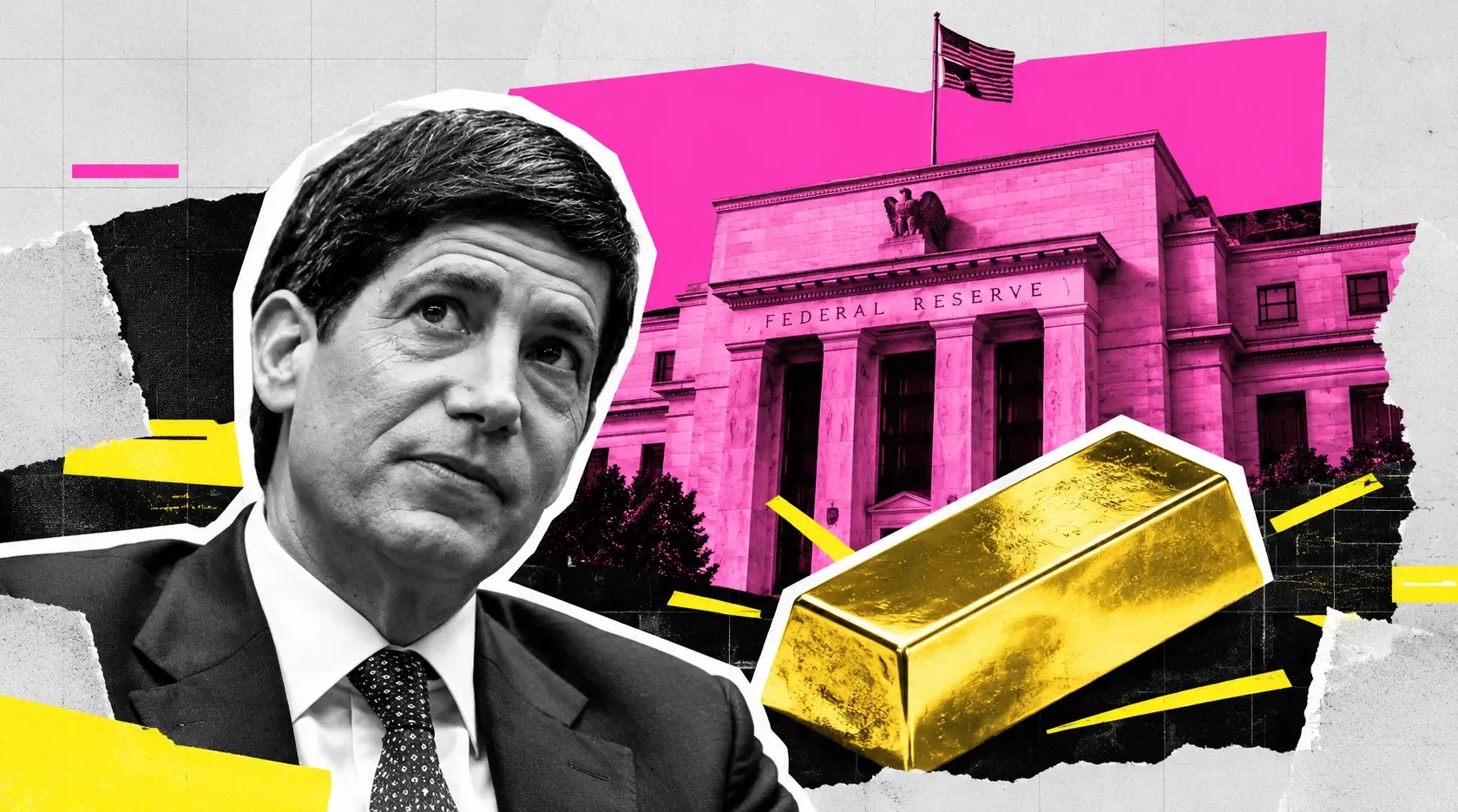
Gold (XAU/USD) Hovers at $4,565 Below the $4,600 Wall — Buy, Sell, or Hold?
Yields at 4.41% throttle bullion's upside as WGC demand hits record $193B | That's TradingNEWS
Key Points
- Gold (XAU/USD) trades at $4,565/oz, a $1 gain from yesterday's $4,564 and 32.82% above the $3,437 level from one year ago.
- Bullion sits 2.29% below last month's $4,672 as the metal struggles to flip $4,600 from resistance into support.
- US 10-year yield at 4.41% continues to cap the safe-haven bid, raising the opportunity cost of holding non-yielding metal.
Spot bullion is changing hands near $4,565 per ounce in the New York morning, posting a fractional $1 gain from yesterday's $4,564 close and stretching the year-over-year advance to a remarkable 32.82% from $3,437 twelve months ago. The metal sits roughly 2.29% lower than where it traded a month ago at $4,672, which captures the entire tension of this market in a single statistic — the long-term trend is unmistakably bullish, but the short-term momentum is being throttled by a US Treasury complex that refuses to give the precious metals room to breathe. XAU/USD continues to trade just shy of the psychologically loaded $4,600 mark on a turnaround Tuesday, recovering part of the recent leg lower without yet establishing the kind of fundamental tailwind that would sustain a clean break higher. The bounce is real. The conviction underneath it is not.
The $4,600 Battle Defines the Entire Setup
Resistance at $4,600 has emerged as the decisive psychological and technical line on the daily chart, and bullion's repeated failure to flip it from ceiling to floor is the single most important data point for anyone trading XAU/USD right now. Monday's session saw a meaningful break beneath that threshold before buyers stepped in, and Tuesday's recovery is testing the same level from underneath rather than building from above it. Round numbers carry weight in this market because of how much speculative and hedging flow gets layered around them through options markets and algorithmic execution engines. Until gold prints a daily close above $4,600 with conviction, the path of least resistance remains capped, and every bounce from here remains tactical rather than structural.
The 10-Year Yield Is the Primary Headwind
Treasury yields are doing the heavy lifting on the bearish side of this trade. The US 10-year sits near 4.41%, and that single figure explains far more about XAU/USD's recent struggle than any headline coming out of the Strait of Hormuz. Bullion is a non-yielding asset by design. Every basis point the long end of the US curve climbs raises the opportunity cost of holding metal versus a Treasury paying out 4.4% annually for a decade. The bond market is broadcasting that the Federal Reserve will stay tighter for longer because of the persistent inflationary pressure flowing through the energy complex, and that posture is mechanically punishing for gold. The historical playbook here is unambiguous: when the 10-year yield falls, bullion rallies; when yields rise, gold struggles regardless of how alarming the geopolitical backdrop appears. The current setup is the latter.
The Fed Stance and the Rate-Cut Math
CME Group data is delivering a sobering message for the gold bulls who had been pricing in aggressive easing. The probability of a rate cut to the 3.25–3.50% range at the June meeting sits at just 5.1%, with 94.9% of market participants now expecting the Fed to hold steady at 3.50–3.75%. That is a near-unanimous market consensus that policy stays restrictive into the summer, and it remains the most important variable capping near-term upside. The committee left rates unchanged at the most recent meeting as expected, but four policymakers dissented — a notable widening of the internal divide as the Iran conflict complicates the inflation outlook and forces members to weigh growth risk against price stability. Some traders have even begun pricing in the tail probability of rate hikes by 2027, which represents a complete inversion of the easing narrative that drove gold to record highs earlier this year.
The Geopolitical Bid Is Real, Just Not Strong Enough
The unresolved Middle East crisis and the near-total closure of the Strait of Hormuz continue to underpin the strategic case for bullion, and the safe-haven flow has not vanished. US military officials are reportedly preparing to brief President Trump on potential operations against Iran, with the administration declaring the naval blockade will remain in place until a nuclear agreement is reached. That is precisely the kind of headline that historically would push XAU/USD ripping through resistance. Yet bullion is barely holding $4,565 — a clear sign that the rate-driven headwind is currently overwhelming the geopolitical premium. Holders keep asking the same question: why isn't gold rallying in a state of war? The answer is the carry trade. With Treasuries paying north of 4.4% annually, the storage cost and yield drag on physical metal offsets the premium that conflict would normally inject into the price. This is not a failure of gold as a haven asset. It is a market where two powerful forces are pulling in opposite directions, and the bond market is currently winning the tug of war.
The 4-Hour Technical Picture Leans Lower
The shorter-term structure is flashing warning signals worth respecting. The 4-hour chart is showing a Falling Three Methods candlestick pattern within the $4,509.74–$4,541.38 range, which is a textbook continuation signal suggesting this consolidation is a pause before another leg lower rather than the bottom of the move. The MACD is moving sideways in negative territory near the zero line, signaling momentum exhaustion rather than a constructive turn. The RSI has ticked up off its lows and is hovering near 38, which leaves the door open for a bounce but does not yet confirm one. The MFI has turned higher off its lower boundary, which is a tentative sign of capital inflow worth monitoring but not yet a buy signal in isolation. Both the VWAP and the SMA20 sit above the current market price, which means short-term moving average pressure is bearish. The technical posture aligns cleanly with the fundamental read — bullion can bounce here, but the structural setup is not yet primed for a clean breakout.
The Levels Worth Trading Around
Mapping the support stack on a break beneath $4,509.74 puts the next logical magnets at $4,441.34, $4,376.04, $4,313.67, $4,254.97, $4,202.40, $4,157.41, $4,114.01, $4,059.90, and $4,005.79. Mapping the resistance stack on a clean reclaim above $4,576.74 puts the upside magnets at $4,645.91, $4,701.55, $4,760.74, $4,821.84, $4,881.57, $4,937.88, $4,996.26, and $5,052.87. The $4,541.38 level is the pivot defining the entire current range — losing it on volume confirms the short-side trade, while reclaiming and holding above $4,576.74 confirms the long-side trade. Trading the middle of this band is a coin flip; the asymmetric setups live at the extremes.
Tomorrow's Forecast Window: $4,376–$4,698
The May 6 trading window points to a daily low of $4,376.04, a daily high of $4,698.44, and an average price near $4,537.24. That projected range is wide — over $322 of intraday potential — and it captures the volatility traders should be sized appropriately for. The downside projection toward $4,376 aligns with the secondary horizontal support layer, while the upside print toward $4,698 would require a clean close back above $4,600 first. Either outcome remains on the table; the bias from the technical structure leans toward the lower half of the range unless yields provide relief.
The Weekly Forecast: $4,441–$4,995 With a $4,718 Average
Looking out across May 4 to May 10, the weekly window projects a low of $4,441.34, a high of $4,995.44, and a midpoint around $4,718.39. That implied range exceeds $554 of weekly volatility, which is enormous and reflects the sheer number of macro catalysts hitting the tape this week. The April Services PMI and JOLTS openings landed today, ADP employment change posts on May 6, initial jobless claims hit on May 7, and Nonfarm Payrolls plus the unemployment rate plus the University of Michigan inflation expectations all stack onto May 8. Any one of those releases can swing the dollar and the yield curve hard enough to break gold out of the current consolidation in either direction. The CPI release on May 12 and the PPI on May 13 then resets the entire framework heading into the back half of the month.
The Monthly Forecast: $4,380–$5,100 With a $4,740 Mean
The full month of May 2026 is projected to range between $4,380.00 and $5,100.00, with an average price expectation around $4,740.00. The starting point near $5,041.00 implies that the recent pullback to current levels around $4,565 has already absorbed roughly $476 of downside, which positions the market closer to the lower half of the projected monthly range than the upper half. That asymmetry is constructive for tactical accumulation strategies focused on dip-buying rather than breakout-chasing. Longer-term forecasters are calling for a $5,400–$6,000 range by year-end, with the bullish thesis anchored on continued geopolitical pressure and the relentless central bank reserve accumulation theme.
World Gold Council Demand Numbers Are Quietly Bullish
The first-quarter data from the World Gold Council should be required reading for anyone short bullion without a clearly defined thesis. Total demand including OTC investment climbed 2% year-over-year to a record 1,230.9 tonnes. The combination of modest volume growth and exceptional price appreciation pushed quarterly demand value up 74% to a record $193 billion. Bar and coin demand alone hit 474 tonnes, up 42% year-over-year and the second-highest quarterly figure ever recorded, driven primarily by Asian buyers loading aggressively into the rally. ETF inflows added 62 tonnes during the quarter — a positive number, though significantly below the exceptionally strong 230 tonnes registered in the first quarter of 2025, with March US fund outflows accounting for the deceleration. Total demand did decline 6% on a quarterly basis, reflecting genuine volatility through the first three months of the year, but the year-over-year picture remains structurally bullish.
Central Bank Buying Is the Quiet Floor Underneath the Market
Central banks made net purchases of 244 tonnes of gold in the first quarter, up 3% year-over-year. The slightly elevated sales activity within the quarter is worth flagging as a counter-data point — not every official institution is on the buy side anymore — but the net flow remains decisively positive. The Bank of France's recent move of selling its 129-tonne US gold reserve and repurchasing the equivalent in Europe at a $15 billion profit is exactly the kind of reserve-management signal worth respecting. Central banks are not just accumulating; they are repatriating and rotating. China bought 5 tonnes in March while Turkey monetized 118 tonnes — a push-and-pull dynamic that reflects the bifurcated official-sector demand picture. The structural argument that bullion is becoming a primary alternative to the US dollar in reserve portfolios is no longer speculation; it is a multi-quarter trend with measurable flow data behind it.
Jewelry Demand Is the Casualty of the Rally
Record-high prices at the start of the quarter dragged global jewelry demand down 23% year-over-year to 335 tonnes. That is the price-elasticity story playing out in real time — when bullion screams to the moon, the consumer-facing demand category gets squeezed because end-buyers simply cannot absorb the cost increase at the retail level. Jewelry weakness is not a bullish signal, but it is also not a meaningful contradiction to the broader bid because investment demand has more than offset the consumer pullback. The composition of demand has shifted from consumption to financial allocation, which is precisely what happens during late-stage commodity bull markets.
The Local Currency Read From the Philippines
For anyone tracking how gold's strength translates across currency frameworks, the Philippine peso pricing is illustrative. Bullion in the Philippines climbed to 8,987.41 PHP per gram on Tuesday, up from 8,965.69 PHP the day before. Per tola, the price advanced to 104,827.00 PHP from 104,574.10 PHP. Per troy ounce, the local quote is now 279,539.90 PHP. The figure for ten grams sits at 89,873.80 PHP. Local pricing reflects both the underlying USD move and the currency translation, and the consistent year-over-year strength across non-USD denominations reinforces that this rally is not just a dollar-weakness story — it is a global store-of-value bid playing out against essentially every fiat alternative.
Read More
-
Yen Stalls at 160 Despite a 3% JGB and Tokyo Core CPI at 2.0% — Intervention Sits at 164, Friday's Payrolls Decide
02.09.2026 · TradingNEWS ArchiveEnergy
-
QQQ ETF ($706.22) Slides 7.4% Below Its High as the Market Reprices the AI Capex Bill — $686.57 Target if $700 Breaks
22.10.2026 · TradingNEWS ArchiveStocks
-
XRPI ($7.00) and XRPR ($10.74) Slide Toward 52-Week Lows as Spot XRP ETF Flows Stall at $708,510
22.10.2026 · TradingNEWS ArchiveCrypto
-
NG ($2.775) Decoupled From Europe’s €88 Gas Crisis as LNG Feedgas Hits 18.9 Bcf/d — $3.30 Upside on Cold Weather
22.10.2026 · TradingNEWS ArchiveCommodities
-
Dollar-Yen (157.35) Loses 157.65 as the Yen Rallies on Haven Demand — 155 Target if 156 Breaks
22.10.2026 · TradingNEWS ArchiveForex
The Cross-Asset Picture: Silver, Platinum, Palladium
Silver is trading at $73 per ounce, platinum at $1,981, and palladium at $1,509 in the most recent reads. That puts the gold-to-silver ratio at roughly 62.5 — historically wide but not at the extremes that would scream rotation. Silver typically moves with higher beta to gold during bullish phases because of its industrial demand component, which means a clean XAU/USD breakout above $4,600 would likely produce outsized silver upside. Platinum and palladium are tracking similar volatility patterns to silver and offer diversification optionality, but they remain considerably less liquid and more volatile than the bullion complex. A diversified precious metals allocation in this environment would lean roughly 70% gold, 20% silver, with the remainder split between platinum and palladium for traders wanting full sector exposure.
The Long-Term Performance Frame
Equities have averaged 10.7% annual returns from 1971 to 2024, while gold has averaged 7.9% over the same window. That is the honest historical statistic that should temper anyone treating bullion as a substitute for equity exposure rather than a complement to it. Gold's role is not to outperform the S&P 500 over multi-decade horizons; it is to provide a non-correlated store of value during regime changes and inflationary shocks. The 32.82% year-over-year gain XAU/USD has just printed is exactly the kind of regime-change move that justifies the strategic allocation, but it does not change the longer-term return math. Position sizing matters; conviction without context is how gold trades get marked at the wrong levels.
The Trade Plan: Two Specific Scenarios
The base case scenario for short-side traders triggers on increased volume below $4,509.74, with downside targets at $4,441.34, $4,376.04, $4,313.67, $4,254.97, $4,202.40, $4,157.41, $4,114.01, $4,059.90, and $4,005.79. The protective stop sits at $4,541.38. The alternative long scenario triggers on increased volume above $4,576.74, with upside targets at $4,645.91, $4,701.55, $4,760.74, $4,821.84, $4,881.57, $4,937.88, $4,996.26, and $5,052.87. The protective stop sits at the same $4,541.38 pivot. That symmetry around $4,541 is exactly why this is the price defining the trade — getting the direction wrong from this pivot is the most expensive mistake on the board, and getting it right is where the asymmetric reward lives.
The Honest Bull Case
The reasons to lean strategically bullish on XAU/USD over a multi-quarter horizon remain intact and arguably strengthening. Central bank diversification away from US dollar reserves continues to accelerate. The BRICS+ demand story has moved from prediction to observable trend, with serious sell-side commentary now calling for $6,000-plus targets on multi-year horizons. Geopolitical risk premium is structurally elevated rather than transitory. The fiscal trajectory of major sovereigns — the US foremost among them — argues for continued debasement-trade flow into hard assets. None of those forces dissipate because the 10-year yield happens to be 4.41% this week. The strategic case has not changed; the tactical setup has simply gotten more difficult, and the next clean catalyst for a structural break higher is most likely a meaningful drop in real yields rather than another headline from the Strait of Hormuz.
The Honest Bear Case
The bear case deserves equal respect. Bullion has just absorbed an enormous run, and momentum exhaustion is a real risk after a 32%-plus year-over-year move. Speculative positioning data has been crowded for months. The Fed's "tighter for longer" stance is mechanically punishing, and any further upside surprise on inflation or downside surprise on labor weakness would exacerbate the rate-induced headwind. ETF flows have already decelerated meaningfully from the 2025 peak. Jewelry demand is collapsing under the weight of price elasticity. If the Middle East situation produces an actual de-escalation rather than further escalation, the safe-haven premium gets unwound aggressively, and XAU/USD could trade back toward the $4,200–$4,000 area without any structural breakdown in the underlying bullish thesis. The bears do not need the long-term story to be wrong; they only need the next quarter to disappoint, and the conditions for that disappointment are arguably already in place.
Positioning Stance: Hold With Tactical Bias Lower, Strategic Bias Higher
Pulling the entire mosaic together, the honest read on XAU/USD is a hold rather than a buy or a sell. The strategic posture remains constructive — central bank accumulation, structural demand growth, debasement-trade flow, and unresolved geopolitical risk all argue for higher prices over a 12-month horizon. The tactical posture leans cautious — yield-driven headwinds, restrictive Fed policy, momentum exhaustion, and bearish 4-hour technicals all argue for lower prices over a near-term horizon. Buying aggressively into the current level is fighting the rate complex; selling aggressively is fighting the structural bid. The disciplined approach is to wait for either a clean reclaim of $4,576.74 with volume confirmation or a flush below $4,509.74 with momentum follow-through. Either confirmed move generates an asymmetric setup. Trading the middle of the current range is donating capital to algorithms. The market has not yet decided which direction it wants to run, and the smart positioning is to let it tell you rather than to guess. The next week's macro data will likely make the choice for everyone, and the trade is to be ready for whichever outcome the tape delivers rather than committed to one before the price action confirms.