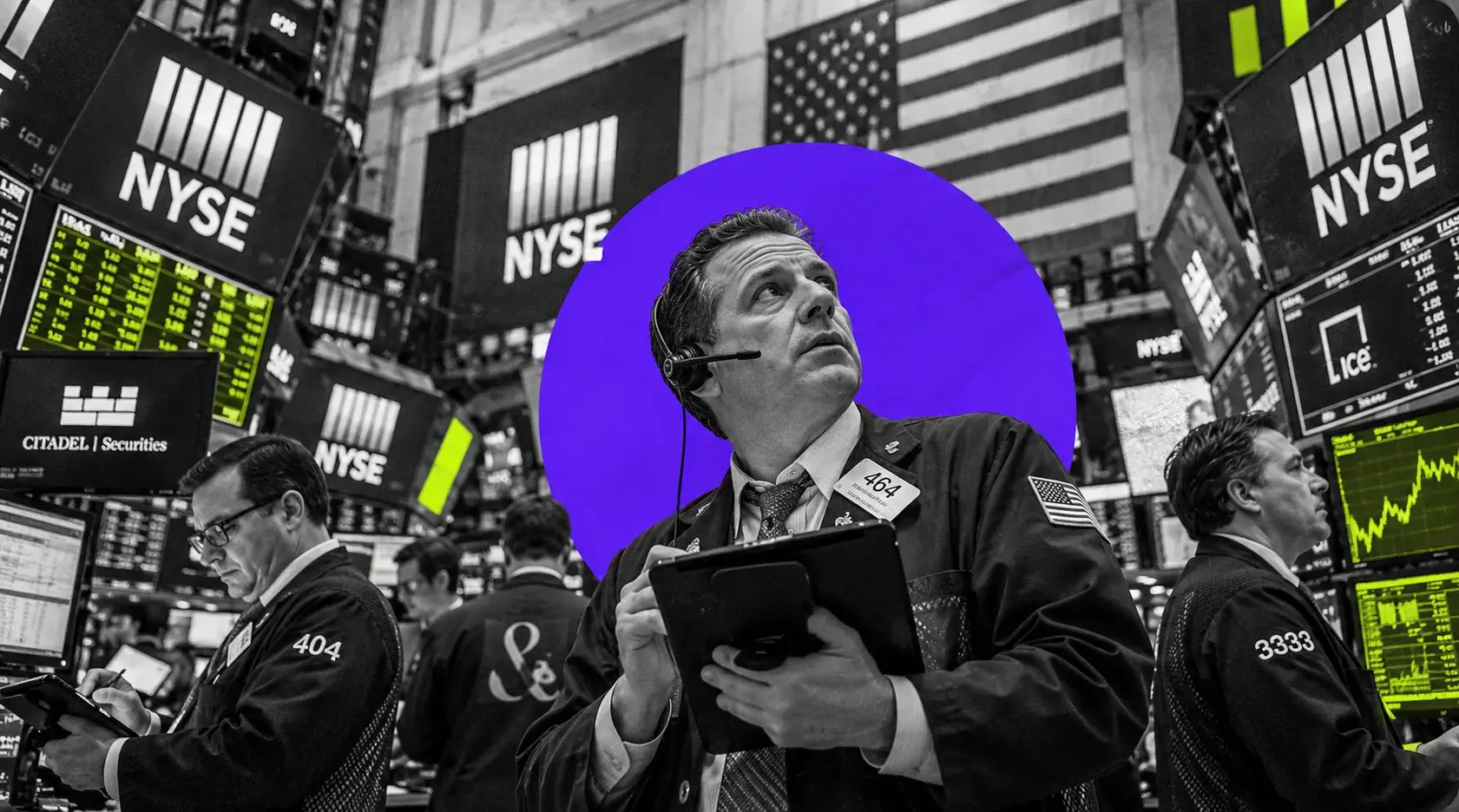
Nasdaq Drops 290 Points, S&P 500 Loses 0.54%, Dow Holds 51,772 as META Rallies 2.9%
Services PMI at 58.7 against a 56.0 forecast lifted the 2-year yield to 4.874% and pushed mortgage rates to 7.12% | That's TradingNEWS
Key Points
- 10-year Treasury yield hit 5.058%, its highest level since July 2007, after a 58.4 composite PMI.
- Paychex fell 6.57% to $107.00 as it held fiscal 2027 revenue growth guidance at 5% to 6%.
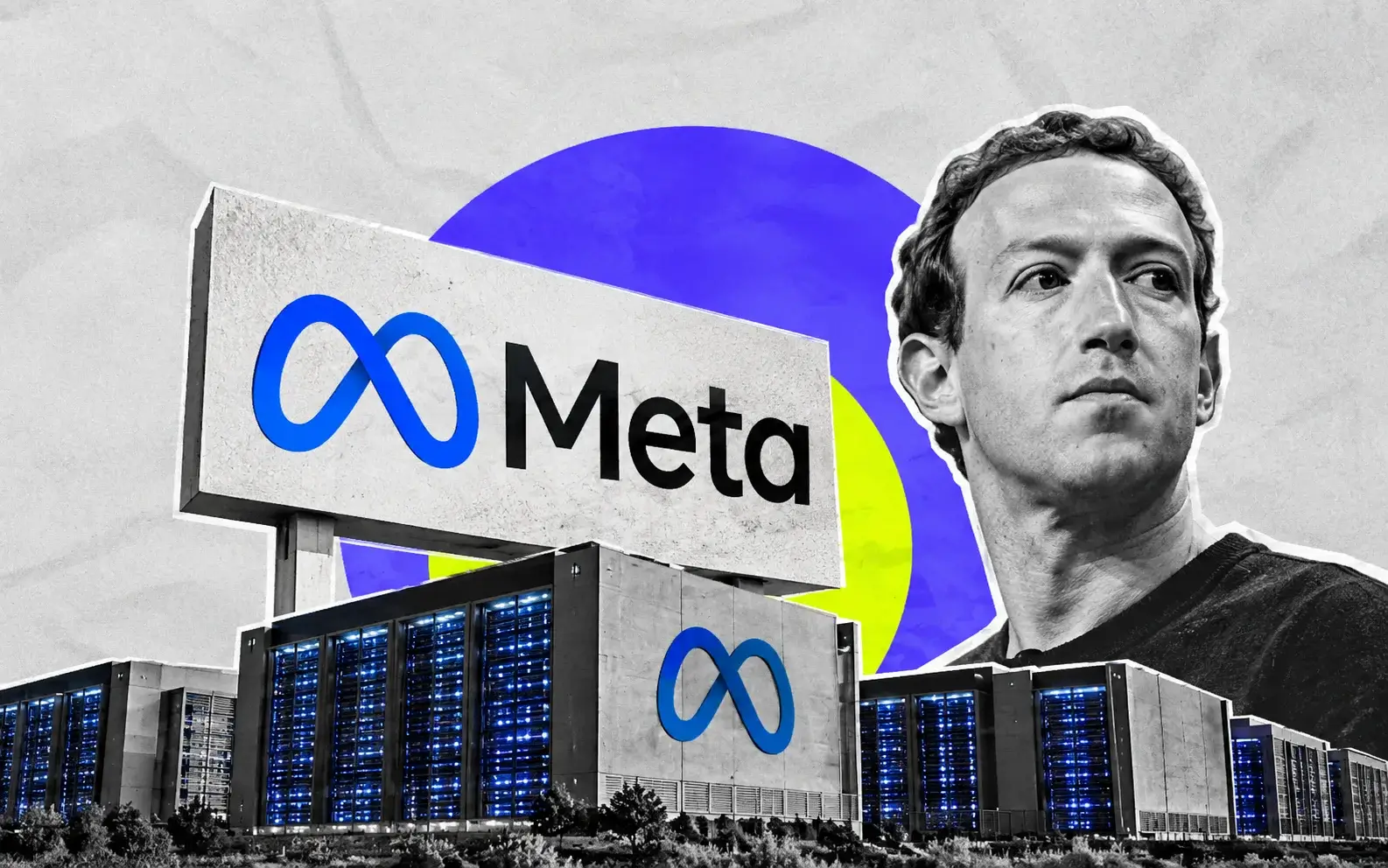
- Meta climbed 2.88% to $757.82, $3.29 below its 52-week high, ahead of the Connect keynote.
Wednesday's session belongs to the Treasury market. Forty-eight hours after the Nasdaq Composite printed back-to-back records, a blistering purchasing managers' survey pushed the 10-year yield to its highest level since 2007, and equities paid for it. By 10:35 a.m. ET the S&P 500 stood at 7,722.88, off 41.76 points or 0.54%, while the Dow Jones Industrial Average held at 51,772.80, down 90.89 points or 0.18%. The Nasdaq Composite dropped 289.89 points, or 1.06%, to 26,954.38, and the Russell 2000 lost 29.81 points, or 1.03%, to 2,860.11.
The trigger was data, not headlines. The 10-year Treasury yield reached 5.058%, the highest print since July 2007, while the 2-year yield climbed almost 10 basis points to 4.874% once the September PMI hit the tape. That 2-year move matters more than the 10-year headline. A 10 basis point jump at the front end is the market repricing the Fed, and it is repricing toward more hikes, not fewer.
Every other move on the screen follows from that one. Growth stocks that ripped into Tuesday's close carry the longest-duration cash flows in the market, and they got hit first. Rate-sensitive defensives such as utilities, which usually catch a bid on a down day, sold off too, because at 5.058% a Treasury note competes directly with a utility dividend. Utilities, consumer discretionary and communication services each shed more than 1%, and materials lagged with a drop approaching 1%.
Volatility woke up without panicking. The VIX rose 0.47 points, or 3.31%, to 14.68. A VIX under 15 on a day the Nasdaq loses more than 1% tells you the selling is orderly, a rotation out of crowded winners and duration, not a liquidation. Traders are not buying crash protection. They are simply marking down multiples.
The distinction frames everything that follows. The economy is not the problem. The economy is too hot, the Fed has already turned hawkish, and the bond market is doing the Fed's work for it. The same PMI report that showed output expanding at the fastest pace in more than five years also showed input costs accelerating at the quickest rate since October 2022. Strong growth plus accelerating costs is the combination that keeps yields climbing, and at 5% on the 10-year the equity risk premium on a 7,700-level S&P 500 gets thin.
One mega-cap is fighting the tape. Meta Platforms is higher by nearly 3% heading into its Connect keynote, a single-stock story driven by product momentum rather than macro. Outside that pocket, and a handful of energy and speculative names, the bid faded almost everywhere by mid-morning.
From Flat Futures to a Fading Open: How the Session Unfolded
The overnight setup gave no warning. Early Wednesday, S&P 500 futures sat at 7,835.00, up 3.25 points or 0.04%, Dow futures were at 52,284.00, Nasdaq futures slipped 13.00 points to 31,015.50, and Russell 2000 futures were down 0.35% at 2,903.90. Traders were digesting diplomacy, not data, coming off Tuesday's back-to-back Nasdaq Composite records and tracking Washington's parallel diplomatic tracks with Iran and China.
The overnight bid came from crude. Brent slipped below $100 a barrel, extending its recent slide even as rhetoric from Washington and Tehran stayed confrontational. Lower oil means lower inflation expectations, which means lower yields, and for a few hours that chain held.
It started breaking before the bell. By 8:17 a.m. ET, S&P 500 futures had slipped to 7,823.25, down 0.11%, Dow futures fell 118 points to 52,161.00, Nasdaq futures dropped 81.25 points to 30,947.25, and Russell 2000 futures were off 0.57%. The earnings calendar did part of the damage, with Paychex trading sharply lower in premarket after its first-quarter report.
At the 9:30 a.m. open, the S&P 500 was down 0.10%, the Dow lost 0.30% and the Nasdaq gave up 0.15%, while the Russell 2000 gained 0.51% as rising crude and climbing Treasury yields revived inflation and borrowing-cost worries. That small-cap pop at the open was the last moment of optimism. The Russell swung from +0.51% at the bell to −1.03% by mid-morning, a reversal of more than 1.5 percentage points in an hour.
The PMI release hit at 9:45 a.m. ET and turned a soft open into a genuine selloff. Shortly before 10 a.m., the S&P 500 was down 0.36% at 7,736.60 and the Nasdaq was off 0.54% at 27,095.84. Forty minutes later the Nasdaq loss had doubled. The Dow, carried by its lower tech weighting and energy exposure, held up best throughout, and at one point in the first half hour was trading worse than the S&P, only to recover relative ground as tech sold off harder.
By 10:32 a.m. ET, the S&P 500 was down 0.59%, snapping its recent momentum as oil turned higher and the 10-year yield moved back above 5%, with traders bracing for Federal Reserve commentary. Only 224 of its 503 holdings were advancing, and losses in the biggest tech weights did most of the damage. With fewer than half the index green, the heavyweights are on the wrong side.
The shape of the morning matters for the afternoon. Flat futures, a soft open, a data-driven leg down, and no bounce off the lows by late morning is a tape that sellers control. Fed remarks later in the session are the next catalyst, and the market is positioned for a hawkish message.
The PMI Print That Did the Damage
Wall Street expected strength. It got a boom. The flash S&P Global US Composite PMI jumped to 58.4 in September from 56.0 in August, with manufacturing climbing to 57.0 from 53.9 and services rising to 58.7 against a 56.0 forecast. Both the services and manufacturing gauges hit five-year highs, the strongest outside the pandemic period since 2015. The manufacturing number cleared expectations by 3.4 points. A miss of that size in the other direction would have been a recession scare.
The internals are more hawkish than the headline. Price pressures intensified in September, with average input costs across goods and services rising at the fastest rate since October 2022. Firms blamed higher fuel and transport costs, and also flagged wage pressures. Fuel costs can fall if Iran diplomacy delivers. Wage pressure does not reverse on a headline.
Capacity is getting tight. Backlogs of work rose at the fastest pace since May 2022 even as overall hiring ran at its strongest in more than four years, and supplier delays were the most widespread since July 2022. Factory hiring rose at the fastest pace since February 2021, and new orders in both manufacturing and services grew at their strongest rates since spring 2022. Rising backlogs, stretched delivery times and accelerating hiring all at once is the textbook signature of an economy running above potential.
The growth math is aggressive. Historical comparisons put the September survey level consistent with annualized growth near 5%, and the third quarter as a whole with a 4% gain. A 4% third quarter with input inflation at a 23-month high is not what a central bank that just hiked wants to see.
The demand is domestic. Goods exports kept declining and services exports grew only modestly. The engine is the U.S. consumer and U.S. capital spending, much of it tied to the AI buildout, and neither is slowing on its own.
This is why the selloff hit duration hardest. Strong nominal growth supports earnings, but at the margin a 58.4 composite reading pushes out any hope of relief on rates. The market had spent the prior week pricing the possibility that falling oil would let the Fed pause after its September hike. Wednesday's PMI takes that pause off the table for now.
One more data point from the morning reinforced the message. Mortgage rates rose again in the weekly application data, covered in the next section. Housing is the one sector that feels 5% Treasury yields immediately, and it is feeling them.
Treasuries, Mortgages and a Fed That Already Hiked
Context matters for reading 5.058%. On September 16, the Fed voted unanimously to lift the federal funds target by a quarter point to a 3.75% to 4% range, its first increase since July 2023, and signaled another hike could come this year. The session that day turned ugly during the press conference. Chair Kevin Warsh declined to offer forward guidance, called the move sober and responsible, and argued policy had never been tight to begin with.
Warsh pinned the climb in long-term yields since July on three forces: a strengthening economy, competition for capital from hyperscalers funding the capex boom, and geopolitics. He called the 10-year Treasury the most important asset in the world. Wednesday's PMI validated the first of those forces in one print.
Run the curve. With the fed funds ceiling at 4.00% and the 10-year at 5.058%, the benchmark sits 106 basis points above the top of the policy range. The 2-year at 4.874% sits 87 basis points above it, which is the market pricing more tightening into the front end. The 2s/10s spread is 18 basis points, positive but flat, and that flatness hurt the banks on Tuesday before Wednesday's move even started.
Housing takes the first hit. The average contract rate on a 30-year fixed conforming mortgage rose to 7.12% from 6.97%, the highest level since 2024, and both purchase and refinance applications fell while the share of adjustable-rate loans rose. A 15 basis point weekly jump in mortgage rates with applications already falling is a direct hit to homebuilders, building products and the entire housing-adjacent consumer complex.
Currency markets are aligned with bonds. The dollar held near its strongest level in two months, with the euro at $1.1446, near its weakest since late July, sterling at $1.3337 and the dollar index at 100.56. Fed officials have already flagged the possibility of further hikes if inflation does not ease.
For equities, the rate backdrop changes the valuation math more than the earnings math. The S&P 500 at 7,722 is trading off a 5.058% risk-free benchmark, and every basis point higher compresses what investors will pay for long-dated growth. That is why the Nasdaq is down twice as much as the S&P and six times as much as the Dow in percentage terms.
The next test arrives later in the session, when Fed remarks hit the tape. Given the PMI print, a hawkish tone is priced. A dovish surprise would spark a sharp short-covering bounce in tech. Anything that repeats the September script leaves yields pinned above 5%.
Nasdaq Gives Back Its Record as Semis and Mega-Caps Cool
The Nasdaq's record run was steep, which is why the pullback is fast. The PHLX Semiconductor Index surged more than 14% over the five sessions since the Fed decision, and the QQQ jumped from lows near $700 to above $747 on Tuesday. The Nasdaq 100 posted a record close, though it did not eclipse its June 3 all-time intraday high. A 14% five-day move in semis is the kind of run that sells off on any excuse, and a 5.058% 10-year is a very good excuse.
Asia was still chasing the rally overnight. The chip-driven Nasdaq 100 record lifted Asian markets, with the MSCI Asia Pacific equity index climbing 0.3% for a sixth straight gain and Samsung Electronics and SK Hynix moving higher. U.S. chip names could not follow through.
Nvidia is soft but orderly. The stock slipped 0.99 to $227.88, down 0.43%, on 10.5 million shares in the first half hour, with a market value of $5.503 trillion and a 52-week range of $164.27 to $236.54. That leaves shares 3.7% below the 52-week high, consolidating, not breaking.
Intel is giving back more. Intel fell $2.71, or 2.19%, to $121.15, carrying a $640.4 billion market capitalization and a 52-week gain of 296.73%. A stock that has nearly quadrupled in a year is the natural place to take profits when rates spike, and traders are doing exactly that.
Amazon is the mega-cap laggard. Shares dropped $4.11, or 1.61%, to $250.87, valuing the company at $2.706 trillion, 12.6% below the 52-week high of $287.20. Amazon has blocked Meta's Muse assistant from carrying out shopping and checkout on Amazon.com, a signal that the agentic AI fight is now a platform turf war and a reminder that Amazon's retail moat is being actively contested.
Palantir is the exception among high-multiple software. Palantir climbed $6.78, or 3.67%, to $191.77, a $460.8 billion market cap at a trailing P/E of 156.59, still 7.6% under its $207.52 52-week high. Buying a 156-times-earnings stock on a day the 10-year hits 5.058% is pure momentum conviction, and it will not last if yields keep grinding higher.
Tesla joined the green column, adding $4.73, or 1.25%, to $383.63.
The quantum complex split. Rigetti slipped 0.61% to $16.42 and D-Wave eased 0.20% to $17.52, while Quantum Computing Inc. rose 2.04% to $9.27. The spark came from IonQ, covered separately below. Stepping back, the Nasdaq damage comes from breadth of selling, not a single blowup. Most leaders are down 0.5% to 2%, and after a 14% semiconductor run in five days, that is a normal exhale, not a trend change.
Meta Rips Toward Its High Into the Connect Keynote
Meta is doing what no other mega-cap managed Wednesday. The stock jumped $21.22, or 2.88%, to $757.82 in the first half hour on 5.5 million shares, within reach of its $761.11 52-week high, with a market value of $1.931 trillion. At that price the gap to the high is $3.29. A clean break above $761.11 puts Meta in price discovery on the day of its most important product event of the year.
The setup is a week in the making. Meta gained 11.3% on Monday to close at $741.25, adding $192 billion to its market capitalization, as its Muse agent climbed to the top of Apple's App Store. The stock then closed Tuesday at $736.60, down $4.65 or 0.63%. Wednesday's move reclaims Monday's high close and pushes past it.
Muse adoption numbers explain the bid. The app logged 2.8 million downloads in its first 12 days across the U.S. and Canadian app stores and set a U.S. daily download record of 264,000 on September 19, its third consecutive day above 200,000. Muse launched with a free tier plus $20 and $100 monthly plans and runs through an app, the web and WhatsApp, giving Meta its first direct consumer subscription line.
The event is today. Meta Connect 2026 runs September 23 to 24 in Menlo Park, with Mark Zuckerberg delivering the keynote at 4:00 p.m. PT on September 23. That keynote lands after the U.S. cash close, which means Wednesday's move is a positioning trade and the real reaction arrives in Thursday's premarket.
The fundamental backdrop gives the bulls cover and the bears ammunition in equal measure. Meta guides 2026 capital expenditures to $130 billion to $145 billion. Second-quarter revenue reached $60.8 billion, up 28% year over year, but costs and expenses grew 55%, cutting operating margin to 31% from 43% a year earlier. A 12-point operating margin compression is the price of the AI buildout. Muse is the first product that gives investors a line of sight on recovering it.
Trading dynamics matter here. A stock that jumped 11.3% in one session, paused for a day, and then pushed toward new highs into a catalyst is carrying a lot of expectation. If Zuckerberg delivers concrete usage, retention and monetization data for Muse, $761.11 becomes support. If the keynote leans on smart glasses and headsets without Muse metrics, a stock at $757.82 has room to give back a chunk of Monday's gap.
Meta's strength does not rescue the broader tape. Communication services still ranks among the sectors down more than 1%, which says the rest of the group is being sold even as its largest name rallies.
Tuesday's Financials Rout Still Hangs Over the Tape
Wednesday's weakness builds on a financial-sector hit that landed a day earlier. The S&P 500 financial index finished Tuesday down 2%, the bank sub-index fell 3%, and money managers led the decline, with Schwab down 6.1%, Ameriprise down 4.4% and Raymond James off more than 3%. JPMorgan fell 3.4%, its biggest one-day drop since July, Wells Fargo lost 3.9%, its worst since May, and Bank of America and Citigroup declined 3% and 2%.
The closing prints were brutal. Charles Schwab finished at $100.35, down $6.53 or 6.11%, on 16.8 million shares, double its 3-month average of 8.5 million. LPL Financial closed at $307.50, down $24.76 or 7.45%, on 2.3 million shares, triple its average. Virtu Financial dropped 5.95% to $54.49.
The driver is an AI product, not a credit event. Muse overtaking ChatGPT as the most-downloaded free iPhone app turned into a direct threat narrative for incumbent wealth managers, and the flattening yield curve added pressure on bank returns. The specific fear targets brokerage economics: personalized finance agents could help clients shift idle cash out of low-yielding brokerage sweep accounts into higher-yielding products, a process known as cash sorting, which threatens the spread income that makes up a large share of broker earnings.
The positioning is lopsided. Schwab options volume topped five times its average on Tuesday, with nearly twice as many puts bought as calls. The stock touched its lowest level since early July and is now down more than 8% since Meta announced Muse.
The disruption case has limits the tape is ignoring. Muse does not trade for users or give financial advice; users can choose to link accounts through Plaid, which gives the assistant visibility into balances, transactions and holdings. Visibility is not custody. A sweep account does not move unless the client moves it.
Wednesday's rate move sharpens the problem anyway. Cash sorting accelerates when the gap between sweep yields and money-market yields widens, and a 2-year yield at 4.874% widens it. The AI narrative and the rate narrative now point in the same direction for brokers, and that is why the group has not bounced.
The spillover reached other consumer-facing platforms. Allstate and Booking Holdings were also caught in Tuesday's selling, as the market started pricing agentic AI as a middleman threat to any business that monetizes consumer inertia. That theme will not resolve in one session. Watch Schwab at $100. A close under that round number keeps the disruption trade in control.
IonQ Snaps Higher on Error-Correction Breakthrough, Then the Bid Fades
IonQ is the day's biggest story among high-volume names, and its intraday path shows exactly how risk appetite is behaving. The stock jumped 11.35% before the open after the company announced it had built and tested a real-time quantum error correction decoder designed to run on a single standard CPU. From a Tuesday close of $40.75, that premarket move put shares near $45.37.
The gain did not hold at full size. Shortly before 10 a.m. ET, IonQ traded at $42.43, up $1.69 or 4.15%, on 26.1 million shares, against a 3-month average of 20.1 million. By 10:35 a.m., the stock sat at $42.85, up $2.10 or 5.17%, on 34.96 million shares, valuing the company at $17.36 billion. Volume ran at 1.7 times the full-day average inside the first hour, but the price surrendered more than half of the premarket spike.
The technical significance is real. Error correction is the central bottleneck in quantum computing, because physical qubits are noisy and useful computation requires detecting and fixing errors faster than they accumulate. Doing that decoding in real time on commodity CPU hardware, rather than specialized accelerators, lowers the cost and complexity of the classical control stack every quantum system needs. That is the kind of infrastructure milestone that feeds the whole group's narrative.
The chart context explains the fade. IonQ's 52-week range runs from $25.89 to $84.64, and the stock is down 44.84% over the past year. At $42.85, shares sit 49% below the high. Every rally in a stock with that drawdown runs into supply from holders who bought higher. The premarket spike hit that supply fast.
Peers did not follow. Rigetti and D-Wave both traded slightly lower in the first half hour, and only Quantum Computing Inc. managed a 2% gain. When a sector-wide technical milestone moves just one ticker, it is a single-stock trade, not a sector re-rating.
The rate backdrop shapes the ceiling. Pre-revenue and early-revenue quantum names are the purest long-duration assets in the market, valued almost entirely on cash flows a decade out. On a morning the 10-year hits 5.058%, even a genuine breakthrough gets discounted harder. That IonQ is still up more than 5% under those conditions says the news carried real weight.
Levels to watch: $40.75, Tuesday's close, is the line the stock must hold to keep the breakthrough gap intact. A push back through the $45 area that the premarket tagged would signal buyers absorbing overhead supply. A close back under $41 turns the day into a sell-the-news reversal.
Earnings Scorecard: Paychex Gets Smoked, Cintas Delivers, General Mills Slips
Paychex is the day's biggest earnings casualty. Shares traded at $107.00, 6.57% below the prior close, with relative volume running at 48.2 times average. From a prior close of $114.52, the stock has lost $7.52 per share.
The numbers were not bad. Paychex first-quarter revenue rose 6% to $1,630.5 million from $1,540.0 million, operating income climbed 14% to $619.2 million, diluted EPS rose 14% to $1.21, and adjusted diluted EPS gained 10% to $1.34. Operating margin expanded to 38.0% from 35.2%, and adjusted operating margin rose to 42.0% from 40.7%. The problem is the outlook. Paychex raised guidance for PEO and Insurance Solutions revenue growth to 7% to 8% and for interest on client funds to $200 million to $210 million, but held total revenue growth at 5% to 6% and adjusted EPS growth at 7% to 9%. The quarter landed essentially in line with consensus, with a slight tilt to the downside on revenue. In an AI-disruption tape where payroll and HR software multiples are under pressure, in-line with no headline guidance raise is a sell signal.
Cintas delivered a clean beat. Cintas fiscal first-quarter revenue rose 10.9% to $3.01 billion from $2.72 billion, organic growth came in at 8.9%, and gross margin expanded 120 basis points to 51.5%. Adjusted diluted EPS rose 15.8% to $1.39, against a $1.36 consensus on $2.98 billion in revenue. Cintas paid $208.8 million in dividends on September 15 and repurchased $544.7 million of stock during the quarter and through September 22, a combined $753.5 million returned. Cintas works as a real-time read on service-sector hiring, and 8.9% organic growth lines up with the PMI's employment surge.
General Mills beat and still slid. Adjusted EPS came in at $0.75 on $4.4 billion in revenue, against expectations of $0.72 and $4.34 billion, yet shares fell 1.17% to $35.03 in premarket from a $35.45 close. The stock started 2026 at $46.53, so at $35.03 it has lost 25% year to date. General Mills affirmed its fiscal 2027 adjusted EPS outlook of $3.00 to $3.20 on September 8. A packaged-food stock yielding north of 6% is a bond proxy, and bond proxies lose on a day the 10-year prints 5.058%.
Cracker Barrel was the bright spot, gaining 7.88% in premarket trading after beating fourth-quarter expectations. Consensus had called for $0.18 per share on $842.22 million in revenue.
Other premarket movers set the day's tone. Instacart parent Maplebear climbed 4.84% on a deal to add Gopuff to its marketplace. WillScot fell 3.98% on leverage and utilization concerns, AppLovin slipped 3.79% on worries its market-share gains have stalled, and Ginkgo Bioworks dropped 3.64%.
Oil Reverses Higher and Energy Takes the Lead
Crude flipped the script by mid-morning. The overnight move was lower on diplomacy. Early Wednesday, West Texas Intermediate fell 0.97% to $89.64 a barrel and Brent slipped 0.24% to $99.01, after President Trump described three-hour talks with Iranian representatives at the United Nations as very productive and said another meeting was scheduled soon. By mid-morning the direction reversed. November WTI traded at $91.92, up $1.40 or 1.55%. That is a $2.28 intraday swing off the early low, a 2.5% move in a few hours.
Supply disruption drove the reversal. An armed group shut a valve on the pipeline from Libya's El Sharara field, which accounts for roughly a third of Libya's oil output, abruptly taking significant supply offline. The Iran track also cooled. Tehran denied it had dropped its preconditions for reopening the Strait of Hormuz, framing the Qatari-mediated exchange as a channel to restate its terms: an end to the war in all its dimensions, the lifting of the naval siege and the release of Iranian assets.
Refined products add another layer. The administration is examining whether a diesel export ban is a feasible response to record-high diesel prices. A U.S. diesel export ban would tighten global product markets while easing domestic prices, a policy that helps pump prices before the midterms but scrambles refining margins.
The recent trend makes Wednesday's bounce a countermove, not a reversal. Brent had fallen for six straight sessions and closed below $100 for the first time since early September. That decline was the single biggest reason the 10-year slipped back under 5% earlier in the week. With crude turning up and the PMI showing fuel and transport as the top cost pressures, the oil-to-yields link is working against equities again.
Energy stocks are catching the bid, and the sector is among the few in positive territory. Natural gas names are leading. Venture Global jumped $0.74, or 5.73%, to $13.65, a $34.1 billion market value, and Antero Resources gained $1.32, or 3.83%, to $35.74. Sasol rose 3.01% to $14.20, with a 52-week gain of 122.78%.
The oil picture cuts both ways for the session verdict. Energy leadership adds breadth to a weak tape. But a higher crude price is exactly what the bond market does not want after a PMI showing input inflation at a 23-month high. Every dollar on WTI makes the 5% yield harder to break back below.
Read More
-
Yen Stalls at 160 Despite a 3% JGB and Tokyo Core CPI at 2.0% — Intervention Sits at 164, Friday's Payrolls Decide
02.09.2026 · TradingNEWS ArchiveEnergy
-
META ($757.82) Beats a 1% Nasdaq Drop as 448,000 Muse Users Set Up $815 Breakout
23.09.2026 · TradingNEWS ArchiveStocks
-
Ethereum Tests $2,700 After Rate Shock — Break of $2,804 Opens 10.6% Upside to $3K
23.09.2026 · TradingNEWS ArchiveCrypto
-
Brent ($101.61) Reclaims $100 as Libya Supply Shock Beats Iran Talks — WTI Range Set at $88 to $95
23.09.2026 · TradingNEWS ArchiveCommodities
-
FILG ETF — Filecoin Trust ($1.51) Carries a $1.6M Gap Over Its $2.2M in FIL as the Premium Compresses From 2,000%
22.09.2026 · TradingNEWS ArchiveMarkets
-
EURUSD Tests 1.1400 on Fed Hike Bets — 150bp Rate Gap Targets 1.1300 Downside
23.09.2026 · TradingNEWS ArchiveForex
Dollar Firm, Gold Slides, Bitcoin Breaks Lower
Rising real yields hit every non-yielding asset. Gold futures dropped $58.30, or 1.33%, to $4,318.10 an ounce by mid-morning. The slide accelerated after the PMI release. Earlier, gold had been down 0.56% at $4,351.70 and silver futures were off 1.23% at $65.71 an ounce. The metal lost another $33 after the data, a clean read on how the rate repricing is transmitting across assets.
Gold is sensitive to exactly this setup. A strengthening dollar, a hawkish Fed and a 10-year yield at its highest in 19 years all raise the opportunity cost of holding an asset that pays nothing. The same dynamic hit in August, when gold futures tumbled $132.10, or 2.9%, to $4,478.10 on the day Warsh signaled the inflation fight was not finished. Since that session gold has lost another $160 per ounce. The pattern on hawkish Fed days is consistent.
Bitcoin broke harder than gold, falling $1,987.14, or 2.30%, to $84,255.74. At the start of the day it traded at $85,988.48, down just 0.29%. Crypto is trading as a high-beta risk asset, not a hedge. On a day when the Nasdaq drops 1% on rates, bitcoin dropping more than twice as much fits that role.
Crypto equities followed the underlying. Bitmine Immersion Technologies fell 2.21% to $28.11, down 44.61% over 52 weeks. The regulatory backdrop adds weight. After the CLARITY Act stalled in a Senate vote last week, state and federal regulators are moving to fill the gap on crypto oversight. Uncertainty over who writes the rules is a headwind for a sector that had priced in legislative clarity.
The dollar ties the cross-asset picture together. A DXY above 100 with the euro under $1.15 means global capital is chasing U.S. yield. That supports Treasury demand at the margin, but it also tightens financial conditions abroad and squeezes the overseas earnings of U.S. multinationals. For S&P 500 companies that generate a large share of sales outside the U.S., a strong dollar is a quiet earnings headwind heading into third-quarter reporting.
The consistent thread across dollar, gold, silver and bitcoin is a market pricing tighter policy for longer. None of these moves is disorderly. All of them point the same direction, and that agreement is what makes the equity selloff credible rather than noise.
Sector Map and Breadth: Narrow Green, Broad Red
The internals are weak even where the index damage looks modest. With 224 of the S&P 500's constituents advancing by 10:32 a.m. ET, 45% of the index is higher and 55% lower. That is a soft breadth reading, not a collapse, but the losers include the heaviest names.
The upside is thin. By 10:35 a.m., only 11 U.S. stocks with market caps above $2 billion were up 3% or more, led by Securitize at $13.83, up 6.38%, Lakefront Biotherapeutics up 5.93%, Venture Global up 5.73% and IonQ up 5.17%. Eleven names clearing a 3% gain across the entire mid-cap-and-above universe is a narrow tape.
Healthcare is providing pockets of strength. Moderna gained $5.92, or 3.24%, to $188.48 on 8.4 million shares, above its previous 52-week high of $187.20, for a 52-week gain of 605.41% and a market cap of $75.2 billion. Universal Health Services rose 3.07% to $184.79 and iRhythm Holdings added 4.22% to $115.19. Moderna printing a fresh 52-week high on a down day is one of the strongest relative-strength signals on the board.
Utilities are the surprise loser. PG&E dropped $0.40, or 3.07%, to $12.48, below its prior 52-week low of $12.59. When the 10-year pays 5.058%, a utility's dividend loses its appeal, and the sector trades like a long bond. The sector ranking confirms it: utilities, consumer discretionary and communication services all fell more than 1%, and materials pulled back almost 1%.
Consumer discretionary is under pressure from two directions: higher mortgage rates hit the housing-linked consumer, and cruise lines are digesting a big deal. Royal Caribbean agreed to take a 50% equity stake in Sandals in a $3 billion transaction that values the resort chain at $6 billion, with closing expected early next year. Royal Caribbean closed Tuesday at $234.89, down $15.36 or 6.14%, on 8.3 million shares, near its 52-week low of $231.03. Viking Holdings fell 5.85% to $81.02 in the same session.
Small caps are the weakest link. The Russell 2000's 1.03% drop matches the Nasdaq's and nearly doubles the S&P's 0.54%. Small companies carry more floating-rate debt and more domestic rate sensitivity, and they cannot absorb a 5% long bond the way cash-rich mega-caps can. The Russell's swing from a 0.51% opening gain to a 1.03% loss is the clearest single sign of how hard the PMI hit rate-sensitive risk.
The map reads as defensive rotation without a defensive safe haven. Energy and healthcare are higher, and almost everything with rate sensitivity or high valuation is lower. That is the tape of a market adjusting to higher-for-longer, not one bracing for recession.
Washington Week: Xi Visit, Iran Talks and the Verdict
The political calendar is crowded, and each item carries market weight. President Trump is set to greet Chinese President Xi Jinping at Joint Base Andrews, opening the Chinese leader's first U.S. state visit in 11 years. No major policy breakthroughs are expected, but trade, the Iran war, rare earths and artificial intelligence are all on the agenda. Nvidia's Jensen Huang, OpenAI's Sam Altman and Google's Sundar Pichai are among the tech executives attending a Thursday dinner with both presidents. Rare earth access and chip export policy are the two items that could move semiconductors sharply either way on Thursday.
Iran remains the swing factor for oil and yields. In his UN address, Trump framed his choice as either making a deal to end the war or annihilating the Islamic Republic, while signaling a deal is more likely after the midterm elections. A post-midterm timeline means the geopolitical premium in crude does not disappear in the next six weeks, and that keeps the inflation channel open.
Other headlines added texture. A financial disclosure showed President Trump bought between $15,001 and $50,000 of SpaceX shares on July 10 and sold between $1,001 and $15,000 on July 17. SpaceX shares slipped 0.76% to $153.55 in early trading, after debuting at $135 on June 12 and reaching a record $225.64 on June 16. Novo Nordisk is open to a direct NYSE listing that would replace its ADR structure, with the U.S. generating more than half its revenue.
For the rest of the session, three levels matter. The 10-year at 5.058% is the ceiling bulls need to see yields fall back under. The S&P 500 at 7,722 needs to hold above Tuesday's lows to keep the post-Fed rally structure intact. The Nasdaq at 26,954 sits just under the 27,000 round number, and a close below that level would confirm a failed breakout from Tuesday's record.
The verdict on Wednesday's session is bearish, with a clear rate-driven cause and limited internal damage. A hot PMI pushed the 10-year to 5.058% and the 2-year up nearly 10 basis points, and that repricing hit the most rate-sensitive and highest-multiple parts of the market hardest: the Nasdaq off 1.06%, the Russell 2000 off 1.03%, PG&E at a 52-week low and Paychex down 6.6% on an in-line quarter. The VIX at 14.68 and orderly single-name moves say this is a valuation reset after a 14% semiconductor run, not a risk-off break. Meta near $761.11, energy up on the Libya outage and Moderna at a new high show capital is rotating, not leaving. Until the 10-year closes back below 5%, rallies in growth stocks are selling opportunities for fast money, and the market's direction runs through the bond pit and Thursday's Trump-Xi headlines rather than through earnings.