Oil Price Forecast: Brent Surges to $108 and WTI Hits $95 — Market Is Pricing Worse
With Iraq's oil exports gutted from 3.4 million to 250,000 bpd, Barclays warning 14 million bpd could vanish, Iran drafting Hormuz toll legislation, and BlackRock's Larry Fink putting $150 oil on the table | That's TradingNEWS
Key Points
- Brent Is Up 48% in One Month and Iran Just Made the Bull Case Stronger — Oil has surged from $71.28 one month ago to $108.50 today — a 48.5% move in 30 days that represents the fastest sustained crude price acceleration since the 1973 Arab oil embargo.
- Iraq's Oil Exports Collapsed 93% — From 3.4 Million Bpd to 250,000 Bpd Overnight — OPEC's second-largest producer has been effectively cut off from global markets as its entire southern export infrastructure transits the Strait of Hormuz with no bypass options unlike Saudi Arabia or the UAE
- BlackRock Says $150 Oil Triggers a "Stark and Steep Recession" — The U.S. Is Already Modeling $200 — Larry Fink told the BBC that sustained oil near $150 would have "profound implications" for the global economy and would likely trigger severe recession
Brent crude (BRN00) is trading at $108.50 per barrel Thursday, up 6.19% on the session. West Texas Intermediate (CL00) sits at $95.04, up 5.23%. Heating Oil has surged 7.87% to $4.321. Gasoline futures are up 4.21% to $3.139. WTI Midland is at $97.70, up 4.81%. Murban Crude — the Abu Dhabi benchmark — is at $109.30, up 3.77%. Natural Gas is at $3.002, up 1.69%. The OPEC Basket is at $117. One month ago, Brent was trading at $71.28. One year ago it was $73.89. Thursday's price of $108.50 represents a 48.49% surge in 30 days and a 43.25% gain year-over-year. To find a comparable pace of crude price appreciation in modern energy market history, you have to go back to the 1973 Arab oil embargo. This is not a normal oil market. This is a market experiencing what the International Energy Agency has called the largest supply disruption on record — nearly 20 million barrels per day removed from global availability at peak — driven by a conflict that is now entering its 27th day with no credible resolution in sight and Iran actively legislating permanent control over the world's most critical oil shipping chokepoint.
Iran Just Made the Diplomatic Situation Dramatically Worse — Here's the Mechanism
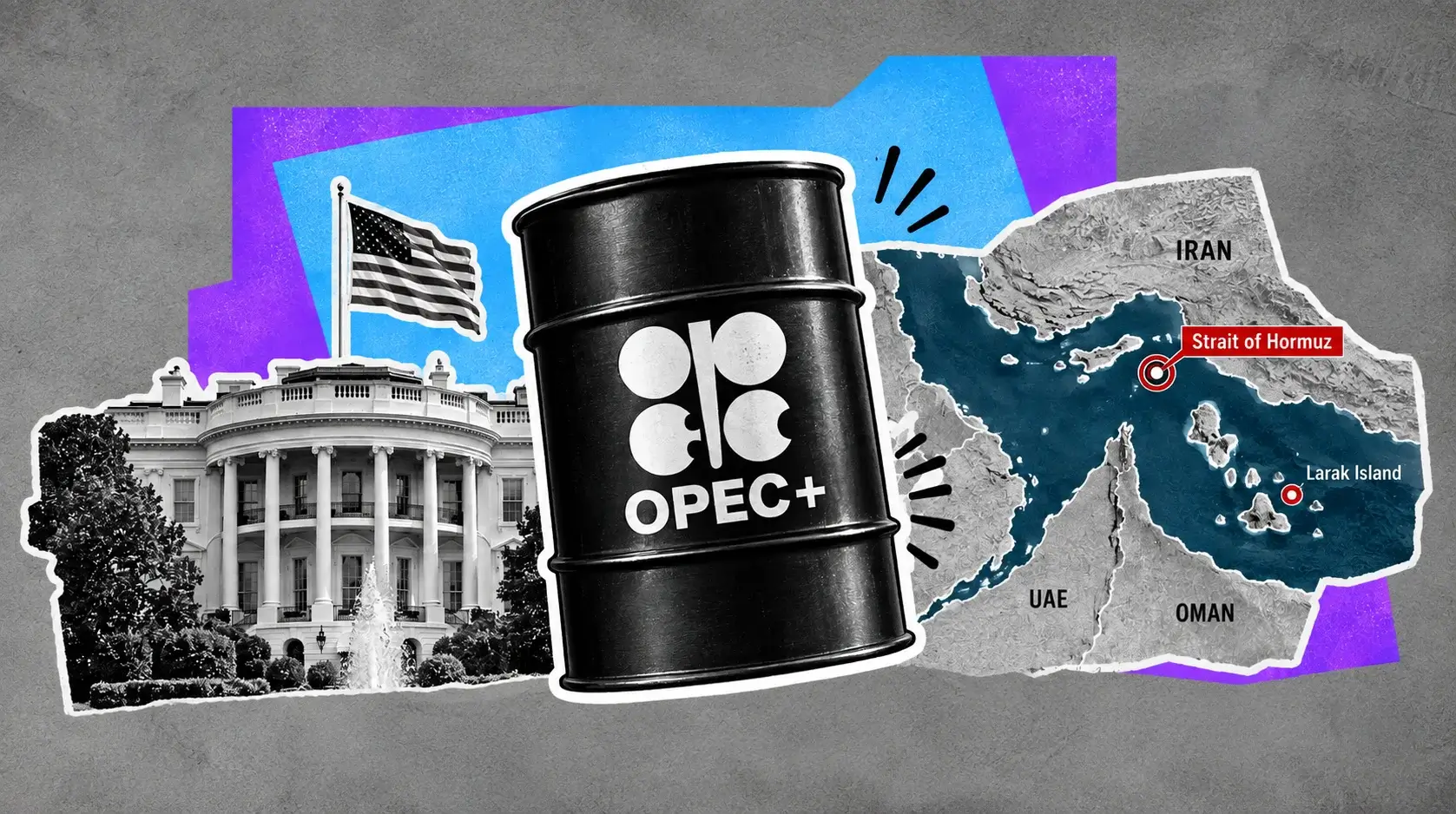
The market had briefly found optimism Wednesday when reports emerged that Tehran was reviewing Washington's 15-point ceasefire proposal. Brent pulled back toward $93 on that news. Within hours, the entire move reversed. Iranian Foreign Minister Abbas Araghchi appeared on state media to explicitly state that exchanges through mediators do not constitute "negotiations with the U.S." — a formulation carefully designed to keep diplomatic channels technically open while shutting down any actual progress. Iranian state media then reported that Tehran had rejected the U.S. ceasefire offer entirely and laid out its own conditions for ending the conflict. Those conditions — which include guaranteed cessation of all attacks on Iran, authorization to pursue its missile program without restriction, reparations for wartime infrastructure damage, lifting of all sanctions, and crucially, formal recognition of Iranian sovereignty and control over the Strait of Hormuz — are not negotiating positions. They are maximalist demands that any U.S. administration would reject immediately. The Strait of Hormuz demand is the single most market-moving element of Iran's position. The Fars and Tasnim news agencies — both close to Iran's Revolutionary Guard — quoted lawmaker Mohammadreza Rezaei Kouchi confirming that "parliament is pursuing a plan to formally codify Iran's sovereignty, control and oversight over the Strait of Hormuz, while also creating a source of revenue through the collection of fees." Iran is not just blocking Hormuz as a wartime tactic. It is legislating permanent control over the waterway and building a revenue model around it. That is a categorically different and dramatically more bearish development than a temporary military blockade. It means that even a ceasefire — which would presumably end active hostilities — does not automatically reopen Hormuz to unimpeded international navigation. Iran would retain the legislative basis to continue fee collection and to restrict passage on any grounds it chose. The global crude supply disruption, in this scenario, does not end when the shooting stops. It evolves into a permanent geopolitical tax on global energy flows.
Iraq's Economy Is Collapsing — From 3.4 Million Bpd to 250,000 Bpd
No country in the world is absorbing a more devastating economic blow from the Hormuz closure than Iraq, and the numbers make the situation almost incomprehensible in scale. Before the war began at the end of February, Iraq was exporting approximately 3.4 million barrels per day from its southern Basra terminal — making it OPEC's second-largest producer behind Saudi Arabia and a critical pillar of global supply. Today, those exports have collapsed to approximately 250,000 barrels per day. That is a 93% reduction in export volume in less than four weeks. Unlike Saudi Arabia, the UAE, and Kuwait — which have varying degrees of pipeline infrastructure capable of routing crude away from the Persian Gulf — Iraq has essentially no bypass capacity. Its entire southern export infrastructure is designed around Gulf loading terminals that require Hormuz transit. The only alternative route Iraq has been able to activate is the northern pipeline from the Kirkuk fields to Turkey's Mediterranean port of Ceyhan — which explains the 250,000 bpd that is still flowing. But that pipeline was historically dormant due to disputes between Baghdad and the Kurdistan Regional Government, and its capacity cannot come close to replacing what was lost in the south. Iraq's economic catastrophe compounds on itself: the country derives 90% of its state budget revenues from petroleum sales, imports 90% of its food, consumer goods, and medicine through the Strait of Hormuz, and has no meaningful sovereign wealth fund to draw on as a financial buffer unlike Kuwait, Saudi Arabia, and the UAE. Iraq is simultaneously losing its only significant income source and its primary supply chain for essential imports through the same chokepoint. A caretaker government — formed months after general elections with no mandate for emergency economic management — is attempting to navigate what may be the worst economic shock in the country's modern history. The northern Ceyhan pipeline is the only lifeline, and 250,000 bpd against a pre-war 3.4 million bpd baseline is not a lifeline. It is a trickle.
Barclays: 14 Million Bpd Could Disappear — The Worst-Case That Markets Haven't Priced
The most alarming institutional analysis of the supply situation came from Barclays, which warned that a prolonged Hormuz blockage could ultimately eliminate 14 million barrels per day of global oil supply. Global oil consumption runs approximately 102-104 million barrels per day. Losing 14 million bpd would represent roughly a 13-14% reduction in total available supply — a disruption roughly three times larger than the 1973 OPEC embargo on a percentage basis and unprecedented in absolute volume terms. The IEA has already described the current disruption — which removed approximately 20 million bpd at peak — as the largest supply shock on record. Barclays' 14 million bpd figure appears to represent the structural worst-case scenario where countries like Iraq, Kuwait, Bahrain, and partially Saudi Arabia and the UAE are all effectively locked out of maritime export capacity simultaneously. Saudi Arabia and the UAE have demonstrated some ability to reroute through Red Sea and overland pipelines, but their combined bypass capacity is a fraction of their total production. At 14 million bpd of permanent supply loss, the global energy system cannot function at current consumption levels. Rationing, production cutbacks across every oil-dependent industry, and a fundamental restructuring of global trade flows would be the inevitable consequences. Even at current disruption levels — far below Barclays' worst case — the IEA has already released emergency reserves and Japan has urged a second emergency release from the agency's strategic stockpile. These are signals of a system under genuine duress, not precautionary measures.
BlackRock's Fink: $150 Triggers Recession, $200 Is Being Modeled in Washington
The two most important macro price call data points Thursday came from diametrically opposite ends of the institutional spectrum — one from the world's largest asset manager and one from the U.S. government itself. BlackRock CEO Larry Fink, speaking to the BBC, laid out the binary scenario framework with unusual directness: if the war ends and Iran reintegrates into the international community, oil prices fall back below pre-war levels — roughly $70-75 range. If the conflict persists and oil holds closer to $150 for a sustained period, it will "probably trigger a stark and steep recession." His framing was that of a man who has modeled the scenarios and is not optimistic about which one is more likely given the current negotiating dynamics. "If oil prices keep closer to $150 for a few years, many countries would be rapidly moving to solar and maybe wind energy" — a comment that reveals just how structurally destabilizing the sustained high-oil scenario would be, forcing a generation-level energy transition under duress rather than by design. Bloomberg reported separately and more alarmingly that the U.S. administration is internally examining how a potential $200 per barrel oil price would impact the U.S. economy — stress-testing an extreme scenario in an effort to build contingency policy frameworks. The fact that Washington is modeling $200 oil is not itself a forecast that $200 oil will materialize. But it is an acknowledgment at the highest levels of government that the current trajectory of the conflict — with Hormuz blockade legislation pending in the Iranian parliament and no credible ceasefire framework in place — makes scenarios that would have been dismissed as extreme fiction six weeks ago worth serious planning consideration. At $200 per barrel, U.S. retail gasoline prices — already averaging $3.981 nationally and approaching $9 per gallon in California — would likely reach $12-15 per gallon nationally. Consumer purchasing power destruction at that price level would be immediate and severe, with transportation costs cascading through every layer of the supply chain into grocery prices, manufacturing costs, and service sector overhead simultaneously.
Iran Is Earning $139 Million Per Day From Oil Despite the Conflict
One of the most counterintuitive data points in the current oil market is that Iran itself is profiting handsomely from the crisis it has created. Reports indicate Iran is earning approximately $139 million per day from oil sales despite the conflict, exploiting the price spike it engineered by blocking Hormuz to its rivals while maintaining its own export capacity through alternative routes and sanctioned buyers. This creates a perverse economic incentive structure: the higher oil prices go as a result of the Hormuz blockade, the more Iran earns per barrel from its surviving exports. At $108 Brent, Iran's per-barrel revenue on whatever volume it moves is dramatically higher than it would have been at pre-war $73 prices. The conflict is not economically symmetric. Iraq's economy is collapsing. Iran's oil revenues are near record levels. Saudi Arabia's exports to China and India are set to fall amid war disruptions, complicating Riyadh's fiscal position. But Iran — the country that triggered the crisis — is the one generating $139 million per day from a market it deliberately disrupted. This asymmetry makes the diplomatic resolution pathway even harder to envision. Iran has limited short-term economic incentive to end a conflict that is inflating the value of its own remaining exports, even as it inflicts catastrophic damage on Iraq, threatens global recession, and forces the international community toward emergency reserve releases.
Read More
-
Yen Stalls at 160 Despite a 3% JGB and Tokyo Core CPI at 2.0% — Intervention Sits at 164, Friday's Payrolls Decide
02.09.2026 · TradingNEWS ArchiveEnergy
-
QQQ ETF ($739) Fades From an Early Tech Rally as a 77.9 ISM Prices Index Meets Micron's $61.5B Guide — $760 Record Test Ahead
01.10.2026 · TradingNEWS ArchiveStocks
-
XRPR and XRPI Follow XRP's $1.49 Test as Spot Funds Hold 1.16B XRP and a 1 Billion Token Escrow Release Lands — $1.70 in Play
01.10.2026 · TradingNEWS ArchiveCrypto
-
November NG Slips Below $3 as Decade-High Storage Meets Capped LNG Exports — $2.75 in Sight
01.10.2026 · TradingNEWS ArchiveCommodities
-
Dollar-Yen at 158 Presses Toward 160 as a 363 bp Carry Gap Meets Katayama-Bessent Intervention Risk — 159 in Sight
01.10.2026 · TradingNEWS ArchiveForex
Russia's Baltic Infrastructure Is Also Under Attack — The Supply Shock Is Wider Than Hormuz
The global oil supply disruption is not confined to the Middle East. Ukraine knocked out 40% of Russia's oil export capacity in the Baltic in a drone strike, according to reporting Thursday. A second tanker has been hit in weeks as Black Sea drone strikes target Russian oil cargo. Russia's vital Baltic oil hubs have been described as crippled by the Ukrainian drone campaign. These are not minor logistical disruptions — Russia is one of the world's largest oil exporters, and simultaneous damage to Baltic export infrastructure compounds the global supply shock from the Middle East. India has snapped up 60 million barrels of Russian crude for April delivery — an aggressive procurement move that reflects the frantic global search for oil supply from any available source at any achievable price. India is simultaneously pushing back a flexible coal power plan amid cost uncertainty and targeting import cuts through a historic oil and gas drilling campaign — a government-level acknowledgment that the supply shock is structural enough to require fundamental changes to energy policy. Japan has urged the IEA to prepare for a second emergency oil release. Europe faces looming fuel shortages with Shell warning of an April crunch. LNG exports have plunged to a six-month low as the war throttles supply. Naphtha shortage is forcing Japanese petrochemical producers to curtail output. Germany and South Korea face rare earth supply shortages as a secondary consequence of the broader trade disruption. The supply shock has metastasized well beyond crude oil into refined products, petrochemicals, LNG, and industrial inputs — exactly what Saudi Arabia's Finance Minister Mohammed Al-Jadaan warned at the FII Priority summit in Miami when he said the serious impacts on the global economy have "not yet been priced into the markets."
The Fed's Response — TD Securities Says "Look Through It," Markets Say Otherwise
The Federal Reserve's reaction function to the oil shock is one of the most critical variables for financial markets and for the trajectory of the oil price itself. TD Securities analysts argued Thursday that the latest oil shock is unlikely to trigger an aggressive Fed policy response, with the bank's economists maintaining that the Fed is more likely to remain in "wait and see" mode and will "look through the energy shock" so long as longer-term inflation expectations remain anchored and second-round effects stay contained. That is a defensible academic position. In practice, the market is not buying it. Fed funds futures are pricing a 32.8% probability of a rate hike by December — up from 20.2% just 24 hours earlier. The 10-year Treasury yield has surged 41.2 basis points in March alone to 4.389% — its largest monthly move in 17 months. The 2-year yield is at 3.953%. The bond market is pricing something between "the Fed will hike" and "the Fed's credibility is being tested" — and the distinction between those two outcomes matters enormously for oil. If the Fed hikes into an oil-driven economic slowdown, it creates a demand destruction scenario where high oil prices and high interest rates simultaneously crush economic activity, which ultimately brings oil demand down and oil prices with it. That outcome — oil at $150 and then crashing as recession destroys demand — is arguably more deflationary long-term than the oil shock alone. If the Fed holds and looks through the energy shock, it risks allowing inflation expectations to become unanchored, which drives further commodity price gains and forces an even more aggressive eventual tightening response. Neither scenario is bullish for risk assets. Both scenarios have oil at elevated levels for at least the near and medium term.
Europe's Stock Markets Are Sobering Up — FTSE Down 0.8%, DAX Down 1.2%, CAC Off 0.7%
Thursday's European session told a stark story about how the continent's markets are absorbing the oil shock. After European indices gained 1.3-1.6% Wednesday on ceasefire optimism, the sessions reversed course sharply. The FTSE 100 in London was down 0.8%. The DAX in Frankfurt was trading 1.2% lower. The CAC 40 in Paris lost nearly 0.7%. Asian markets preceded the European selling: Tokyo's Nikkei 225 fell 0.8%. South Korea's Kospi dropped 3.3%. Hong Kong's Hang Seng fell 1.9%. These are not minor corrections — they are coordinated global selling driven by the same recognition that ceasefire hopes were premature and that Brent above $100 is not going away on any foreseeable timeline. The OECD separately issued a warning Thursday about a "large setback to growth and a jump in inflation" if the energy crisis worsens — a statement from the institutional guardian of developed economy growth forecasts that carries real weight. Germany's Defense Minister Boris Pistorius called the Iran war "an economic catastrophe" for world economies. The Strait of Hormuz closure, he noted, is specifically affecting the Indo-Pacific and Japan — highlighting how the supply disruption is not a regional Middle East problem but a global trade architecture crisis.
The Strategic Petroleum Reserve — A Band-Aid on an Arterial Bleed
The U.S. Strategic Petroleum Reserve and IEA emergency reserve releases have been deployed in response to the supply shock, but their capacity to contain a disruption of this magnitude is structurally limited. The SPR's primary function is described precisely by its name — strategic, not sustained. It is designed to bridge gaps during short-term disruptions while market mechanisms adjust, not to replace months of lost production from multiple major exporters simultaneously. Japan has already urged the IEA to prepare for a second emergency release. The first release has clearly been insufficient to cap prices, given Brent's continued climb toward and above $100. Each successive reserve release comes from a smaller total stock, meaning the buffer capacity diminishes with each deployment. If the Hormuz blockade persists for another 30-60 days — which Iran's parliamentary Hormuz legislation suggests is the base case rather than a tail risk — the SPR cannot prevent further price escalation. It can only slow the rate of that escalation marginally. Valero is preparing to restart its massive Texas refinery after an explosion that tightened an already strained refinery capacity picture, and U.S. crude and product inventories have risen — a mild near-term relief valve. But against the scale of the supply shock, domestic inventory builds are noise.
The LNG Market Is Breaking Down — Saudi Exports to China and India Falling
The disruption is not limited to crude oil. The Iran war has fundamentally upended global LNG markets. LNG exports have plunged to a six-month low as the conflict throttles supply routes. Goldman Sachs explicitly warned earlier this week that even if the war resolves soon, it could take three to five years to bring damaged LNG facilities responsible for 3% of global supply back online. Saudi Arabia's oil exports to China and India are set to fall amid war disruptions — a critical development given that Saudi-to-Asia flows represent one of the most important supply routes in the global oil trade. China's top shipper has resumed Middle East trips amid ceasefire talks, but the resumption is tentative and reversible. Insurance costs for Middle East shipping have surged dramatically — ships are now seeking Iranian clearance to cross Hormuz as risks rise, creating a de facto Iranian veto over global energy shipping that is already being priced into marine insurance premiums globally. Shell has warned of an April fuel crunch across Europe. Naphtha shortage is forcing Japanese petrochemical producers to curtail output. The LNG disruption is creating secondary effects in Asian manufacturing and European fuel markets that will compound through April and beyond regardless of what happens militarily.
Australia Delays Its Gas Crunch — Venezuela Climbs to 1.1 Million Bpd
Two secondary supply stories Thursday offered marginal and insufficient offsets to the primary disruption narrative. Australia delayed its domestic gas crunch — a temporary reprieve for Asia-Pacific LNG consumers that provides minimal relief given the scale of Middle East supply destruction. Venezuela's oil production climbed to 1.1 million barrels per day — a modest production recovery for a country that was producing over 3 million bpd before its prolonged economic collapse. Venezuela's incremental production adds supply at the margin, but 1.1 million bpd against 20 million bpd of disrupted Hormuz flows is a rounding error in the global supply balance. U.S. waivers are spurring some Russian oil sales, but interest in Iranian crude among major refiners remains low — major Chinese refiners like Sinopec are not buying Iranian crude despite U.S. waivers, reflecting the reputational and secondary sanction risks that continue to constrain Iran's ability to fully monetize its wartime oil exports even as prices surge.
The Price Forecast: Brent at $108 Is Not the Top — Here's Why
The current price level does not reflect the full downside risk embedded in the supply disruption. Brent at $108 prices in a conflict resolution within the Deutsche Bank survey's consensus timeframe — 54% expecting a ceasefire by end of April, 76% by end of May. Those consensus expectations are the reason prices have not already reached $130-$150. They represent the market's implicit bet that the diplomatic resolution will eventually materialize before the worst economic damage accumulates. That bet is being challenged Thursday by Iran's parliamentary Hormuz legislation, by the maximalist conditions Tehran has imposed for ending the conflict, and by the structural collapse of Iraq's export capacity suggesting the disruption is already more severe than prices reflect. Barclays' 14 million bpd worst-case scenario implies Brent between $130-$150 even before the BlackRock recession trigger threshold. The U.S. government's $200 stress test scenario — while an extreme tail — implies Brent north of $160. Goldman Sachs has raised price targets on Cheniere Energy (LNG), Venture Global (VG), and Golar LNG (GLNG) with implied upsides of 10-13% from current levels — and those targets were set before Thursday's additional 6% Brent move. The energy sector is the one part of the market where the fundamental supply-demand dynamic unambiguously supports higher prices from here. The only scenario where Brent retreats meaningfully below $100 in the near term is a genuine ceasefire announcement — not negotiations being reported, not mediators being optimistic, but signed terms and Hormuz reopening. That scenario remains the primary tail risk for energy longs. Until it materializes, the structural case for $120-$150 Brent is more defensible than the case for a sustained retreat below $100.
The Verdict — Oil Is a Buy, Energy Stocks Are a Buy, Everything Else Is a Hedge
WTI (CL00) at $95 and Brent at $108 remain buys on any pullback toward the $90-$95 WTI range for the following reasons: Iraq's export collapse to 250,000 bpd from 3.4 million is structural and cannot be reversed quickly even with a ceasefire. Iran's Hormuz legislation creates a permanent overhang on Strait transit rights that outlasts any specific military agreement. Barclays' 14 million bpd worst-case has not been priced. BlackRock's $150 recession threshold has not been priced. The IEA's reserve releases are insufficient to offset supply destruction of this magnitude. Secondary disruptions — Baltic drone strikes on Russian infrastructure, LNG export collapse, Saudi Arabia's falling Asian exports — are compounding the primary Hormuz shock. Goldman Sachs's buy recommendations on LNG, VG, and GLNG with 10-13% implied upside remain valid and are reinforced by Thursday's data. The energy sector is the market's only genuine fundamental bull story in a world where the Nasdaq is down 1.11%, S&P 500 is off 0.83%, gold is falling, and bitcoin is sliding. When every risk asset is in retreat and a single sector has genuine supply-demand support for higher prices, that sector deserves overweight positioning. The ceasefire risk — the tail event that produces the 20-30% oil price collapse — is real and requires position sizing discipline. But until Iran's parliamentary Hormuz bill is withdrawn, until Iraqi exports recover toward 2 million bpd, and until a credible diplomatic framework emerges that is acceptable to both Washington and Tehran, the path of least resistance for crude oil remains higher.