
Oil Price Forecast: WTI Jumps to $101.80, Brent Tops $108 as Iran Tensions Reignite the Rally
A 1 billion barrel supply destruction milestone, a 26-year OPEC output low | That's TradingNEWS
Key Points
- WTI rallies 3.79% to $101.80, Brent jumps 3.70% to $108.10 after Trump rejects Iran's peace proposal
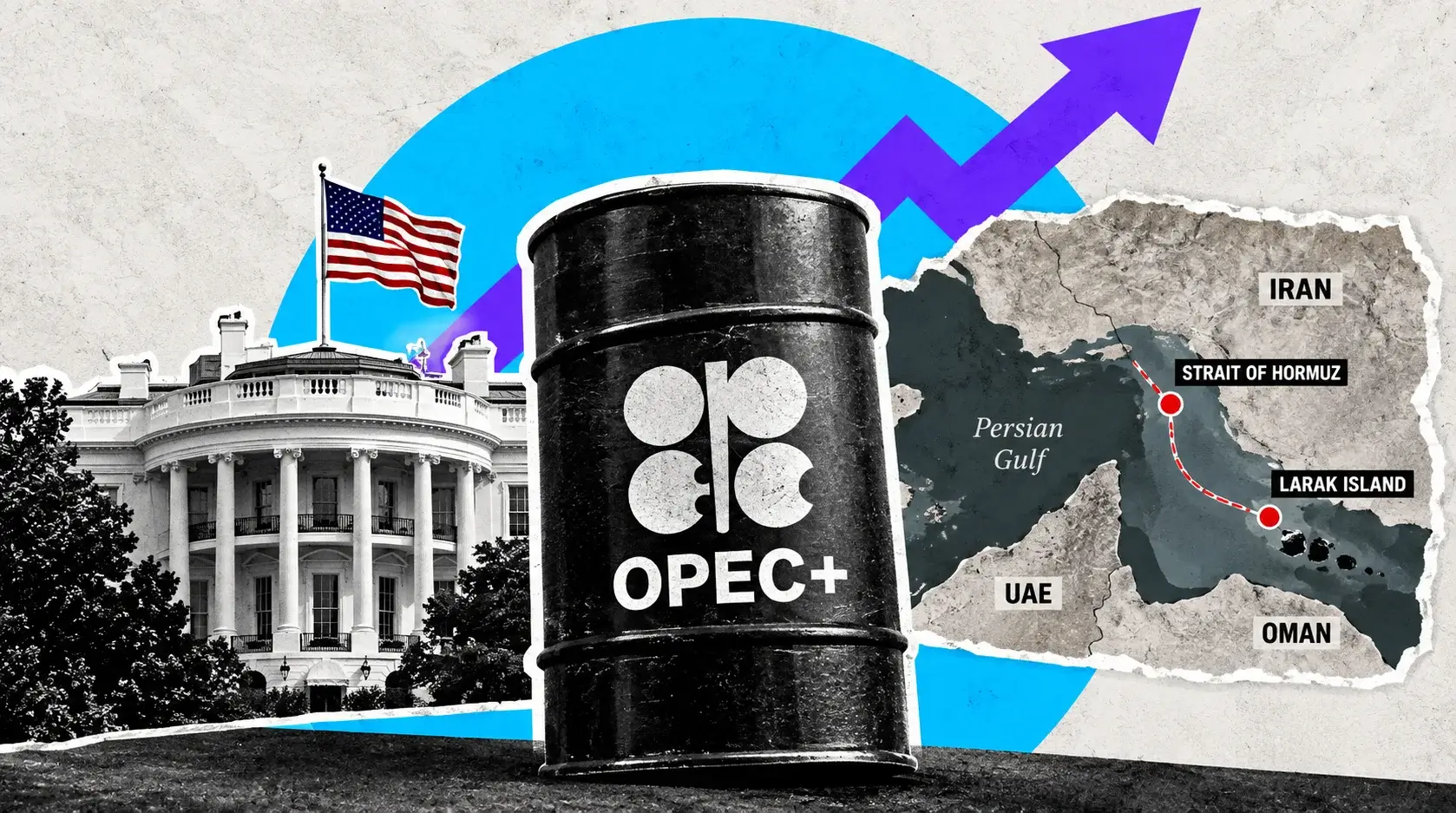
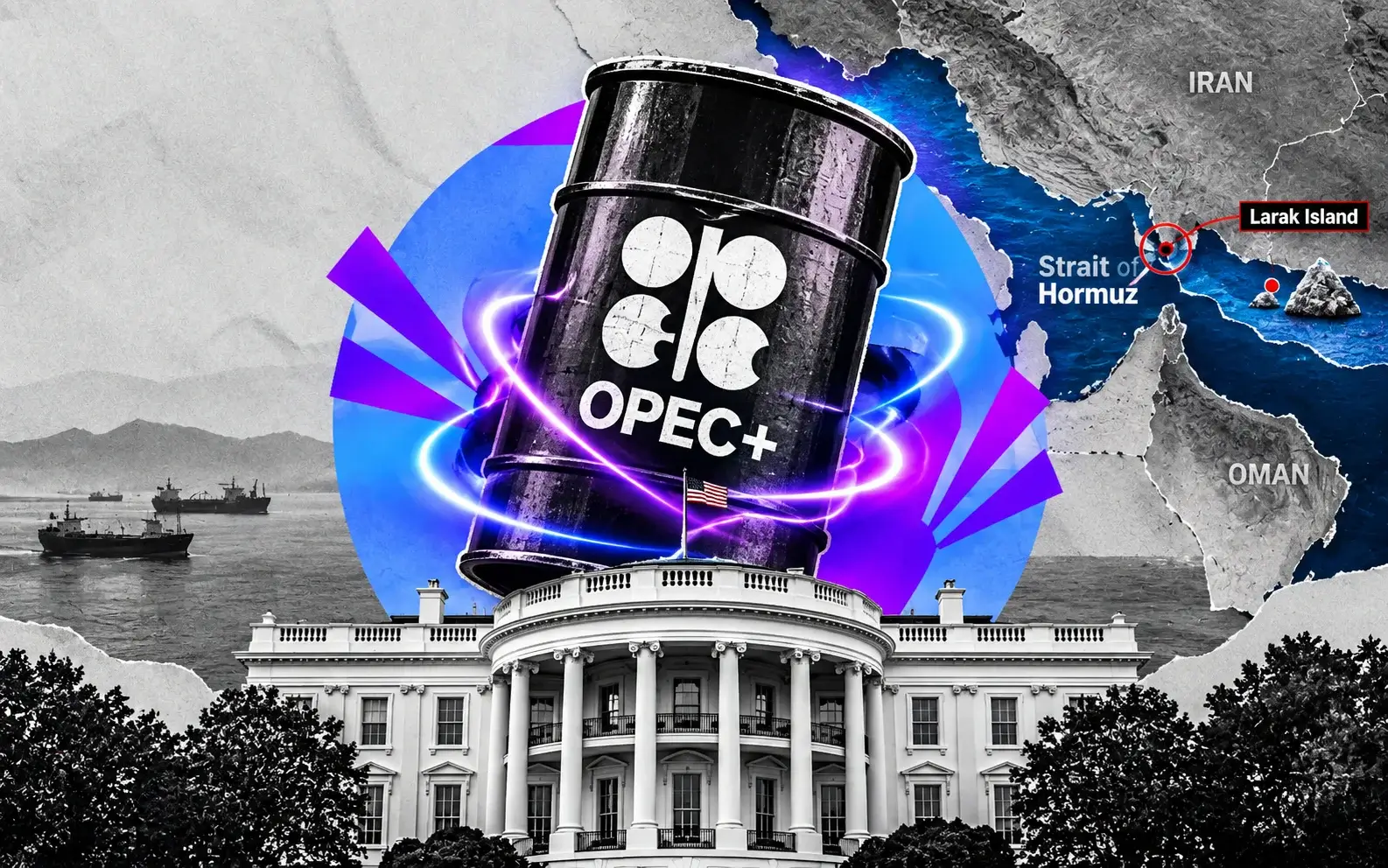
- Global markets lose 1 billion barrels of supply as Hormuz blocks 20% of world oil trade flows
- OPEC output falls to a 26-year low while Brent climbs 68.75% YoY from the $65.44 level a year ago
WTI Crude (CL=F) is changing hands at $101.80 on Tuesday after the U.S. benchmark surged 3.79% to add $3.72 per barrel in one of the most decisive single-session advances of the entire post-conflict rally cycle. Brent Crude (BZ=F) has climbed 3.70% to $108.10, gaining $3.86 in the session as the Strait of Hormuz crisis enters another week of unresolved escalation. The Brent reference quote sits at $110.43 on certain pricing feeds, registering a $2.76 gain from yesterday's $107.67 print and pricing the global benchmark a staggering $45 per barrel above the $65.44 quote logged twelve months ago — a cumulative 68.75% annual move that ranks crude among the strongest-performing macro assets across the global market complex. The supporting product chain has confirmed the move with conviction. WTI Midland is up 4.18% to $104.30, Murban Crude has added 2.12% to $105.80, gasoline futures have rallied 3.06% to $3.710, and heating oil has surged 3.45% to $4.105, while the OPEC Basket sits at $107.70 despite a counterintuitive 4.10% session decline tied to delayed pricing mechanics. The Indian Basket is at $102.50 with an 8.85% decline that reflects the discounted Russian supply continuing to feed Indian refiners, and the cross-currents within the headline pricing data tell a market that has begun pricing genuine permanent supply destruction rather than a transient geopolitical premium.
The 1 Billion Barrel Supply Destruction Threshold Has Now Been Crossed
The most consequential structural development behind today's rally is the official crossing of the 1 billion barrel supply destruction milestone. Energy Intelligence estimates that the ongoing Middle East conflict has now deprived global markets of 1 billion barrels of crude oil, petroleum products, and other liquids since the war began. That number is not a theoretical projection — it represents physical barrels that were either prevented from flowing through Hormuz or extracted from inventory buffers to plug the gap. The Strait of Hormuz remains effectively blocked, and roughly 20% of global oil trade flows through that single chokepoint, meaning every additional day of continued disruption mechanically subtracts millions of additional barrels from the available supply pool. Morgan Stanley has warned explicitly that oil inventory buffers could exhaust before Hormuz reopens, which would transition the market from a managed disruption phase into a true scarcity pricing regime. The current price action is reflecting that risk pricing in real time, with each headline that pushes the timeline for resolution further out adding incremental premium to the forward curve.
Trump's Rejection Of Iran's Counterproposal Buried The De-Escalation Trade
The immediate catalyst for the latest leg higher came from President Trump's public rejection of Iran's latest peace proposal, branding the response as inadequate and declaring the ceasefire on "life support." The diplomatic framework that markets had been trading off has effectively collapsed, and the operative trading premise now incorporates a genuine probability of renewed combat operations rather than a structured de-escalation cycle. U.S. forces have hit Iran-flagged oil tankers even while peace talks were ostensibly continuing, U.S. and Iranian forces have exchanged fire in the Strait of Hormuz in recent sessions, and Iran has seized a tanker carrying its own oil in what is being interpreted as a deliberate signal of operational unpredictability. Tankers are now going dark to exit the Strait of Hormuz, indicating that maritime traffic is operating under emergency conditions rather than any version of normal commercial flow. The behavior captured in vessel-tracking data confirms that participants are now treating Hormuz transit as a survival exercise rather than a routine commercial process.
The Operational Disruption Is Now Cascading Across The Global Supply Chain
The supply disruption has now moved decisively beyond the immediate Persian Gulf and is showing up in unexpected corners of the global energy infrastructure. Qatar has asked vessels at its key LNG port to go dark for safety, mechanically reducing transparency in one of the world's most important gas export hubs and confirming that the security environment has deteriorated even for non-Iranian Gulf shipping. Brazil's oil exports to China have doubled as Beijing scrambles to replace lost Iranian barrels through alternative supply channels — a remarkable redirection of global trade flows that captures how rapidly the international crude routing map is being redrawn. More than 40 India-bound ships remain trapped near Hormuz, with the first cargo finally reaching South Korea through the Strait since the war began only in recent days. The first Mexican fuel oil cargo in 9 months has arrived in Asia, and Japan has received its first Central Asian crude since the Iran war began, each data point reflecting how the global supply chain has been forced into hastily-assembled alternative routings that increase delivered cost while reducing reliability. OPEC output has fallen to a 26-year low according to the most recent Reuters survey, with the cartel's effective spare capacity now stretched thinner than at any point since the immediate aftermath of the 1998 Asian crisis price collapse.
Russia's Counterintuitive $59 Oil Forecast Reveals The Sovereign Calculus
Among the most revealing data points to emerge in the past 48 hours is the Russian Economy Ministry's decision to keep its 2026 oil price forecast unchanged at $59 per barrel despite spot prices trading nearly $50 above that level. The forecast for the following three years is even more conservative at $50 per barrel, and Deputy Prime Minister Alexander Novak has explicitly framed the conservative stance as pragmatism — arguing that crisis-driven export revenue upside is structurally short-term and that the budget cannot be built around windfall pricing. The math underneath that decision is consequential and worth dissecting carefully. Russia's $3 trillion economy contracted 0.3% in Q1 2026, marking the first quarterly decline since early 2023, and the Economy Ministry has cut its 2026 GDP growth forecast to just 0.4% from a prior 1.3%, with 2027 growth slashed to 1.4% from 2.8% and 2029 growth projected at 2.4%. Despite being one of the largest potential beneficiaries of elevated oil prices, the Russian government is structurally refusing to price the windfall into its long-term planning — a tell that one of the most informed sovereign actors in the global oil complex believes the current spike is not sustainable into 2027 and beyond, even though Novak personally acknowledges that "the crisis creates conditions for increased export revenues from oil and gas."
The Inflation Pass-Through Is Now Showing Up In Every Major Economy
The macro pass-through from oil prices into headline inflation is now unambiguous across every major economic geography. April U.S. CPI accelerated to 3.8% year-over-year, with energy alone contributing nearly half the headline gain and gasoline running 28.4% higher than a year ago. China's CPI has jumped as the Middle East crisis pushes energy costs higher, India's inflation has accelerated as high energy prices start to bite, and Europe is now actively designing demand-destruction policy responses to prevent household-level fuel price damage from triggering political instability. The European Federation for Transport and Environment has quantified that EU drivers could save €30 to €74 billion per year through aggressive demand-side measures, with the headline recommendation being that three additional days of remote work per week could cut individual driver fuel bills by 20%. The detail that captures the household-level severity of the shock is the data point that filling a 55-litre diesel tank in Europe now costs €30 more than before the conflict began — a number that translates directly into political pressure for emergency policy responses across multiple capitals.
The Food Inflation Channel Is The Underrated Risk Multiplier
Perhaps the most underreported channel through which the oil shock is transmitting into the global economy is food prices. The FAO Food Price Index reached 130.7 points in April, up 1.6% from March and 2.0% year-over-year, marking the third consecutive month of advances driven explicitly by elevated energy costs and Hormuz-linked supply disruption. The FAO Vegetable Oil Price Index surged 5.9% from March to its highest level since July 2022, with palm oil rising for the fifth consecutive month as biofuel demand pulls vegetable oil supply away from food markets. The mechanism is critical to understand and worth articulating clearly. When crude prices spike, biofuel demand increases, which pulls palm, soy, sunflower, and rapeseed oils away from food applications and into energy applications, creating a feedback loop that hits food prices independently of the direct fuel cost. The FAO Meat Price Index hit a new record high in April, climbing 1.2% from March and 6.4% from a year ago, while rice prices climbed 1.9% reflecting higher production and marketing costs across exporting countries following the crude oil surge. Bovine meat prices have hit a new peak on limited slaughter-ready cattle supplies in Brazil, and pig meat prices have risen on firmer EU quotations amid seasonal demand.
The Cereal And Wheat Picture Adds Another Layer Of Supply Risk
The grain markets are now feeling the secondary impact of the Hormuz disruption through the fertilizer channel. Urea and phosphate prices are rising because of the effective closure of the Strait, and that has begun to feed through into 2026 planting decisions in ways that will compound the inflation pressure into next year's harvest cycle. Farmers are shifting toward less fertilizer-intensive crops, with FAO now forecasting 2026 wheat production at 817 million tonnes — down approximately 2% from the prior year. World wheat prices climbed 0.8% in April on drought concerns in the United States and below-average rainfall expectations in Australia, maize prices rose 0.7% on weather concerns in Brazil and dry sowing conditions in parts of the U.S., and rice climbed 1.9% on cost passthrough from elevated crude derivatives. Global cereal production at 3,040 million tonnes for 2025 is up 6.0% from the previous year and provides a meaningful inventory cushion, but the 2026 outlook is unambiguously tightening as input cost pressure flows into planting decisions across multiple producing regions. The fertilizer affordability problem is the bridge that connects the oil crisis to the food crisis, and that bridge gets longer the more days Hormuz remains effectively closed.
How OPEC's 26-Year Low Output Reshapes The Forward Curve
The collapse in OPEC output to a 26-year low is the structural data point that most cleanly justifies a sustained price premium rather than a tactical spike. OPEC's spare capacity has historically functioned as the global oil market's shock absorber — when supply gets disrupted, the cartel taps spare capacity and prices normalize. The current configuration has effectively eliminated that buffer. With OPEC output running at multi-decade lows, the marginal additional supply needed to offset Iranian disruption simply cannot be sourced from the traditional swing producers without exposing the cartel to its own internal political dynamics. Aramco CEO Amin Nasser has explicitly stated that demand "rationing" will continue, a remarkable comment from the chief executive of the world's largest oil exporter that essentially confirms there is no immediate fix to the supply-demand imbalance through additional production volumes. The cartel's behavior is telling the market that even the wealthiest swing producers are operating at their effective ceiling, which means the price discovery process has to occur on the demand side rather than the supply side — and demand-side rationing typically produces sharper price moves than supply-side adjustments.
The Refining Margin Crisis Adds A Secondary Layer Of Tightness
Beyond crude itself, the downstream complex is signaling its own form of distress. China's teapot refiners have slashed output as the Hormuz crisis crushes margins, removing meaningful incremental processing capacity from the global system at exactly the moment when product demand is structurally strong. Pakistan has rejected LNG bids as the energy crisis deepens, signaling that even premium product markets are being shut out by pricing dynamics that exceed national budget capacity. Global jet fuel exports hit a 10-year seasonal low in April, which translates directly into the 20.7% year-over-year airfare inflation showing up in U.S. CPI data. Shell is moving to exit the French fuel retail market in a strategic pivot that reflects how distorted downstream economics have become, and Modi has urged Indians to conserve fuel as the oil shock spreads across the world's third-largest oil consumer. The fragmentation of the downstream layer adds risk because each refinery shutdown reduces processing capacity even after crude supply normalizes, meaning the recovery cycle on the product side could lag the recovery on the crude side significantly.
The SPR Releases Are Buying Time But Not Solving The Problem
Strategic Petroleum Reserve releases are absorbing some of the immediate pressure but cannot structurally fix the underlying supply gap. The U.S. has released 53.3 million barrels from the SPR as part of a coordinated IEA package totaling 172 million barrels, and Modi's fuel price freeze is costing Indian state retailers billions as a parallel demand-side intervention that adds fiscal cost without resolving the underlying scarcity. The fundamental math problem is that strategic reserves are finite, and once they deplete the system has no remaining cushion. Morgan Stanley has explicitly warned that oil buffers could run out before Hormuz reopens, which is the cleanest single articulation of the central risk facing the market right now. Gasoline pump prices on Tuesday averaged $4.50 per gallon nationally in the United States despite the SPR releases, indicating that the strategic intervention is barely keeping pace with the demand-side pressure rather than driving prices lower. The SPR is functionally a damage-mitigation tool rather than a price-resolution tool, and the market is increasingly pricing that distinction into its forward expectations.
The Long-Term Performance Context Captures The Cyclical Setup
Stepping back to the longer-term frame produces an instructive performance picture. Brent crude is up 68.75% from $65.44 a year ago, 14.50% from $96.44 a month ago, and the trajectory is unambiguously vertical with no meaningful consolidation phases interrupting the advance. To frame how severe the current cycle is by historical standards, the COVID demand collapse pushed prices below $20 per barrel in 2020, while the 2008 supply tightness drove a similar spike before collapsing alongside the global financial crisis. The current setup more closely resembles the early-1970s embargo configuration — a deliberate geopolitical chokepoint blockade rather than a demand-driven price discovery cycle — and that historical analog typically produces more sustained pricing premiums than purely speculative oil rallies because the underlying supply destruction is mechanically locked in rather than reflecting trader positioning. The 1973 embargo eventually produced a price quadrupling that took years to fully resolve, and while no single historical analog maps perfectly onto the current configuration, the structural similarities suggest that mean-reversion expectations need to be calibrated for a slower normalization timeline than typical commodity spike cycles.
The Natural Gas Cross-Current Adds Another Macro Variable
The natural gas complex is sending a partially divergent signal worth understanding precisely. Natural Gas futures are down 2.75% to $2.830, breaking from the broader energy rally despite the parallel disruption to LNG flows from Qatar and other Hormuz-adjacent producers. The divergence reflects warming weather patterns reducing immediate heating demand combined with China's LNG imports rebounding from an eight-year low as Beijing rebuilds inventory through alternative supply channels. Asia's major LNG importers Japan and Korea are turning to coal as the LNG complex tightens, Cheniere has raised 2026 guidance as LNG exports hit record highs, and the IEA has projected tight gas markets will last through 2030. The bifurcation between crude and natural gas captures the regional specificity of the supply disruption — crude is hostage to the Hormuz chokepoint while gas has more diversified delivery routes that have allowed alternative supply to compensate more efficiently. The implication for the crude bull case is that the geographic specificity of the disruption matters far more than the headline energy narrative, and that distinction supports the view that crude prices remain structurally premium-bid even as natural gas softens.
Capital Investment Is Now Flowing Aggressively Into Replacement Supply
The investment community has begun deploying capital into replacement supply at scale, validating the view that current price levels are sustainable enough to justify long-term project commitments. Santos has approved a major gas expansion project in Papua New Guinea, investing approximately $160 million net in a brownfield extension of PNG LNG with gross capex of $400 million over three years. The project adds 135 mmscf/d of production capacity with an expected IRR above 50% and a payback period under four years, converting 66 mmboe of undeveloped reserves into developed reserves with a production plateau of around 12 years and potential output beyond 2050. TotalEnergies, QatarEnergy, and ConocoPhillips have all joined Chevron to explore for hydrocarbons in Syrian waters in one of the more strategically significant exploration partnerships of the past decade, repositioning Syria from a geopolitical pariah back into the global hydrocarbon supply complex. Woodside is mounting a Browse LNG offensive, Devon has launched an $8 billion buyback after the Coterra merger, and Aramco profit has jumped 25% in Q1 as pipeline ramp-ups counter Hormuz disruption, with Shell boosting its dividend after strong Q1 performance and Eni shareholders backing a €4 billion buyback that confirms management confidence in sustained cash generation through the cycle.
Read More
-
Yen Stalls at 160 Despite a 3% JGB and Tokyo Core CPI at 2.0% — Intervention Sits at 164, Friday's Payrolls Decide
02.09.2026 · TradingNEWS ArchiveEnergy
-
Dell Rebounds to $565.86 as a $95 Billion AI Backlog Meets 22x Forward Earnings — $595 High in Sight
25.09.2026 · TradingNEWS ArchiveStocks
-
XRP-USD ($1.53) Outperforms as ETF Inflows Return, but August Buyers Guard $1.60 — $1.70 Upside vs. $1.25 Floor
25.09.2026 · TradingNEWS ArchiveCrypto
-
Brent Holds $105 While WTI Heads for a 7% Weekly Loss as a 3M-Barrel Build and a Diesel Ban Threat Split the Market
25.09.2026 · TradingNEWS ArchiveCommodities
-
S&P 500 Gains 0.22%, Nasdaq Tops 27,000, Dow Up 0.40% on MSFT Launch and AKAM Deal
25.09.2026 · TradingNEWS ArchiveMarkets
-
Sterling Slides to 1.3216 as a Divided Bank of England Trails the Fed — 1.3424 Upside vs. 1.3000 Risk
25.09.2026 · TradingNEWS ArchiveForex
The Demand Destruction Mechanisms Are Now Active In Multiple Markets
Demand destruction is becoming a meaningful counterforce to the supply-driven rally, and any credible analytical framework needs to incorporate this as a genuine bear-case input rather than dismissing it as a marginal factor. China's car sales have slumped as gasoline demand craters, providing the cleanest signal that price-driven demand erosion is now visible in real-time consumption data rather than just analyst forecasts. China's crude imports have plunged to the lowest level since the pandemic, a structural development that should mechanically cap the upside on crude prices if it persists into the back half of the year. The EU policy framework being designed by the European Federation for Transport and Environment would mechanically eliminate meaningful continental demand through behavioral changes — speed limit reductions of at least 10 km/h on motorways, accelerated public transport investment, and aggressive eco-driving guidance focused on tyre pressure maintenance and air conditioning use. The risk for bulls is that demand destruction at this scale, combined with eventual diplomatic resolution and inventory rebuilding, could trigger a sharp reversal once the supply side normalizes. The bear case essentially depends on the demand response moving faster than the supply restoration sequence, and the demand-side data is starting to provide credible evidence that this scenario is operationally viable.
The Pricing Architecture Across The Forward Curve
The current pricing architecture across the global benchmarks captures the dispersion in regional supply dynamics with notable precision. WTI Crude at $101.80 versus Brent at $108.10 produces a Brent-WTI spread of roughly $6.30, which is meaningfully wider than the historical sub-$5 baseline and reflects the structural premium being attached to seaborne crude with global delivery optionality. WTI Midland at $104.30 is trading at a $2.50 premium to standard WTI, capturing the export-quality premium for light-sweet barrels with direct Gulf of Mexico delivery. Murban Crude at $105.80 is now trading just below the OPEC Basket, while the Indian Basket at $102.50 reflects the discounted Russian and Iranian supply that India continues to import via alternative routing channels. The Brent-WTI spread, the Murban premium, and the regional basket divergences all point to a market that is pricing genuine logistical scarcity rather than uniform speculative demand. Understanding the dispersion matters because it reveals where the marginal barrel of supply is most stressed — and right now that marginal barrel is unambiguously the seaborne international barrel needing to traverse the Hormuz chokepoint.
The Pump Price Reality Captures The Household-Level Damage
The household-level damage is now severe enough to demand political attention across multiple major economies. Gasoline futures at $3.710 per gallon translate into retail pump prices well above $4.50 per gallon nationally in the United States, with several states already pricing above $5.00 per gallon at the rack. The "rockets and feathers" pattern is fully in evidence — gasoline prices respond instantly to crude rallies but decline only slowly when crude prices ease, meaning households face front-loaded pain on the way up that lingers even after the underlying oil benchmark moderates. Heating oil at $4.105 is up 3.45% on the session, gasoline futures are up 3.06%, and the entire downstream complex is delivering daily price increases that mechanically squeeze discretionary spending across every income bracket. The political economy implications of sustained $4.50+ pump prices through the U.S. summer driving season are non-trivial and could force aggressive Strategic Petroleum Reserve drawdowns beyond the current 53.3 million barrel release if pressure intensifies.
The Sugar And Dairy Outliers Tell A Subtle Story
Worth noting within the broader inflation complex are the two food categories that have moved against the trend and provide useful diagnostic information. The FAO Dairy Price Index declined 1.1% from March on abundant European milk supplies and stronger-than-expected late-season Oceania output, and the FAO Sugar Price Index dropped 4.7% from March and a remarkable 21.2% from a year ago on improved Asian production prospects and the Brazilian harvest commencement. The dispersion within the food complex is informative because it confirms that the dominant inflation pulse is energy-driven rather than reflecting broad-based supply pressure across all commodities. When crude rallies but certain food categories decline, the market is sending a clear signal that the inflation channel runs almost entirely through the energy-input pathway. Sorghum prices declined 4.0% during the same period on weaker import demand, providing additional confirmation that grain-specific weakness exists alongside the energy-driven strength rather than reflecting any structural deflation in food broadly. The takeaway is that policymakers focused on inflation control need to address the energy channel directly because supply-side responses in food alone will not resolve the broader pressure.
The Strategic Calculus For The Coming Sessions
The setup heading into the back half of the week is structurally bullish on a tactical horizon and likely to remain so unless one of three specific catalysts emerges to break the pattern. First, a credible diplomatic breakthrough between Washington and Tehran that actually opens Hormuz to normalized commercial transit would mechanically remove the geopolitical premium currently embedded in the price. Second, a meaningful coordinated SPR release announcement that goes beyond the current 53.3 million barrel commitment would provide additional supply absorption capacity. Third, demonstrable demand destruction across China and India that accelerates beyond current trajectory would force a structural recalibration of forward price expectations. None of these three scenarios currently appears probable on a near-term horizon, which means the path of least resistance for crude prices remains higher into the summer driving season unless a sudden catalyst emerges to break the pattern.
The Position Framework — Structurally Bullish With Defined Asymmetry
The framework here resolves to a structurally bullish oil posture with disciplined entry timing required at the current spike levels. The fundamental case is built on a foundation of multiple converging supports — the 1 billion barrel cumulative supply destruction milestone, OPEC output at a 26-year low with limited spare capacity to deploy, the effective Hormuz closure removing 20% of global crude trade from operational flow, the rejection of the diplomatic resolution framework that markets had partially priced into the forward curve, the FAO food inflation channel adding secondary upward pressure through the biofuel substitution dynamic, and the Morgan Stanley warning that inventory buffers may exhaust before the diplomatic process resolves. The technical case is supported by the parallel rallies across WTI, Brent, Murban, WTI Midland, gasoline, and heating oil that confirm broad institutional positioning rather than a single-product squeeze. The risks deserve respect — demand destruction in China is visible in import data and car sales, the EU is designing aggressive demand-side policy responses, SPR releases are absorbing some immediate pressure, and the Russian Economy Ministry's $59 baseline for 2026 represents informed sovereign skepticism about price sustainability into next year. The base-case positioning is accumulation on weakness toward the $95-$98 WTI zone and $102-$104 Brent levels, with the $96.44 one-month low providing a meaningful structural anchor and the $110-$115 Brent zone as the immediate upside target if the Hormuz disruption persists. A confirmed break above $112 Brent with rising volume and continued OPEC output weakness would justify pyramid additions targeting the $118-$120 zone that several analysts now identify as the next structural resistance band, with eventual price discovery toward the $130-$140 range possible if the supply destruction extends through the summer driving season. The conviction read on oil is Buy with a structurally bullish bias on the WTI and Brent complex, transitioning to strong Buy on any pullback toward $95 WTI or $100 Brent, with the longer-term setup suggesting that prices are likely to remain elevated through the back half of 2026 unless Hormuz reopens decisively or demand destruction accelerates meaningfully beyond current trajectories. The structural role of oil as both a geopolitical risk hedge and an inflation transmission vector remains decisively intact regardless of which side of the supply-demand equation ultimately resolves first, and the current pullback opportunities into any tactical reversal should be treated as accumulation windows rather than warnings to exit the directional thesis.