Oil Price Today: WTI Explodes 11% , Brent at $107 — 500M Barrels Already Lost, $200 Oil at 20% Probability
Trump's vow to hit Iran "extremely hard" for two to three more weeks — while simultaneously telling US allies the Strait of Hormuz is "their problem to solve" | That's TradingNEWS
Key Points
- WTI (CL=F) surged as much as 13% before settling at $110.22 and Brent (BZ=F) rose 6.44% to $107.67 Thursday after Trump's Wednesday address vowed further Iran strikes
- TP ICAP analyst Scott Shelton warned that if the war extends past the weekend ceasefire, oil markets will hit demand destruction levels before mid-to-late April
- Jet fuel prices have surged more than 100% in one month, hitting airlines with an estimated $400 million per carrier quarterly expense hit
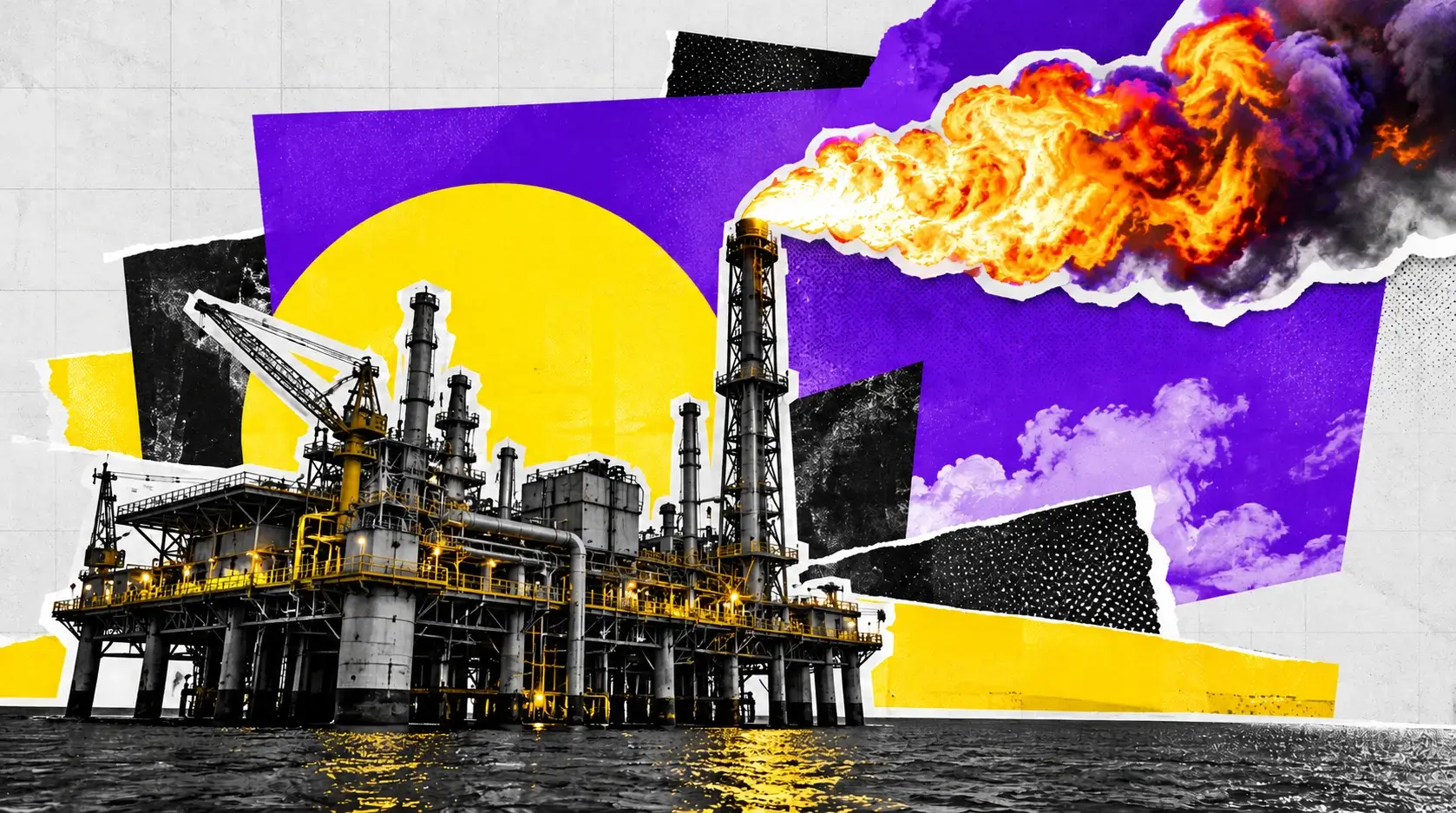
West Texas Intermediate crude futures (CL=F) surged 11.10% to $110.22 per barrel as of 11:33 a.m. ET Thursday, marking the second time since the war began in late February that WTI has crossed the psychologically and economically critical $110 threshold. June futures for international benchmark Brent crude (BZ=F) rose more than 6.44% to $107.67 per barrel, with intraday peaks reaching $107.79 during the morning London session before partially pulling back. At their session highs, WTI had gained as much as 13% from the prior session before retreating from the extreme peak as Iranian state news agency IRNA reported that Iran and Oman were drafting a protocol to monitor Strait of Hormuz transit — a headline that briefly gave the market an excuse to trim the most extreme gains without reversing the underlying bullish trend.
The numbers in isolation are extraordinary. WTI has now rallied from approximately $65 per barrel before the war began on February 28 to $110 on Thursday — a 69% surge in approximately five weeks. Brent crude surged more than 60% during the month of March alone, which Bank of America described as the biggest single-month percentage gain in Brent crude prices since futures trading launched in the 1980s. That is not the biggest monthly gain since 2020, or since 2008, or since the first Gulf War. That is the biggest monthly gain since the instrument has existed as a tradable financial product. The scale of what has happened to global energy markets in the past five weeks has no modern precedent, and Thursday's 11% single-session WTI move is not an outlier in this environment — it is the continuing manifestation of a supply shock whose full economic consequences have not yet been fully priced or felt.
The prompt oil price has hit a record premium to next-month delivery — a condition known as extreme backwardation — reflecting the market's judgment that physical crude is desperately scarce right now and that traders are willing to pay a massive premium for immediate delivery versus future delivery. Extreme backwardation of this magnitude is the oil market's most reliable signal of acute physical supply shortage, and it reinforces every analytical argument for why prices are not simply speculative — they are reflecting real-world supply disruption of historical severity.
What Trump Actually Said — And Why the Market Responded With an 11% Surge Rather Than a Relief Rally
The market's 11% initial surge on Thursday was a direct reaction to Trump's Wednesday evening national address, which delivered the opposite of what oil traders had positioned for following Tuesday's optimistic signals. On Tuesday, Trump told White House reporters that the war would end within "two or three weeks, whether we have a deal or not" and appeared to signal a unilateral US military withdrawal regardless of diplomatic resolution. Oil prices fell on that comment, with Brent briefly dipping below $100 per barrel for the first time in a week as traders priced in an imminent end to the Strait of Hormuz disruption. That optimism was systematically dismantled over the next 24 hours.
Trump's Wednesday address ran 19 minutes and contained language that oil markets interpreted as unambiguous escalation rather than wind-down. The president said the US would "hit" Iran "extremely hard" over the next two to three weeks, attributed the oil price surge to "the Iranian regime launching deranged terror attacks against commercial oil tankers," and framed the US position on the Strait of Hormuz in terms that shocked energy analysts: he essentially told America's oil-dependent allies that reopening the Strait was their problem to handle, not Washington's. Political risk analyst Giles Alston at Oxford Analytica described the shift directly on CNBC's Squawk Box Asia: "It's becoming increasingly clear that the US position on what you do to get your oil out of and through the Straits of Hormuz is now something which Washington has largely washed its hands off. This is now something for those who take oil through the Strait to sort out for themselves."
George Efstathopoulos, portfolio manager at Fidelity International, told Squawk Box Asia that markets had braced for a binary outcome — either a war exit signal or further escalation — and "clearly we seem to be on the latter path right now." That binary framing is exactly right. The oil market had built in a meaningful probability of near-term de-escalation following Tuesday's comments. Wednesday's address eliminated that probability in real time, and the 11% single-session WTI surge is the arithmetic of removing a de-escalation probability from oil's pricing framework and replacing it with an escalation premium.
Trump simultaneously added a contradiction that the market processed as net bearish: he acknowledged that Iran's "New Regime President" had asked for a ceasefire, said the US would "only consider" it if the Strait of Hormuz was "open, free, and clear," and then threatened to blast Iran "back to the Stone Ages" in the same statement. Iran flatly denied the ceasefire claim, saying the Strait remains "decisively and dominantly under the control of the IRGC Navy" and would not be reopened based on what Tehran characterized as Trump's "absurd displays." The two sides have now contradicted each other's claims about peace talks so frequently and so sharply that the market has essentially stopped pricing diplomatic resolution as a near-term base case — and when the base case for oil traders is no resolution, the price reflects that conclusion at $107 to $110 per barrel.
500 Million Barrels Already Lost — Scott Shelton's Numbers Are the Most Alarming in the Market
Scott Shelton, energy analyst at TP ICAP, put the physical scale of the supply disruption into numbers that every participant in every market needs to internalize. At current rates of disruption, Shelton estimates the overall losses for the duration of the war so far are approximately 500 million barrels of crude oil and refined products including diesel, jet fuel, and gasoline. Five hundred million barrels. That figure represents the near-total elimination of the global oil storage buffer that existed before the war started. The pre-war storage buffer was the world's primary safety valve against supply shocks — the cushion that moderated price spikes by allowing stored oil to flow into markets when production or transport was disrupted. That cushion is essentially gone, which is why prices are behaving with the volatility and severity they are, and why analysts who understand the physical market are the most alarmed voices in the current conversation.
Shelton provided a specific and time-bound warning that deserves to be read in full: "If this war is still going past the weekend's ceasefire, we are going to demand destruction levels before the middle to end of the month." That statement has a precise meaning in oil market economics. Demand destruction is not a metaphor — it is the specific economic mechanism where prices rise high enough that consumers and businesses reduce consumption faster than the supply shortage reduces supply, causing demand to fall to meet the available supply. It is the oil market's self-correcting mechanism of last resort, and it operates through economic pain — business closures, consumption cutbacks, recessions, and in severe cases, rationing. Shelton is saying that if the war does not end at the weekend ceasefire he referenced, demand destruction becomes the dominant market dynamic before the end of April.
Bank of America reinforced Shelton's physical assessment from a macroeconomic angle. The bank estimated that in March alone, the world economy lost approximately 14 million to 15 million barrels per day of crude oil and energy products. To put that in context, total global oil consumption is approximately 100 million barrels per day under normal conditions — meaning the Hormuz disruption removed roughly 14-15% of global energy supply in a single month. Bank of America's conclusion was stark and should be quoted without softening: "Should most of these energy flows not be restored within the next two to four weeks, we believe that a breakdown of the global oil supply chain would be inevitable." The bank used the phrase "breakdown of the global oil supply chain" — not disruption, not challenge, not headwind. Breakdown. And it added that such a breakdown would force demand rationing and trigger "consequences reminiscent of, or possibly worse than, the energy crises of the 1970s."
$200 Oil Is Not a Fringe Scenario — Macquarie Puts the Probability at 20% and Here Is the Math
Vikas Dwivedi, global oil and gas strategist at Macquarie Group, published research concluding that if the war lasts through June, oil prices would likely spike above $200 per barrel "for a time." Dwivedi told CNN on Wednesday that the probability of $200 oil has declined from approximately 40% late last week to approximately 20% currently — a meaningful reduction driven primarily by Trump's Tuesday comments suggesting a near-term war conclusion. But 20% is not a negligible probability. In risk management terms, a 20% probability on a $200 oil scenario is a tail risk that every portfolio manager, corporate treasurer, and policymaker needs to have in their stress testing framework right now.
The mathematical logic behind $200 oil is not exotic. Bob McNally, president and founder of Rapidan Energy Group and a former energy adviser to President George W. Bush, explained the mechanism with surgical precision: "The price will go to whatever level is required to slow GDP. No one knows exactly what level that is, but I think high $100s or even over $200 is reasonable, unfortunately." In 2008, the demand destruction price — the level where consumption fell fast enough to balance supply — was approximately $147 per barrel. Adjusted for twelve years of inflation to 2026, that inflation-adjusted equivalent could be above $200. McNally is not speculating. He is applying the same demand destruction logic that has governed every major oil supply shock in history to current conditions where the supply disruption is categorically larger than any prior episode.
If oil reaches $200 per barrel, the downstream consequences are specific and quantifiable. US gasoline prices would rise to approximately $7 per gallon — nearly $2 above the prior record of $5.02 set in June 2022 and nearly double the pre-war national average. Dubai oil prices have already topped $166 per barrel, which serves as a real-world data point confirming that $150-plus oil is not theoretical but is already being transacted in some market segments. The CNN Fear & Greed Index has fallen to 15, reflecting extreme fear across financial markets — a reading that has historically corresponded to the most acute phases of financial stress and is consistent with the market pricing a meaningful probability of recession-level economic damage from the current energy shock.
Bank of America's Three Scenarios for Oil — From $77.50 to $150-Plus Depending on What Happens in the Next Two to Four Weeks
Bank of America laid out three explicit price scenarios for oil that represent the cleanest forward-looking framework currently available in the market. In scenario one — "rapid de-escalation" — the Middle East conflict ends quickly and the Strait of Hormuz reopens, allowing BofA to project Brent averaging just $77.50 per barrel for 2026. That scenario would represent a collapse of approximately 28% from Thursday's $107 and would deliver a significant economic tailwind as energy costs fall, inflation retreats, and the Federal Reserve gains room to cut rates. This is the scenario Trump described on Tuesday when he said gas prices would "come tumbling down" once the conflict ends, and it remains theoretically achievable if a ceasefire materializes within the next week.
In scenario two — BofA's most likely outcome — the war ends in two to four weeks as Trump has repeatedly promised, translating to Brent crude averaging $92.50 for the full year 2026. This scenario implies elevated prices but a manageable economic environment — painful for airlines, trucking, and consumer spending but not catastrophic for overall growth. This is the scenario that requires Trump's two-to-three week timeline to actually materialize, Hormuz to reopen within weeks of a ceasefire, and energy infrastructure in the Middle East to begin restoration within a timeframe that prevents the storage buffer from completely exhausting.
In scenario three — the "escalation" scenario — BofA projects an extended supply loss that would drive oil prices above $150 per barrel this quarter. The bank described this outcome as a "triple-whammy" of near-zero real income growth for consumers, job losses, and stock market turmoil. "The escalation scenario could push the US economy into a recession within a few months," BofA wrote explicitly. The key driver of this scenario is not the war continuing indefinitely but rather the Strait of Hormuz remaining substantially closed long enough after hostilities end for the global oil supply chain to experience the "breakdown" the bank described — at which point the physical shortage becomes self-reinforcing as refineries cut utilization, storage empties, and prices must rise to levels that crush demand rather than simply moderate it.
The Strait of Hormuz Is Not Just an Oil Problem — Helium, Jet Fuel, Diesel, Fertilizer, and Petrochemicals Are All in Crisis Simultaneously
The analytical error most commentators are making about the current energy crisis is reducing it to a crude oil story. The Strait of Hormuz carries approximately 20% of the world's oil and gas flows, but its closure has set off a cascade of disruptions through the entire energy and chemical supply chain that extends far beyond crude prices. Goldman Sachs analysts described the breadth of the damage in a note on Tuesday, specifically identifying aviation and Asian petrochemical industries as sectors where "pockets of clearer demand destruction have emerged." Those two sectors are not marginal — aviation represents a multi-trillion-dollar global industry, and Asian petrochemicals underpin the manufacturing supply chains that produce goods flowing to consumers in every major economy.
Jet fuel prices have surged more than 100% over the past month. American Airlines (AAL) and United Airlines (UAL) each dropped more than 3% on Thursday. Delta Air Lines (DAL) fell nearly 2%. Alaska Air Group (ALK) and Southwest Airlines (LUV) also declined. The industry anticipates a $400 million expense hit per carrier this quarter — a number that will materialize in Q1 earnings calls beginning with Delta's print on April 8th. Andy Lipow, president of Lipow Oil Associates, identified a compounding refinement problem that is making the jet fuel situation structurally worse: "Asian refiners have had to cut utilization rates due to a lack of crude oil, further exacerbating the supply situation." He added that "refined product exports have been restricted by China, Korea, Thailand, and Pakistan" — meaning the disruption has now triggered retaliatory or protective policy responses from Asian governments that are further restricting the global availability of refined petroleum products beyond what the raw Hormuz closure alone would produce.
Delta's structural advantage — owning the Monroe Energy refinery in Pennsylvania, which allows it to produce its own jet fuel and capture refining margins — is the single most important competitive differentiator in the airline industry right now. While every other carrier pays third-party suppliers charging steep markups on already-elevated jet fuel, Delta has partial insulation through its refinery ownership. That advantage does not eliminate the fuel cost headwind but it meaningfully reduces it, which is why Delta is expected to navigate the earnings season with less damage than American and United despite all three stocks declining on Thursday.
The fertilizer dimension adds another layer that markets are underpricing. Persian Gulf natural gas — whose transport routes are directly affected by Hormuz disruption — is a primary feedstock for the Haber-Bosch process that produces the nitrogen fertilizers that feed roughly half the world's population. CF Industries (CF), which jumped 5% Thursday, is the most direct US-listed beneficiary of this dynamic, but the downstream consequences extend to agricultural commodity prices, food inflation, and the economic stability of import-dependent developing nations. BofA's thesis — explicitly stated in their research — is that the Iran war is not an oil shock but an energy shock, and the fertilizer channel is one of the clearest illustrations of why that distinction matters.
Read More
-
Yen Stalls at 160 Despite a 3% JGB and Tokyo Core CPI at 2.0% — Intervention Sits at 164, Friday's Payrolls Decide
02.09.2026 · TradingNEWS ArchiveEnergy
-
QQQ ETF ($706.22) Slides 7.4% Below Its High as the Market Reprices the AI Capex Bill — $686.57 Target if $700 Breaks
22.10.2026 · TradingNEWS ArchiveStocks
-
XRPI ($7.00) and XRPR ($10.74) Slide Toward 52-Week Lows as Spot XRP ETF Flows Stall at $708,510
22.10.2026 · TradingNEWS ArchiveCrypto
-
NG ($2.775) Decoupled From Europe’s €88 Gas Crisis as LNG Feedgas Hits 18.9 Bcf/d — $3.30 Upside on Cold Weather
22.10.2026 · TradingNEWS ArchiveCommodities
-
Dollar-Yen (157.35) Loses 157.65 as the Yen Rallies on Haven Demand — 155 Target if 156 Breaks
22.10.2026 · TradingNEWS ArchiveForex
The IEA Has Released 400 Million Barrels From Emergency Stockpiles — The Largest Emergency Release in History — And It Is Not Enough
The International Energy Agency has taken the most aggressive emergency response in its history, releasing a record 400 million barrels of oil from emergency stockpiles globally while also publishing consumption reduction recommendations for both governments and consumers. IEA head Fatih Birol stated explicitly that the current energy crisis has already become the largest in history — surpassing the 1973 Arab oil embargo, the 1979 Iranian Revolution shock, and every subsequent supply disruption including the Gulf War and the 2008 price spike. The 400 million barrel emergency release is extraordinary in its scale — but it must be contextualized against TP ICAP's estimate of 500 million barrels already lost, which suggests the IEA's emergency action has replaced approximately 80% of the deficit while the other 20% continues to accumulate daily as the Strait remains closed.
Birol's warning that "in many countries, the rationing of energy may be coming soon" is perhaps the most alarming public statement from a major institutional authority since the war began. The IEA does not use language like "rationing" casually. Energy rationing — government-mandated restrictions on how much fuel consumers and businesses can purchase — represents a level of supply emergency that triggers economic disruption far beyond what price increases alone can accomplish. Toni Meadows, head of investment at BRI Wealth Management, told CNBC that he expects rationing announcements by the end of Trump's stated two-to-three week war conclusion window, noting: "I would expect to see more announcements regarding potential rationing of oil supplies as countries prepare for a period where their reserves start to deplete."
Germany has already implemented new regulations preventing gas stations from raising fuel prices more than once per day — a reaction to reports that some outlets had been hiking prices 22 times daily in response to crude oil futures movements. Australia has activated level 2 of its 4-level national fuel security plan, with drivers being officially encouraged to "only buy the fuel you need." Japan has temporarily relaxed rules to allow increased use of coal-fired power plants. These are not normal peacetime energy policy adjustments. These are emergency response measures from some of the world's most developed economies, implemented in real time as their energy security frameworks are tested at a scale they were not designed to handle.
South America Is Breaking Under the Oil Shock — Chile Up 60% on Diesel, Argentina's YPF Introduces a 45-Day Price Buffer, Brazil's Petrobras Raises Jet Fuel 55%
The global transmission of the oil price shock is happening simultaneously across every continent, but South America is providing some of the most acute examples of how the energy crisis is creating political and economic fractures in countries that were already operating under stress. Chile, one of the most import-dependent energy economies in Latin America, has been among the hardest hit. After being forced to unwind its price-stabilization scheme due to strained public finances, Chile is facing gasoline price increases of up to 30% and diesel price increases of up to 60%. Diesel in Chile powers the trucks that move goods throughout the country's geography — 60% diesel price increases translate directly into food prices, manufacturing costs, and every downstream price in the economy.
Brazil's state-run energy firm Petrobras (PETR3.SA) raised jet fuel prices by approximately 55% this week — a number that mirrors the broader aviation fuel crisis described in the US context but at Brazilian scale, affecting one of the world's largest economies. Brazil's status as a net oil exporter provides some structural cushion, but it does not immunize the country from global oil price transmission, and central bank officials have already warned that the oil shock could weigh on inflation even accounting for Brazil's energy export position. Peru saw inflation spike in March amid higher fuel prices and domestic supply disruptions. Uruguay has been cited by Citi as a relative exception due to fewer direct energy subsidies and adequate international reserves.
Argentina presents the most politically complex story. President Javier Milei's entire anti-inflation narrative — the core of his political identity and his administration's claim to economic credibility — is being directly attacked by the oil shock. Gasoline prices in Argentina are up approximately 15% on average since late February according to energy analyst Fernando Bazan at Abeceb, and that number is after Milei's administration relaxed gasoline quality standards and postponed a fuel tax hike specifically to limit price increases. YPF (YPF), Argentina's dominant state energy firm, introduced a 45-day buffer on gasoline prices late Wednesday — specifically committing not to pass on further Brent crude price increases to consumers for 45 days. YPF CEO Horacio Marin explicitly framed this as not a price cap, calling it a "period of stability" while the global situation evolves. The Argentine government source told Reuters that no additional measures were being contemplated and energy subsidies must remain capped at 0.5% of GDP to meet fiscal targets.
The political stakes in Argentina are existential for Milei. Monthly inflation has stalled near 3% for nine months, or approximately 33% annually, with private forecasters already revising 2026 inflation estimates higher before the crude price surge began. Mariano Machado, Americas analyst at Verisk Maplecroft, summarized the predicament precisely: "The Iran shock has arrived at the worst possible moment for Milei's counter-inflation program." Fuel price protests in Chile have already dented the popularity of newly inaugurated President Jose Antonio Kast. Argentina's opposition — fragmented but hungry for ammunition — now has a potentially potent political grievance to organize around ahead of the 2027 presidential race, and the YPF price buffer will expire in 45 days regardless of whether the war has ended.
Demand Destruction Has Already Started — Aviation, Asian Petrochemicals, South Korea, Thailand
The distinction between demand destruction and demand modification is one of the most important analytical distinctions in the current oil market, and multiple analysts on Thursday were trying to characterize where along that spectrum the current situation sits. Chris Metcalfe, CIO at IBOSS, argued that what markets are currently seeing is "short-term demand modification driven by higher prices and precautionary behaviour" rather than true structural demand destruction. He cited the US experience of gasoline prices briefly moving above $4 per gallon as an example of price-driven behavior change that "tends to be short-lived and reversible" unless sustained. He pointed to South Korea and Thailand as markets where consumption has softened but described the softening as reflective of temporary adjustments rather than structural declines.
Goldman Sachs took a harder view, specifically identifying aviation and Asian petrochemical industries as sectors where demand destruction has clearly materialized rather than merely been modified. The distinction matters enormously for how long the recovery takes once the Hormuz situation resolves. Modified demand snaps back immediately when prices fall. Destroyed demand is slower to recover — it requires capacity to be rebuilt, supply chains to be re-established, and consumer and business confidence to be restored. Airlines that have cut routes, petrochemical plants that have reduced utilization, and Asian refiners that have cut processing capacity are not going to restart instantaneously the moment Brent falls back to $80. The supply chain damage from five-plus weeks of Hormuz closure is creating a recovery timeline that extends well beyond the moment of ceasefire.
Scott Shelton's estimate of 500 million barrels in cumulative losses is the most important physical quantification of this dynamic. If those losses have wiped out the pre-war storage buffer, then even a rapid Hormuz reopening does not immediately restore balance — the market must first rebuild the storage buffer before it can absorb any additional supply disruption. That rebuilding process takes time, during which prices remain elevated even in a post-war environment. This is why ECB chief Christine Lagarde told The Economist that market views of a swift recovery from the Iran war were "overly optimistic" and warned that there is "no way" the Gulf's lost energy supply can be restored within months — noting that the disruption may last years rather than weeks. Lagarde's language is not hyperbole. It reflects the structural reality that energy infrastructure destroyed or closed during five weeks of intensive conflict does not reopen on a political timeline dictated by a presidential speech.
IMD Professor Simon Evenett's Warning: Iran Can Sustain the Hormuz Stranglehold Even After US Withdrawal
Simon Evenett, Professor of Geopolitics and Strategy at IMD Business School in Switzerland, delivered the most analytically challenging assessment of the current oil price situation Thursday — one that the market appears to be only partially pricing. Evenett told CNBC that despite Trump's vow to "finish the job" in Iran, the president "has no viable military strategy to neutralize Iran's enduring threat." His conclusion: "The Gulf conflict looks set to extend well beyond three weeks. Even if the United States withdraws, Iran can continue the fight. Claims that Tehran's capabilities have been obliterated are overstated. Iran can sustain a stranglehold on the Strait of Hormuz. Oil prices would rise sharply. Physical shortages will emerge. Demand destruction becomes a necessity."
This analysis represents the tail risk that BofA's escalation scenario and Macquarie's $200 oil projection are quantifying — a scenario where the US military exits the conflict but Iran retains sufficient capability to continue disrupting Hormuz traffic through asymmetric means including mines, drone attacks, and IRGC Navy harassment of commercial vessels. The Islamic Republic has already stated that the Strait remains "decisively and dominantly under the control of the IRGC Navy" — and that statement comes after five weeks of some of the most intense US-Israeli military operations in the region's history. If Iran's denial of Hormuz access is not contingent on active US military presence but rather on Iran's own military posture, then Trump's exit from the conflict does not automatically reopen the waterway. That scenario — US withdrawal without Hormuz reopening — is what Trump himself floated when he told America's allies to figure out the Strait for themselves, and it is the scenario that Macquarie's $200 oil analysis is built around.
Bob McNally, the Rapidan Energy Group founder who previously advised President George W. Bush on energy policy, made the most direct statement about the inadequacy of current policy tools: "The tools President Trump has used are good ones. They're just too small. Hormuz is just way too big of a problem for the president's toolkit to fix." McNally identified 400 million barrels of emergency reserve releases, maritime insurance support, and Jones Act waivers as genuinely useful measures that simply cannot compensate for the scale of disruption created by the effective closure of the world's most critical energy chokepoint. There is no policy tool in any government's toolkit that can replace 14-15 million barrels per day of lost energy flow indefinitely. The only solution is physical reopening, and the timeline for that reopening is the single most important variable in every oil price forecast.
Gasoline Above $4 Nationally — The Consumer Economy Is Already Absorbing the Pain
The transmission from $110 WTI crude to US consumer gasoline prices is faster and more direct than in prior energy shocks because of changes in US refinery capacity utilization, regional supply dynamics, and the elimination of the pre-war storage buffer. US gasoline prices have already surged above $4 per gallon nationally — a level that historical data shows begins to measurably alter consumer behavior, particularly for lower-income households where fuel costs represent a larger share of total spending. Toni Meadows at BRI Wealth Management cited long lines at gas stations that maintain cheaper prices as an expected near-term consequence of further fuel cost increases — a behavioral response reminiscent of the 1979 energy crisis rather than the more orderly market adjustments seen in 2008 or 2022.
If oil reaches $200 per barrel as Macquarie projects in the tail scenario, US gasoline would reach approximately $7 per gallon — shattering the prior record of $5.02 set in June 2022 by nearly $2. At $7 gasoline, the behavioral and macroeconomic consequences scale dramatically: discretionary consumer spending falls sharply as fuel costs consume a larger fraction of household budgets, airline ticket prices spike as jet fuel costs pass through to fares, trucking costs rise and flow into food and goods prices, and the Federal Reserve faces the impossible choice of hiking rates to fight energy-driven inflation into an already-slowing economy. Bank of America's description of this as consequences "reminiscent of, or possibly worse than, the energy crises of the 1970s" is not rhetorical excess — it is the analytical conclusion of their supply shock modeling applied to the current physical data.
The IRNA Hormuz Protocol Headline — Real Progress or Tactical Price Management?
The single most market-moving development Thursday aside from Trump's speech was the report from Iranian state news agency IRNA that Iran and Oman are drafting a protocol to "monitor transit" through the Strait of Hormuz. Kazem Gharibabadi, Iran's deputy foreign minister of legal and international affairs, indicated that tanker traffic could resume if "supervised and coordinated" by the two countries. The market's reaction was immediate — WTI pulled back from its 13% peak to approximately 10-11% gains, and Brent similarly eased from its highest levels. The partial reversal suggests the market attributed some probability of genuine progress to the IRNA report.
The question is whether the IRNA headline represents genuine diplomatic movement toward Hormuz reopening or a tactical statement designed to provide Iran with some negotiating cover while maintaining effective control of the waterway. Iran's concurrent statement that the Strait remains "decisively and dominantly under the control of the IRGC Navy" and will not be reopened based on US "absurd displays" creates direct tension with the Oman protocol report. The two statements cannot both be fully true simultaneously. Either Iran is actively negotiating Hormuz access through Oman as a mediator — in which case the IRNA report is substantive and bullish for oil — or Iran is making a tactical diplomatic gesture to create leverage while maintaining operational control of the strait — in which case the market's partial retreat on the IRNA headline represents a selling opportunity rather than a genuine de-escalation signal.
The oil market's behavior after the IRNA headline — pulling back from peaks but remaining up 10%-plus on the day — reflects the market's collective judgment that the headline is partially real but insufficient to change the underlying supply disruption trajectory. Until physical tanker traffic through Hormuz actually resumes at meaningful volumes, every diplomatic statement must be treated as a negotiating position rather than an operational commitment.
Bottom Line on Oil (CL=F, BZ=F): The Physical Market Is at a Breaking Point and the Next Two Weeks Determine Everything
WTI (CL=F) at $110 and Brent (BZ=F) at $107 reflect a physical oil market that has consumed its emergency storage buffer, lost approximately 500 million barrels of cumulative supply, and is within weeks of demand destruction becoming the dominant price-balancing mechanism. The three-scenario framework from Bank of America provides the cleanest analytical structure: rapid de-escalation brings Brent to $77.50 average for 2026, two-to-four week war conclusion brings Brent to $92.50 average, and escalation drives Brent above $150 with recession consequences. Macquarie's 20% probability estimate on $200 oil is not dismissible — it is the tail risk that every portfolio manager needs to have in their framework.
Energy stocks — CF (CF) at +5%, APA (APA) at +4.3%, OXY (OXY), DVN (DVN), COP (COP), XOM (XOM), and CVX (CVX) all at approximately +3% — are the clear buys in this environment with fundamental support from $100-plus oil projected through year-end by BofA even under optimistic scenarios. Airlines DAL (DAL), UAL (UAL), AAL (AAL), ALK (ALK), and LUV (LUV) are sells into any bounce given a $400 million per carrier quarterly expense hit and jet fuel up 100% over the past month. The next two to three weeks — specifically whether Trump's war conclusion timeline materializes and whether Hormuz physical traffic resumes — are the most consequential weeks for energy markets in at least four decades.