Solana Defends $100 Ahead of Alpenglow as $57M in ETF Outflows and a $1.49B Stablecoin Drain Weigh
Solana’s largest consensus upgrade replaces TowerBFT on Wednesday | That's TradingNEWS
Key Points
- SOL trades at $104.42, down 11.5% in October, with buyers defending $100 repeatedly.
- U.S. spot Solana ETFs recorded outflows for 11 straight sessions, totaling about $57 million.
- Alpenglow activates October 21, targeting finality of 150ms, down from 12.8 seconds.
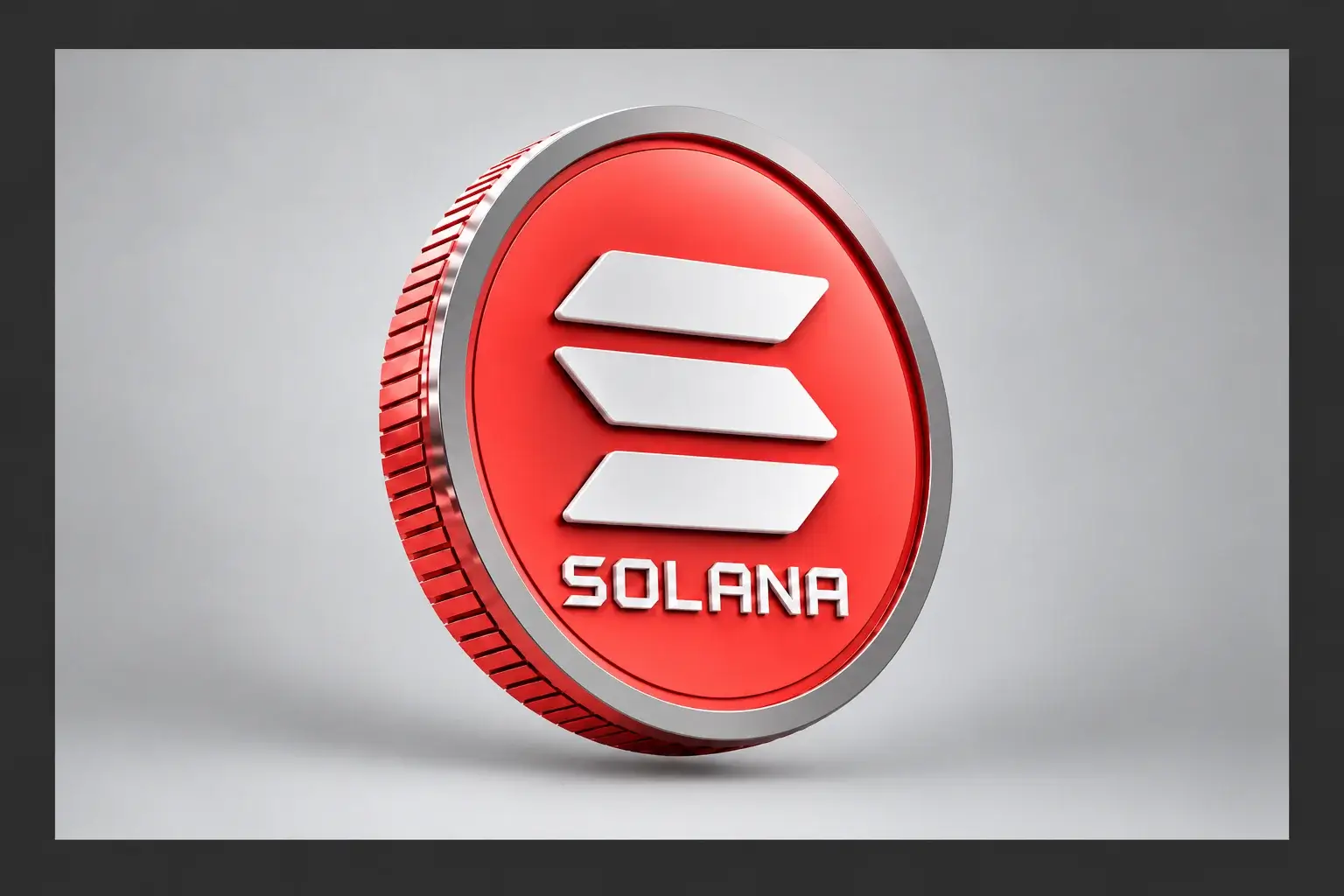
Solana traded at $104.42 on Tuesday, down 1.71% over 24 hours, after moving between $103.54 and $106.05. The token carries a market value of about $61.6 billion on a circulating supply of 589.49 million SOL, ranking seventh among cryptocurrencies. It opened October at $118.01, so the month has cost holders 11.5%. SOL sits 64.6% below its all-time high near $295.
The thesis for this forecast is direct. Solana has a floor and a catalyst, and both arrive this week. The floor is $100, a level buyers have defended repeatedly since mid-October, with daily lows of $100.96 on October 15 and $101.31 on October 17. The catalyst is Alpenglow, the largest change to Solana’s consensus layer since the network launched, scheduled to activate on mainnet on Wednesday, October 21. Against both stand 11 straight sessions of spot ETF outflows totaling about $57 million and a $1.49 billion drain in stablecoins on the network since late September. The setup favors a buy at the floor, because the downside to $100 is 4.2% while a clean upgrade could lift SOL back toward $114 to $118.
The October path explains the pressure. SOL traded between $118 and $122 in the first week of the month, closing at $121.58 on October 4. It fell 3.67% on October 7 and 5.79% on October 8, dropping from $116.29 to $109.56. A 5.04% slide on October 12 took it to $105.72. Since then, it has traded between $100 and $109.
The broader crypto market moved differently on Tuesday. Bitcoin recovered from a low of $81,099 to $83,042, up 0.98%, after IBIT’s $665 million inflow on Monday. Ether rose 1.77% to $2,436. SOL lagged both, a sign that Solana-specific pressure from fund outflows is outweighing the broader rebound.
The levels that matter are clear. Support sits at $103.54, then $100, then the $92 to $98 zone where SOL consolidated in September. Resistance sits at $107 to $108, then $110, the 20-day average near $111.38, and $114. The upgrade begins Wednesday afternoon UTC.
Alpenglow Activates Wednesday: Finality Falls From 12.8 Seconds to 150 Milliseconds
Alpenglow is the event that defines this week. Anza, the team that builds Solana’s Agave validator client, said on October 13 that Alpenglow goes live on mainnet-beta on Wednesday, October 21, at about 14:50 UTC. The upgrade replaces TowerBFT, the consensus protocol Solana has run since its launch in March 2020.
The core change is speed of settlement. Alpenglow’s Votor protocol is designed to cut transaction finality from about 12.8 seconds to a target of roughly 150 milliseconds, a reduction of nearly 99%. Finality is the point at which the network considers a transaction irreversible. Faster finality matters for payments, trading and any application where users need to know a transaction is settled.
The activation is scheduled as a handoff on a running network with no restart. It begins with epoch 1064, and the Solana Foundation estimated the epoch would start at about 13:20 UTC, noting that epoch timing drifts. TowerBFT is set to continue for 5,000 slots, about 18 minutes, after the feature gate turns on. Alpenglow is expected to take over at slot 459,653,000.
The voting mechanism changes fundamentally. Votor sends validator votes directly between validators instead of recording them in on-chain transactions. It offers a fast finalization path when validators holding 80% of stake certify a block, and a slower path that uses two certificates with 60% thresholds. The protocol is designed to keep working even if up to 40% of the network’s stake becomes unavailable.
What stays the same matters for users. Transaction execution, programs and fees remain unchanged. Applications do not need to rewrite their contracts. Rotor, the data distribution component of the broader Alpenglow design, is not part of this activation and has no announced launch date. Wednesday is Votor only.
The preparation has been extensive. Alpenglow was first announced in May 2025. Testnet and devnet migrations ran on September 24 and September 25. BLS keys in vote accounts went live on mainnet on July 8, and the Validator Admission Ticket on July 22. Anza’s genesis certificate captured signatures representing 82% of stake, a readiness signal above the 80% fast-path threshold.
The 150-millisecond figure is a target, not an established result. Actual finality will depend on network conditions, validator participation and the number of voting rounds required. Wednesday’s migration will provide the first live evidence of whether Solana can replace its consensus system safely and deliver finality near that target.
Why the Upgrade May Not Lift the Price Immediately
A successful upgrade does not guarantee a rally. Faster finality improves network quality, but it does not automatically create new demand for SOL. The market has known about the October 21 date since October 13, and SOL has fallen from about $107.62 to $104.42 over that week. That pattern suggests the upgrade is already partly priced or that other forces are outweighing it.
The “sell the news” risk is real. Traders who bought SOL ahead of the upgrade may sell once it is complete, regardless of how well it goes. Large scheduled events in crypto often see prices rise into the date and fall after it. SOL has not rallied into Alpenglow, which reduces that risk somewhat: there are fewer speculative longs to unwind.
The dashboards will show a misleading drop. Because Votor moves validator votes off-chain, reported transaction counts will fall sharply after activation. The Solana Foundation has called this an accounting change, not a throughput regression, and warned that outdated dashboards will report the change as a collapse in network activity. Vote transactions have historically made up a large share of Solana’s reported transactions. Once they leave the chain, headline transactions-per-second figures will drop, even though user activity is unchanged.
That accounting shift could spook the market briefly. Traders and automated systems that track transaction counts may read the drop as weakness. The Foundation has flagged the risk publicly to head off that confusion. Investors should track non-vote transactions, which measure actual user activity, rather than total transactions.
Validator operations add short-term risk. Jito said all mainnet nodes for its Block Assembly Marketplace would enter maintenance mode in the days before activation and told operators not to run certain modified clients during the transition. Validators need an Agave-based client built on version 4.3.0 and at least 0.8 SOL above the rent-exempt minimum in their vote accounts. Any validator that fails to upgrade could miss votes during the handoff.
The risk of a failed migration is low but not zero. Solana has suffered network outages in its history, most of them in 2021 and 2022. A disruption during a consensus handoff would be damaging to sentiment. The successful testnet and devnet migrations, combined with 82% stake readiness, reduce that risk. A smooth handoff on Wednesday would remove one of the overhangs on the price.
Spot SOL ETFs Have Bled for 11 Straight Sessions
Fund flows are the main drag on SOL. U.S. spot Solana ETFs recorded $6.72 million in net outflows on Monday, October 19, the 11th consecutive session of withdrawals. The Bitwise Solana Staking ETF (BSOL) led with $4.88 million in outflows, and the Fidelity Solana Fund (FSOL) lost $1.84 million. The last inflow came on October 2, at $1.30 million. Across the 11 sessions since October 5, outflows total roughly $57 million.
The weekly totals show the trend. The week of October 5 to 9 brought $24.8 million in net outflows, ending a 14-week inflow streak. BSOL accounted for about $21 million of that, its largest weekly outflow on record. The week of October 12 to 16 brought $25.5 million in outflows, with BSOL losing $18.8 million, Grayscale’s GSOL $6.0 million, and VanEck’s VSOL $0.7 million.
The daily pattern has worsened. Outflows ran $9.24 million on October 5, $1.0 million on October 13, $1.3 million on October 14, $9.8 million on October 15 and $12.7 million on October 16. BSOL accounted for the full $12.7 million on October 16, while VSOL, FSOL, TSOL, SOEZ, MSOL and GSOL each recorded zero net flow.
The cumulative picture is still positive. Spot Solana ETFs have taken in $1.551 billion in net inflows since launch. Net assets across the funds total $1.625 billion. BSOL’s cumulative inflows stand at $1.175 billion, about 76% of the total. FSOL’s stand at $230 million. The October outflows of about $57 million equal 3.7% of cumulative inflows.
The scale relative to the market is small. ETF net assets of $1.625 billion equal 2.64% of SOL’s $61.6 billion market cap. That compares with about 6.35% for Bitcoin and 5.04% for Ether. Solana’s ETF market is younger and smaller, which means daily flows have less direct price impact than in Bitcoin, but they shape sentiment.
The flows tell investors what institutions are doing. Earlier this year, the funds pulled $153 million in their strongest week since launch. The shift from steady inflows to 11 sessions of outflows shows that institutional demand has paused. A return to inflows after Alpenglow would be the clearest sign that the upgrade is drawing new capital.
Stablecoins on Solana Fell $1.49 Billion Since September 25
The stablecoin base is shrinking. The supply of stablecoins on Solana fell from $17.45 billion at its September 25 high to $15.96 billion on October 17, a decline of $1.49 billion, or 8.5%. Stablecoins are the cash of a blockchain. When they leave a network, it means capital that could have been used to buy tokens or trade on decentralized exchanges has left.
The decline runs alongside the price drop. SOL closed September at $118.06 and has fallen 11.6% since. The stablecoin supply fell 8.5% over a similar period. The parallel moves suggest the same force is driving both: capital rotating out of the Solana ecosystem.
There was one positive signal on Tuesday. Circle minted 500 million USDC on the Solana network within 12 minutes on October 20. A mint of that size usually reflects demand from exchanges, market makers or institutions that need dollar liquidity on Solana. If that USDC stays on the network and is deployed, it would reverse a third of the decline since September.
Stablecoin growth had been one of Solana’s strengths in 2026. Stablecoin assets on Solana rose 51% in the first half of the year. That growth supported decentralized exchange volume, lending activity and payments. The reversal since September is the first significant decline in months.
The stablecoin trend matters for the forecast because it leads activity. A rising stablecoin base usually precedes higher trading volume and higher token prices, because the cash is available to buy. A falling base signals that buyers have less dry powder. If the Circle mint marks the start of a recovery in stablecoin supply, it would support a price recovery after Alpenglow.
The level to watch is $16 billion to $17 billion. A return above $17 billion would signal that capital is coming back to the network. A drop below $15 billion would extend the October drain and point to further price weakness.
Record Network Activity Has Not Translated Into Price
The network is busier than ever while the price struggles. Solana processed 8.92 billion successful non-vote transactions in the third quarter, its busiest quarter of the past four. Non-vote transactions measure user activity, excluding validator votes. That figure shows demand for Solana’s blockspace is growing.
Tokenization is expanding fast. Solana’s real-world asset market has grown 514% over the past year, among the fastest growth of any major blockchain. About 1.4 million addresses now hold tokenized stocks on Solana. Tokenized assets bring traditional financial products on-chain, from Treasury bills to equities.
Solana is losing share in some markets. Research from DWF Labs shows Solana’s share of tokenized-equity decentralized exchange volume fell to 31% in early October from 99.8% in January. Other chains have built competing markets for tokenized stocks. Solana remains a leader, but it no longer dominates the category.
Revenue tells a harder story. Network revenue fell 87% in the first half of 2026 compared with a year earlier. Revenue comes from transaction fees and priority fees paid to validators. The drop reflects lower speculative activity, especially in memecoins, which drove heavy fee generation in 2025. Activity has shifted toward lower-fee uses such as payments and stablecoin transfers.
The gap between activity and revenue is the core question for SOL’s valuation. A blockchain can process more transactions while earning less if each transaction pays lower fees. Investors who value SOL on fee revenue see a weaker picture than those who value it on usage. Alpenglow does not change fees directly, but faster finality could attract new applications, such as payments and high-frequency trading, that generate fees at scale.
For the forecast, network activity provides a long-term floor under the price. Rising usage, growing tokenization and the upgrade all point to a network that is gaining capability. The short-term price depends more on flows than on fundamentals.
Forward Industries Holds 8.5 Million SOL at a Cost Above Today’s Price
Corporate treasuries add a structural buyer. Forward Industries (NASDAQ:FWDI), the largest public Solana treasury company, held 8,501,298 SOL and SOL equivalents at the end of September, about 1.4% of circulating supply. According to its fiscal fourth-quarter treasury update, the company added 948,601 SOL during the quarter, a 13% increase from 7,552,698 SOL at the end of June.
The recent buying came cheap. Forward’s purchases during the quarter averaged $83 per SOL, including SOL earned through staking. At $104.42, those purchases sit 25.8% in profit. SOL per fully diluted share rose to 0.0806 from 0.0730, an annualized growth rate of about 42%.
The original position is underwater. Forward launched its treasury strategy in September 2025, buying 6,822,000 SOL at an average price of $232 per token, about $1.58 billion. At $104.42, that initial stake is worth about $712 million, a 55% loss on cost. The company has since lowered its average cost by buying more at much lower prices.
The treasury’s value has fallen in October. At $118.06 on September 30, Forward valued its 8.5 million SOL at $1.004 billion, with a preliminary net asset value of about $870.4 million after debt. At $104.42, the treasury is worth about $887.7 million. Institutional debt rose to $167.5 million.
Forward continues to raise capital. It sold 3,125,000 shares at $8.00 in a $25 million registered direct offering on September 24, with proceeds earmarked for SOL purchases. The company stakes its SOL through its own validator and uses its liquid staking token, fwdSOL, in decentralized finance.
Treasury buying supports the price at lower levels. Forward bought aggressively in the $75 to $85 range during the summer. If SOL falls toward those levels again, the company would likely add more, providing demand. Treasury companies tend to buy when their stock trades at a premium to net asset value and slow down when it trades at a discount, so Forward’s buying pace depends on its own share price.
Read More
-
Yen Stalls at 160 Despite a 3% JGB and Tokyo Core CPI at 2.0% — Intervention Sits at 164, Friday's Payrolls Decide
02.09.2026 · TradingNEWS ArchiveEnergy
-
BBUL Fund Surges 14% as QNX’s Record Quarter Lifts BB, but Volatility Decay Limits the Hold
20.10.2026 · TradingNEWS ArchiveStocks
-
XRPI and XRPR Bounce With XRP, but $10.25M in October Inflows and a 1B Token Unlock Cap the Upside
20.10.2026 · TradingNEWS ArchiveCrypto
-
November NG Slips to $2.975 as Mild Weather Masks 45 Bcf Storage Surplus and First-Ever 20 Bcf/d LNG Demand
20.10.2026 · TradingNEWS ArchiveCommodities
-
Yen Firms to 158.08 as Katayama’s Warning and Ueda’s 2% Inflation Signal Cap Dollar Below 160
20.10.2026 · TradingNEWS ArchiveForex
The $100 Floor Has Held Through Repeated Tests
The $100 level is the most important on the chart. Buyers have defended it repeatedly since mid-October. SOL’s daily low reached $100.96 on October 15 and $101.31 on October 17, and each time it recovered. Heavy buying near $100 may reflect accumulation ahead of Alpenglow.
The floor has psychological and technical weight. Round numbers attract orders, and $100 marks the line between a token trading in two digits and three. A break below $100 would trigger stop-loss orders and could accelerate selling. The next support sits in the $92 to $98 zone, where SOL consolidated in September.
The October range is clear. SOL has traded between $100 and $109 since October 12, after falling from the $118 to $122 range in early October. The October high of $123.61 came on October 2. The current price of $104.42 sits in the lower half of the range.
Momentum is weak but not oversold. The relative strength index sits near 41, below the 50 midpoint, which shows sellers have had control but are not exhausted. The 20-day average near $111.38 sits 6.7% above the current price, acting as dynamic resistance. SOL broke below the lower line of its rising channel in early October.
Resistance levels are layered. The $107 to $108 zone is the first barrier, 2.5% to 3.4% above. The $110 level, where SOL failed in mid-October, sits 5.3% higher. The 20-day average near $111.38 follows. The $114 level, 9.2% higher, marks the late September resistance. The $115 to $118 band, 10.1% to 13.0% higher, marks the early October range.
The volume profile supports the floor. Volume rose on the drops toward $100, a sign that buyers absorbed the selling. If volume rises on a break above $108 after Alpenglow, it would confirm that the upgrade is drawing buyers back.
SOL Against Bitcoin, Ether and the Macro Backdrop
SOL has underperformed the major cryptocurrencies this month. Bitcoin traded at $83,042 on Tuesday, down about 7% for the year, near the middle of its October range of $79,709 to $87,229. Ether traded at $2,436, down 17.9% for the year. SOL’s 11.5% decline in October alone compares with smaller monthly losses for Bitcoin.
The ETF story is different for each. Bitcoin ETFs took in $526.6 million on Monday, led by IBIT’s $665 million. Ether ETFs lost $103 million on Monday, their fourth straight outflow session, bringing October outflows to about $1.06 billion. Solana ETFs lost $6.72 million. Bitcoin is attracting institutional money, while Ether and Solana are losing it.
The rate backdrop weighs on all crypto. The 10-year Treasury yield traded at 5.10% on Tuesday, near the 5.31% peak of October 5, its highest in 24 years. Fed funds futures price an 89% chance of a December hike. High yields raise the opportunity cost of holding assets that do not pay interest. Solana’s staking yield, which runs in the mid-single digits, offers some offset but trails Treasury yields after accounting for token inflation.
Staking ETFs give Solana an edge. BSOL is a staking ETF, passing staking rewards to investors. That feature has helped BSOL capture 76% of cumulative Solana ETF inflows. As yields elsewhere rise, the value of a yield-bearing crypto product grows.
Risk sentiment improved on Tuesday. The Dow rose 714 points and the S&P 500 gained 0.7%. Chip stocks reversed early losses. Brent crude spiked to $111.75 before falling to $106.85. A risk-on equity market usually supports crypto, but SOL did not benefit on Tuesday, which shows that the token’s own flows are driving it.
The Fed decides on October 28. A hawkish signal would pressure all risk assets, including SOL. A balanced message that keeps December uncertain would ease yields and support crypto. Alpenglow on October 21 comes a week before that decision, giving SOL a window to establish its post-upgrade direction before the macro catalyst.
What Happens After Alpenglow: Three Paths
The next week will be decided by the upgrade’s execution and the market’s reaction.
The base case, a 50% probability, is a smooth upgrade and a modest recovery. Alpenglow activates on schedule, finality drops toward the 150-millisecond target, and no outages occur. ETF outflows slow as the upgrade removes uncertainty. SOL holds $100 and recovers to the $108 to $114 range by the end of October, a gain of 3.4% to 9.2% from $104.42.
The bullish case, a 25% probability, is a breakout. The upgrade succeeds, finality data impresses, ETF flows turn positive, and the stablecoin base recovers after Circle’s $500 million mint. SOL breaks above $110 and the 20-day average near $111.38, then tests the $115 to $118 band, a gain of 10.1% to 13.0%. A daily close above $118 would open a path toward $125.
The bearish case, a 25% probability, is a sell-the-news drop. The upgrade succeeds technically, but traders sell, the transaction count drop on dashboards spooks the market, or a minor issue during the handoff hurts sentiment. ETF outflows extend past 15 sessions. SOL breaks $100 and falls to the $92 to $98 zone, a decline of 6.1% to 11.9%.
The probabilities reflect the floor. Buyers have defended $100 repeatedly, and Forward Industries has shown it will buy at lower levels. The downside is limited by that demand. The upside depends on whether the upgrade draws new capital, which is uncertain.
The confirmation signals are clear. A daily close above $108 after the upgrade confirms the base or bullish case. A daily close below $100 confirms the bearish case. ETF flows for October 21 and 22, reported the following mornings, will show whether institutions are returning.
Solana Price Forecast Verdict: Buy the $100 Floor, Target $114, Stop Below $97
The verdict on SOL is Buy at the floor, with a first target of $110, 5.3% above the current price of $104.42, a main target of $114, 9.2% higher, and an extended target of $118, 13.0% higher. Solana enters its largest upgrade at a 64.6% discount to its all-time high and 11.5% below where October started. Alpenglow activates on Wednesday, October 21, replacing TowerBFT with Votor and targeting finality of about 150 milliseconds, down from 12.8 seconds. Testnet and devnet migrations succeeded, and 82% of stake signed the genesis certificate.
The pressure is real. U.S. spot Solana ETFs have recorded outflows for 11 straight sessions, totaling about $57 million, including $6.72 million on Monday. BSOL posted its largest weekly outflow on record. The stablecoin base on Solana fell $1.49 billion from its September 25 high to $15.96 billion. Network revenue fell 87% in the first half of the year, and Solana’s share of tokenized equity trading has dropped to 31%.
The floor is also real. Buyers have defended $100 repeatedly, with daily lows of $100.96 and $101.31 holding. Forward Industries holds 8.5 million SOL and bought its most recent tranche at an average of $83. Solana processed a record 8.92 billion non-vote transactions in the third quarter. Circle minted $500 million in USDC on Solana on Tuesday. Cumulative ETF inflows still stand at $1.551 billion, and October’s outflows equal just 3.7% of that.
The trade is to buy SOL in the $100 to $105 zone, with a stop on a daily close below $97, targeting $110 first, then $114, then $118. From $104.42, that sets downside to the stop at 7.1% against upside to the main target of 9.2% and to the extended target of 13.0%. A close above $108 after the upgrade would confirm the move. A close below $100 would shift the outlook toward the $92 to $98 zone.
Solana is replacing the engine of its consensus while the network runs, and it is doing so with buyers sitting at $100. If Wednesday’s handoff goes cleanly, the upgrade removes the biggest uncertainty on the chart and leaves the ETF outflows as the last obstacle to a recovery.