Stock Market Today - Nasdaq Leads Wall Street Comeback as AI and Crypto Surge — NVDA Stock, MSFT, and Bitcoin (BTC-USD) Outperform
The S&P 500 climbs to 6,843 and Dow hovers near 47,400 while investors bet on a December Fed rate cut | That's TradingNEWS
Stock Market Today - Wall Street Regains Its Footing as Tech and Crypto Rebound; Nasdaq Leads the Charge
U.S. markets stabilized on Tuesday following a volatile start to December that saw equities and cryptocurrencies suffer their steepest one-day declines in weeks. Futures across all major indices edged higher as investors digested a flood of macro and corporate developments while repositioning portfolios ahead of next week’s pivotal Federal Reserve meeting. S&P 500 (ES=F) futures rose 0.24% to 6,843.25, Nasdaq 100 (NQ=F) climbed 0.40% to 25,491.75, and Dow Jones Industrial Average (YM=F) gained 0.14% to 47,418. Global risk sentiment improved marginally, driven by optimism around the Fed’s expected policy shift, stabilization in crypto markets, and renewed strength in large-cap technology. The rebound marked a return of cautious optimism after Monday’s selloff snapped five-day winning streaks across all three major indices.
Indices Performance and Investor Sentiment
The S&P 500 (^GSPC), which dropped 0.53% in the prior session, attempted to reclaim lost ground, supported by the information technology and communication services sectors. The Dow Jones Industrial Average (^DJI), coming off a 0.90% decline, remained relatively flat as investors rotated from defensive stocks back into growth-heavy names. The Nasdaq Composite (^IXIC), down 0.38% on Monday, rebounded more decisively thanks to renewed inflows into software, chipmaking, and AI-linked companies.
Globally, sentiment was steadier but cautious. The Stoxx 600 (STOXX) inched up 0.20%, while Germany’s DAX (DAX) posted similar gains as investors monitored European growth headwinds. In Asia, risk appetite was stronger: Japan’s Nikkei 225 (^N225) climbed 0.5% to 49,534.36 amid a surge in financials, the Hang Seng (^HSI) advanced 0.7% to 26,209.07 on tech buying, and South Korea’s Kospi (^KS11) jumped 1.5% to 3,977.85, with chipmakers leading the way. Samsung Electronics rose 2.8% and SK Hynix 3.4% after tariff news and solid semiconductor demand trends.
Meanwhile, Japanese bond yields continued to climb, with the 30-year yield touching a record 3.4199% before easing slightly. The spike in JGB yields underscored market expectations that the Bank of Japan could raise rates sooner than anticipated, a move that may ripple through global carry trades and U.S. Treasury demand. The U.S. 10-year Treasury yield held steady at 4.117%, reflecting cautious optimism that the Federal Reserve will pivot toward rate cuts in December. Fed funds futures currently assign an 87% probability to a cut at the upcoming December 10 meeting, a sharp rise from mid-November’s 58%.
Technology and AI Stocks Take the Lead in Market Recovery
Technology stocks were once again the center of market leadership as investors flocked to companies benefiting from AI momentum and strong enterprise demand. MongoDB (MDB) surged over 23% in premarket trading to $406 after reporting exceptional fiscal Q3 results. Revenue reached $628.3 million, surpassing guidance and representing a 19% year-over-year increase, driven primarily by the success of its Atlas cloud platform. The firm’s narrower-than-expected loss of $0.02 per share compared to consensus estimates of a $0.78 loss added confidence to its operational efficiency. Analysts across major banks revised their targets upward: BofA to $480 from $440, Morgan Stanley to $440, Wells Fargo to $450, and Citizens JMP to $475, citing MongoDB’s growing role in AI-driven enterprise workloads and its potential to capture share in the $100 billion unstructured database market.
Other AI beneficiaries joined the rebound. Snowflake (SNOW) rose 3.4% premarket to $260.80 and remains up 44% year-to-date, as investors anticipated strong cloud growth and positive forward guidance. Marvell Technology (MRVL) gained 1% on reports it is in advanced talks to acquire AI hardware startup Celestial AI in a multibillion-dollar cash-and-stock deal, signaling aggressive expansion into optical interconnect technology vital for AI infrastructure. Credo Technology (CRDO) rallied 16.6% following strong quarterly results and upbeat full-year guidance. Meanwhile, NVIDIA (NVDA), the leading AI chipmaker, rose 0.83% to $181.41 after confirming new investments in AI design firm Synopsys, reinforcing its influence across the semiconductor ecosystem. Palantir Technologies (PLTR) and Astera Labs (ALAB) also gained ground, with traders increasing exposure to companies directly leveraged to AI adoption cycles.
Corporate Deals, M&A, and High-Profile Transactions
Mergers and acquisitions played a critical role in today’s sentiment revival. Eventbrite (EB) soared 79% in premarket trade after agreeing to an all-cash buyout by Bending Spoons valued at $500 million, representing an 82% premium over its 60-day VWAP. Once completed, Eventbrite will delist and become a private company, marking one of the largest private acquisitions in the U.S. consumer tech space this quarter.
In biotech, Polyrizon (PLRZ) shares surged more than 130% after the company announced it successfully scaled its PL-14 nasal spray production, confirming readiness for upcoming clinical trials and higher-volume manufacturing runs. The breakthrough bolstered investor confidence in its ability to meet commercial-scale standards.
Warner Bros. Discovery (WBD) gained 1.5% as reports surfaced that Comcast (CMCSA), Netflix (NFLX), and Paramount (PSKY) submitted renewed offers for portions of its entertainment portfolio, hinting at potential consolidation in streaming content. Alphabet (GOOGL) also edged higher after sources indicated OpenAI declared a “code red” internally, acknowledging Google’s Gemini AI model had surpassed GPT performance benchmarks — signaling Alphabet’s resurgence in the competitive AI race.
Crypto and Blockchain Stocks Stabilize After Major Selloff
Cryptocurrencies stabilized following Monday’s severe correction that erased billions in digital asset market value. Bitcoin (BTC-USD) rebounded 1.6% to $87,352 after plunging as low as $84,000 in its worst session since March, but still trades 30% below its all-time high of $126,000. Ethereum (ETH-USD) fell 0.3%, while XRP (XRP-USD) gained modestly. Crypto-linked equities recovered in tandem: Coinbase (COIN) climbed 1.8%, MicroStrategy (MSTR) rose 1.7%, and Robinhood (HOOD) gained 1.3%.
MicroStrategy’s leveraged ETFs (MSTX, MSTU, MSTP) remain down over 80% year-to-date, collectively losing about $1.5 billion in assets. The firm’s announcement of a $1.4 billion reserve to service dividend and debt obligations signaled attempts to calm liquidity fears, yet the scale of losses underscores the speculative risk embedded in crypto exposure.
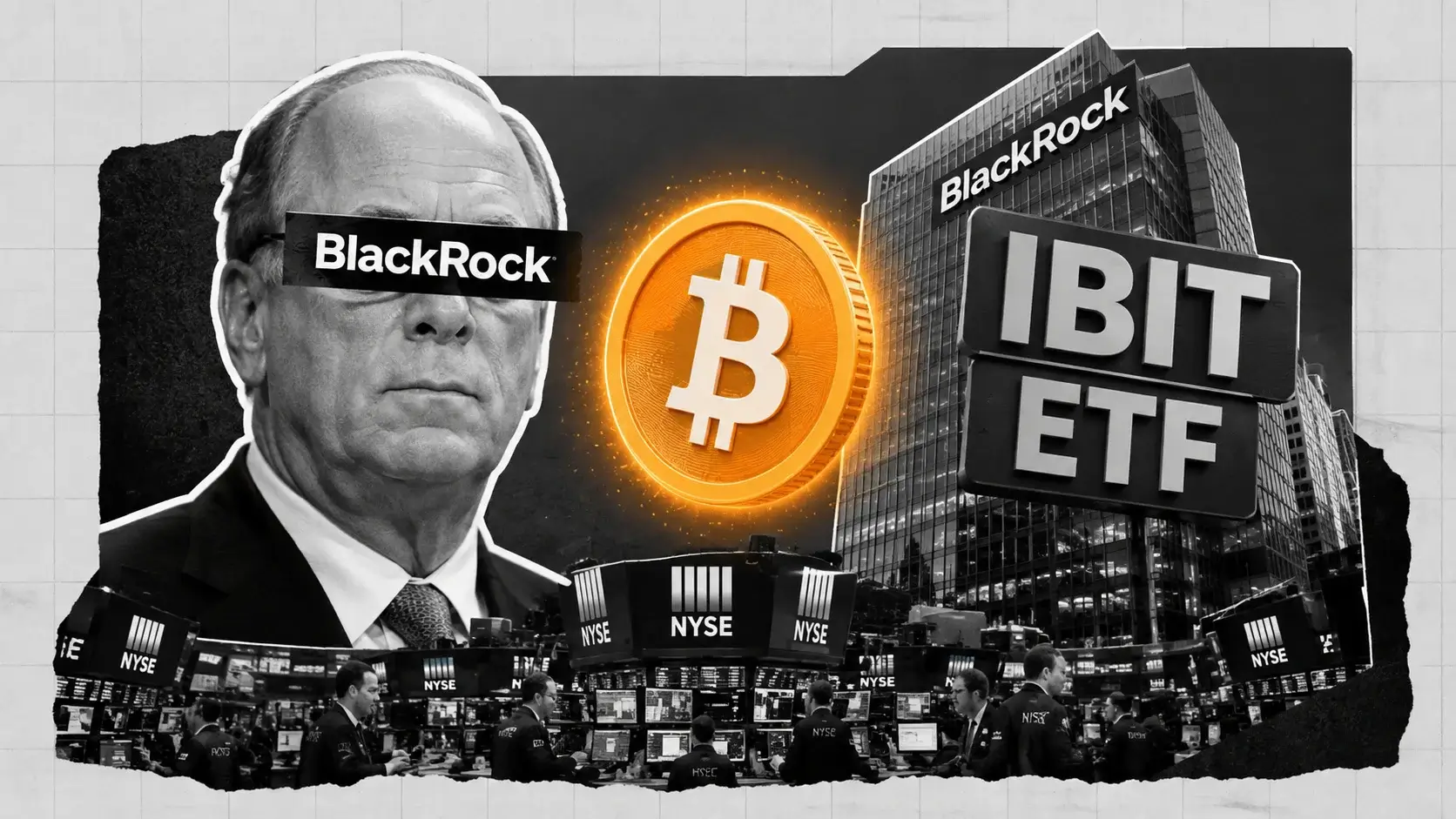
In a major development for institutional crypto adoption, Bank of America (BAC) revealed it will formally allow clients on Merrill, Private Bank, and Merrill Edge platforms to allocate 1%–4% of portfolios to digital assets. Starting January 5, BAC will offer exposure through four ETFs: Bitwise Bitcoin ETF (BITB), Fidelity Wise Origin Bitcoin Fund (FBTC), Grayscale Bitcoin Mini Trust (BTC), and BlackRock iShares Bitcoin Trust (IBIT). IBIT gained 2.31% premarket to $49.62 after closing down nearly 6% on Monday, indicating renewed institutional inflows.
Consumer Discretionary and Retail Stocks Show Mixed Reactions
Retail and apparel names diverged sharply. Citi Trends (CTRN) rose 7.8% after Q3 net sales of $197.1 million exceeded estimates of $187.3 million, reflecting a 10% year-over-year increase. The company narrowed its quarterly net loss to $6.9 million and raised its full-year EBITDA guidance to $10–$12 million, representing a $24–$26 million swing from the prior year. CEO Ken Seipel projected long-term EBITDA potential near $45 million by 2027. American Eagle Outfitters (AEO), Okta (OKTA), and CrowdStrike (CRWD) were all set to report earnings later in the day, with CrowdStrike slipping 0.99% in premarket trading.
Falling energy costs continue to bolster retail prospects. U.S. average gasoline prices dropped to $3.00 per gallon, the lowest since 2021, easing consumer pressure and providing tailwinds to discretionary spending heading into the holiday season.
Read More
-
Yen Stalls at 160 Despite a 3% JGB and Tokyo Core CPI at 2.0% — Intervention Sits at 164, Friday's Payrolls Decide
02.09.2026 · TradingNEWS ArchiveEnergy
-
SPY Stalls Below Its Record As A 4.63% Earnings Yield Loses To A 4.74% Treasury
03.09.2026 · TradingNEWS ArchiveStocks
-
Bitwise Holds 286.8M XRP At A $480M Cost And $393M Of Value — The Category Bought Every Dip And Is Still Underwater
03.09.2026 · TradingNEWS ArchiveCrypto
-
Natural Gas Stalls Under $3 As Record 111.5 Bcf/d Production Absorbs Every Bullish Signal
03.09.2026 · TradingNEWS ArchiveCommodities
-
Dow 53,461, S&P 500 7,702 And Nasdaq 26,392 Climb On Waller's Dovish Turn — HOOD Explodes 14.9%
03.09.2026 · TradingNEWS ArchiveMarkets
-
Yen Rips Four Yen In A Session As Japan Takes Control Of The Dollar — Brent At $97.62 Could Not Stop It
03.09.2026 · TradingNEWS ArchiveForex
Commodities Weaken as Metals and Oil Slide
Commodity markets retreated as traders took profits from recent highs. Gold (GC=F) fell 0.91% to $4,235.80, while Silver (SI00) declined 1.75% to $58.10 after an overbought RSI reading triggered technical selling. Silver remains the top-performing precious metal of 2025, up roughly 95% year-to-date. Platinum (PL00) slipped 2.18% to $1,640.90.
Crude Oil (CL=F) eased 0.35% to $59.11, with Brent (BZ=F) similarly pressured as traders weighed OPEC+’s adherence to supply cuts against slowing demand projections in the OECD’s latest global growth outlook. The S&P GSCI Index Spot fell 0.42%, and the Dollar Index (DXY) edged higher to 96.88, modestly tightening financial conditions.
Asia-Pacific Markets Buoyed by Tariff Relief and Tech Strength
Asian equities extended gains after the U.S. confirmed it would reduce tariffs on South Korean automobiles from 25% to 15%, retroactive to early November. The move triggered a strong rally in Hyundai Motor and Kia Corp, both up over 4%, while KG Mobility surged 11%. The Kospi Composite (^KS11) climbed 1.9%, while the OECD raised its U.S. GDP growth projection for 2026, noting the economy’s resilience despite higher tariffs and moderating manufacturing data.
Samsung Electronics (005930.KS) jumped 2.6% following the announcement of its new Galaxy Z TriFold smartphone, the world’s first tri-folding model, set for Q1 2026 release at approximately $2,445 in South Korea. The innovation reinforced Samsung’s edge in foldable technology and lifted regional semiconductor shares.
Tesla (TSLA) Strengthens on China Recovery and Norway Market Dominance
Tesla Inc. (TSLA) traded 0.44% higher premarket after data from the China Passenger Car Association showed November China-made EV sales of 86,700 units, up 10% year-over-year and 41% month-over-month from October’s 61,497. This rebound helped offset ongoing weakness in Europe, where registrations dropped 58% in France, 59% in Sweden, 49% in Denmark, and 44% in the Netherlands. The company’s outperformance in Norway, where sales surged 34.6% year-to-date to 28,606 units and secured over 31% market share, remains a standout.
Tesla trades near $430 per share with a market capitalization of $1.43 trillion, a forward P/E of 209× versus the S&P 500’s 22× average, and trailing revenue of $95.6 billion. Analysts forecast flat revenue for 2025 (~$97 billion) but anticipate a 13% rebound in 2026 as higher-margin FSD software, energy storage, and AI-chip initiatives scale. Wedbush’s Dan Ives maintains a $600 price target, viewing Tesla as the most significant beneficiary of the coming “autonomy revolution,” while Michael Burry’s renewed short position highlights persistent valuation and dilution concerns. The Street consensus average target stands near $384, implying 10% downside, though sentiment remains broadly bullish for long-term investors.
Institutional Flow and Insider Dynamics
NVIDIA (NASDAQ: NVDA) saw strong fund accumulation near $181.50, reflecting renewed conviction in its $2 billion AI infrastructure expansion through Synopsys. Microsoft (NASDAQ: MSFT) attracted consistent buying pressure around $486.80, reinforcing its role as a core defensive growth holding amid stable Azure and Copilot revenue streams. Alphabet (NASDAQ: GOOGL) traded around $318.50, drawing portfolio rotations from smaller software peers following its Gemini AI lead over OpenAI benchmarks.
Institutional desks trimmed exposure to unprofitable small caps and speculative growth names, particularly within biotech and EV segments, locking in profits ahead of year-end NAV reporting. Hedge funds rotated capital into balance-sheet strength — firms with high free cash flow yields and consistent buyback programs — signaling a strategic defense against potential volatility around the Fed’s rate decision.
Insider transactions were limited as S&P 500 companies entered blackout periods, yet insider buying persisted selectively in high-margin semiconductor and software names. Notably, insider purchases were recorded in AMD (NASDAQ: AMD) near $222.50, Broadcom (NASDAQ: AVGO) around $389.00, and Palantir (NYSE: PLTR) under $31.00, suggesting confidence in upcoming AI-related revenue catalysts. These moves indicate management conviction that sector leadership will remain anchored in advanced computing and data infrastructure through Q1 2026.
Macroeconomic Outlook and Market Positioning
Tuesday’s session marked a technical recovery phase for U.S. equities, with sentiment cautiously improving after Monday’s drawdown. Traders adjusted positions ahead of the upcoming CPI release, which will determine whether disinflation momentum justifies an early Federal Reserve rate cut on December 10. Fed funds futures imply an 87% probability of a 25-basis-point cut, while the U.S. 10-year yield hovered near 4.12%, signaling stable bond market expectations.
The Nasdaq 100 (NDX) continues to outperform, closing near 25,500, supported by surging demand for AI hardware, strong Q4 cloud bookings, and firm software margins. The S&P 500 (SPX) traded toward 6,843, with technical resistance seen at the 6,950–7,000 range — a breakout above which could confirm momentum for a December rally. The Dow Jones Industrial Average (DJIA) consolidated near 47,400, lagging slightly as cyclical and industrial sectors remain pressured by slower global demand and tariff uncertainty.
Sector flows show clear leadership concentration: technology, semiconductors, and digital assets remain the key outperformers into year-end. Bitcoin (BTC-USD) stabilizing above $87,000 and gold (XAU/USD) holding near $4,235 both reinforce that markets are comfortable balancing risk and safety simultaneously.
The near-term equity bias remains bullish, fueled by resilient corporate earnings, easing inflation, and steady liquidity. Risks persist — including potential inflation re-acceleration, global manufacturing softness, and central bank missteps — yet positioning, cash levels, and technical structure favor continued upside. If December inflation data confirms the disinflation trend, the S&P 500 could break above 7,000, setting the stage for a late-month rally driven by institutional rebalancing, AI optimism, and year-end portfolio inflows.