Stock Market Today: S&P 500 (^GSPC) and Nasdaq Storm to New Records, Dow Eyes 50,000 MU Up 10%
April payrolls land at 115K vs 55K expected, sending MU above $700 for the first time in a 28% weekly rip | That's TradingNEWS
Key Points
- Micron (MU) crosses $700 for the first time ever, pacing a 28% weekly gain — its best week since December 2008 — and clears an $800B market cap.
- AMD vaults past a $713B market cap, up 20% on the week and roughly 90% over the trailing month after a Q1 beat at $1.37 EPS on $10.25B revenue.
- Akamai (AKAM) rockets 27% on a $1.8 billion, seven-year AI Cloud Infrastructure Services contract from a leading U.S. frontier-model lab.
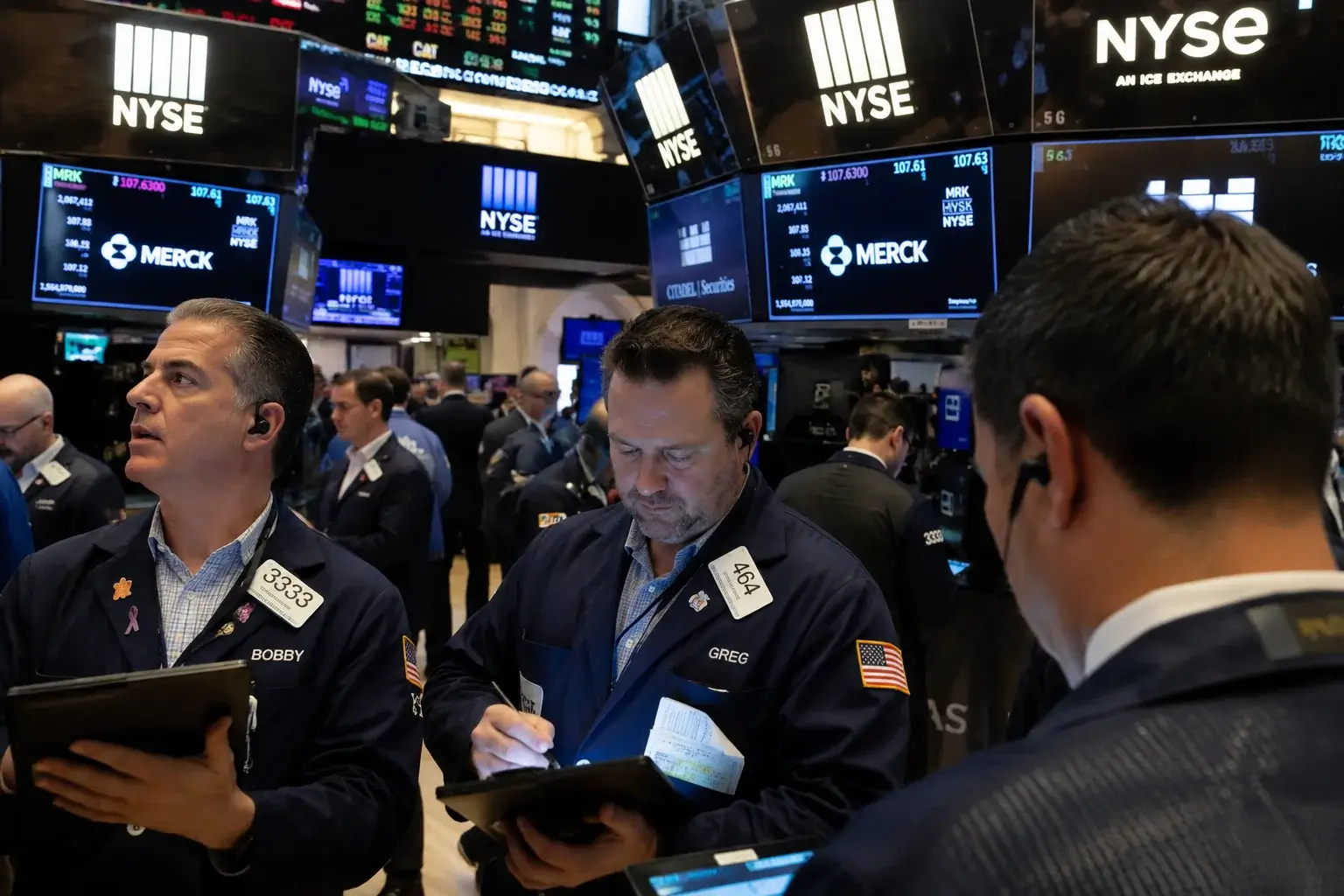
The desks were braced for noise Friday morning and got something else entirely. Within the first hour of trading, the S&P 500 (^GSPC) was up roughly 0.7% to about 7,388, the Nasdaq Composite (^IXIC) was running 1.1% to 1.3% higher near 26,148, and both gauges had already minted fresh intraday all-time highs with closing records firmly in play. The Dow Jones Industrial Average (^DJI) was the laggard with a 113-point grind to about 49,610, dragged hard by a 4.4% slide in Salesforce (CRM) that quietly shaved roughly 50 points off the price-weighted gauge before lunch. The Dow is once again knocking on 50,000 — a level it has not closed above since February — and an uneventful afternoon may be all it takes to print one. What gives this rally weight beyond a single session is the streak: both the S&P and the Nasdaq are on the cusp of a sixth straight winning week, which would be the longest unbroken run of weekly gains since October 2024. Week-to-date, the Nasdaq is pacing a 3% advance, the S&P 500 is up roughly 2%, and the Dow trails near 0.7%.
Why the April Payrolls Print Was the Goldilocks Headline
The 8:30 a.m. release reset the day's risk tone in one clean stroke. April nonfarm payrolls landed at 115,000, more than double the 55,000 Dow Jones consensus and well clear of the 65,000 Bloomberg median. The unemployment rate stayed pinned at 4.3%, exactly where the model sat, and March was revised upward from 178,000 to 185,000 — a quiet but meaningful tell that the labor market is firmer than the bears wanted to believe. Average earnings growth, by contrast, slipped under expectations, and that miss is doing real work behind the scenes. It removes a layer of inflation anxiety without disturbing the broader employment story, and it leaves the Federal Reserve comfortably parked. The setup is very nearly the textbook risk-asset cocktail: hiring strong enough to bury the recession argument, joblessness flat enough to give the Fed cover to do nothing, and wage softness that takes pressure off the inflation tail. The ADP read earlier in the week pointed the same way, with private payrolls up 109,000 and the fastest monthly pace since January 2025. Annex Wealth Management's Brian Jacobsen captured the mood when he likened reacting to the data to turning on a fan in a hurricane — the macro noise around Iran is louder, but the labor backbone is doing exactly what it needs to do.
Memory Goes Vertical and Micron (MU) Books Its Best Week Since the Lehman Crash
The single most spectacular print on the board belongs to Micron Technology (MU), which is ripping roughly 10% to trade above $715 and crossing the $700 line for the first time in its corporate history. The stock closed last week at $542, which puts it on pace for a weekly move of about 28%. That would be the best five-day stretch for the name since December 2008, a comparison that tells you something about both the rarity and the regime. Year-to-date the stock is up more than 147%, and the market cap has now cleared $800 billion, planting Micron firmly inside the top ten most valuable U.S. technology companies. The trigger is layered. Micron confirmed that shipments of its highest-density solid-state drive have begun, the AI memory shortage continues to tighten, and HBM and high-density NAND pricing is doing exactly what the supplier side wants it to do. The neocloud reality check from CoreWeave earlier in the day — where management openly flagged memory and storage component inflation as a margin headwind — essentially handed the bull case its smoking gun. The supplier squeeze that hurts hyperscaler economics is the same squeeze that pads Micron's gross margin line. The daily move is unquestionably hot, the trade is crowded, and a digestion phase is overdue, but the structural imbalance behind the move is not the kind of thing that gets resolved by one capex revision.
AMD Cracks $700 Billion as Q1 Lands Cleanly Above the Bar
Advanced Micro Devices (AMD) punched through the $700 billion market cap mark mid-morning, with LSEG data parking the company at roughly $713 billion shortly after the open. The momentum is staggering even by the standards of this AI cycle — up around 20% on the week and an almost vertical 90% over the trailing month. The Q1 print did the work: earnings of $1.37 per share against a $1.29 FactSet consensus for a beat of more than 6%, with revenue at $10.25 billion versus the $9.9 billion analyst bar. The data center business is converting AI infrastructure capex into revenue at the pace bulls have been modeling, and the MI-series accelerator narrative is no longer a future story. Qualcomm (QCOM) is along for the ride with a 9% pop that lines up the stock for a fourth straight session of gains, and the chip halo is broader than the marquee names suggest. The PHLX Semiconductor Index (^SOX) stamped a new high alongside the SMH and SOXX ETFs, with smaller plays like MaxLinear (MXL), Wolfspeed (WOLF), Sandisk (SNDK), Seagate (STX), Corning (GLW), F5 (FFIV), Dell Technologies (DELL), ASML, and Analog Devices (ADI) all touching fresh records. Nvidia (NVDA) and Apple (AAPL) are likewise minting their second intraday all-time highs of 2026, and Alphabet (GOOGL) has already clocked its sixteenth record of the year. The Roundhill Magnificent Seven ETF (MAGS) is up roughly 1.2% near $69.74 and on track for its first all-time closing high since October — a small detail that matters because it is the cleanest signal that the megacap leadership baton has been picked back up after the first-quarter wobble.
Akamai (AKAM) Lands a $1.8 Billion AI Cloud Anchor
The asymmetric standout of the morning is Akamai Technologies (AKAM), which surged 27% on news that a leading U.S.-based frontier-model AI lab committed $1.8 billion over seven years to its Cloud Infrastructure Services. The company also delivered a Q1 adjusted earnings beat with revenue squarely in line. For a name whose narrative has spent years stuck between legacy CDN and "interesting edge story," a contract of this scale rewires the conversation. It introduces multi-year revenue visibility, validates the distributed-GPU thesis, and gives the sales team a marquee logo to walk into the next pitch with. The print quietly rerates the franchise.
CoreWeave (CRWV) Gets Punished as the Capex Bill Keeps Climbing
The other side of the same AI infrastructure trade got bruised. CoreWeave (CRWV) slid roughly 7% in early trade after guiding second-quarter revenue to a $2.45 billion to $2.6 billion range, with the $2.53 billion midpoint undershooting the $2.69 billion LSEG consensus by a meaningful margin. Management also nudged its 2026 capex band to $31 billion to $35 billion from a prior $30 billion to $35 billion, which is shorthand for "more cash burn before the contracted power converts to billable revenue." Q1 produced a $1.12 per share loss — about twenty cents wider than the Street modeled — even as the top line more than doubled to $2.1 billion from $982 million in the year-ago quarter. CEO Mike Intrator framed the company as having "reached hyperscale," with more than 3.5 gigawatts of contracted power, 400-plus megawatts added in the quarter alone, and the substantial majority expected online by the end of 2027. He also conceded the obvious: the same memory and storage component shortages lifting Micron are pushing component costs higher across the neocloud and hyperscaler stack. CoreWeave's contracted backlog is real and the long-duration revenue visibility is not in dispute, but the market is repricing how much capital has to be lit on fire before the model self-funds.
Microchip Technology (MCHP) Joins the Beat-and-Raise Crowd
Microchip Technology (MCHP) is up about 3% after a fiscal fourth-quarter print that beat on both lines and a guide for the current quarter that walked past expectations. Management called for fiscal Q1 revenue of $1.44 billion to nearly $1.47 billion, against a FactSet consensus of $1.34 billion. After a long stretch of analog and microcontroller suppliers getting punished for inventory bloat, this print is the cleanest evidence yet that the cyclical bottom in the broader analog space is in the rearview.
Cloudflare (NET), Coinbase (COIN), Expedia (EXPE) and Lyft (LYFT) Take the Hits
Not every name is participating. Cloudflare (NET) cratered roughly 20% in early trading after announcing sweeping layoffs and explicitly citing artificial intelligence as a factor in the workforce reduction. That framing is double-edged — it acknowledges productivity gains but also raises the question of whether the company's growth algorithm is being recalibrated lower in real time. Coinbase (COIN) slipped about 3% pre-market and traded around $190 after posting a net loss of $394 million, or $1.49 per share, against a $66 million profit ($0.24 per share) in the year-ago period and a $667 million loss ($2.49 per share) in the prior quarter. Net revenue dropped 31% to $1.4 billion and missed Street estimates. CFO Alesia Haas leaned on the "fundamentals are strong despite short-term macro headwinds" line, but two consecutive quarterly losses and a crypto market with Bitcoin back under $80,000 (down about 1% on the day) make that defense harder to sell. Expedia (EXPE) lost 8% after guiding second-quarter revenue to $4.11 billion to $4.19 billion against a $4.12 billion consensus — the midpoint barely scrapes the bar, and the market hates that. Lyft (LYFT) is down 2% after first-quarter EPS landed at four cents versus the six cents the Street was modeling. None of these are cycle-defining moves on their own, but together they sketch the rotation underneath the headline records: AI infrastructure and memory are absorbing capital, while consumer travel, rideshare, and crypto exchange names are getting picked off when the print is anything less than clean.
Stifel's Shake Shack (SHAK) Upgrade After the 28% Bloodbath
Shake Shack (SHAK) is the value-screen call of the week. Stifel upgraded the chain to buy from hold the morning after a brutal 28% Thursday selloff that followed a quarter where the company broke even on a per-share basis against a 12-cent FactSet consensus, with same-store sales also coming in just light. The firm trimmed its price target to $85 from $105, but with shares closing Thursday in the high $60s, that revised target still implies roughly 23% upside. Buying after a one-day evisceration is a discipline question, not a thesis question — and the call is a clean example of an analyst willing to underwrite the brand, the unit economics, and the white space rather than chase the chart.
Iran, the Strait of Hormuz, and the Oil Tape That Refused to Panic
The geopolitical layer is where this story gets interesting. Overnight, U.S. and Iranian forces exchanged fire near the Strait of Hormuz, with each side claiming the other struck first. U.S. Central Command stated that American forces "intercepted unprovoked Iranian attacks and responded with self-defense strikes" as three U.S. Navy destroyers transited the waterway. President Trump used Truth Social and ABC News to characterize the incident as a "love tap," insisted the ceasefire remains in effect, said the three destroyers exited unscathed, and warned Iran the next round would be "a lot harder, and a lot more violently" if the deal does not get signed. Secretary of State Marco Rubio added the diplomatic finishing touch in Rome, telling reporters the U.S. expects a response from Tehran on the latest peace framework "today." The mediation channel runs through Pakistan, and according to reporting, peace talks could begin there as early as next week if both sides accept the one-page framework. The oil tape ended up siding with the diplomatic optimists. WTI crude (CL=F) is hovering near $95 per barrel, up about 0.4% to 0.6%, having pared a roughly 2% overnight spike. Brent (BZ=F) sits near $100.87 per barrel, up about 0.8%. Wolfe Research's Stephanie Roth made the right point on the rate side — even with a deal, the 10-year yield is unlikely to round-trip back to pre-war levels because the move was driven as much by stronger corporate earnings and the unwind of the February AI-fear rally as by the geopolitical premium. Wolfe pegs the new equilibrium at roughly 4.15% to 4.40%, with maybe 10 to 15 basis points of give-back available if the deal lands.
A 48.2 Sentiment Print That Should Bother Every Soft-Landing Believer
The University of Michigan's preliminary May Survey of Consumers landed at 48.2, a fresh record low and a 3.2% drop from April's prior record swoon, putting the index 7.7% below where it stood a year ago. Economists were modeling 49.7. The internals are where the warning signal lives — about a third of consumers spontaneously mentioned gasoline prices, around 30% flagged tariffs, and year-ahead inflation expectations only edged down to 4.5% from 4.7%, still well above the 3.4% reading from February before the Iran war began. Survey director Joanne Hsu was direct in saying that signs of de-escalation alone will not move sentiment until consumers actually see the relief in pump prices. There is a real disconnect emerging between the equity tape and the household mood. Markets are pricing the AI capex cycle and a successful Iran de-escalation; consumers are pricing what they paid for gasoline this week. Both can be right at the same time, but historically the spread does not stay this wide for very long.
Read More
-
Yen Stalls at 160 Despite a 3% JGB and Tokyo Core CPI at 2.0% — Intervention Sits at 164, Friday's Payrolls Decide
02.09.2026 · TradingNEWS ArchiveEnergy
-
QQQ ETF ($739) Fades From an Early Tech Rally as a 77.9 ISM Prices Index Meets Micron's $61.5B Guide — $760 Record Test Ahead
01.10.2026 · TradingNEWS ArchiveStocks
-
XRPR and XRPI Follow XRP's $1.49 Test as Spot Funds Hold 1.16B XRP and a 1 Billion Token Escrow Release Lands — $1.70 in Play
01.10.2026 · TradingNEWS ArchiveCrypto
-
November NG Slips Below $3 as Decade-High Storage Meets Capped LNG Exports — $2.75 in Sight
01.10.2026 · TradingNEWS ArchiveCommodities
-
Dollar-Yen at 158 Presses Toward 160 as a 363 bp Carry Gap Meets Katayama-Bessent Intervention Risk — 159 in Sight
01.10.2026 · TradingNEWS ArchiveForex
Treasury Yields, the Fed, and a Curve That Is Not Buying a Cut
Treasury yields drifted lower across the curve despite the hot payrolls headline. The 10-year (^TNX) eased about two to three basis points to roughly 4.36% to 4.375%, the 2-year slipped two basis points to around 3.987%, and the 30-year was down a basis point near 4.962%. The fed funds market is priced about as hawkish as it has been all cycle — CME data shows just a 5.1% probability of a June cut and a 94.9% probability the central bank stays on hold under incoming Chair Kevin Warsh, and the market puts a 42.6% probability that the Fed remains on hold all the way through December 2027. That is not a curve preparing for stimulus. The dollar index (DXY) is once again flirting with a break of the 98 handle, the fifth time in the past six sessions and the eighth time in the past month it has tested that level. Closing under 98 would mark a meaningful technical break — the level functioned as support in December, flipped to resistance in February, and is now fighting to hold as support again, with the index already trading below its 200-day moving average. Gold (GC=F) is hovering around $4,734 per troy ounce, up roughly 0.3% to 0.5% and on track for a weekly gain, doing what it does when real yields drift and the dollar wobbles. Bitcoin (BTC-USD) is the outlier in the haven trade, slipping under $80,000 to around $79,800 and offering the cleanest evidence that the speculative bid that defined late 2025 has not yet returned with the equity rally.
The International Read: Japan Cools, China Slips, India Drags
The Asian session did not share Wall Street's optimism. Japan's Nikkei 225 slipped 0.19% to 62,713.65 as profit-takers trimmed positions after Thursday's record close. Toyota Motor (TM) dropped 2.18% after reporting that fourth-quarter operating profit collapsed 49% under the weight of U.S. tariffs — a reminder that the trade-policy backdrop continues to grind on Japanese exporters even when the macro tape looks fine. South Korea's Kospi scraped out a 0.11% gain to 7,498 with the small-cap Kosdaq adding 0.71% to 1,207.72. Australia's S&P/ASX 200 had the worst session of the region, dropping 1.51% to 8,744.40. China's CSI 300 fell 0.58% to 4,871.91 and Hong Kong's Hang Seng was off 0.85%, even as Chinese tech names like Alibaba (BABA) and Baidu (BIDU) posted what is shaping up as an epic week — proof that the AI bid is no longer just an American phenomenon. India's Nifty 50 fell 0.67%.
The Strategist Tape: Earnings Momentum Is Doing the Heavy Lifting
The fundamental case for staying long here is not complicated, and PNC Asset Management's Yung-Yu Ma laid it out cleanly on CNBC's "The Exchange" Thursday afternoon when he flagged that consensus is still modeling 20% or higher year-over-year earnings growth for Q2, Q3, and Q4. That is not a market priced for a rolling slowdown. The dispersion is real — chip suppliers and AI infrastructure beneficiaries are dominating the upside while consumer travel, rideshare, and certain SaaS names are getting picked off — but the breadth of the earnings momentum is wider than the leadership board suggests. RBC's decision Friday to raise its S&P 500 price target adds another voice to the bull camp, with the firm arguing that megacap technology can drive an additional 10% of upside from current levels. Pair that with Akamai's $1.8 billion AI commitment, AMD's earnings-driven rerate, Micron's structural memory squeeze, and Microchip's evidence of an analog cyclical bottom, and the path to higher highs into year-end has more handholds than the bears are prepared to admit. The honest risks are visible on the same page — a consumer sentiment number at 48.2 is not noise, the Salesforce drag on the Dow points to pockets of enterprise software stress, the CoreWeave capex creep flags how expensive the AI infrastructure trade is to fund, and the dollar break of 98 (if it sticks) reorders global cross-asset positioning. The base case here leans constructive into the back half — long the chip and memory complex, long quality megacap technology, neutral on consumer cyclicals until the sentiment and gas-price loop breaks, and respectful of the energy tape until Tehran actually signs something. The market is climbing the right wall of worry on the right kind of data, and that is a tape you stay in until the data tells you otherwise.