WTI $91, Brent $95 Swing on Fresh US-Iran Clashes; Aramco Warns of 2027 Normalization If Hormuz Stays Shut
The Strait of Hormuz chokes ~20% of global oil flows and the UAE just exited OPEC, tightening the spare-capacity buffer to ~2.5M bpd | That's TradingNEWS
Key Points
- Brent trades near $95 and WTI near $91 on June 2, down ~19% on the month but up ~44% on the year.
- Hormuz chokes ~20% of global oil flows; OPEC+ output is off 1.74M bpd and the UAE just exited OPEC.
- EIA sees Brent ~$106 in Q2 falling to $89 by Q4; Aramco warns of 2027 normalization if Hormuz stays shut.
Oil is trading on one thing and one thing only: the Strait of Hormuz. Brent sits near $95 and WTI near $91 on June 2, after crude popped 5% on June 1 — surging more than 7% intraday — when Iran threatened to fully close the strait, then gave some of it back as Trump talked up a deal. That's the entire market in a sentence. Every Hormuz-closure threat spikes crude, every de-escalation signal sinks it, and the price is whipsawing between a war premium and a reopening discount that nobody can handicap.
Here's the thesis: the structural setup under oil is the tightest it's been in years — Hormuz chokes roughly 20% of global energy flows, OPEC+ output is already down 1.74 million barrels per day, the UAE just walked out of OPEC and shrank the spare-capacity buffer, inventories are drawing 8.5 million bpd this quarter, and Saudi Aramco's CEO is warning the market won't normalize until 2027 if the strait stays shut past mid-June. That's a powder keg. But the market is simultaneously pricing an eventual reopening that drags Brent toward the high-$80s. The result is a violent range — call it $90–$100 Brent, with $138 in the tail if Hormuz fully closes and the high-$80s if it reopens. The trade is the headline, and the headline is Iran.
Where Crude Trades Right Now
The board: Brent near $94.58–$96.65 on June 2 depending on the feed, with WTI near $91 after settling around $92.54 on June 1. Brent is down 0.42% on the session, off roughly 17–19% over the past month, but still up about 44% over the trailing 12 months and roughly $31 a barrel higher than a year ago. The monthly drop was crude's worst since the Covid-19 pandemic — a ~20% retreat from the 2026 peak on ceasefire optimism that's now being challenged by renewed tension.
The Brent–WTI spread is part of the story. It widened to an average of $12 a barrel in March on Hormuz-related shipping disruptions and elevated U.S. inventories, which keep capping WTI relative to the international benchmark. So WTI in the low-$90s and Brent in the mid-$90s reflects both the global supply squeeze and the U.S.-specific inventory cushion. The 2026 range tells the whole violent year: WTI started the year below $60 and ran to nearly $100, while Brent climbed from the low-$60s to a $138 April peak before the May unwind. Crude has been repriced into an entirely different regime, and it's still moving on every Iran wire.
The 2026 War Rally and the May Unwind
The path here matters because it frames the range. Crude began 2026 with WTI under $60 and Brent in the low-$60s — a calm, oversupplied market. Then U.S. and Israeli military operations against Iran kicked off in late February, and the Strait of Hormuz went into effective closure. Brent rallied more than 50%, tested its highest levels since June 2022 above $111 in late March, pushed past $113 on Trump's 48-hour Hormuz ultimatum, and peaked at $138 on April 7 with the month averaging $117. The IEA compared the crisis to both 1970s oil shocks happening at once.
Then May flipped. The U.S. and Iran were reported to have "mostly agreed" to a 60-day memorandum of understanding to pause hostilities, and the ceasefire optimism crushed the premium — Brent plunged almost 19% on the month back toward $92.56, off about 20% from the 2026 peak. June 1 reignited it: Iran suspended communications over the Lebanon strikes and threatened a full Hormuz closure, popping Brent 5% above $95. That's the rhythm of this market — a 50% war rally, a 20% peace unwind, and now a fresh spike on renewed threat. The range is wide because the binary is wide.
The Strait of Hormuz Is the Whole Market
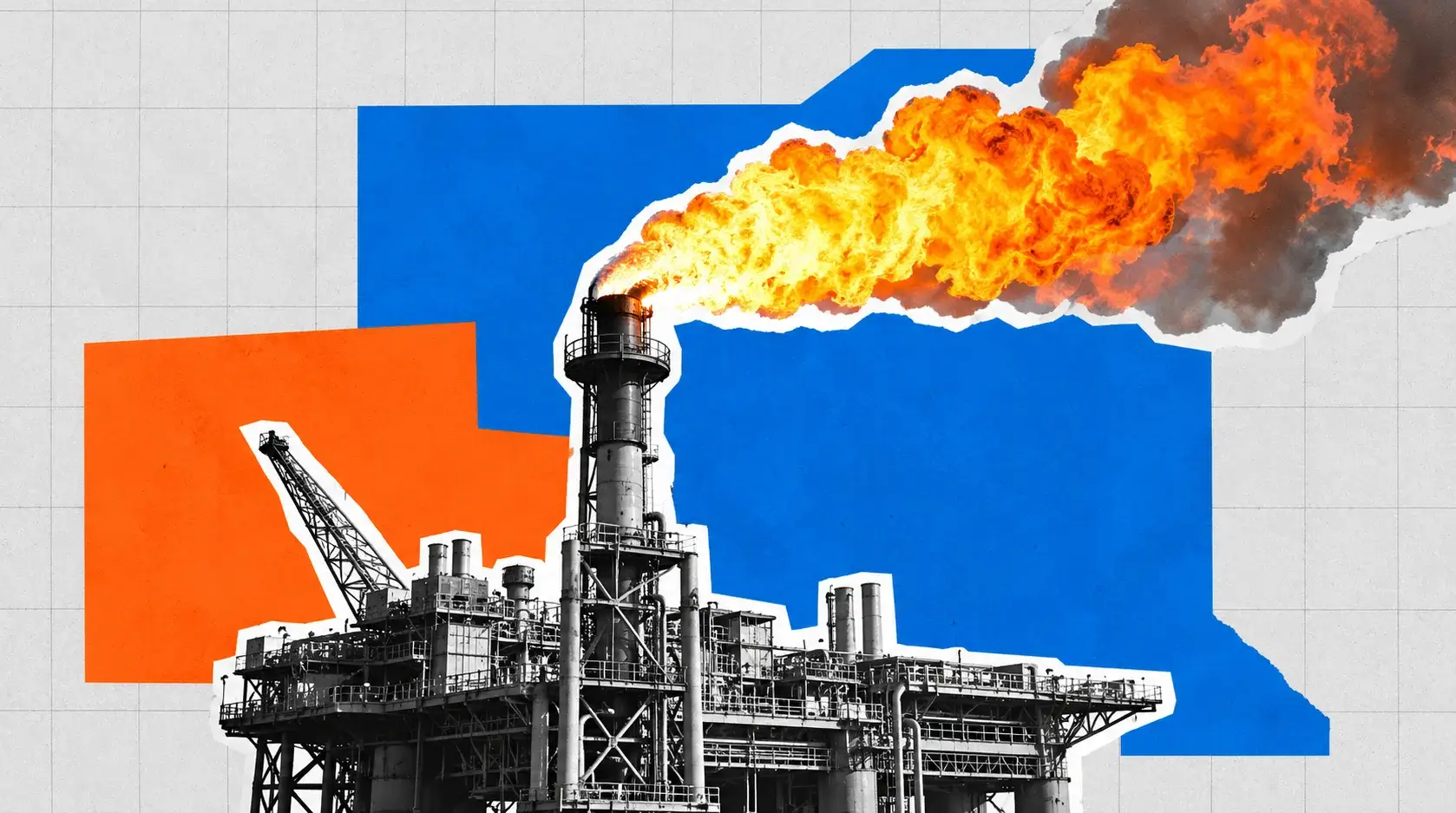
Everything routes through this chokepoint. The Strait of Hormuz carries roughly a fifth of global seaborne oil, and its effective closure since the conflict began is what tightened global supply and drove the entire repricing. When the strait chokes, Middle East producers can't move barrels and shut in output; when traders fear a full closure, the premium spikes instantly — the June 1 intraday move above 7% is exactly that reflex. There is no oil forecast right now that isn't first a Hormuz forecast.
The damage compounds the risk. The war has done significant harm to refineries, pipelines, and energy infrastructure across the Gulf — at least 40 assets across nine nations damaged since hostilities began — alongside depleted inventories and ongoing tanker-security challenges. That's why even a reopening wouldn't be clean: any restart of flows is likely to be partial, with infrastructure repairs and insurance and security overhangs lasting well beyond a diplomatic handshake. The strait is the supply story, the risk-premium story, and the price story all at once.
The June 1–2 Whipsaw
The last 48 hours are a microcosm. June 1: Iranian media reported Tehran had suspended communications with Washington in response to attacks in Lebanon and was preparing to fully close Hormuz, and Brent surged more than 7% intraday before paring to a 5% gain above $95. June 2: Iran's Foreign Ministry said Tehran remained engaged with the U.S. but did so with "distrust," and fresh U.S.-Iranian clashes near the strait raised concerns about an interim peace agreement — keeping crude bid even as Brent ticked slightly lower on the session.
Cutting the other way, Trump said negotiations remain ongoing, that talks would "work out well," and that a memorandum of understanding to reopen Hormuz could be reached within the next week. Lebanese authorities pushed for all Lebanese territory to be covered under any ceasefire extension. That's the daily tug-of-war: an MOU-within-a-week headline caps the upside, a fresh-clashes-near-Hormuz headline puts a floor under it. Until one side resolves decisively, crude trades the wire, and the wire flips by the hour.
The Supply Side Is Tighter Than It Looks
Beyond Hormuz, the physical market has quietly tightened in ways that outlast the headlines. OPEC+ output fell by around 1.74 million barrels per day in April alone, and OPEC's May monthly report cut its 2026 global demand growth forecast to 1.17 million bpd from 1.38 million previously, citing the conflict's drag on trade flows. Lower output meeting still-positive demand growth is a tightening setup even before the geopolitical premium.
The structural change that matters most: the UAE announced its departure from OPEC effective May 1, 2026. Because the UAE held meaningful spare crude capacity, OPEC's spare capacity is now expected to average just 2.5 million bpd in 2027, down sharply from a prior 3.8 million bpd forecast. That's a thinner shock-absorber for the entire global market — less buffer to cover a supply disruption, which raises the price sensitivity of any future Hormuz event. A market with a 3.8 million bpd cushion can absorb a scare; one with 2.5 million bpd can't as easily. The buffer just got smaller right as the risk got bigger.
The Inventory Draw
The balances confirm the squeeze. The EIA expects global oil inventories to fall by an average of 8.5 million bpd in the second quarter of 2026 — a massive draw — and by 2.6 million bpd for the full year, a steeper drawdown than the prior month's 0.3 million bpd estimate, because the agency now assumes a later Hormuz reopening and a longer recovery for shut-in production. Inventories draining at that pace under a supply disruption is the textbook setup for sustained elevated prices.
That's the bull's hard-data anchor. The geopolitical premium can deflate on a headline, but a physical inventory draw of 8.5 million bpd is a real tightening that takes time to reverse. It's why the EIA pegs Brent around $106 a barrel for May and June — the near-term balance is genuinely tight regardless of the diplomatic noise. The draw is the floor under the war premium; even skeptics of the Iran headlines have to respect a market that's physically short barrels.
Aramco's 2027 Warning
The supply-side authority weighed in bluntly. Saudi Aramco CEO Amin Nasser — who runs the world's largest oil company — warned that the oil market won't normalize until 2027 if the Strait of Hormuz stays blocked beyond mid-June. Even if the strait opened today, he said, it would still take months for the market to rebalance, and a delay of a few more weeks pushes normalization into 2027.
That's a critical timeline for traders. Mid-June is the line Nasser drew, which makes the next two weeks of Iran diplomacy the swing window for the entire back half of 2026. If Hormuz reopens before mid-June, the rebalancing clock starts and prices can begin their descent toward the EIA's fall targets. If it stays shut past that date, the disruption ossifies into a 2027 problem, and the elevated-price regime extends. Aramco isn't talking its book here so much as flagging the physical reality — depleted inventories and damaged infrastructure don't refill on a ceasefire announcement.
The Brent–WTI Spread and U.S. Production
The U.S. side offers a partial release valve. Higher prices are pulling U.S. crude output up — the EIA now sees U.S. production averaging 13.6 million bpd in 2026 and 13.8 million bpd in 2027, roughly half a million bpd higher than prior forecasts. More U.S. barrels and elevated domestic inventories are exactly what's keeping WTI capped relative to Brent, holding that spread wide near $12 a barrel and leaving WTI in the low-$90s while Brent trades mid-$90s.
That dynamic matters for the trade. The international benchmark carries the full Hormuz premium because it prices the disrupted seaborne crude directly; WTI carries a discount because U.S. supply is insulated from the strait and domestic stocks are ample. For a forecaster, Brent is the cleaner read on the geopolitical risk premium, while WTI reflects the premium minus the U.S. supply cushion. Both move on Iran, but Brent moves more.
Read More
-
Yen Stalls at 160 Despite a 3% JGB and Tokyo Core CPI at 2.0% — Intervention Sits at 164, Friday's Payrolls Decide
02.09.2026 · TradingNEWS ArchiveEnergy
-
FDVV ETF ($61.42) Balances Nvidia, Apple and Microsoft Against Rate-Sensitive Income Holdings — $64.54 High in Reach if Yields Ease
19.10.2026 · TradingNEWS ArchiveStocks
-
XRPI ($6.98) and XRPR ($10.61) Trade 56% and 52% Below Their Highs as First-Mover Funds Lose the Fee Battle to 0.19% Spot Products
19.10.2026 · TradingNEWS ArchiveCrypto
-
NG Holds Its $3.00–$3.30 Range as Light Storage Builds Meet Record 112.2 Bcf/d Output — $3.50 Above $3.26
19.10.2026 · TradingNEWS ArchiveCommodities
-
Dollar-Yen (158.43) Stuck in a 1.39-Yen Box as Carry Meets the Intervention Line — 156.65 Below 157.55, Tokyo Waits at 160
19.10.2026 · TradingNEWS ArchiveForex
The Forecast — Targets and the Range
The institutional calls cluster around a near-term-tight, later-soft path. The EIA sees Brent around $106 in May and June, then falling to an average of $89 in the fourth quarter and roughly $79 for 2026 as Middle East production rises, dropping further to $64–$79 in 2027 — a sharp upward revision from earlier $58/2026 and $53/2027 forecasts, reflecting how fast the balances shifted. Goldman Sachs raised its 2026 Brent projection to $85 from $77 on extended supply disruptions. The trader consensus, per ICMA's Bob Parker, is $90–$100 "for at least the next couple of months" until there's clarity on a lasting peace, with the caveat that any Hormuz reopening is likely only partial.
So the map: the near-term range is $90–$100 Brent, anchored by the physical draw and the Hormuz premium. The downside scenario is a confirmed, durable reopening before mid-June that starts the rebalancing clock and drags Brent toward the EIA's $89 fourth-quarter path and eventually the high-$70s. The upside tail is a full, sustained Hormuz closure that re-tests the April $138 peak and pushes normalization into 2027 — the Aramco scenario. The base case is the violent chop: crude ranging $90–$100, spiking on threats and fading on diplomacy, until the strait's status resolves one way or the other.
The Technicals and the Levels
The chart reflects a market with no committed trend. Both benchmarks have been holding above their full moving-average stacks, but the RSI readings are neutral — around 52 for WTI and 55 for Brent — and the ADX is weak, signaling neither benchmark has established a firm directional trend. That's a coiled, headline-driven tape, not a trending one: the indicators say the market is waiting for the Iran resolution to pick a direction.
The levels to trade: for Brent, the $92–$93 area that capped the May lows is near-term support, with the psychological $90 handle below it — a break there opens the EIA's fall path toward the high-$80s. Resistance sits at the $97–$100 zone that contained the June 1 spike, and above that the war-premium highs toward $105–$113 come back into play on a full Hormuz closure. For WTI, $90 is the line — hold it and the bid stays, lose it and the low-$80s open; resistance runs $95 then $100. The technicals are secondary to the headlines here, but $90 Brent and $90 WTI are the floors that tell you whether the war premium is holding.
The Verdict
Oil is a binary trade wearing a price chart. Crude staged a 50%-plus war rally to a $138 Brent peak, gave back 20% on ceasefire hopes, and is now whipsawing in the mid-$90s as June 1's Hormuz-closure threat reignited the premium and June 2's fresh clashes fight Trump's "MOU within a week" optimism. The structural setup is genuinely tight — Hormuz choking 20% of global flows, OPEC+ output down 1.74 million bpd, the UAE's exit shrinking the spare buffer to 2.5 million bpd, an 8.5 million bpd Q2 inventory draw, and Aramco warning of 2027 normalization if the strait stays shut past mid-June. That's a powder keg under prices.
The line in the sand is mid-June and the $90 handle. A Hormuz reopening before mid-June starts the rebalancing clock and points Brent toward the EIA's $89 fourth-quarter path and the high-$70s into 2027 — the bear case. A full, sustained closure re-tests the $138 April peak and locks in the elevated regime — the bull tail. Until the strait resolves, crude doesn't trend; it ranges violently between $90 and $100, spiking on every threat and fading on every handshake. Oil doesn't need a new catalyst to move — it needs the Iran headline cycle to break one way, and $90 Brent is the level that tells you whether the war premium still holds. Trade the strait, not the chart.