Brent Closes on $90 After a 5% Weekly Gain While the IEA Flips to a 1.8M Barrel Third-Quarter Deficit
The interim US-Iran ceasefire expires with Hormuz talks deadlocked and Iran demanding six concessions before reopening the waterway | That's TradingNEWS
Key Points
- Brent traded $88.77, up 0.28%, with WTI at $81.61 and the spread between them at $7.16.
- The IEA raised its third-quarter deficit forecast to 1.8 million barrels per day from roughly 800,000.
- Saudi Arabia produced 7.34 million barrels per day against a 10.29 million allocation because it could not ship.
Crude opened the week with a modest bid and an expiring truce. Brent traded $88.77, up $0.25 or 0.28%, while WTI sat at $81.61, up $0.14 or 0.17%, with some venues quoting the American benchmark closer to $82.83. Contract-for-difference pricing on Brent showed $88.31, down 0.24% on the prior session, and spot references ran as high as $91.53 at 6 a.m. Eastern Time, up 86 cents on the previous morning. The dispersion across quotes reflects a market where physical differentials have detached from paper benchmarks.
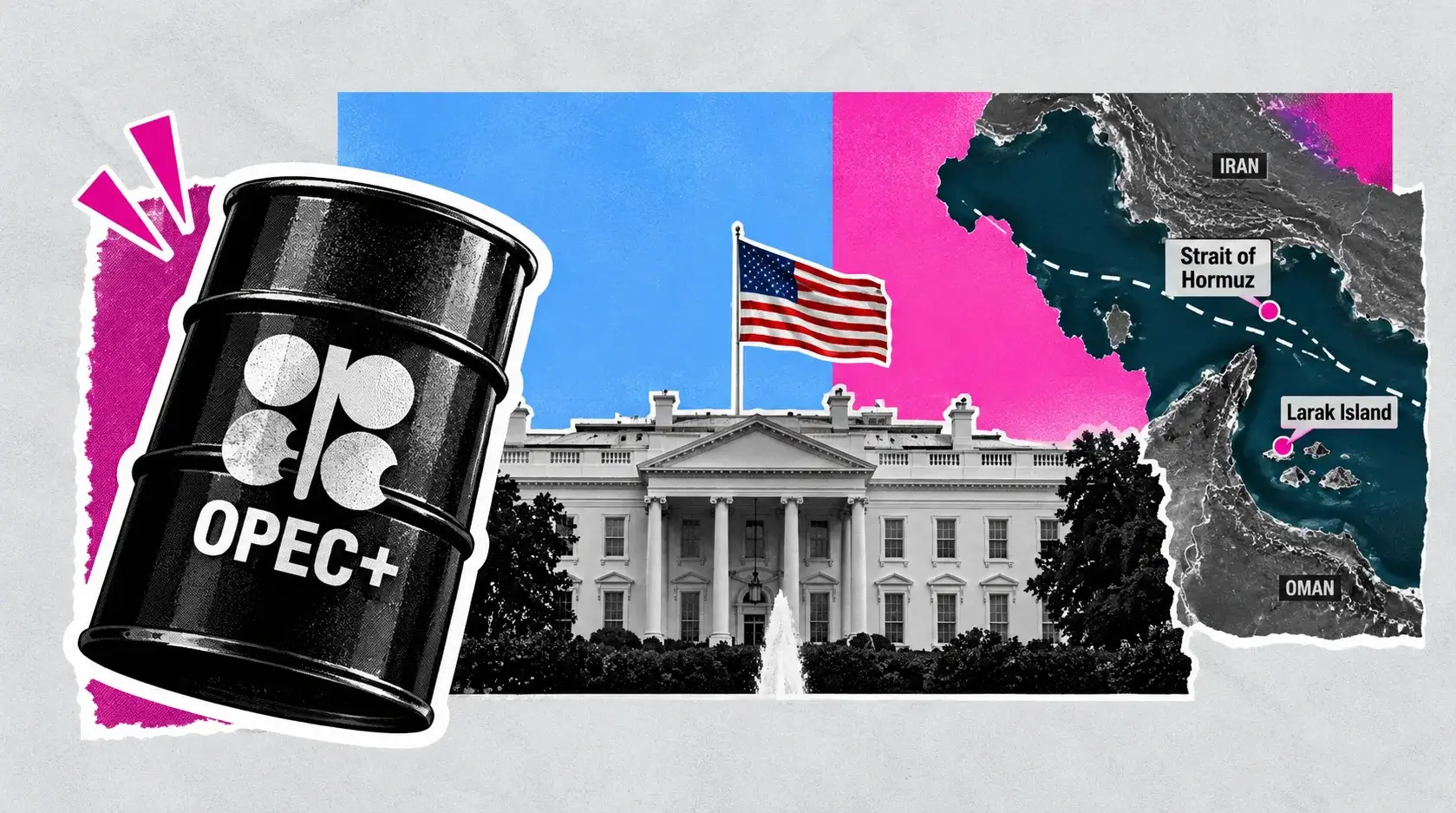
The event driving the session was a deadline. The interim ceasefire agreement between the United States and Iran was set to formally expire, while negotiations to end the conflict and reopen the Strait of Hormuz remain deadlocked. Israel launched fresh strikes on Lebanon over the weekend, with fighting against Iran-backed Hezbollah delivering another setback to efforts to end the parallel Middle East wars. President Donald Trump is preparing new economic sanctions aimed at forcing Iran to capitulate.
The counterweight has kept prices from breaking higher. Middle Eastern producers are covertly moving millions of barrels of crude through the waterway, which has limited further price gains despite the disruption. Iran and Oman appear to be moving closer to an agreement on managing the Strait, though the United States is not participating in those talks. That bilateral track matters because it establishes a mechanism for partial flow restoration independent of the stalled US-Iran negotiation.
The annual comparison quantifies the shock. Brent trades 32.60% above where it stood a year ago, an increase of roughly $25.65 per barrel, while sitting 1.02% lower across the past month. That combination describes a market that repriced violently and has since consolidated at the higher level rather than continuing to climb. The 52-week intraday high on Brent was $120.88 on April 30, 2026, which places current pricing 26.6% below the conflict peak. Oil surged more than 20% during July alone on rising geopolitical tension and supply shocks, and the August range has been a digestion of that move rather than an extension of it.
Friday's 5% Weekly Gain and the $82.40 WTI Settle
Last week delivered the strongest advance since the July surge. Brent rose above $88 a barrel on Friday, gaining more than 5% across the week as the United States increased economic pressure on Iran to reopen the Strait of Hormuz. The September WTI contract settled at $82.40, up $1.15 or 1.42% on the session. WTI had opened the week at $81.12 and Brent at $86.91.
The intra-week path was uneven. Brent gained 0.62% across one 24-hour stretch to $87.47, then extended through Thursday and Friday as sanctions rhetoric intensified. A 5% weekly move on a benchmark already 32.6% higher year over year indicates the market still carries substantial headline sensitivity, and that sensitivity is asymmetric to the upside because inventory buffers have thinned.
Equity markets registered the crude strength selectively. Chevron gained 1.16% on Friday and helped limit the Dow's decline, while Range Resources tumbled 7.3% on persistent headwinds from lower natural gas prices, regional supply gluts and analyst target cuts. Natural gas fell to $2.661 on Monday, down 2.63%, while European gas held above €60 per megawatt hour. That divergence between crude strength and North American gas weakness isolates the geopolitical premium to oil rather than to energy broadly.
August 15 and 16 were non-trading days for oil, which compressed the weekend's geopolitical developments into Monday's open. Fresh Israeli strikes on Lebanon, the formal ceasefire expiry and new sanctions preparation all arrived without a market to price them, and the resulting 0.28% opening gain on Brent understates the accumulated news flow. Moderate volatility is expected across the week given the release of Federal Reserve minutes, July industrial production data, US crude oil inventories, the Philadelphia Fed Manufacturing Index and preliminary August PMI readings, with any escalation of the Middle East conflict capable of triggering a larger move.
Iran Demands Six Concessions Before Reopening Hormuz
The negotiating position on the Iranian side has hardened into an explicit list. Iran has stated that Hormuz remains closed until the United States meets six sweeping demands. That framing converts the waterway from a casualty of conflict into an instrument of leverage, and it means reopening is now a negotiated outcome rather than a military or logistical one.
The structure of that demand set determines the timeline. A closure contingent on six separate concessions requires either a comprehensive settlement or a partial arrangement that satisfies some conditions while leaving others unresolved. The Iran-Oman track, from which the United States is absent, represents the second path. An Omani-brokered management framework for the Strait could restore partial transit without Washington conceding the full list, which is why that channel carries more near-term significance than the stalled bilateral talks.
Enforcement has proved leaky in both directions. Iran moved 12 million barrels past a renewed US oil blockade, demonstrating that sanctions on Iranian exports are porous. Simultaneously, Middle Eastern producers are covertly shipping millions of barrels through the Strait despite the closure, which shows the transit restriction is equally porous. Both facts point the same direction: headline positions on supply are more absolute than realised flows.
The escalation calendar carries a defined risk boundary. Jefferies warned the uneasy truce may hold only through the US mid-term elections, after which escalation risk rises, and identified the critical market variable as how high oil prices climb before Washington offers concessions. The broker added that Asia and Europe carry greater exposure than the United States to a prolonged Hormuz disruption given heavier reliance on imported energy. That asymmetry explains why European equities and the euro carry more sensitivity to the conflict than US assets, and it is the mechanism through which the oil price transmits into the currency market. Geopolitical uncertainty remains the most significant headwind weighing on market sentiment, though the relative absence of large-scale military activity has lowered volatility at the margin.
The IEA Doubles Its Third-Quarter Deficit to 1.8 Million Barrels
The August Oil Market Report delivered the most consequential revision of the year. The global oil balance is now expected to show a deficit of 1.8 million barrels per day in the third quarter of 2026, more than double the estimate of roughly 800,000 barrels per day in the prior month's report. That revision reflects continued severe constraints on Hormuz transits rather than any change in the demand outlook.
A deficit that doubles in a single monthly cycle indicates the agency was materially behind the physical market. Balance revisions of that magnitude typically follow rather than lead price action, which is consistent with crude having surged more than 20% in July before the forecast caught up. The implication for positioning is that the official balance data has been understating tightness, and further revisions in the same direction remain more likely than reversals while the Strait stays constrained.
The offsetting expectation is a return to surplus. The market is projected to move back into oversupply toward the end of this year as flows recover, but the agency flagged that risks remain substantial and the urgency of reopening the Strait has increased because previously available inventory buffers are rapidly depleting. That is a specific warning: the surplus forecast depends on a reopening that Iran has conditioned on six demands.
The scale of the potential swing is extraordinary. The IEA expects a substantial surplus if oil flows through the Strait recover, with implied oversupply of 3.8 million barrels per day in 2026 once disruptions end, and one scenario flips a projected 1.3 million barrel deficit into a 4.6 million barrel surplus in 2027. A market that moves from a 1.8 million barrel quarterly deficit to a 3.8 million barrel surplus on a single binary event is not a market with a price. It has two prices separated by a diplomatic outcome, and the current $88.77 handle represents a probability-weighted blend of them.
Observed Stocks Fall Below 7.9 Billion Barrels for the First Time Since April 2025
Inventory data supplies the hardest evidence of physical tightness. Global observed oil inventories plunged by 69 million barrels, or 2.2 million barrels per day, during July, dragged lower almost entirely by a decline in oil on water. That followed brief respite in June. By the end of July, observed stocks had fallen below 7.9 billion barrels for the first time since April 2025.
The cumulative draw is the more alarming figure. Stock reductions between the end of February and the end of July reached 410 million barrels, averaging 2.7 million barrels per day across five months. Sustained draws at that rate consume the buffer that allows a market to absorb further supply shocks without price spikes, which is precisely why the agency escalated its language about the urgency of reopening the Strait.
The composition of the July draw carries specific meaning. Inventories falling almost entirely through a drop in oil on water indicates that floating storage and cargoes in transit were consumed rather than onshore tank stocks. Oil on water is the most price-responsive inventory category, since it represents supply already committed to a destination. Depleting it first means the next phase of drawdowns hits onshore commercial stocks, which are stickier and more visible, and those draws tend to move prices more forcefully.
US inventories tell a parallel story with domestic causes. Commercial crude stocks are forecast to remain below the five-year 2021 to 2025 low through the end of 2026. Increased crude exports, reduced imports and high refinery runs since mid-April have produced consistent weekly declines. Net imports are forecast to stay below average through 2027 given strong international demand for American crude. The American Petroleum Institute reported a sharp US crude stock draw as the Strategic Petroleum Reserve hit a new low, though a separate reading showed inventories building as the Hormuz shipping disruption dragged on. Wednesday's official inventory and Cushing figures resolve that conflict.
The EIA Sees Brent at $85 in Q3 Before Falling to $69 in 2027
Official US forecasting has been revised tighter in the near term and looser beyond it. The Energy Information Administration's Short-Term Energy Outlook, released August 11 with the forecast completed August 6, increased estimates of Middle East shut-in crude production relative to the July projection because of continued severe constraints on Hormuz transits, which the agency assumes persist through August.
The price path is explicit. Reduced shipments through the Strait lower global inventories further in the coming months and keep prices near early-August levels, producing a Brent spot forecast averaging around $85 per barrel in the third quarter of 2026. As inventories rebuild with most production recovering by early 2027, the agency expects Brent to fall gradually to an average of $69 per barrel across 2027.
Current pricing sits above the near-term forecast. Brent at $88.77 trades 4.4% above the $85 third-quarter average, which implies either that the agency expects prices to soften through September or that the physical market has tightened beyond the August 6 forecast completion date. Given the ceasefire expiry and the fresh Lebanon strikes since that cutoff, the second explanation is the more probable one.
The 2027 projection is where the real divergence sits. A $69 average implies a 22.3% decline from current levels, predicated on most regional production returning near pre-conflict averages in early 2027 with ongoing disruptions of roughly 600,000 barrels per day continuing through the end of next year. That is a considerably more constructive supply assumption than the current situation supports, and it depends entirely on the diplomatic outcome. Statista's March 2026 survey forecast Brent averaging $78.84 across 2026, an increase of $9.80 over the prior year, which already looks low against a benchmark trading at $88.77 in August. Every forecast in the market has been chasing the physical reality upward.
OPEC+ Quotas Are Academic: Saudi Allocation 10.29 Against 7.34 Output
The most misunderstood aspect of the current market is that production quotas have stopped mattering. Saudi Arabia holds an allocation of 10.29 million barrels per day and produced 7.34 million barrels per day. That single 2.95 million barrel shortfall is roughly three times the size of the entire five-month cumulative quota increase the group has delivered.
The cause is logistical rather than discretionary. Saudi Arabia sits below quota in mid-2026 because it could not ship, not because it chose not to pump. Iraq's shortfall alone reached 2.39 million barrels per day, more than twelve times the size of the August adjustment. Iraq and Kuwait have shut in production not by choice but because they physically cannot export through the Strait. Only two members were at or above target: Kazakhstan, a chronic overproducer whose Tengiz expansion has repeatedly outrun its allocation, and Oman, whose small onshore output was largely untouched by the Gulf shipping crisis. Every member exposed to Hormuz was massively short.
The August decision reflects that irrelevance. OPEC+ delivered a 188,000 barrel per day increase for August, a quota rise rather than a cut, and members cannot fill the quotas they already hold. Raising an allocation that producers are unable to physically utilise has no supply effect whatsoever. Saudi Aramco cut its August official selling price to Asia one day after the quota decision, which is the pricing signal that actually matters for physical barrels.
The group is now preparing to stop raising output targets altogether. A pause would leave another 2 million barrels per day of group-wide cuts in place through the end of 2026. September 2026 was the point at which the April 2023 tranche was expected to be fully unwound, and if roughly 191,000 barrels per day remains outstanding, the schedule has slipped and the alliance will have to acknowledge it. Quota headlines have become a distraction from the variable that determines supply.
Gulf Exports Run 16.1 Million Barrels Against a 24 Million Pre-War Average
The tanker count is the supply metric that matters, and it shows a gap of historic proportions. Gulf export volumes ran 16.1 million barrels per day in June against a pre-war average of 24 million barrels per day. That 7.9 million barrel shortfall represents roughly 7.5% of global demand removed from seaborne trade, and closing it is the single variable that determines whether crude trades at $69 or above $100 next year.
Tanker traffic through the Strait has declined, and that decline is what produced the 69 million barrel July inventory draw concentrated in oil on water. The mechanism is direct: fewer cargoes departing means less oil in transit, and oil in transit is counted as inventory. A 7.9 million barrel daily export gap sustained across months explains the 410 million barrel cumulative draw between February and July without requiring any assumption about demand.
Covert flows partially offset the official gap. Middle Eastern producers moving millions of barrels through the waterway despite the closure, combined with Iran pushing 12 million barrels past the US blockade, means realised supply exceeds the headline export figures. That grey volume is why prices have held near $88 rather than pushing through $100, and it is also why the market cannot accurately size the deficit.
The reconstruction timeline is the forecast's weakest link. The EIA expects most regional production to return near pre-conflict averages in early 2027 with ongoing disruptions of about 600,000 barrels per day persisting through the end of next year. Moving from a 7.9 million barrel export gap to a 600,000 barrel residual disruption requires the Strait to reopen substantially within roughly four months. Iran has conditioned that reopening on six demands with the United States absent from the Omani negotiating track. The supply forecast and the diplomatic reality are not currently reconciled, and Wednesday's inventory print is the nearest measurement of which one the physical market believes.
Read More
-
Yen Stalls at 160 Despite a 3% JGB and Tokyo Core CPI at 2.0% — Intervention Sits at 164, Friday's Payrolls Decide
02.09.2026 · TradingNEWS ArchiveEnergy
-
MELI Stock Gap to $1,843 High as Ibovespa Surges 8.76% and Rate-Cut Bets Lift a $16.4B Credit Book — $2,270 Upside Case
05.10.2026 · TradingNEWS ArchiveStocks
-
XRP-USD ($1.52) Coils Under a $1.55 Ceiling as Whales Add 1.6B Tokens and RLUSD Tops $2.4B — $1.60 Breakout in Focus
05.10.2026 · TradingNEWS ArchiveCrypto
-
Brent Crude Stays Above $100 and WTI Slides Toward $88 as Gulf Exports Top Pre-War Levels While Hormuz Remains Shut
05.10.2026 · TradingNEWS ArchiveCommodities
-
S&P 500, Nasdaq and Dow Futures Dip as 5.28% Yields Test Friday's Rally; PTC Soars 36%, INTC Falls 3.9%
05.10.2026 · TradingNEWS ArchiveMarkets
-
Pound Sterling at 1.3228 Pinned Near a 3-Month Low as the Dollar Index Hits 102.53
05.10.2026 · TradingNEWS ArchiveForex
Spare Capacity Destroyed as the 2027 Baseline Fight Begins
The strategic consequence of the conflict extends past current barrels to the market's shock absorber. The Iran war has reduced exports from several Middle Eastern members and cut deeply into the group's effective spare capacity. Spare capacity is defined as idled production that can be brought online within 90 days and sustained for an extended period, and capacity that cannot reach a tanker does not meet that definition regardless of what sits in the reservoir.
Saudi Arabia nominally retains approximately 3 million barrels per day of spare capacity, the largest buffer in the alliance, with a fiscal breakeven near $80 per barrel. At $88.77 Brent the kingdom is generating surplus revenue, but its 7.34 million barrel actual output against a 10.29 million allocation means that spare capacity is currently unreachable. A buffer that cannot be deployed provides no protection against further disruption, which is why the market carries a persistent risk premium despite headline spare capacity looking adequate.
Constraints extend across the alliance. Iraq remains limited by export bottlenecks. Kazakhstan has reduced production after attacks disrupted Black Sea loadings. Russia is managing refinery and terminal outages while Western sanctions cap its ability to raise output even if the group agreed. Saudi Arabia's energy minister has stated the kingdom is on track to lift capacity by more than 1 million barrels per day to above 13 million by the end of 2026 or the start of 2027, which would rebuild the buffer if shipping normalises.
The allocation fight is now the group's central political problem. OPEC+ is reviewing the maximum sustainable production capacity of its members to set 2027 baselines, and Iraq along with other producers wants higher quotas reflecting investments that expanded capacity. Every member wants credit for barrels it claims it can pump, and recent events have made that counting considerably messier. Determining how much capacity genuinely exists, who may claim it, and whether the market will need it in 2027 is the defining challenge, and the answer shapes whether the post-conflict period delivers a $69 Brent or a managed decline.
Demand Contracts 1.56 Million Barrels as Prices Destroy Consumption
The demand side has deteriorated sharply, and that deterioration is the primary bear argument against current pricing. The IEA downgraded its outlook for global oil demand this year, citing persistent Hormuz export disruptions and elevated fuel prices. The agency now expects 2026 demand to decline by 1.56 million barrels per day, roughly 510,000 more than its previous forecast, to 103.29 million barrels per day.
The quarterly path shows the shock working through. Demand contracted 4.9 million barrels per day year over year in the second quarter, easing to a projected 2.8 million barrel contraction in the current quarter before returning to growth of around 580,000 barrels per day in the final three months of the year. A demand contraction of that magnitude across two quarters is price-induced destruction rather than a cyclical slowdown, and it establishes a ceiling on how far crude can rise before consumption responds.
Forecasters disagree fundamentally on the trajectory. The IEA's 2026 estimate of 103.29 million barrels per day sits against OPEC's research unit forecasting demand growth of 1.38 million barrels per day to 106.52 million barrels per day. A 3.2 million barrel gap between the two authoritative agencies on the same calendar year is unusual and reflects opposing assumptions about the duration of the disruption. The recovery case assumes de-escalation, with the IEA projecting 2027 demand growth of 2.4 million barrels per day to 105.7 million.
The consumer evidence supports the destruction thesis directly. Gasoline prices sit roughly $1 per gallon above pre-Iran war levels, US retail sales fell 0.6% in July against consensus for a 0.1% gain, and consumer discretionary is one of only two S&P 500 sectors lower this year. Companies dependent on discretionary spending have faced pressure through 2026 amid stubbornly high inflation and elevated fuel costs. That single dollar per gallon connects the Strait of Hormuz to a contracting American consumer, and it is the mechanism through which high oil prices eventually cure high oil prices.
The $7.16 Brent-WTI Spread and the US Export Pull
The differential between benchmarks reveals where the tightness actually sits. Brent at $88.77 against WTI at $81.61 produces a spread of $7.16, which is wide by historical standards and reflects the geographic concentration of the supply shock. Hormuz constrains waterborne Middle Eastern crude that prices off Brent, while American production is unaffected by the Strait and prices off inland dynamics at Cushing.
That spread creates a powerful export incentive. A $7.16 premium for delivering into the Atlantic basin rather than selling domestically explains why increased crude exports, reduced imports and high refinery runs since mid-April have driven consistent weekly declines in US commercial stocks. The arbitrage pulls American barrels overseas, which tightens domestic inventories even though US production has not fallen.
The consequence is that US inventories are forecast to remain below the five-year 2021 to 2025 low through the end of 2026, with net imports staying below average through 2027 given strong international demand for American crude. That is a structurally tighter domestic balance created by an external shock, and it means WTI carries upside sensitivity to any further Brent strength through the arbitrage channel rather than through direct supply disruption.
The dollar amplifies both benchmarks simultaneously. The dollar index slipped 0.20% to 99.363, a three-month low and below the 99.40 floor of its recent range, after July retail sales missed. Dollar weakness makes dollar-priced crude cheaper for buyers using other currencies, which supports demand at the margin and lifts nominal prices. Gold advanced 0.5% toward $4,400, silver gained 1.7% to $65.83 and copper added 1.03% on the same impulse. Crude participating in a broad commodity bid driven by currency rather than fundamentals is a lower-quality rally than one driven by physical tightness, and separating the two components is what determines whether $90 holds.
Fed Minutes Wednesday and the Inventory Print That Resolves the Conflict
The week's calendar concentrates energy-relevant risk into a single session. Wednesday delivers US crude oil inventories, Cushing crude inventories and minutes from the July 28-29 FOMC meeting simultaneously. Thursday brings the Philadelphia Fed Manufacturing Index for August, and preliminary August manufacturing and services PMI data close the week alongside July industrial production.
The inventory figure carries unusual weight because the available signals conflict. The American Petroleum Institute reported a sharp US crude stock draw as the Strategic Petroleum Reserve hit a new low, while a separate reading indicated inventories building as the Hormuz shipping disruption persisted. Those cannot both be right, and Wednesday's official data settles which direction the domestic balance is moving. A draw confirms the export-pull thesis and supports WTI. A build suggests demand destruction is outpacing the supply shock.
The Federal Reserve minutes matter through the dollar and the growth channel. Swaps traders now price roughly a one-in-four chance of a September rate increase, down from approximately 50% a week earlier and near 70% earlier in August, with the federal funds target at 3.50% to 3.75% held since December. Dovish minutes weaken the dollar further and support nominal crude. Hawkish minutes reveal a committee closer to tightening than the market assumes, which strengthens the dollar and pressures oil through both the currency and demand channels.
The interaction between the two is what makes Wednesday consequential rather than merely busy. Oil is currently the primary reason the Federal Reserve retains a tightening bias, since policymakers have noted inflation remains above target partly because of supply shocks driving energy prices and inflation has exceeded 2% for more than five years. A crude rally toward $95 would revive September hike odds and strengthen the dollar, which would then cap the rally. That feedback loop is the most underappreciated feature of the current setup, and it means oil's upside is self-limiting through the monetary channel even while the physical deficit widens. Chair Kevin Warsh speaks at Jackson Hole from August 27 to 29.
The Forecast: $90 Decides the Week, the Strait Decides 2027
The bullish path requires two confirmations. First, Brent clearing $90 on a daily close, which would confirm the break above the $88 level that capped the prior week and place the psychological $95 in range. Second, Wednesday's inventory data showing a draw that validates the 410 million barrel cumulative global decline, with observed stocks already below 7.9 billion barrels for the first time since April 2025. A ceasefire expiry that produces military escalation rather than a negotiated extension would supply the catalyst, with the April 30 high of $120.88 as the conflict-peak reference.
The bearish path requires the diplomatic track to deliver. Progress on the Iran-Oman framework for managing the Strait, even without US participation, would begin restoring the 7.9 million barrel gap between June's 16.1 million barrel Gulf exports and the 24 million pre-war average. That closes the deficit rapidly and activates the surplus forecasts, with implied oversupply of 3.8 million barrels per day once disruptions end. WTI support sits at the $81.12 August 14 open, and monthly range projections extend to $67.93 with a pivot at $67.00.
The base case for the coming sessions is continued range trade between $85 and $92 on Brent, with the third-quarter forecast average of $85 acting as a floor and $90 as the contested ceiling. The market carries a probability-weighted blend of two incompatible outcomes: a 1.8 million barrel quarterly deficit if the Strait stays constrained and a 3.8 million barrel surplus if it reopens. That is why every official forecast has been revised in the same direction and still trails the physical market, and why the monthly WTI range projection spans $67.93 to $106.74.
The asymmetry favours crude on inventories and disfavours it on demand. A 69 million barrel July draw, stocks below 7.9 billion barrels, spare capacity that cannot reach a tanker and Saudi Arabia producing 2.95 million barrels below allocation all argue that the physical market is tighter than the price. Against that, demand contracting 1.56 million barrels per day in 2026, gasoline $1 per gallon above pre-war levels, US retail sales down 0.6% and the Federal Reserve retaining a tightening bias specifically because of energy prices all cap the upside. Brent holding $88 through the ceasefire expiry establishes the floor. Clearing $90 is the event that would extend the move, and reopening the Strait is the only thing that would change the cycle.