Crude Sinks Toward $69 as the War Premium Unwinds, Hormuz Reopens, and Saudi Arabia Floods the Market With Barrels
WTI hit its lowest since February 27 and Brent broke $73 as transits through Hormuz reached their fastest wartime pace, restoring Persian Gulf exports to 75% of prewar levels despite a projectile strike on the Ever Lovely off Oman | That's TradingNEWS
Key Points
- WTI sank toward $69, its lowest since February 27, on a 10% weekly drop as Hormuz transits accelerated.
- Saudi Arabia restarted Ras Tanura exports for the first time since March; Persian Gulf flows hit 75% of prewar levels.
- The market flipped from shortage to a 2026 surplus fear; Goldman cut its Q4 Brent target to $80 a barrel.
Crude is unwinding the entire conflict in real time. West Texas Intermediate sank nearly 4% toward $69 a barrel in Friday dealing, its lowest level since February 27 — the day before the airstrikes that opened the US-Iran war first sent prices spiraling. Brent, the international benchmark, eased below $73. WTI is on track for a roughly 10% weekly drop, the largest in a month, and a third straight weekly decline. The premium that pushed crude above $120 at the peak of the conflict has been ripped out of the price, and the speed of the unwind is the entire story.
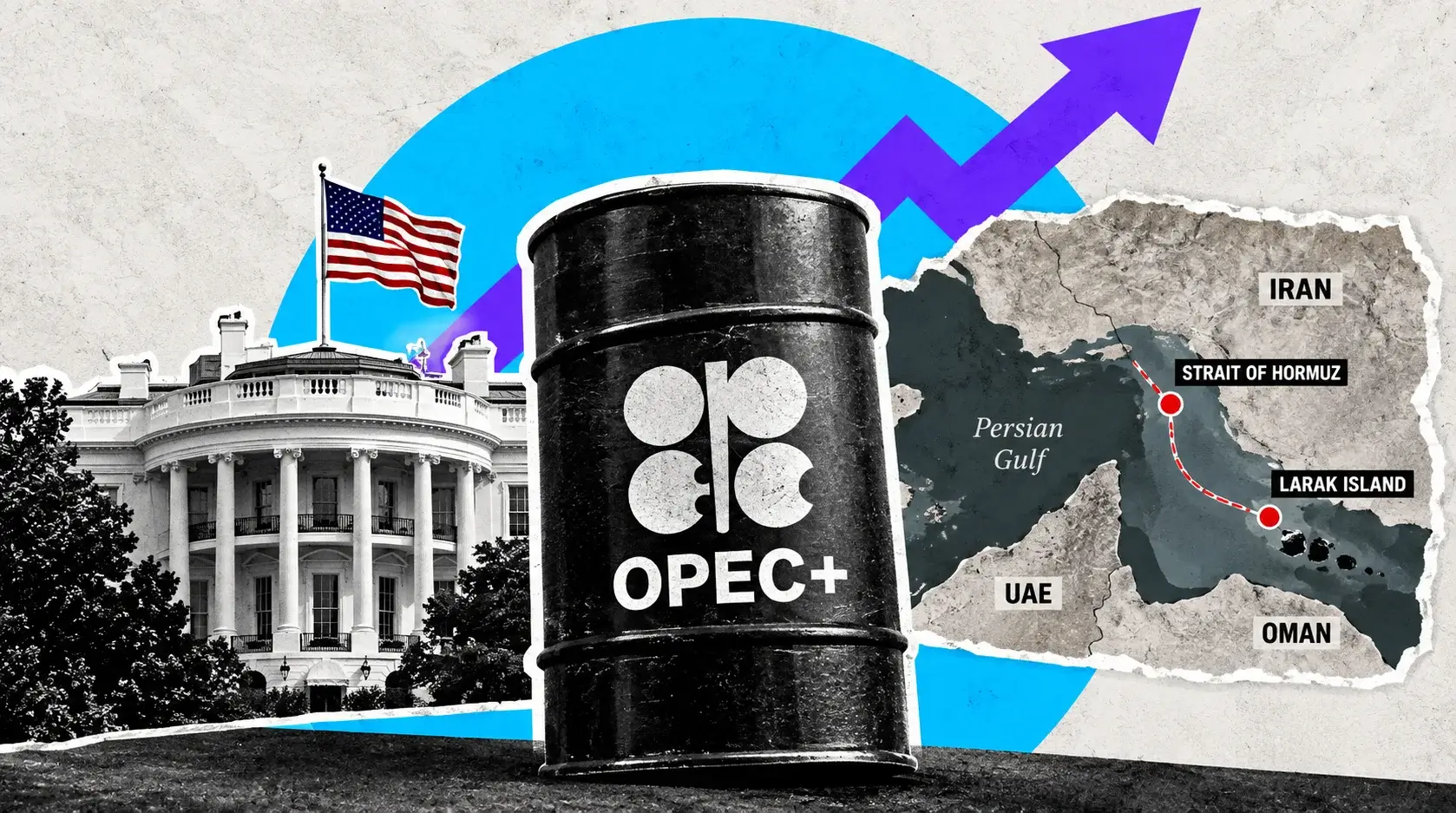
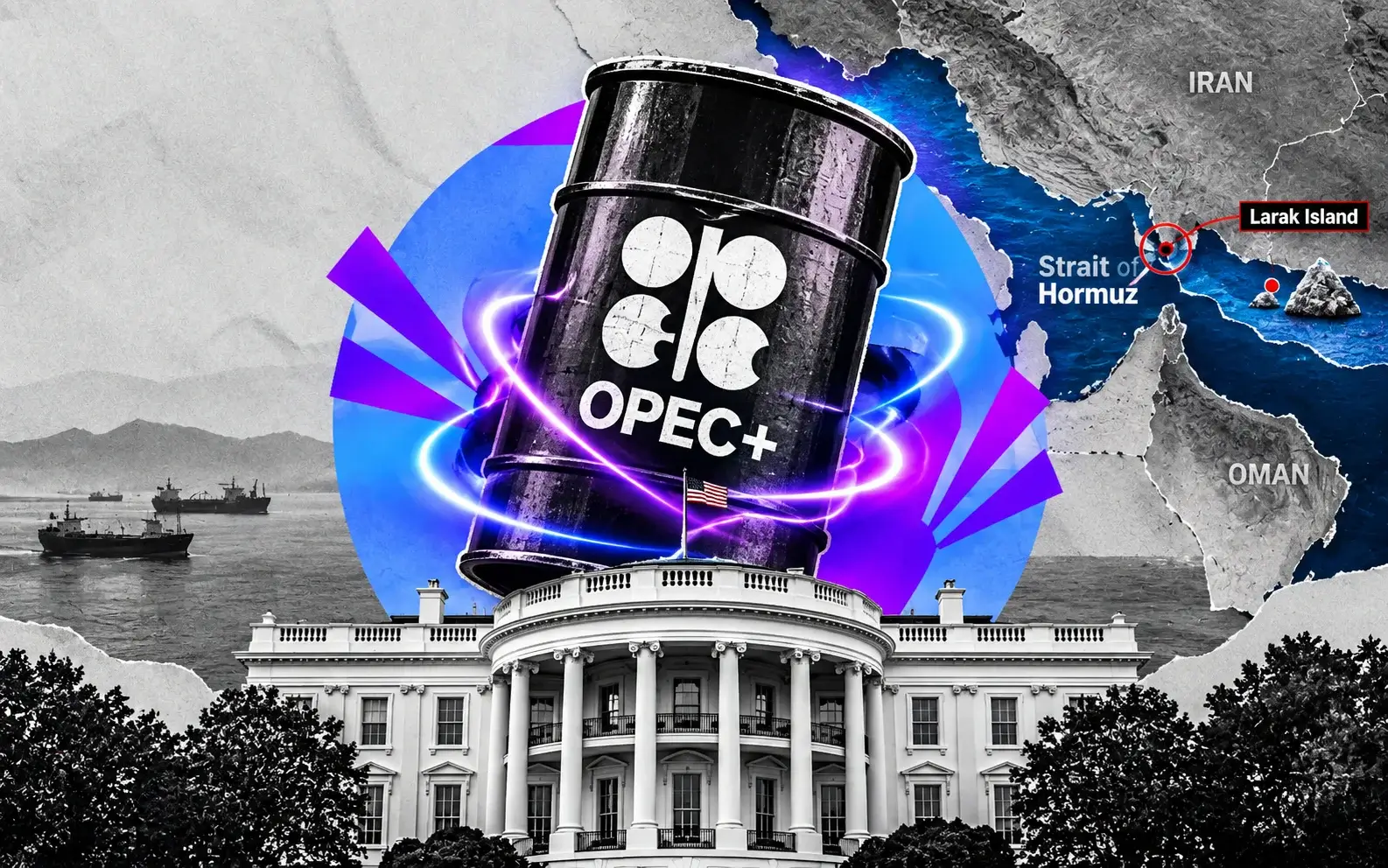
The thesis driving every tick is simple: the war premium is gone, and what's replacing it is the fear of a glut. The Strait of Hormuz — effectively closed during the conflict, choking off more than 11 million barrels per day of Middle East output and spiking Brent above $120 — is reopening fast. Transits are running at their fastest wartime pace, Saudi Arabia is loading tankers for the first time since March, and Persian Gulf exports have clawed back to roughly 75% of prewar levels. The 60-day US-Iran ceasefire is holding, the strait is open, and the crowd has decided the disruption that gripped the market for four months is, as one veteran analyst put it, well and truly over. That conviction has flipped the narrative 180 degrees — from acute shortage to looming surplus — and crude at $69 is the price catching down to the new reality. The only thing keeping a floor under it is the residual geopolitical risk that the ceasefire could still crack.
Hormuz Is Reopening Fast
The collapse traces directly to the reopening of the world's most important oil chokepoint. Shipping transits through the Strait of Hormuz have accelerated sharply, with vessels openly navigating the waterway — tracking signals turned back on — following progress toward a lasting US-Iran peace deal. That's a stark reversal from the conflict months, when the strait was effectively shut and tankers either avoided it or ran dark. Oil flows from the Persian Gulf through Hormuz have reached their fastest pace since the war began, and the market is repricing the supply picture accordingly.
The numbers tell the story of normalization. Persian Gulf exports have been restored to roughly 75% of prewar levels, a dramatic recovery from the near-total shutdown that defined the spring. The growing confidence in a durable agreement is what's encouraging the openly tracked transits — when shipowners believe the ceasefire will hold, they stop hiding and start sailing, and the supply that was bottled up behind the chokepoint floods back into the market. Every barrel that moves through the reopened strait is a barrel the market priced as unavailable just weeks ago, and the re-emergence of that supply is the dominant bearish force on crude. The reopening isn't theoretical or projected — it's happening now, vessel by vessel, and the price is falling toward $69 as the physical flows confirm the disruption is ending faster than almost anyone modeled.
Saudi Arabia Loads Ras Tanura for the First Time Since March
The single most important supply signal came from the Saudi coast. Saudi Arabia began loading tankers at its Ras Tanura terminal — the kingdom's primary export hub — restarting Persian Gulf exports for the first time since March. That's the world's largest swing producer flipping its export machine back on after a months-long shutdown, and it represents a major regional output ramp-up that the market is only beginning to absorb.
The Ras Tanura restart is the clearest evidence that the supply side is normalizing in earnest. When Saudi Arabia loads at Ras Tanura, the volumes are enormous, and the resumption signals that the kingdom believes the conflict is contained enough to commit barrels to the water. The ramp isn't limited to Saudi Arabia — Middle Eastern producers across the board, including the United Arab Emirates, Kuwait, and Qatar, are boosting supply, with Qatar issuing its first post-war crude tender. The one constraint slowing the flood is logistical: producers are having difficulty securing enough tankers to transport the additional crude, a bottleneck that's tempering how fast the barrels reach market. But that's a timing issue, not a supply issue. The crude is there, the producers are pumping, and the only question is how quickly the tanker fleet can move it. With Saudi Arabia, the UAE, Kuwait, and Qatar all ramping at once, the supply wave building behind the reopening is the force pressing crude toward its lowest levels since February.
From Shortage to Surplus: The Narrative Flipped
The most consequential shift is psychological, and it's a complete inversion. During the conflict, the market traded a genuine shortage — very limited shipping through Hormuz forced Middle East producers to cut crude output by more than 11 million barrels per day in May versus pre-conflict levels, triggering large global inventory draws and pushing Brent above $120. The entire framework was scarcity: how undersupplied is the market, and how high do prices go. That framework has been torn up and replaced.
Now the market's attention is fixed on a potential 2026 global supply surplus. The same producers who were forced offline are racing to restore output, OPEC members are jostling for higher quotas, and the crowd has pivoted from pricing shortage to pricing glut. That's a 180-degree flip in a matter of weeks, and it's why crude is falling so fast — the market isn't just removing the war premium, it's beginning to price the possibility that the post-war ramp overshoots into oversupply. The IEA, which had warned of a glut, dialed back its oversupply warning after the winter shocks, but the surplus narrative has taken hold regardless. When the dominant question shifts from "how short is the market" to "how big is the glut," the path for price is down, and crude at $69 reflects a market that's stopped fearing scarcity and started fearing abundance. The narrative flip is the engine of the selloff.
OPEC Is Jostling for Barrels Again
Nothing signals the return to normalcy like OPEC members fighting over quotas, and that fight is back. Iraq is demanding a higher OPEC production quota — and has gone as far as threatening to leave the cartel unless its quota is increased — seeking to recoup the oil sales it lost during the war. That's the kind of internal jockeying that only happens when producers are confident the market can absorb more barrels, and it's a tell that the supply side sees the conflict as over.
The quota fight matters because it points toward more supply, not less. When members like Iraq push aggressively for higher output allowances, the pressure on the cartel is to loosen, and a looser OPEC means more crude hitting a market already absorbing the Hormuz reopening. The producers ramping outside the quota debate — Saudi Arabia at Ras Tanura, the UAE, Kuwait, Qatar — compound the effect. A temporary US waiver permitting purchases of already-loaded Iranian oil adds yet another stream of supply to the equation. The collective picture is a producer bloc shifting from emergency output cuts back to competition for market share, and that competition is inherently bearish for price. The discipline that held during the conflict — when barrels were physically unavailable — is giving way to the old dynamic of members maneuvering for volume. Iraq's quota demand is a small headline with a big signal: the supply side is normalizing, and the barrels are coming back faster than the market can comfortably absorb.
The Ever Lovely Attack and the Geopolitical Floor
For all the bearish momentum, the geopolitical risk hasn't vanished, and it's what's keeping a floor under crude. The container ship Ever Lovely was struck by a projectile southeast of Oman, an incident reported by the maritime group UKMTO that revived security concerns and triggered a brief 2% price rebound on Thursday, lifting Brent back near $74.7 and WTI toward $71.6 before the selling resumed. Several commercial ships reversed course in the aftermath, a reminder that the waterway's normalization is fragile and reversible.
The attack underscores the central tail risk: Iran could exert greater control over transit through Hormuz even as it negotiates a permanent end to the war. The fear is that Tehran uses its position over the strait as leverage — slowing traffic, imposing transit charges, or signaling that it can disrupt flows at will — which would inject a fresh risk premium back into crude. President Trump confirmed the strait remains open and traffic has continued, and the ceasefire is holding, but the Ever Lovely strike showed how quickly a single incident can reverse course and turn ships around. That's the floor under the price: as long as the geopolitical situation can flare, the market can't fully strip out the risk premium, and any escalation would send crude sharply higher. The bearish supply wall dominates the trend, but the geopolitical tail keeps the selloff from becoming a one-way collapse. Crude at $69 is priced for normalization, not for a clean, permanent peace.
The 60-Day Clock and the Nuclear Wildcard
The structure of the peace deal itself is the wildcard that hangs over every forecast. The ceasefire opened a 60-day window of talks on Iran's nuclear program, and the terms are explicit: if an agreement isn't reached on the nuclear question, the US could restart military attacks. That conditional structure means the market is pricing a temporary peace, not a permanent one, and the clock is ticking on a negotiation that could go either way.
The nuclear talks are the hardest part of the deal to resolve, and both sides expect them to remain prolonged. A breakdown in those negotiations — or a violation of the agreement's terms — would reopen the conflict and send crude spiraling back toward the levels it traded during the war. That's the asymmetry the market is wrestling with: the base case is continued normalization and lower prices, but the tail risk is a return to airstrikes and a supply shock. Earlier in the conflict, planned peace talks were abruptly cancelled, and crude jumped on the renewed uncertainty, showing how sensitive the price is to the diplomatic track. The 60-day clock keeps that sensitivity alive. Every headline out of the talks has the power to move crude sharply, and the prolonged nature of the nuclear discussions means the uncertainty persists for weeks. The crowd is selling the normalization while keeping one eye on the diplomatic calendar, because the same deal that's crushing the war premium today could collapse and restore it tomorrow.
Goldman Cuts, and the Banks Chase Price Down
The sell-side is racing to revise its forecasts lower, and that's confirmation the bearish shift is structural. Goldman Sachs cut its Q4 2026 Brent forecast to $80 a barrel, down from $90, and now expects Persian Gulf crude exports to return to pre-war levels by the end of July — a full month earlier than it had previously modeled. That revision captures the core dynamic: the supply is coming back faster than expected, and the banks are marking their price targets down to match.
The forecast cuts are striking because of how far they've traveled. At the peak of the conflict, the major banks were chasing prices higher — the EIA had lifted its full-year 2026 Brent forecast to $96, JPMorgan projected Brent averaging $96 for 2026, and HSBC went to $95, all citing the effective closure of Hormuz and record inventory drawdowns. Goldman itself had been at $90 for Q4. Now the same analysts are cutting, with Goldman's move to $80 leading the reversal. The whole forecast complex is repricing from shortage to normalization, and when the institutions that drove the bull case start cutting their targets in unison, it signals the trend has turned. The earlier projections assumed a prolonged Hormuz closure that isn't materializing; the reopening has pulled the rug out from under the high forecasts. The banks chasing price down is the mirror image of them chasing it up during the war, and it reinforces that the market has structurally shifted toward a lower-price regime as the supply returns.
The Physical Market Is Still Tight Underneath
For balance, the physical market hasn't fully normalized, and there's genuine tightness lingering beneath the bearish headlines. US stockpiles at the key Cushing, Oklahoma storage hub have fallen below operational requirements to roughly 19 million barrels — a level that signals real physical scarcity at the most important US delivery point. When Cushing drops below its operational minimum, it points to a market that's still drawing down inventory faster than it's replenishing, a bullish undercurrent that cuts against the surplus narrative.
The tightness is a function of the war's lingering effects. The months of disrupted flows drew down global inventories sharply, and those stocks don't refill overnight even as production ramps. The tanker bottleneck compounds the issue — producers are pumping, but the difficulty securing enough vessels means the crude isn't reaching storage and refiners as fast as the output numbers suggest. So the physical picture is more nuanced than the screaming bearish price action implies: the front of the curve still shows pockets of tightness, with Cushing below operational requirements and inventories depleted from the conflict. That tightness is part of what's keeping crude from collapsing even faster, and it's the physical-market argument the bulls lean on. The market is pricing the future flood of supply while the present still shows scarcity at key hubs, and that tension between forward surplus and spot tightness is one reason the selloff, while sharp, hasn't been a vertical crash.
Demand Is the Other Half of the Bear Case
The supply story dominates, but the demand side is quietly reinforcing the bearish tilt. The EIA now forecasts global oil demand will decrease by 1.1 million barrels per day over the course of 2026 — a sharp downgrade from earlier projections that had demand growing. That demand destruction, driven partly by the high prices during the conflict and partly by broader economic softness, removes a pillar that would otherwise support crude as supply returns.
The demand weakness is showing up in real buying behavior. Asian refiners are slowing their Middle East crude purchases as Hormuz risk and high freight costs offset the benefit of falling prices, a sign that even cheaper crude isn't pulling demand forward the way it normally would. That's a problem for the bulls: if supply is ramping and demand is contracting at the same time, the surplus the market fears becomes more likely, not less. The EIA does assume demand rebounds in 2027 as supply normalizes — projecting growth of 2.5 million barrels per day to 105.3 million next year — but that's a 2027 story, and the near-term picture is one of falling demand meeting rising supply. The combination is the textbook setup for lower prices: more barrels chasing fewer buyers. The demand downgrade is the less-discussed half of the bear case, but it compounds the Hormuz reopening to create a genuinely two-sided bearish dynamic that's pressing crude toward $69.
OPEC Pushes Back on Peak Demand
The cartel itself is fighting the bearish narrative, and its pushback is worth weighing. OPEC Secretary General Haitham Al Ghais has stated the organization does not expect oil demand to peak in the foreseeable future, explicitly rejecting forecasts from the International Energy Agency that point to a future supply glut. His argument is methodological — that OPEC focuses on actual fundamentals and real numbers rather than the "ifs and buts" embedded in the bearish projections.
The OPEC position is the institutional counterweight to the surplus fear driving the selloff. If Al Ghais is right that demand keeps growing and the glut forecasts are overstated, then the current selloff is an overshoot that sets up a rebound once the war-premium unwind exhausts itself. The cartel has every incentive to talk demand up — a market that believes in durable demand is a market that supports higher prices — but OPEC also has the deepest visibility into actual physical flows, and its confidence isn't trivial. The tension between OPEC's no-peak-demand stance and the IEA's glut warning is the central debate that will determine where crude settles once the Hormuz normalization is fully priced. For now, the market is siding with the bears, selling the supply return and ignoring OPEC's reassurance. But Al Ghais's pushback is a reminder that the surplus isn't a certainty — it's a forecast, and forecasts that drove crude to $96 targets weeks ago have already proven wrong once.
Technical Map: $69 and the Levels Below
The chart turned decisively bearish when crude broke its range, and the levels are clean. WTI's drop toward $69 marks its lowest level since February 27, the pre-war benchmark that now acts as the key reference point. That February 27 low is the line the market is testing — hold it and crude stabilizes near pre-conflict levels; break it and the next leg down opens toward levels not seen in over a year. The $70 round number, already breached, flips from support to resistance on any bounce.
The momentum is firmly to the downside, with crude breaking out of the range it held during the conflict and extending losses on the supply news. The 10% weekly drop — the largest in a month — confirms the selling pressure, and the failure of Thursday's 2% Ever Lovely rebound to hold showed that rallies are being sold. On the upside, the $71-$74 zone where crude traded earlier in the week is now overhead resistance, with Brent's $74.7 Thursday high marking the level the bulls would need to reclaim to signal stabilization. The Brent-WTI spread, which widened to around $12 during the Hormuz disruption as US inventories built and the international benchmark commanded a premium, is another gauge to watch — a narrowing spread would signal normalization. For now, the technical picture matches the fundamental one: crude is in a downtrend, testing the February 27 pre-war low, with the path of least resistance lower until either the geopolitical risk flares or the physical tightness reasserts itself.
The US Export Angle
One beneficiary of the whole saga has been US energy exports, and that's a structural shift worth noting. The disruptions to crude and refined-product flows through Hormuz drove increased demand for US supply, pushing US crude oil and petroleum-product net exports to a record 5.8 million barrels per day in April, with May staying close to that level. The US filled the gap when Middle East barrels couldn't reach market, and that export surge is one of the lasting marks of the conflict.
The export picture matters for the forward outlook because it shows how the global supply chain rerouted around the disruption. Demand for US diesel and jet fuel in particular rose sharply, with net exports of both expected to increase, and the EIA expects US crude and product net exports to average 4.2 million barrels per day this year — up 1.4 million from 2025. As Hormuz reopens and Middle East supply returns, some of that US export premium will fade, with the rerouted flows normalizing back toward their traditional patterns. But the episode demonstrated the US's role as the swing supplier of last resort, and the elevated export base is likely to persist even as prices fall. For the domestic market, the combination of strong exports and falling crude prices is a mixed picture: producers face lower prices, but the export demand provides a floor under volumes. The US export story is the quiet structural winner of a conflict that's otherwise unwinding into lower prices for everyone.
Read More
-
Yen Stalls at 160 Despite a 3% JGB and Tokyo Core CPI at 2.0% — Intervention Sits at 164, Friday's Payrolls Decide
02.09.2026 · TradingNEWS ArchiveEnergy
-
Dell Rebounds to $565.86 as a $95 Billion AI Backlog Meets 22x Forward Earnings — $595 High in Sight
25.09.2026 · TradingNEWS ArchiveStocks
-
XRP-USD ($1.53) Outperforms as ETF Inflows Return, but August Buyers Guard $1.60 — $1.70 Upside vs. $1.25 Floor
25.09.2026 · TradingNEWS ArchiveCrypto
-
Brent Holds $105 While WTI Heads for a 7% Weekly Loss as a 3M-Barrel Build and a Diesel Ban Threat Split the Market
25.09.2026 · TradingNEWS ArchiveCommodities
-
S&P 500 Gains 0.22%, Nasdaq Tops 27,000, Dow Up 0.40% on MSFT Launch and AKAM Deal
25.09.2026 · TradingNEWS ArchiveMarkets
-
Sterling Slides to 1.3216 as a Divided Bank of England Trails the Fed — 1.3424 Upside vs. 1.3000 Risk
25.09.2026 · TradingNEWS ArchiveForex
The Bull Case That's Left
For balance, the bull case for crude isn't dead — it's just on the defensive. The geopolitical tail is the biggest argument: the 60-day ceasefire is conditional, the nuclear talks could collapse, and a single escalation like the Ever Lovely attack could reverse the normalization and send crude spiraling back toward war-time levels. As long as that tail risk is live, the downside is capped, and any flare-up would spark a violent rally. The physical tightness reinforces it — Cushing below operational requirements at 19 million barrels and depleted global inventories mean the market isn't as oversupplied today as the forward curve fears.
The supply ramp also faces real constraints. The tanker bottleneck is slowing the flood, OPEC discipline could reassert itself if prices fall too far, and Al Ghais's no-peak-demand stance suggests the cartel may defend a floor. If the surplus forecasts prove overstated — as the bullish forecasts proved overstated weeks ago — the current selloff is an overshoot. The bull case requires the geopolitical risk to flare, the physical tightness to reassert, or OPEC to cut, any of which would put a floor under crude near pre-war levels. None of that is the base case, but none of it is impossible, and the conditional nature of the peace deal means the bulls are always one headline away from a sharp reversal. Crude at $69 is priced for normalization, which leaves it vulnerable to any news that the normalization isn't as clean as the market assumes.
Forecast Into the Weekend and Beyond
The map into next week is defined by the February 27 pre-war low near $69 that WTI is testing. Hold it and crude stabilizes near pre-conflict levels, consolidating as the Hormuz normalization gets fully priced; break it and the next leg opens toward lower levels, with the surplus narrative driving the move. On the upside, the $71-$74 zone is overhead resistance, with Brent's $74.7 Thursday high the level that would signal the selloff has paused. The geopolitical tail — the nuclear talks, any fresh Hormuz incident — is the wildcard that could spike crude sharply higher at any moment.
The forecast follows the thesis: the war premium is gone, and crude trades lower until either the geopolitical risk flares or the physical tightness reasserts. The base case into the weekend is continued weakness or consolidation near the February 27 low, with WTI toward $69 and Brent below $73, as the Saudi Ras Tanura restart, the accelerating Hormuz transits, and the looming 2026 surplus dominate the tape. A break below $69 confirms the next leg down toward pre-war-plus territory; a geopolitical flare-up or a hold of Cushing tightness caps the downside and risks a sharp rebound. Goldman's cut to $80 Q4 Brent frames the new lower regime, while OPEC's no-peak-demand pushback and the conditional ceasefire keep the bulls in the game. Crude has round-tripped the entire war, from above $120 back to its pre-conflict starting point, and the burden now sits with whichever force wins: the supply wave pushing it lower or the geopolitical tail that could send it ripping back up. For now, the supply wins, and the path of least resistance points down.