WTI Breaks $70 and Brent Hits $72 as Hormuz Tankers Surge — Crude Erases 40% War Premium With Contango Signaling 2026 Oversupply
A flood of returning Gulf supply, a US-Iran peace framework, and Brent's flip into bearish contango have pushed oil back to pre-war levels, down more than 8% on the week | That's TradingNEWS
Key Points
- WTI fell below $70 (near $69.50) for a fourth straight session; Brent near $72.50, the lowest since late February.
- Crude is down ~40% from its $120+ wartime peak as Hormuz traffic surges and a 2026 surplus narrative takes hold.
- Inventory paradox: US stockpiles hit a 1984 low and Cushing fell to ~19M barrels, leaving the downside exposed to any shock.
Oil has given back almost the entire war, and the speed of the unwind is staggering. WTI crude changed hands near $69.50 on Thursday, slipping below $70 for a fourth straight session, while international benchmark Brent fell toward $72.50, its lowest since late February. Both benchmarks have nearly erased the entire geopolitical premium built during the West Asia conflict, with prices back near pre-war levels after a collapse of roughly 40% from a wartime peak above $120. Brent has shed more than 8% over the past week and nearly 24% over the past month. The catalyst is unambiguous: tankers are pouring back through the Strait of Hormuz at the fastest pace since before the conflict, US-Iran peace efforts are advancing toward a lasting agreement, and the market's attention has pivoted from supply panic to the prospect of a 2026 oversupply.
The Premium Bleeds Out Below $70
The Thursday session extended a relentless slide. WTI dropped below $70 for the first time since March 2, having closed Wednesday at $70.34 after touching a session low of $69.63 in a roughly 4% decline. Brent fell below $74 on Wednesday and pushed toward $72 on Thursday, down 1.48% from its $73.41 prior close, reaching its lowest level since before the US-Iran conflict erupted. The fourth consecutive down session has wiped out nearly all the gains accumulated since hostilities began.
The scale of the reversal tells the story. Oil prices have fallen about 40% from their wartime peak, with Brent down roughly 36% from the levels above $120 reached during the conflict's height. The geopolitical premium that pushed prices to extremes has drained almost entirely, returning crude to the trading zone that prevailed before the strait was threatened, a round trip that has erased months of war-driven gains in a matter of weeks.
The market structure confirms the bearish shift. Brent's prompt spread, a closely watched indicator of near-term supply tightness, shifted into bearish contango on Wednesday for the first time since the conflict began, signaling that the market now prices ample near-term supply rather than scarcity. That structural flip, where front-month prices trade below later months, marks a decisive change in sentiment from the backwardation that defined the war period and reinforces the downward momentum.
Hormuz Reopens and the Tankers Pour Through
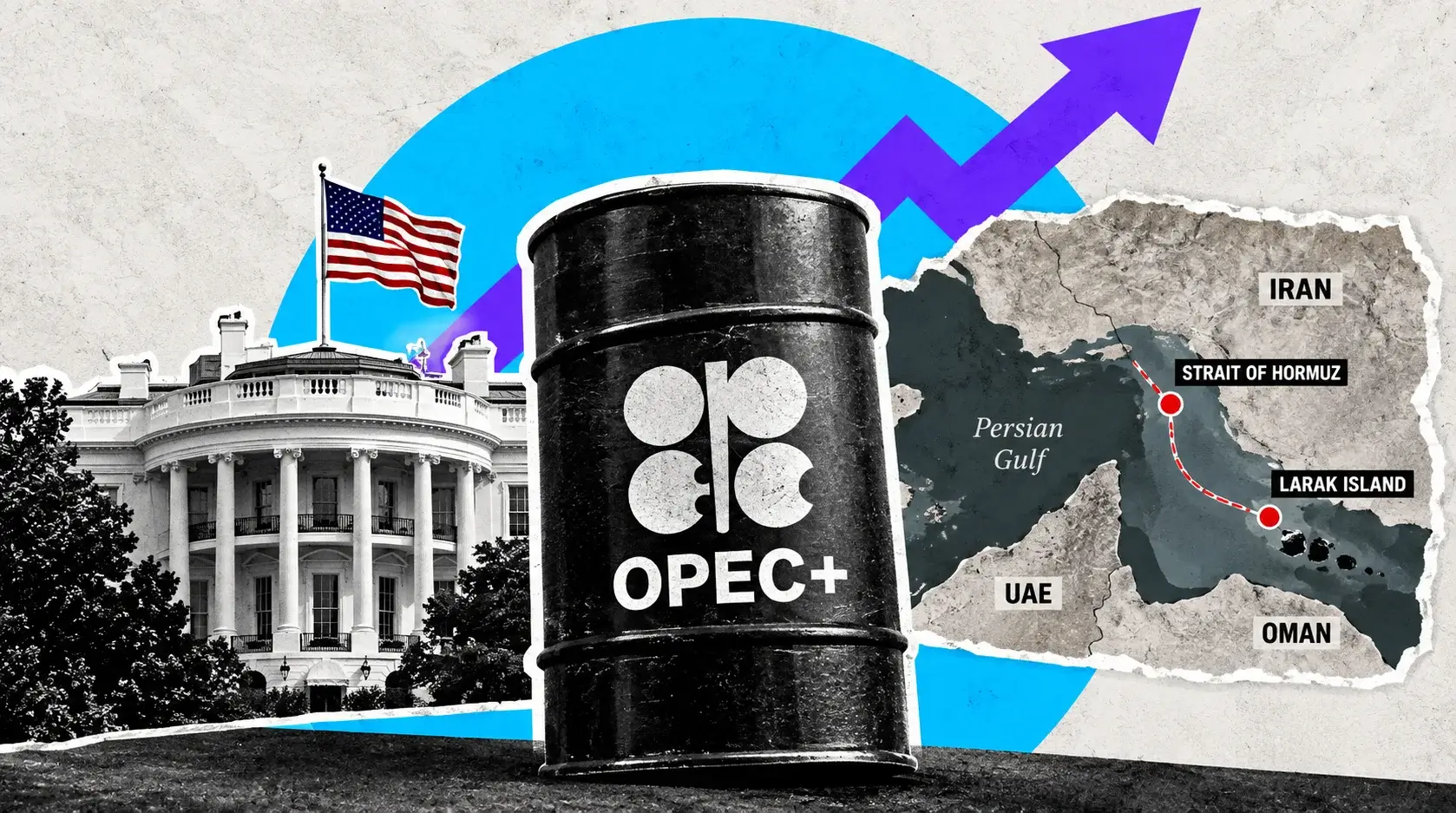
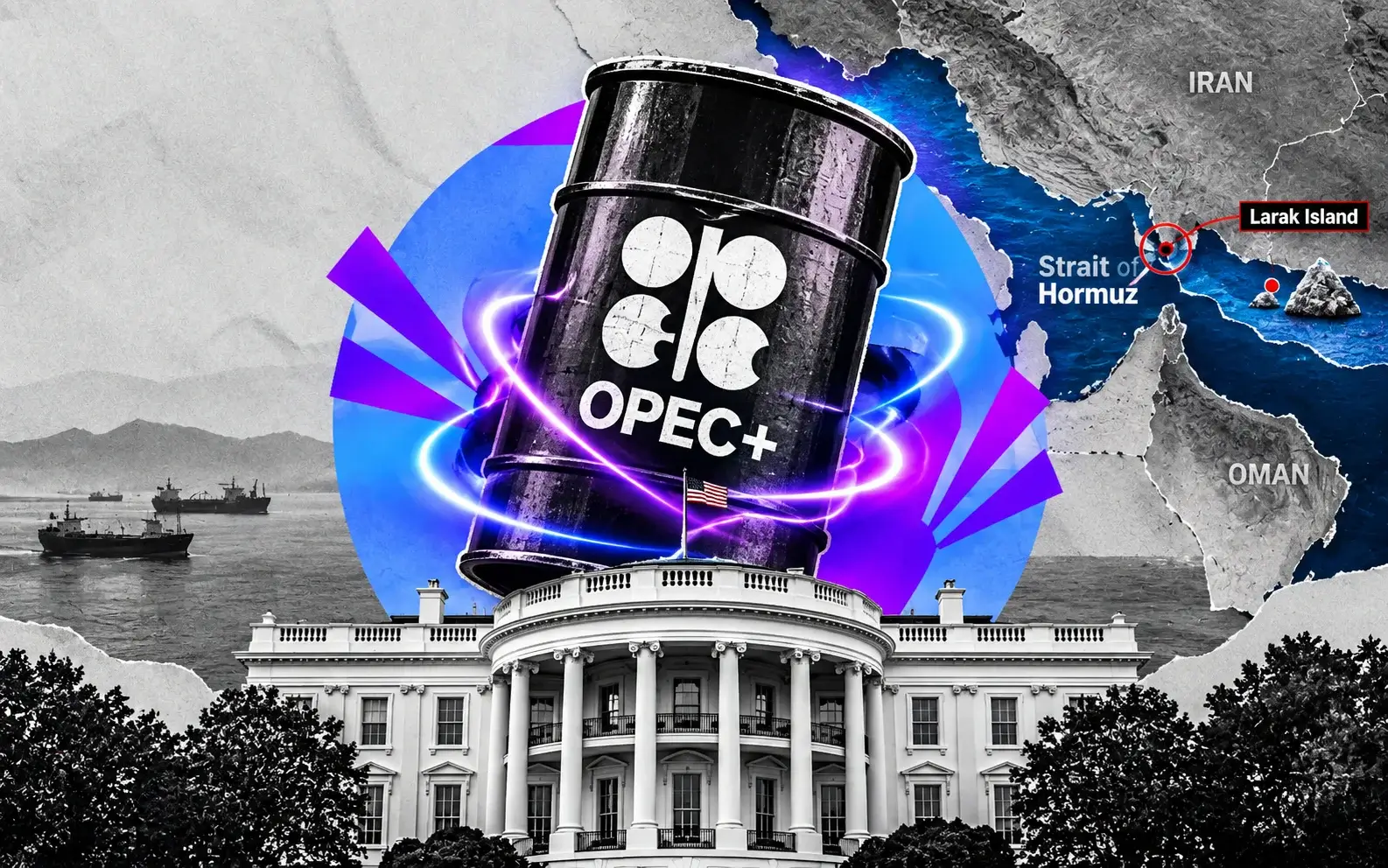
The single largest driver of the collapse is the reopening of the Strait of Hormuz. Maritime traffic through the critical chokepoint surged over the past 24 hours to its highest vessel movement since before the conflict escalated, easing the supply fears that had inflated prices. Shipowners are transiting the waterway with active satellite signals after securing safety guarantees from the International Maritime Organization, a sharp reversal from the weeks when vessels waited in the Gulf of Oman with transponders dark.
The physical flows have resumed in force. Saudi Arabian tankers are heading toward the Ras Tanura terminal to restart Persian Gulf exports for the first time since March, and the International Energy Agency estimates the United Arab Emirates is now exporting oil at nearly 85% of pre-war levels, selling roughly 60 million barrels from the Persian Gulf recently. More than 11,000 stranded seafarers have begun exiting the strait after the safety guarantees were secured, clearing the human and logistical backlog that had paralyzed the route.
The normalization removes the supply threat that justified the premium. With crude streaming through the waterway at its fastest wartime pace and oil producers in the region restarting the production they had idled, the market has concluded that the disruption which pushed prices above $120 is well and truly over. The conditional reopening of the strait, the lifting of force majeure declarations, and the end of the US naval blockade together convinced the market that the worst of the supply shock has passed, and prices have adjusted with brutal speed.
The Peace Framework That Cracked the Market
The diplomatic track has been the second pillar of the decline, even as it carries lingering uncertainty. Growing optimism that negotiations between the United States and Iran could produce a longer-term peace agreement has encouraged the return of shipping, anchored by a memorandum of understanding on ending the war and reopening the strait, alongside a 60-day truce that the market views as a meaningful step toward stability.
The path has not been entirely smooth. A planned meeting between US and Iranian officials in Switzerland was abruptly cancelled, with the White House citing unresolved logistical issues and Vice President JD Vance no longer traveling to the talks, an episode that briefly lifted prices on renewed uncertainty. The cancellation underscored that turning an interim agreement into a lasting settlement remains fraught, and the market continues to weigh the practical effect of the framework against the risk of a breakdown.
The diplomatic complications have not reversed the broad trend. A temporary US waiver permitting purchases of already-loaded Iranian oil is expected to further boost available supply, adding barrels to a market already absorbing the return of Gulf flows. Even with the Switzerland setback, the momentum toward de-escalation has been strong enough to keep prices falling, with the market betting that the physical reopening of the strait will hold regardless of the diplomatic theater surrounding the formal negotiations.
From $120 to $70: Anatomy of a Round Trip
The war's price arc traces a complete boom and bust. The conflict that erupted in late February drove crude sharply higher as the threat to the Strait of Hormuz, through which a large share of global oil flows, raised the specter of a catastrophic supply disruption. Prices spiked above $120 at the peak as the strait was effectively closed and Middle East producers idled more than 11 million barrels per day of production in May compared with pre-conflict levels.
The descent began as the diplomatic and physical situation improved. Brent had dropped from above $110 in April to the low-$90s after the initial ceasefire, then continued falling through the $80s as tanker traffic resumed. The June 19 framework and the surge in Hormuz transits accelerated the decline, pushing Brent below $74 and WTI below $70, back to the levels that prevailed before the war premium took hold.
The completeness of the round trip is the key feature. Crude has nearly wiped out all the gains made since the outbreak of the Middle East conflict, returning to pre-war trading ranges despite the months of disruption in between. The market has effectively priced the war as a temporary shock rather than a lasting supply change, and the rapid return to baseline reflects the resilience of global supply once the chokepoint reopened, leaving prices exposed to the next phase of the cycle.
A Supply Surge From Every Direction
The bearish case rests on supply returning faster than the market expected. Buyers face a surge of crude offers from the Middle East and other exporting regions, including West Africa, as producers race to monetize barrels they had held back during the conflict. The simultaneous return of Gulf, North African, and West African supply has flooded the market at precisely the moment demand concerns are mounting.
The Saudi and UAE flows lead the charge. Saudi tankers heading to Ras Tanura to restart exports for the first time since March, combined with the UAE running at 85% of pre-war export levels, represent the return of millions of barrels per day to a market that had grown accustomed to their absence. The temporary US waiver on already-loaded Iranian oil adds another tranche of supply, layering onto the recovering Gulf production to create a wall of barrels.
The OPEC dimension adds further downside pressure. With oil streaming through the strait at its fastest wartime pace and the market shifting attention to an anticipated 2026 global supply surplus, Iraq has threatened to leave OPEC unless its production quota is increased, a sign of the internal strain that cheaper prices place on the cartel. Any breakdown in OPEC discipline or a push by members to defend market share through higher output would accelerate the oversupply and deepen the price decline.
Contango and the Oversupply Signal
The shift in market structure carries profound implications. Brent's move into bearish contango on Wednesday, the first since the conflict began, signals that the market now expects ample near-term supply rather than the scarcity that defined the war. When front-month prices trade below deferred contracts, it reflects a market well-supplied in the present, incentivizing storage and discouraging immediate buying, a structural condition that tends to cap prices.
The contango flip marks a regime change. During the conflict, the strait's closure created acute near-term tightness that pushed the curve into steep backwardation, with front-month prices commanding a premium for immediate delivery. The reversal to contango within days of the reopening demonstrates how quickly the supply picture transformed, and it provides a market-based confirmation that the scarcity narrative has given way to an abundance narrative.
The structural shift reinforces the downward bias. Contango markets tend to grind lower as the surplus builds and storage fills, and the combination of returning Gulf supply, the anticipated 2026 surplus, and the bearish curve creates a self-reinforcing dynamic. Until demand surprises to the upside or supply is disrupted anew, the market structure points toward continued weakness, with the contango acting as both a symptom and a driver of the bearish trend.
The 2026 Surplus Narrative Takes Over
The market's attention has pivoted decisively from war to oversupply. The Energy Information Administration now forecasts that global oil demand will decrease by 1.1 million barrels per day over the course of 2026, against 104.0 million in 2025, a sharp downgrade from the May projection of a 0.2 million barrel increase and the February forecast of a 1.2 million barrel rise. The demand destruction from elevated wartime prices, combined with returning supply, has flipped the balance toward surplus.
The demand weakness reflects the war's economic toll. The price spike above $120 suppressed consumption, and the broader macro slowdown, with US GDP revised toward 1.6%, has dampened the demand outlook further. The EIA expects demand to rebound by 2.5 million barrels per day in 2027 to 105.3 million as the supply and price normalization works through the economy, but the near-term picture is one of contracting consumption meeting expanding supply.
The surplus dynamic is the dominant theme for the second half. With the IEA having dialed back its oversupply warning after winter shocks but the broad direction still pointing toward abundance, and with Iraq pressing OPEC for higher quotas, the market is bracing for a period of well-supplied conditions. The pivot from scarcity to surplus represents the fundamental reason prices have collapsed so far so fast, and it frames the bearish base case for the coming months.
The Inventory Paradox: Lowest Since 1984
A genuine puzzle sits beneath the bearish tape: inventories are extraordinarily tight. US crude inventories plunged to their lowest level since 1984, with Cushing, Oklahoma stockpiles dipping below operational minimums to roughly 19 million barrels, a level that would normally signal acute scarcity and support higher prices. The drawdown reflects the months of disrupted supply during the conflict, when limited Hormuz traffic forced large global inventory draws to meet demand.
The paradox is that low inventories have done nothing to halt the decline. The resumed global flow has overshadowed the EIA data showing the historic inventory drop, as the market looks past the current tightness toward the wave of returning supply. When traders are confident that millions of barrels are about to arrive from the Gulf, present-day inventory levels matter less than the forward supply trajectory, and the bearish flows have dominated the bullish stockpile picture.
The tension creates a coiled-spring risk. The combination of inventories at 42-year lows and a market pricing oversupply is unusual, and it means the physical market is far tighter than the price suggests. Should the peace framework falter or the Hormuz reopening stall, the thin inventory cushion would amplify any supply shock, creating the potential for a violent upside reversal. For now, the market has chosen to believe in the supply return, but the inventory paradox leaves the downside case vulnerable to disruption.
The Forecast That Broke in Real Time
The speed of the reopening has rendered official forecasts obsolete almost overnight. The EIA's Short-Term Energy Outlook, built on the assumption that the Strait of Hormuz would remain effectively closed in the near term, projected Brent averaging $105 per barrel in June and July, with shipments resuming only in the third quarter and taking months to ramp toward pre-conflict levels not expected until early 2027. Reality has overtaken that forecast by roughly $30 a barrel.
The assumption that broke was the timeline. The EIA expected a gradual, months-long normalization, but the reopening accelerated far faster, with tanker traffic surging within days of the safety guarantees rather than over quarters. The UAE already running at 85% of pre-war export levels and Saudi tankers restarting Gulf shipments demonstrate a recovery pace that the official models did not anticipate, leaving the $105 projection stranded against a market trading near $72.
The forecast miss illustrates the central uncertainty. The entire price structure depends on assumptions about the pace and durability of the Hormuz reopening, and those assumptions have proven highly sensitive to fast-moving developments on the ground. The gap between the EIA's $105 forecast and the market's $72 reality captures how dramatically the supply outlook shifted, and it underscores that any reversal in the diplomatic or physical situation could swing prices just as violently in the other direction.
Read More
-
Yen Stalls at 160 Despite a 3% JGB and Tokyo Core CPI at 2.0% — Intervention Sits at 164, Friday's Payrolls Decide
02.09.2026 · TradingNEWS ArchiveEnergy
-
Dell Rebounds to $565.86 as a $95 Billion AI Backlog Meets 22x Forward Earnings — $595 High in Sight
25.09.2026 · TradingNEWS ArchiveStocks
-
XRP-USD ($1.53) Outperforms as ETF Inflows Return, but August Buyers Guard $1.60 — $1.70 Upside vs. $1.25 Floor
25.09.2026 · TradingNEWS ArchiveCrypto
-
Brent Holds $105 While WTI Heads for a 7% Weekly Loss as a 3M-Barrel Build and a Diesel Ban Threat Split the Market
25.09.2026 · TradingNEWS ArchiveCommodities
-
S&P 500 Gains 0.22%, Nasdaq Tops 27,000, Dow Up 0.40% on MSFT Launch and AKAM Deal
25.09.2026 · TradingNEWS ArchiveMarkets
-
Sterling Slides to 1.3216 as a Divided Bank of England Trails the Fed — 1.3424 Upside vs. 1.3000 Risk
25.09.2026 · TradingNEWS ArchiveForex
US Production and the Export Machine
The American supply story adds another layer to the picture. Disruptions to crude and refined product flows through the Strait of Hormuz had pushed US crude oil and petroleum product net exports to a record 5.8 million barrels per day in April, with May staying close to that level, as global buyers turned to American supply during the Gulf shortage. The EIA expects US net exports to average 4.2 million barrels per day this year, up 1.4 million from 2025.
The export surge reflected the wartime premium on US barrels. Demand for US diesel and jet fuel rose sharply, with wholesale diesel and jet prices forecast to climb more than 60% and 40% respectively in 2026 compared with pre-conflict projections, and wholesale gasoline expected to rise around 50%. The disruption made American crude and products a critical substitute for the constrained Gulf supply, lifting US export volumes to records.
The normalization now threatens that premium. As Gulf supply returns and global prices fall, the elevated demand for US exports may ease, and the price relief flowing through to wholesale fuel markets could reverse the inflationary pressure that the war created. Trump's call for a Department of Justice probe into fuel prices, accusing oil companies of gouging consumers, reflects the political sensitivity around energy costs, and the rapid decline in crude should eventually feed through to lower prices at the pump.
The Disinflation Dividend and the Macro Read
Oil's collapse carries macro consequences that extend well beyond energy markets. The surge in crude prices during the conflict fueled the inflation that pushed core PCE to 3.4% and headline PCE to 4.1%, and the reversal now removes a key source of that pressure. Cheaper oil feeds directly into lower transportation, manufacturing, and fuel costs, and the disinflationary impulse could eventually give the Fed room to soften its hawkish posture.
The timing intersects with the rate debate. The Fed under Chair Kevin Warsh has signaled potential hikes with September odds near 68%, driven partly by the energy-led inflation that the war produced, and the collapse in crude undercuts the case for further tightening over time. As the disinflation from falling oil works through the data, the central bank may find the justification for hikes weakening, a dynamic that links the Hormuz reopening directly to the trajectory of US monetary policy.
The cross-asset effects have rippled widely. The 10-year Treasury yield fell below 4.5% as oil slid, gold lost its inflation-hedge bid and broke below $4,000, and the broad disinflation narrative reshaped positioning across markets. Oil's decline has become one of the most important macro variables of the moment, influencing inflation expectations, rate-path odds, and the relative appeal of every asset that trades on the inflation outlook, far beyond the energy complex itself.
The Technical Map: $70 Becomes the Battle Line
The chart structure has turned decisively bearish with the break below $70. WTI's slide beneath the $70 level for the first time since March 2, combined with the session low of $69.63, establishes the low-$70s as broken support that now acts as resistance, while the pre-war trading range below offers the next reference zone. The fourth consecutive down session confirms strong downward momentum with no clear sign of exhaustion.
The key levels are well defined by the war's price history. On the downside, the pre-conflict lows near $69 to $70 are being tested, and a sustained break would expose the levels that prevailed before the February escalation, potentially in the mid-$60s. On the upside, WTI would need to reclaim $72 to $74 to signal stabilization, with Brent's recovery of the $74 to $80 zone required to suggest the selloff has run its course.
The momentum and structure both point lower for now. The bearish contango, the fourth straight down session, and the relentless supply narrative leave the path of least resistance to the downside, with any bounces likely to be sold unless a genuine supply disruption emerges. The technical picture mirrors the fundamental one: a market that has broken key support and is searching for a floor as the surplus narrative dominates, with the pre-war range the most likely near-term destination absent a fresh shock.
The Bull Case: A Thin Cushion and a Fragile Peace
The case for higher prices rests on the fragility of the current calm. The peace framework remains incomplete, as the cancellation of the Switzerland talks demonstrated, and any collapse of the US-Iran negotiations or renewed threat to the Strait of Hormuz would send prices sharply higher given how far the premium has unwound. TotalEnergies' chief executive calling the ability to bypass Hormuz an absolute priority underscores that the market still regards the chokepoint as a live risk despite the reopening.
The inventory backdrop amplifies the upside risk. With US crude stockpiles at their lowest since 1984 and Cushing below operational minimums at roughly 19 million barrels, the physical market has almost no cushion to absorb a new disruption. Should supply be threatened again, the thin inventories would force a rapid repricing, and the speed of any rebound could match the violence of the recent decline, catching a market positioned for continued weakness off guard.
The demand recovery offers a longer-term support. The EIA expects global demand to rebound by 2.5 million barrels per day in 2027 to 105.3 million as prices normalize and the economy adjusts, and the rebuilding of depleted inventories will require sustained buying. If OPEC defends prices by restraining the very output increases Iraq is demanding, the supply surge could prove temporary, and the combination of recovering demand, inventory restocking, and disciplined supply could establish a firm floor and eventual recovery.
The Bear Case and the Forecast Into Normalization
The bearish scenario commands the near-term tape and rests on the supply wave. As Gulf production returns, the US Iranian waiver adds barrels, West African and other supply floods in, and the 2026 surplus narrative takes hold, the path of least resistance points lower. The bearish contango, the EIA's demand downgrade of 1.1 million barrels per day, and Iraq's pressure on OPEC quotas all reinforce a market tilting toward abundance, with WTI's break below $70 opening the pre-war range in the mid-to-high $60s.
The diplomatic momentum supports the downside. Despite the Switzerland setback, the surge in Hormuz traffic, the 60-day truce, and the broad progress toward a lasting agreement have convinced the market that the supply disruption is over, and each new tanker transit reinforces that conviction. The temporary US waiver on Iranian oil and the restart of Saudi exports through Ras Tanura demonstrate that the supply return is accelerating rather than stalling, keeping downward pressure firmly in place.
The near-term forecast points to continued weakness with disruption risk. The base case for the coming sessions is further downside or consolidation in the high-$60s to low-$70s for WTI and the low-to-mid-$70s for Brent as the supply surge meets soft demand, with the bearish contango and surplus narrative capping rallies. The decisive variables are the durability of the peace framework, the pace of the Hormuz normalization, and OPEC's response to Iraq's quota demands. With WTI near $69.50 and Brent near $72.50, both back at pre-war levels after a 40% collapse from their wartime peak, the market sits in a fragile equilibrium where the surplus narrative dominates but the thinnest inventories in four decades leave it one disruption away from a violent reversal.