EUR/USD Price Forecast — Euro Defends 1.0970 as ECB Locks December Hike; 1.1085 in Sight
A frozen 137.5 bp Fed-ECB gap steadies the euro; a close above 1.1000 opens 1.1085 | That's TradingNEWS
Key Points
- EUR/USD trades at 1.0970, 88 pips above Monday's 1.0882 low, the weakest level since April 2025.
- Markets price a 98% Fed hike on December 9 and a 91% ECB hike to 2.75% on December 17.
- Euro-area inflation hit 4.0% in October, a three-year high, with energy prices up 20.8% year over year.
EUR/USD is trading at 1.0970 on Thursday, near the top of a tight holiday range after edging up in the European afternoon. The pair dipped 0.2% to 1.0960 in the morning, then firmed after the European Central Bank published the account of its October meeting, which showed policymakers leaning toward further tightening. With U.S. markets closed for Thanksgiving and the dollar index flat at 103.7, the euro has spent the day consolidating rather than trending.
The euro has just printed its weakest level in 19 months. On Monday, November 23, EUR/USD fell to 1.0882, its 2026 low and the lowest reading since April 2025, as the dollar index hit a 19-month high. Since then the pair has recovered 88 pips. It rallied 0.58% to close Tuesday at 1.0969, dipped to 1.0940 on Wednesday ahead of the U.S. inflation data, and has rebuilt toward 1.0970 since.
The damage over the past month is still heavy. EUR/USD traded at 1.1235 on November 5 and 1.1070 on November 13. It is down 1.86% over one month and 5.23% over one year. The 52-week range runs from 1.0882 to 1.2081, and the pair sits 9.4% below that high, set when the euro broke above 1.20 in late January.
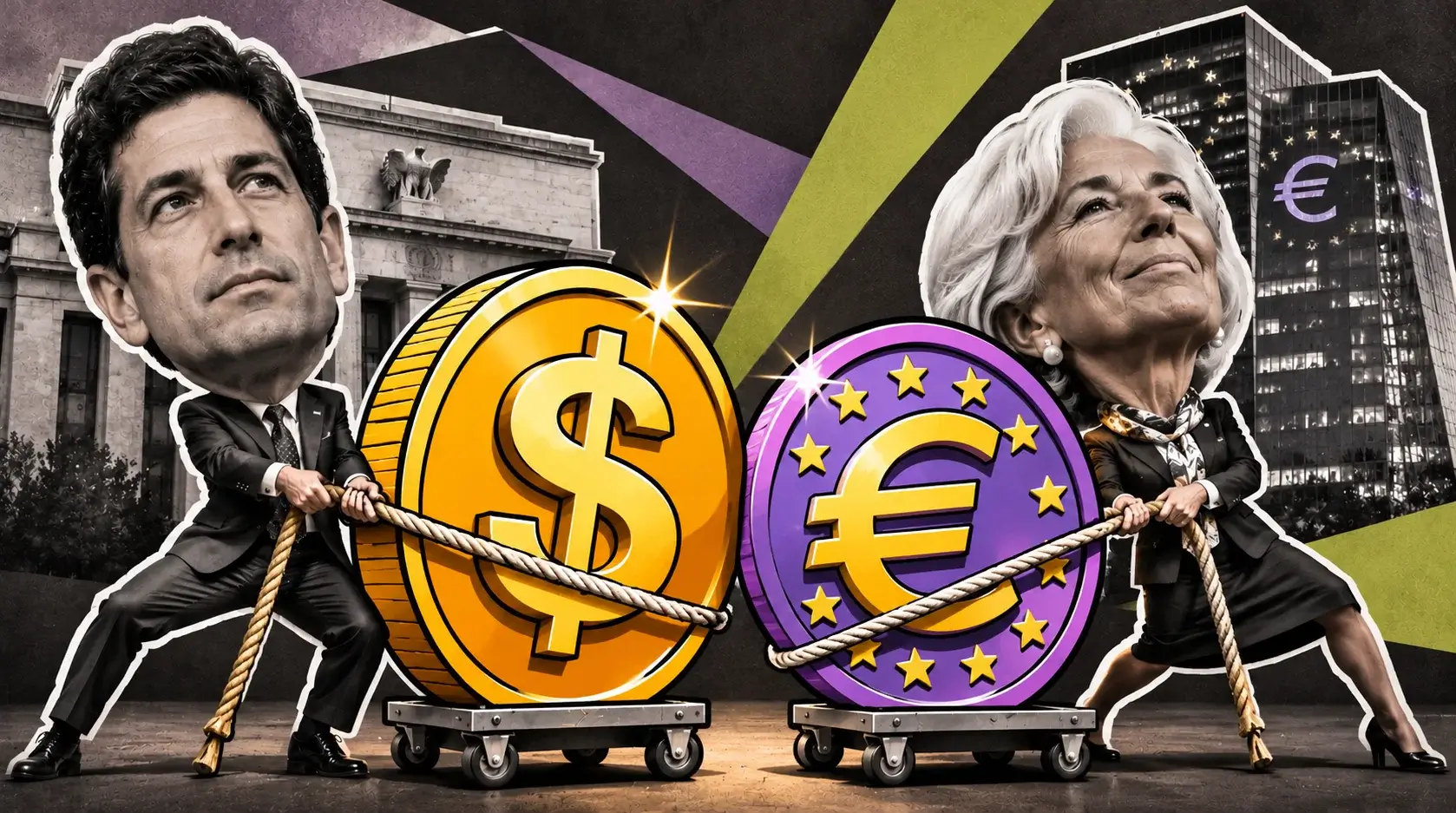
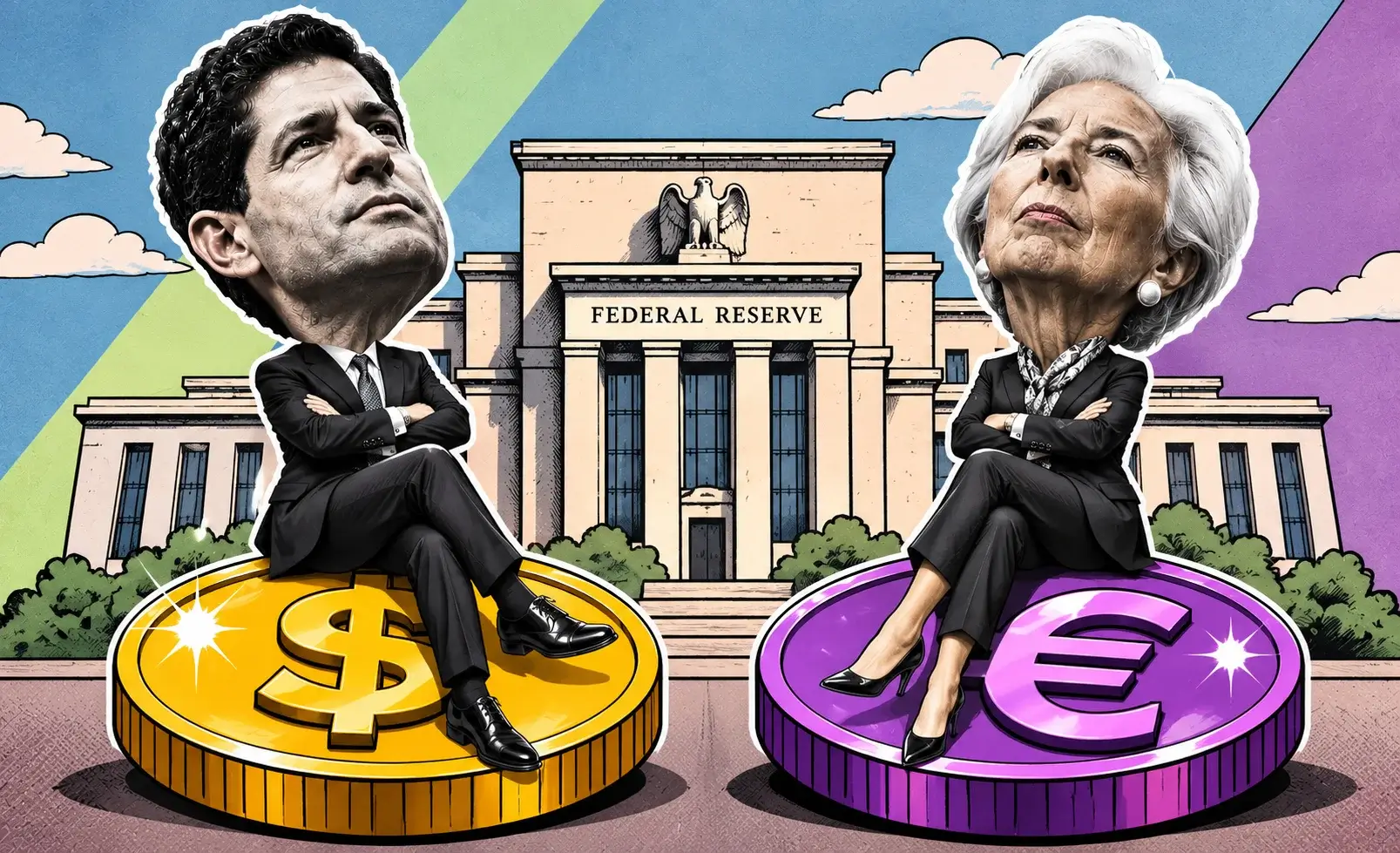
This forecast rests on one number: the 137.5 basis point gap between the Federal Reserve and the ECB. The Fed's target range is 3.75% to 4.00%, a midpoint of 3.875%. The ECB's deposit rate is 2.50%. Markets price a 98% chance of a Fed hike on December 9 and a 91% chance of an ECB hike on December 17. If both deliver 25 basis points, the gap stays at 137.5. The divergence that drove the euro from 1.2081 to 1.0882 has stopped widening, and the euro needs exactly that to stabilize.
Thursday's ECB account supports this view. Policymakers see another rate hike as likely unless the inflation outlook improves significantly, which locks in the December move and keeps the door open for 2027. With euro-area inflation running at 4.0%, the ECB has no room to pause.
The near-term path depends on three levels. Support sits at 1.0882, the 2026 low. The pivot zone runs from 1.0938 to 1.0954, where Wednesday's dip found buyers. Resistance sits at 1.1000, the round number that capped the pair on November 19 and again on Wednesday, then at 1.1081 to 1.1086. A daily close above 1.1000 opens the path to the 1.1085 upside target. A daily close below 1.0938 puts 1.0882 back in play.
ECB October Account: Another Hike Likely Unless Inflation Improves Significantly
The European Central Bank released the account of its October meeting on Thursday, and the tone was hawkish. Policymakers judged that another rate hike would likely be warranted unless the inflation outlook improved significantly. That goes further than the October press conference and shows the October pause was tactical, not the end of the hiking cycle.
The ECB's path in 2026 has been unusual. The central bank spent 2024 and 2025 cutting rates, taking the deposit facility rate from 4.00% to 2.00% through eight cuts ending in June 2025. It held at 2.00% at its December 2025 meeting, and the account of that meeting showed markets expecting the first hike no earlier than 2027. The energy shock that followed the outbreak of the Iran war in late February upended that outlook. The ECB raised rates by 50 basis points across two hikes in 2026, including a September move that markets had fully priced, taking the deposit rate to 2.50%. It then held in October.
The account covers that October hold. It shows a Governing Council that paused to assess the data, not to signal a peak. A majority of economists now expect the ECB to deliver a final hike to 2.75% in December. More than a third expect another increase in early 2027, with inflation running at double the 2% target. Markets price at least one more rise after December.
That matters for EUR/USD because it narrows the scope for the Fed to outrun the ECB. In the first half of November, the euro sold off hard after ECB President Christine Lagarde said on November 7 that she could not promise a December hike. From November 9 the euro lost 250 pips, as markets saw the ECB softening while the Fed was still pricing more hikes. The October account reverses that view. So does Governing Council member Martin Kocher's comment this week that market pricing for a December hike is not unreasonable.
The euro's reaction on Thursday was modest, as is typical on a U.S. holiday. The pair edged higher after the release but stayed inside its recent range. Thin liquidity mutes the immediate impact. The signal will carry into next week, when the November flash HICP lands on Tuesday, December 1, and the December meeting comes into focus.
The risk is that the hawkish tone is already priced. With a December ECB hike at 91%, the account confirmed what markets expected rather than surprising them. For EUR/USD to break higher, the ECB needs to signal more than one additional hike, or the Fed needs to signal less.
The 137.5 Basis Point Gap: Why Fed-ECB Divergence Has Stopped Widening
Interest rate differentials are the single biggest driver of EUR/USD, and the gap between the Fed and the ECB is now 137.5 basis points. The Fed's target range of 3.75% to 4.00% gives a midpoint of 3.875%. The ECB's deposit facility rate is 2.50%. That spread pays dollar holders 137.5 basis points more per year than euro holders, and it explains why capital has flowed toward the dollar through November.
The direction of the gap matters more than its level. From early November until last week, markets were pricing the Fed to hike in December, January and possibly March, while the ECB looked set to stop after one more move. That widening divergence drove EUR/USD from 1.1235 on November 5 to 1.0882 on November 23, a 353-pip drop in under three weeks.
The pricing has now shifted. After Wednesday's U.S. data, a December Fed hike is priced at 98%, up from 96.4%, which would take the range to 4.00% to 4.25%. But the odds of a January hike have slipped to 60% from 64.3%, and the odds of a March hike have fallen to 35% from above 50% a week earlier. On the ECB side, a December hike is priced at 91%, and markets still see at least one more rise in 2027.
If both central banks deliver 25 basis points in December, the gap stays at 137.5. The divergence trade that pushed the euro to a 19-month low has stalled. That alone will not lift the euro. A stable gap removes the main source of selling pressure and lets relative growth, energy prices and risk sentiment drive the pair.
The danger sits in January. If the Fed hikes again in January while the ECB holds at 2.75%, the gap widens to 162.5 basis points. That would put renewed pressure on the euro and open a move below 1.0882 toward 1.0780. The 60% January pricing is the number to watch through December. Every point it gains is a headwind for EUR/USD. Every point it loses is a tailwind.
Long-term yields tell the same story. The U.S. 10-year Treasury yield fell more than 6 basis points to 4.84% on Wednesday, its lowest since November 9. The German 10-year Bund yield fell to 3.235%, its lowest in two weeks. The 10-year spread stands at 160 basis points, 22.5 basis points wider than the policy gap. Both yields fell together, which is why EUR/USD held steady through the rally in government bonds.
Euro-Area Inflation at 4.0%: The ECB Has No Room to Pause
The ECB is hiking because euro-area inflation has doubled its target. Headline inflation hit 4.0% in October, up from 3.8% in September and a three-year high. Core inflation was revised up to 2.6% from a 2.5% flash estimate. Energy prices are up 20.8% year over year, the direct result of the Iran war and the disruption to Gulf supplies that has kept Brent crude above $90.
Germany shows the same pressure. German inflation was revised up to 2.9% from 2.8%. Average gross wages are rising 4.2% year over year, fast enough to push inflation higher through second-round effects. That is the specific risk the ECB cites as the reason to keep tightening: once energy costs feed into wages and services prices, they are hard to reverse.
The ECB's September projections saw inflation averaging 3.0% in 2026, 2.5% in 2027 and 2.1% in 2028. With October at 4.0%, the 2026 average is tracking at the upper end of that forecast, and the December projections are likely to be revised higher. That would strengthen the case for a hike in early 2027.
The next test comes on December 1, when Eurostat publishes the November flash HICP. A reading above 4.0% would show inflation has not yet peaked and push markets to price a second ECB hike in 2027 more aggressively. That would be euro-positive, because it would narrow the expected gap with the Fed. A reading below 3.8% would raise the odds that December is the last hike, leaving the euro exposed if the Fed keeps hiking into January.
Low natural gas storage heading into winter adds to the inflation risk. Dutch TTF gas prices rose on Thursday, pressuring Bunds. A cold winter with tight storage would push energy inflation higher and force the ECB to keep hiking. That could support the euro through tighter policy, but it would also weigh on growth and on European assets more broadly.
Compare that with the U.S. picture. Core PCE inflation came in at 3.3% in October against a 3.2% forecast, up from 3.1%. Headline PCE ran at 3.8%, up from 3.6%. Both economies face inflation well above target, and both central banks are responding. The difference is that U.S. growth is running at 4.3% while euro-area growth is far weaker, which gives the Fed more room to keep hiking without breaking the economy.
German Growth Stalls at 0.1%, but Ifo Hits a Three-Year High
The euro-area growth picture is mixed, and Germany sits at the center of it. German third-quarter GDP was revised down to 0.1% quarter on quarter from a 0.2% flash estimate, after 0.4% in the first quarter and 0.3% in the second. Year-over-year growth stands at 1.2%. The detail is weaker than the headline. Capital spending fell 1.2%, investment in machinery and equipment dropped 3.5% and goods exports slipped 0.8%. Household consumption rose just 0.1%.
Higher rates and higher energy costs are slowing the German economy. Business investment is the part of GDP most sensitive to rates, and its decline follows directly from the ECB's 50 basis points of hikes in 2026. Exports are suffering from the strong dollar's effect on global demand and from trade uncertainty.
The forward-looking data tells a different story. The Ifo business climate index rose to 90.6 in November, beating the 90.5 forecast. It was the seventh straight monthly gain and the highest reading in more than three years. The current assessment component rose to 89.4 from 88.8, ahead of the 89.1 consensus. German businesses are more optimistic about the outlook than they have been since 2023, even as the hard data shows near-stagnation.
German fiscal expansion explains the gap between sentiment and the hard data. Berlin's spending on defense and infrastructure is filtering into order books, and businesses expect that support to lift activity in 2027. That supports the ECB's case that the economy can absorb another hike without tipping into recession.
For EUR/USD, the growth gap with the U.S. remains the euro's biggest structural weakness. U.S. third-quarter GDP was revised up to 4.3% annualized, against 3.5% consensus. German GDP grew at an annualized pace of under 0.5% over the same quarter. That growth differential lets the Fed hike more than the ECB. It is why markets price a January Fed hike at 60% while the ECB is expected to stop after December or one more move.
The euro needs that gap to narrow. A rebound in German activity in the fourth quarter, signaled by the Ifo, would help. A slowdown in U.S. growth, hinted at by the falling 10-year Treasury yield, would help more. Neither is visible in the hard data yet. Until it is, the euro will struggle to sustain moves above 1.1100 even if the rate gap holds steady.
Tariffs: The EU's 20% Headline Is Capped at 15%
Trade policy delivered the second shock of Wednesday's U.S. session. The U.S. Trade Representative proposed new Section 301 tariffs on 14 trading partners, with a headline rate of up to 20% on European Union goods. The announcement hit the euro and European equities during the U.S. morning, and the Stoxx 600 closed down 1.06%.
The details limited the damage. Rates for the EU, Japan, South Korea and Switzerland are capped at 15% under existing trade deals, net of most-favored-nation duties. Steel, aluminum and autos are excluded, which removes the largest category of European exports to the U.S. from the package. The new duties do not stack on top of existing tariffs imposed in July.
The EU fared better than most. China faces 20%, rising to 40% if talks collapse before a January deadline. Vietnam faces up to 35%. India, Taiwan and South Korea face up to 25%. Relative to those partners, the EU's effective exposure is lower, and the euro's reaction reflected that. EUR/USD dipped to 1.0940 before the U.S. data and recovered toward 1.0970 as the details emerged.
The timeline also gives Europe room. Written comments on the proposal are due on January 5, 2027, and public hearings begin on January 25. No new tariffs take effect before then. That leaves two months for negotiation and makes tariffs a background risk rather than an immediate driver for EUR/USD.
European equities responded quickly once the details were clear. Germany's DAX rose 1.9% to 25,180.12 in early Thursday trade, France's CAC 40 gained 1.8% to 8,126.47 and Britain's FTSE 100 climbed 1.6% to 10,591.83. The rally shows investors see the tariff package as manageable for European exporters.
For the forecast, tariffs are a secondary factor. Unless the final EU rates come in above the 15% cap or autos are added back to the list, trade will not push EUR/USD to 1.0882 or to 1.1085. Rates and growth will. The risk is a breakdown in the consultation process that leads Washington to drop the 15% cap, which would hit the euro hard. That is a January risk, not a December one.
Read More
-
Yen Stalls at 160 Despite a 3% JGB and Tokyo Core CPI at 2.0% — Intervention Sits at 164, Friday's Payrolls Decide
02.09.2026 · TradingNEWS ArchiveEnergy
-
Avis Stock Price Forecast — CAR Breaks Out to $141.82 on Thin Float; $160 Target in Range
26.11.2026 · TradingNEWS ArchiveStocks
-
Bitcoin Price Forecast — BTC-USD Holds $60,423 After $57,300 Sweep; $66,000 Target in Play
26.11.2026 · TradingNEWS ArchiveCrypto
-
Gold Price Forecast — XAU/USD Rebounds From $3,426 15-Month Low; $3,740 Target Back in Play
26.11.2026 · TradingNEWS ArchiveCommodities
-
Stock Market Today: S&P 500 SPX Erases 3.2% Plunge, Nasdaq IXIC and Dow DJI Recover; 7,420 Next
26.11.2026 · TradingNEWS ArchiveMarkets
-
USD/JPY Stalls at 159.20 as a Steady Rate Gap Meets Tokyo's 160 Line; 160.20 Retest Target
25.11.2026 · TradingNEWS ArchiveForex
Dollar Index at 103.7: The Greenback's Advance Stalls Below 104.40
The dollar's rally has stalled. The U.S. dollar index sits flat at 103.7 in holiday trade after a volatile week. It hit a 19-month high on Monday as EUR/USD fell to 1.0882 and peaked at 104.40 on Tuesday. On Wednesday it traded in a 103.81 to 104.10 range before sliding toward 103.7 as Treasury yields fell. It is now drifting just above a one-week low.
Cross-asset flows explain the stall. Souring sentiment toward the crowded AI trade sent investors into U.S. Treasuries this week, driving yields down and stripping away some of the dollar's interest-rate advantage. When the 10-year Treasury yield falls 6 basis points in a session, the dollar loses one of its main supports, even if the Fed is still on course to hike.
Equity volatility has whipsawed the dollar all week. The Nasdaq fell 4.6% intraday on Wednesday before recovering to close down 0.62%. Each swing in tech stocks pushed the dollar higher on haven demand, then lower as yields fell. The net result is a dollar index that has gone nowhere since Tuesday.
The dollar's strength in November was broad. The pound and the Australian dollar both fell to new 2026 lows on November 19, while the euro held flat near 1.0970, the strongest of the three. Against the yen, the dollar holds 159.14, with 160.00 acting as a ceiling because of intervention risk from Tokyo.
For EUR/USD, the dollar index is the clearest near-term signal. A move back below 103.30 would be needed to support a sustained rally above 1.1000 toward 1.1085. A return above 104.10 would push EUR/USD back toward the 1.0938 to 1.0954 pivot. A break above Tuesday's 104.40 high would put 1.0882 back in play.
The dollar faces its own catalysts next week. The November jobs report lands on December 4, and the November CPI follows ahead of the December 9 Fed decision. Strong data would revive January hike pricing and lift the dollar. Weak data would cut January odds further and weigh on it. With the December hike fully priced, the dollar's direction now depends on what comes after.
ECB Leadership Shake-Up: Lagarde's Successor Takes Shape at the Brussels Summit
Currency markets have paid little attention to a political catalyst for the euro. European Union leaders meet in Brussels on November 26 and 27 to discuss who will replace Christine Lagarde as ECB president. Lagarde announced on October 29 that she will step down on February 7, 2027, nine months before the end of her term. The early exit allows French President Emmanuel Macron to take part in choosing her successor before France's presidential election.
The summit is expected to identify a preferred candidate, with a final decision targeted at the December 17-18 European Council. Pablo Hernández de Cos and Klaas Knot have emerged as front-runners. Leaders are also discussing two other vacancies on the ECB Executive Board, suggesting the appointments will be negotiated as a package. Isabel Schnabel, one of the board's most influential hawks, will leave on January 3, 2027, to take a senior role at the International Monetary Fund.
The identity of the next president matters for EUR/USD because it shapes how the ECB responds to inflation in 2027. Knot, the former Dutch central bank governor, has a reputation as one of the Governing Council's most hawkish voices. De Cos, the former Bank of Spain governor, is seen as more centrist. A Knot appointment would likely signal a tighter ECB through 2027, which would support the euro. A De Cos appointment would be read as neutral to slightly dovish.
Schnabel's departure adds uncertainty. As head of market operations, she has been the board member most closely associated with the ECB's hawkish turn in 2026. Her successor will influence how quickly the ECB responds to inflation in the first half of 2027.
Markets have not priced much risk around the transition, and Thursday's thin trading leaves little room for a reaction even if a front-runner emerges. The bigger impact is likely to come on December 17, when the formal decision lands alongside the ECB's rate decision and new staff projections. A clear signal of continuity, combined with a hike and upgraded inflation forecasts, would be the most euro-positive outcome of the month.
There is also a downside political risk. Divisions over the EU budget remain unresolved, and the French presidential race looms. A messy appointment process that drags past December, or a compromise candidate seen as weak on inflation, would weigh on the euro. That is not the base case, but it is a tail risk worth tracking.
Energy Shock and Risk Sentiment: Brent at $94.61 Weighs on Europe
Europe is more exposed to the energy shock than the U.S., and that exposure is a structural drag on the euro. Brent crude jumped 3.51% to $94.61 on Wednesday after Yemen's Houthis claimed a strike on Ras Tanura, Saudi Arabia's largest refinery. Reports of vessels being targeted in the Strait of Hormuz added to supply fears. Brent traded near $72 before the Iran war began in late February.
The euro area imports the bulk of its energy, so higher oil and gas prices worsen its terms of trade and drain income from households and businesses. Energy prices are up 20.8% year over year in the euro area, the main driver of the 4.0% headline inflation rate. The U.S., as a net energy exporter, is partly insulated. That asymmetry has helped the dollar throughout 2026.
The energy shock cuts both ways for EUR/USD. It pushes euro-area inflation higher, which forces the ECB to keep hiking and narrows the rate gap with the Fed. That is euro-positive. But it also weakens euro-area growth, as the 0.1% German GDP print shows, and that is euro-negative. In the first half of November, the growth effect dominated. If the ECB delivers in December and signals more, the rate effect may take over.
Risk sentiment adds another layer. Against the dollar, the euro tends to trade as a mild risk currency. When global equities sell off, the dollar benefits from haven flows. Wednesday's 3.2% intraday drop in the S&P 500 and the 6.16% collapse in South Korea's Kospi pushed EUR/USD toward 1.0940. The recovery in equities through Thursday, with S&P 500 futures up 0.5% and European indices rallying 1.6% to 1.9%, has helped the euro back toward 1.0970.
Natural gas is the swing factor for the winter. Low storage levels heading into the heating season leave Europe exposed to a cold snap or a further disruption to supplies. Dutch TTF prices rose on Thursday, pressuring Bunds. A spike in gas would push euro-area inflation higher and raise the odds of an ECB hike in early 2027, but it would also hit growth and sentiment.
For the forecast, oil is the key signal outside currency markets. Brent above $95 keeps the energy drag on euro-area growth heavy and limits the euro's upside. Brent dropping toward $85 on any de-escalation in the Gulf would ease the pressure on Europe's terms of trade and give EUR/USD room to test 1.1085. OPEC+ meets on November 29 to set its 2027 output policy, adding an oil catalyst to the weekend.
Technical Map: 1.0882 Support, 1.0938-1.0954 Pivot, 1.1000 and 1.1085 Resistance
The chart has clear levels on both sides. The first support is the pivot zone between 1.0938 and 1.0954. Wednesday's low at 1.0940 sat inside that zone, and the November 18 close at 1.0954 marks its upper edge. Buyers defended it before and after the U.S. data, and it now separates a consolidation from a renewed slide. A daily close below 1.0938 would signal that Tuesday's 0.58% rebound has failed.
The second support is 1.0882, the 2026 low set on Monday. That is the lowest level since April 2025 and the point where the dollar's rally ran out of momentum. A break below it would open 1.0780, the downside target if the Fed-ECB gap widens in January, with little technical support in between.
On the upside, the first resistance is 1.1000. The round number capped EUR/USD on November 19, when the pair touched it and turned back despite two disappointing U.S. data releases. It capped the pair again on Wednesday, when the euro rose to just under 1.1000 after the U.S. data before slipping back. A daily close above 1.1000 would mark the first break of that ceiling since mid-November.
The second resistance is 1.1070, the November 13 price, followed by the 1.1081 to 1.1086 zone. The 1.1085 upside target sits inside that zone, 115 pips or 1.05% above the current 1.0970. A move there would recover more than half of the decline from 1.1235 to 1.0882. It would put the pair back where it traded before the latest widening of the Fed-ECB gap.
Above that, the pair faces heavy resistance. The 50-day exponential moving average sat just under 1.1250 as of last week, and the 200-day EMA was just under 1.1450. The November 5 high at 1.1235 aligns with the 50-day EMA. The August high just above 1.1700 marks the top of the year's second-half range. EUR/USD sits 6% below that August peak.
The broader trend remains down. The pair is below its 50-day and 200-day moving averages, with lower highs since August. Monday's low at 1.0882 followed by two higher daily closes is the first sign of a short-term base, but it needs confirmation with a close above 1.1000.
From 1.0970, the setup leans slightly to the upside. Upside to 1.1085 is 115 pips. Downside to 1.0882 is 88 pips. A close above 1.1000 tilts the odds toward the upside target. A close below 1.0938 tilts them toward the 2026 low.
The Calendar: November HICP on December 1, U.S. Payrolls on December 4, Fed on December 9
The next three weeks carry the heaviest event risk of the quarter for EUR/USD. The first test arrives on Tuesday, December 1, when Eurostat publishes the November flash HICP. October's 4.0% reading was a three-year high. A November print at or above 4.0% would confirm that the ECB has more work to do and push markets to price a second 2027 hike more aggressively. A print below 3.8% would raise the odds that December is the ECB's last move.
The U.S. calendar follows. The November jobs report lands on Friday, December 4. Strong payrolls would push January Fed hike odds above 60% and weigh on the euro. Weak payrolls would cut those odds and give EUR/USD room to break 1.1000. The November CPI follows ahead of the Fed meeting, with core inflation the key number after October's 3.3% core PCE.
The Fed decides on December 9. A 25 basis point hike to 4.00% to 4.25% is priced at 98%, so the decision itself is unlikely to move the euro. The dot plot and the Fed Chair's guidance will matter. Signals of one or more additional hikes in 2027 would widen the expected gap and push EUR/USD lower. A signal that December marks a pause would narrow it and support the euro.
The ECB decides on December 17. A 25 basis point hike to 2.75% is priced at 91%. New staff projections will include 2028 forecasts and are likely to revise inflation higher. A hike with hawkish guidance would leave the gap at 137.5 basis points and give the euro its best chance of a sustained recovery. A hike framed as the last of the cycle would disappoint.
The European Council summit on December 17-18 is expected to formalize the choice of Lagarde's successor, starting the same day as the ECB decision.
Before any of that, the holiday week ends with thin liquidity. U.S. markets reopen on Friday for a shortened session, with stocks closing at 1:00 p.m. ET and bonds at 2:00 p.m. ET. The November monthly close falls on Monday. Expect wide intraday ranges and little conviction until the December 1 HICP print sets the tone.
EUR/USD Price Forecast: 1.1085 Upside Target, 1.0882 Invalidation
The forecast for the next three weeks rests on whether the Fed-ECB rate gap stays frozen at 137.5 basis points. The base case is a recovery toward 1.1085 before the December 17 ECB decision, for four reasons. The hawkish ECB account confirms a December hike and keeps 2027 tightening in play. Euro-area inflation at 4.0% leaves the ECB no room to pause. January Fed hike odds have slipped to 60% from 64.3%. And the dollar index has stalled below Tuesday's 104.40 high.
The sequence to watch is specific. EUR/USD needs to hold the 1.0938 to 1.0954 pivot through the holiday and close above 1.1000 on a daily basis. A November HICP print at or above 4.0% on December 1 would strengthen the ECB case. Soft U.S. payrolls on December 4 would cut January Fed odds further. A dollar index below 103.30 would confirm the move. Together, those conditions open 1.1070 and then the 1.1085 upside target, a 115-pip gain from 1.0970.
The bear case is a renewed widening of the rate gap. Strong U.S. payrolls and CPI push January Fed hike odds above 75%, while a soft November HICP signals that December is the ECB's last move. The gap widens toward 162.5 basis points, the dollar index breaks back above 104.40 and EUR/USD falls through the 1.0938 pivot. A daily close below 1.0882 opens 1.0780.
The balance of risks tilts modestly toward the upside in the short term. The divergence that drove the euro to a 19-month low has stopped widening, the ECB has confirmed its hawkish stance and the dollar's momentum has faded. The structural picture still favors the dollar. U.S. growth is running at 4.3% against near-stagnation in Germany. The energy shock hits Europe harder than the U.S. And the 137.5 basis point rate gap still pays dollar holders.
The verdict is bearish on the trend and tactically neutral-to-bullish for the next three weeks. EUR/USD at 1.0970 has room to recover toward the 1.1085 upside target as long as the rate gap holds at 137.5 basis points and the 1.0938 pivot stays intact. A daily close above 1.1000 is the trigger. A daily close below 1.0882 invalidates the setup and hands control back to the dollar.