Oil Crashes to 3-Month Lows as US-Iran Peace Deal Flips the Trade from Shortage to Glut; $70 WTI Is the Line
Crude has repriced from a war premium to a supply flood — Iran is shipping 30M+ barrels a week at a discount | That's TradingNEWS
Key Points
- WTI fell to ~$73 and Brent to ~$77, three-month lows, down ~36% from the $120+ war peak as the US-Iran deal reopened Hormuz and authorized Iranian oil sales.
- Iran shipped 30M+ barrels last week at discounted prices, Gulf producers are ramping, and the EIA cut 2026 demand to -1.1M b/d, pointing toward a glut.
- Drained inventories (OECD lowest since 2003) and a fragile 14-point MOU cap the downside; $70 WTI is the line, with the deal holding vs breaking the swing factor.
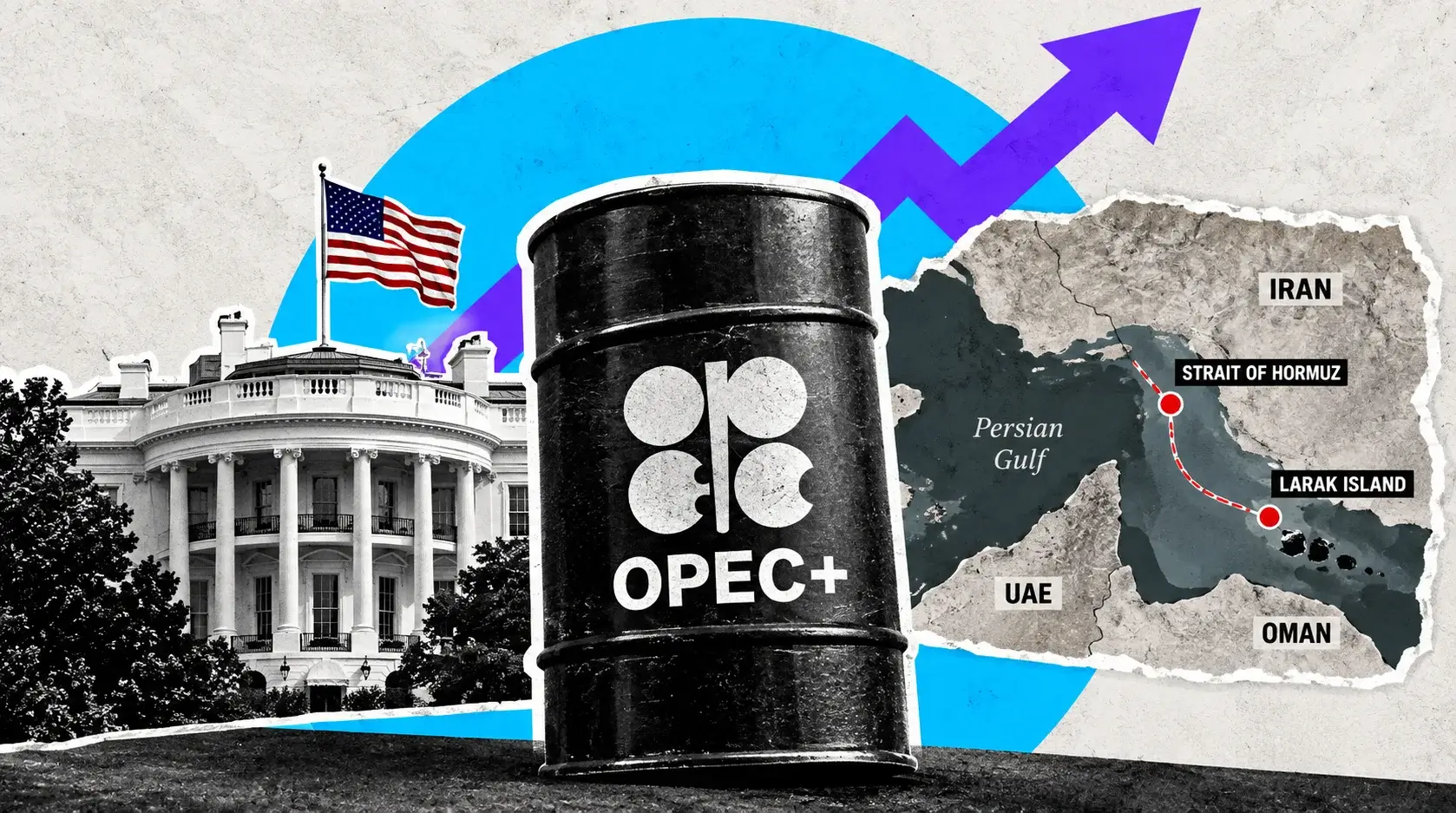
WTI crude is trading around $73–74 a barrel and Brent near $77–78, both hovering at their lowest levels since early March, extending a slide driven entirely by the diplomatic thaw between Washington and Tehran. The catalyst is the US-Iran framework — a 60-day roadmap toward a final peace deal, a Treasury license authorizing Iranian oil sales, and a Strait of Hormuz that's reopening to shipping after more than three months of effective closure. Crude that spiked above $120 during the conflict has given back the entire war premium and then some, with Brent now down roughly 36% from its conflict peak.
This is the thesis, and it's a clean flip of the trade that ran for months: oil has repriced from a war-premium asset to a peace-and-oversupply asset. Through the spring, the entire crude complex traded on fear — fear that Hormuz would stay shut, that Middle East supply would stay offline, that the chokepoint disruption would starve the market. The peace framework demolished that fear in a matter of days. Iran is now flooding the market with barrels, Gulf producers are ramping output, and a full Hormuz reopening could release tens of millions of barrels into a market where demand has gone soft. The supply side flipped from shortage to glut, and the price followed.
But the repricing isn't a one-way street, and that's what makes the forecast interesting rather than obvious. The conflict drained global inventories to multi-decade lows, which means there's a genuine bull counterweight to the supply wave — depleted buffers and restocking demand that could put a floor under prices and even spark a squeeze if the fragile peace falters. The deal is preliminary, not binding; the physical Hormuz reopening is slow and cautious; and the risk of a flare-up hasn't vanished. The thesis: oil is in a war-to-peace repricing that pulls toward the low-$70s on the supply flood and weak demand, but drained inventories and a fragile framework cap the downside and keep a residual risk premium alive. The $70 WTI level is the line, and whether the deal holds is the swing.
The Scoreboard
Here's where crude stands. WTI is around $73–74, Brent near $77–78, both at their lowest since early March and extending losses from the prior session. The move has been relentless — Brent has shed roughly 36% from its peak above $120 during the height of the conflict, and the descent accelerated as the peace framework took shape and the market started pricing the return of supply rather than its disruption. Crude stabilized near these levels on Tuesday after the latest leg down, as the desk assessed the progress in the Switzerland negotiations and the pace of the Hormuz reopening.
The longer arc captures the whole war-premium cycle. Brent averaged $107 a barrel in May, down $10 from April's $117, marking the first monthly decline since late 2025 as reports of a possible US-Iran agreement began circulating. The conflict that began February 28 had pushed prices to extraordinary highs as the de facto closure of Hormuz — a major world oil transit chokepoint — cut Middle East production by more than 11 million barrels per day at its worst. The unwind of that disruption is what's driving the current collapse, and the speed of it reflects how much premium had been built in.
The Brent-WTI spread tells its own story of normalization. During the height of the Hormuz disruption, the spread widened to around $12 a barrel in March, as shipping bottlenecks and elevated US inventories capped WTI relative to the international benchmark. That spread has now narrowed to roughly $4–5, a sign that the dislocation is healing as global trade flows begin to normalize. The scoreboard says oil is at three-month lows, well off its war peak, with the benchmarks converging — a market that's repriced the conflict out and is now grappling with what comes next.
The Peace Framework Flipped the Trade
The driver of the entire move is the diplomatic breakthrough, and its mechanics are worth laying out because they explain why the price collapsed so fast. The US and Iran agreed to a roadmap aimed at securing a final peace agreement within 60 days, and crucially, the US Treasury authorized the production, delivery, and sale of Iranian oil and petroleum products for a 60-day window — through August. That license is the key that unlocked the supply flood, because it cleared the legal path for Iranian barrels to flow back onto international markets after months of being effectively sidelined.
The framework directly addresses the supply fear that drove the war premium. With the path to restored Iranian production open and the Strait of Hormuz reopening to shipping, the market's calculus flipped from "how much supply is offline" to "how fast does supply come back." Traffic through Hormuz has picked up, with producers including Kuwait and the UAE finding alternative export routes, and the chokepoint that had been the focus of all the supply anxiety is gradually returning to function. The reopening of Hormuz, the lifting of force majeure declarations, and the end of the US naval presence convinced the market that the disruption which pushed prices above $120 is, in the words of one analyst, well and truly over.
The repricing was both swift and logical. When the entire premium in a commodity is built on a supply disruption, and that disruption gets resolved, the premium evaporates — and crude's drop from $120 to the $70s is that evaporation in real time. The peace framework didn't just remove a risk; it actively reversed the supply narrative, turning a market starved of barrels into one about to be flooded with them. That's why the move has been so much larger than a typical de-escalation bounce. The war premium wasn't just deflating; the trade was inverting from shortage to surplus.
Iran Is Flooding the Market
The most immediate bearish force is Iran itself, which is moving aggressively to monetize its return to the market. Iran shipped more than 30 million barrels over the past week, increasing its visible oil shipments through Hormuz to the highest level since the conflict began. After months of constrained exports, Tehran is pushing barrels out the door as fast as it can, eager to capture revenue and reestablish its market share — and that surge of supply is landing directly on prices.
The pricing strategy reinforces the bearish read. Iran has cut prices for cargoes sold to China, its largest customer, signaling a willingness to discount aggressively to move volume. When a major producer slashes prices to push barrels into the market, it pressures the entire price structure, because buyers can source cheaper Iranian crude rather than paying up for alternatives. The combination of surging volume and discounted pricing is a one-two punch on the market, and it's a direct consequence of the Treasury license that reopened the export channel.
This Iranian supply wave is the sharpest near-term driver of the price collapse. The market spent three months pricing Iranian barrels as offline; now they're not just back, they're flooding in at a discount. The 30-million-barrel weekly pace is the visible evidence that the supply side has flipped, and it's the clearest reason crude keeps making new three-month lows. As long as Iran keeps pushing volume to recapture share, the supply pressure stays on, and the path of least resistance for prices is lower — at least until the market absorbs the returning barrels.
Gulf Producers Ramping and the 80-Million-Barrel Overhang
Iran isn't the only source of returning supply. The Gulf producers are preparing to ramp output back up after the conflict-driven disruptions, with Kuwait lifting its force majeure notices and Abu Dhabi's ADNOC resuming supply operations. The producers that had curtailed output during the conflict are bringing barrels back online, adding another layer of supply to a market already absorbing the Iranian flood. The collective return of Middle East production — more than 11 million barrels per day were offline at the worst of the disruption — is a massive volume of supply working its way back to the market.
Looming over all of it is the Hormuz overhang. A full reopening of the strait could release about 80 million barrels into the market, barrels that had been stranded or stored during the chokepoint's closure. That's an enormous slug of supply waiting to hit a market where demand has weakened, and the prospect of it is a persistent weight on prices. Saudi supertankers that had been sitting in the Gulf with their transponders off — carrying millions of barrels — have begun exiting Hormuz and broadcasting their locations, a sign that the stored crude is starting to move.
The supply overhang is what gives the bearish case its weight beyond the immediate Iranian flood. It's not just current production returning; it's the inventory that built up during the closure now being released, plus Gulf producers ramping, all hitting at once. The market has to absorb this wave, and with demand soft, that absorption pressures prices lower. The 80-million-barrel figure is the kind of number that hangs over the market as a reminder that the supply side hasn't finished repricing — there's more crude coming, and the question is how fast and how disorderly the release proves to be.
The Demand Problem
While supply floods back, the demand side has quietly deteriorated, and that's the part of the story the war premium masked. The EIA now forecasts that global oil demand will decrease by an average of 1.1 million barrels per day in 2026 — a stunning downgrade from its May forecast of 0.2 million b/d of growth and its February forecast of 1.2 million b/d of growth. In the span of a few months, the demand outlook went from solid growth to outright contraction, and that shift is a profound bearish force that compounds the supply wave.
The demand destruction is concentrated in Asia, which receives more of its crude from the Middle East and was hit hardest by the Hormuz closure. High fuel prices, reduced fuel availability, and government initiatives during the conflict combined to crush demand, and the data suggests the drop has been larger than previously thought. The longer the high prices and disruption persisted, the more demand was destroyed, and some of that destruction may prove sticky even as prices fall — consumers and industries that adjusted their behavior during the crisis don't necessarily snap back immediately when prices drop.
The demand contraction is what turns a supply normalization into a genuine glut risk. If demand were growing as previously expected, the returning Iranian and Gulf supply might be absorbed without crushing prices. But with demand actually falling 1.1 million b/d, the returning supply meets shrinking consumption, and the imbalance pushes prices down hard. The EIA warned that if the drop in demand continues to outpace expectations, it could further limit any oil price increases — a direct acknowledgment that the demand side is now a cap on prices. The supply flood gets the headlines, but the weak demand is the deeper, more durable bearish force.
The Drained-Inventory Bull Case
For all the bearish supply-and-demand dynamics, there's a genuine bull counterweight that prevents the price collapse from running unchecked: the conflict drained global inventories to multi-decade lows. The EIA forecasts that OECD total liquid fuels inventories will fall to just under 2.3 billion barrels by December 2026 — the lowest level since 2003, when the dataset begins, and well below the five-year average of 2.8 billion barrels. On a days-of-supply basis, OECD inventories are projected to fall to a low of 50 days by year-end, the fewest on record.
This inventory drawdown is the foundation of the bull case, and it's substantial. During the conflict, with supply offline and Hormuz closed, the world drew down its stored crude to meet demand, depleting the buffers that normally cushion the market. Those depleted inventories now have to be replenished, and that restocking represents a genuine source of demand even as headline consumption softens. A market running on the thinnest inventory cushion in decades is vulnerable to any supply hiccup — which is exactly why the EIA forecast prices remaining elevated until global flows normalize and inventories rebuild.
The drained inventories are what cap the downside and create squeeze risk. If the peace framework falters, if Hormuz's physical reopening stalls, or if the returning supply comes back slower than expected, the thin inventory buffer means prices could spike violently — there's no cushion to absorb a fresh disruption. The restocking demand puts a floor under the market in the meantime, since refiners and storage operators need to rebuild stocks. The bull case isn't that demand is strong or supply is short; it's that the inventory situation is so depleted that the market can't afford any disappointment in the supply recovery. That tension — flooding supply against drained buffers — is what keeps oil from simply collapsing to the low $60s.
The Official Forecasts Are Stale
One of the most telling features of the current oil market is how badly the official forecasts have been overtaken by events. The EIA's June Short-Term Energy Outlook, with its forecast completed June 4, assumed the Strait of Hormuz would remain effectively closed in the near term and projected Brent averaging around $105 a barrel in June and July, falling to $89 by the fourth quarter. The major banks were similarly positioned: Goldman Sachs had Brent at $90 for the fourth quarter, HSBC at $95 for the 2026 average, and J.P. Morgan at $96 for full-year 2026 — all built on the assumption of a prolonged Hormuz disruption.
Those forecasts have been demolished by the peace framework. With Brent now at $77 rather than the EIA's assumed $105, the entire forecasting edifice built on a closed-Hormuz, supply-disruption thesis has been overtaken by the reality of a reopening strait and flooding supply. The EIA itself acknowledged the assumption-dependence, noting its projections hinged on Hormuz staying closed in the near term — an assumption that the diplomatic breakthrough has invalidated. The gap between the $105 forecast and the $77 reality is the measure of how fast the situation flipped.
This matters for the forecast because it means the consensus price targets are in the process of being revised sharply lower, and the market is trading ahead of the official numbers. When the EIA releases its next outlook in July, it will almost certainly cut its Brent forecast dramatically to reflect the peace framework and the supply return. The banks will follow. The current price already reflects the new reality, but the lagging official forecasts create a backdrop where every revision lower reinforces the bearish narrative. The forecasts built for war are being torn up for peace, and that process itself adds downward pressure as the market digests a fundamentally different supply picture than the one the analysts modeled just weeks ago.
The Brent-WTI Spread Is Normalizing
A quieter but telling signal is the normalization of the Brent-WTI spread. During the Hormuz disruption, the gap between the international Brent benchmark and US WTI widened to around $12 a barrel in March, driven by the shipping bottlenecks that constrained global crude flows and the elevated US inventories that capped WTI's gains. That wide spread was a direct symptom of the dislocation — international crude commanded a premium because Hormuz-disrupted supply was scarce, while US crude was relatively abundant.
As the peace framework takes hold and trade flows normalize, the spread has narrowed to roughly $4–5, much closer to its typical range. That compression is a sign the market is healing — the international supply scarcity that drove Brent's premium is easing as Hormuz reopens and barrels flow again. The narrowing spread reflects the same force driving the overall price collapse: the return of supply to the global market is removing the dislocation premium that the conflict created, and Brent is falling back toward WTI as the international scarcity unwinds.
The spread normalization also has implications for US producers and exporters. During the disruption, the US became a critical alternative supplier, with net crude and petroleum product exports hitting a record 5.8 million barrels per day in April as Hormuz disruptions drove demand for US supply. As the spread compresses and international supply returns, that export premium fades, and US crude loses some of the relative advantage it enjoyed during the crisis. The spread is a real-time gauge of how much dislocation remains in the market, and its return toward normal confirms that the war-driven distortions are working their way out of the system.
Read More
-
Yen Stalls at 160 Despite a 3% JGB and Tokyo Core CPI at 2.0% — Intervention Sits at 164, Friday's Payrolls Decide
02.09.2026 · TradingNEWS ArchiveEnergy
-
Dell Rebounds to $565.86 as a $95 Billion AI Backlog Meets 22x Forward Earnings — $595 High in Sight
25.09.2026 · TradingNEWS ArchiveStocks
-
XRP-USD ($1.53) Outperforms as ETF Inflows Return, but August Buyers Guard $1.60 — $1.70 Upside vs. $1.25 Floor
25.09.2026 · TradingNEWS ArchiveCrypto
-
Brent Holds $105 While WTI Heads for a 7% Weekly Loss as a 3M-Barrel Build and a Diesel Ban Threat Split the Market
25.09.2026 · TradingNEWS ArchiveCommodities
-
S&P 500 Gains 0.22%, Nasdaq Tops 27,000, Dow Up 0.40% on MSFT Launch and AKAM Deal
25.09.2026 · TradingNEWS ArchiveMarkets
-
Sterling Slides to 1.3216 as a Divided Bank of England Trails the Fed — 1.3424 Upside vs. 1.3000 Risk
25.09.2026 · TradingNEWS ArchiveForex
The Deal Is Fragile and Preliminary
The single biggest risk to the bearish thesis is that the peace framework is far less solid than the price collapse implies. The US and Iran have signed only a preliminary 14-point memorandum of understanding, not a final peace deal, with both sides reportedly treating the agreement as a framework for extended negotiations rather than a binding settlement. The 60-day roadmap is a truce and a starting point, not a resolution, and the market may be pricing more certainty than the diplomacy actually supports.
The fault lines are already visible. Iran's nuclear program remains a major point of contention — Vice President JD Vance said Tehran had agreed to admit nuclear inspectors, a claim Iranian officials flatly denied, and Iranian media reports have contradicted the optimism coming out of Washington. Those conflicting statements over something as fundamental as nuclear inspections suggest the two sides aren't as aligned as the framework implies. President Trump has warned of potential renewed action if the terms aren't upheld, and an earlier round of planned talks in Switzerland was abruptly canceled, underscoring how easily the process can stall.
The geopolitical backdrop adds more fragility. A flare-up involving Lebanon and Hezbollah has periodically threatened to reignite the broader conflict, and any escalation could send the war premium straight back into crude. With inventories drained to multi-decade lows, the market is acutely vulnerable to a reversal — a collapse of the framework or a fresh disruption would hit a market with no buffer, potentially sparking a violent spike. The preliminary nature of the deal is why a residual risk premium remains embedded in prices despite the collapse, and it's the reason the bearish case can't run to its logical extreme. The peace is real enough to crash the war premium, but fragile enough that it can't fully disappear.
The Physical Hormuz Reopening Is Slow
Even setting aside the diplomatic fragility, the physical reopening of the Strait of Hormuz is proving slower and more cautious than the price collapse suggests. Major shipping lines have yet to fully resume transits, insurance rates remain elevated, and the market is wary about the speed of normalization. The strait is believed to contain an unknown number of Iranian naval mines, necessitating mine-sweeping operations that could take weeks, and that hazard alone is enough to keep cautious operators on the sidelines.
The shipping industry's caution is a real constraint on the supply recovery. The International Association of Independent Tanker Owners called for greater clarity on the practical steps needed to facilitate safe passage, warning that without it, ships will be unsure whether to transit the strait. Some vessels have started moving — the Saudi supertankers exiting Hormuz are evidence of that — but shipowners have adopted a very cautious approach, and the resumption of normal traffic is happening gradually rather than all at once. The EIA's own modeling assumed it could take several months to ramp Hormuz traffic back to pre-conflict levels, with full normalization not occurring until early 2027.
This slow physical reopening is a check on the bearish supply thesis. The market is pricing the return of supply faster than the supply can physically return, which creates a gap between the price collapse and the actual flow of barrels. If the physical reopening stalls — if mine-sweeping takes longer, if insurance stays prohibitive, if shipping lines remain cautious — the supply wave the market is pricing may not fully materialize on schedule, which would support prices. The depleted inventories make this risk acute: a market betting on a fast supply recovery that doesn't arrive could find itself short, with no buffer to fall back on. The physical constraints are part of why the downside has limits.
The Macro Overlay
Layered on top of the supply-and-demand dynamics is the macro backdrop, and today it's pushing the same bearish direction. The global chip rout that hammered equities sent a wave of risk aversion through every market, and oil fell with the broader risk-off move as money fled cyclical assets. Crude is a growth-sensitive commodity, and a risk-off tape driven by fears about the AI trade and global growth weighs on demand expectations, reinforcing the bearish pressure from the supply wave and the weak consumption data.
The Fed adds another layer. With the central bank under Chair Kevin Warsh leaning hawkish — holding at 3.50–3.75% with rising odds of a September hike, as BofA and others now expect — the macro environment points toward tighter financial conditions and a firmer dollar. A strong dollar is a direct headwind for oil, since crude is priced in dollars and a stronger greenback makes it more expensive for international buyers, suppressing demand. The hawkish Fed and the elevated rate path also signal concern about growth, which feeds the demand worries already weighing on the market.
The macro overlay reinforces the core thesis without changing it. The dominant drivers remain the supply flood and the weak demand, but the risk-off tape and the hawkish Fed add incremental downward pressure and remove any macro tailwind that might have cushioned the decline. Falling oil is itself a relief valve for the inflation picture — cheaper crude eases the cost pressures that have kept the Fed hawkish — but that's a slow-burn benefit that doesn't lift oil prices in the near term. For crude itself, the macro is one more weight, not a counterweight, and it's part of why the benchmarks keep probing three-month lows.
Where the Banks See It Going
The forecast landscape is in flux, with the war-era targets being overtaken and the new peace-era numbers still forming. The most current near-term read puts oil trading in a $75–82 range for Brent, with the recognition that even if the agreement holds, the recent sell-off may prove unsustainable in the short term given the drained inventories and the slow physical reopening. That tension — bearish supply against a thin buffer — is why the near-term range carries a floor rather than open-ended downside.
The longer-dated bank forecasts, built during the conflict, now look stale and are ripe for downward revision. J.P. Morgan had projected Brent at $96 for full-year 2026 falling to $75 in 2027, with WTI at $89 in 2026 and $70 in 2027 — numbers anchored to the Hormuz disruption that the peace deal has unwound. Goldman's $90 fourth-quarter Brent and HSBC's $95 annual average sit in the same boat. The 2027 numbers, which assumed supply normalization and inventory rebuilding, may prove closer to the mark than the elevated 2026 figures, since they were built on the eventual return of flows that's now happening faster than expected.
The dispersion in the forecasts reflects the genuine two-sided nature of the setup. The bears point to the supply flood, the weak demand, and the demolished war premium, arguing prices drift toward the low $70s WTI or below. The bulls point to the drained inventories, the fragile deal, and the slow physical reopening, arguing the downside is capped and a reversal could spark a squeeze. The banks are caught revising their war-era numbers lower while acknowledging the inventory situation prevents a collapse. The honest read is that the consensus is migrating toward a $70–80 Brent world for the near term, well below the war peak but well above the lows that a pure glut scenario would imply.
The Forecast: $70 WTI Is the Line
Strip it down and oil is in a war-to-peace repricing, with the supply side flipped from shortage to glut and the price collapsing from $120 to the $70s as a result. Iran is flooding the market at a discount, Gulf producers are ramping, an 80-million-barrel Hormuz overhang looms, and demand has turned negative for 2026 — all of which pulls prices lower. Against that, inventories are drained to multi-decade lows, the peace deal is preliminary and fragile, and the physical Hormuz reopening is slow and cautious — all of which caps the downside and keeps a residual risk premium alive. The result is a market that's repriced the war out but can't fully price a glut in.
The level that matters is $70 WTI. Crude trading at $73–74 sits just above that psychologically critical round number, and how it behaves there defines the near-term path. A clean break below $70 would signal that the supply flood and weak demand are overwhelming the inventory support, opening the door toward the low $60s and confirming the glut thesis. Holding above $70 would suggest the drained inventories and the fragile-deal risk premium are providing the floor the bull case calls for, keeping crude in a $70–80 WTI range while the market digests the returning supply. Brent's equivalent line sits around $75, with the $75–82 range the near-term consensus.
The swing factor is the deal itself. If the peace framework holds and the physical Hormuz reopening proceeds, the supply wave keeps pressuring prices toward and potentially through $70. If the framework falters — a collapse in the nuclear talks, a Lebanon escalation, a stall in the physical reopening — the war premium snaps back into a market with no inventory buffer, and prices could spike violently. The drained inventories are the wild card that makes the downside limited and the upside explosive in a reversal scenario. Oil has priced the peace; whether the peace delivers the supply, on schedule and in full, is the question that decides the next move. Until the framework proves durable and the barrels actually flow, $70 WTI is the line, the risk premium stays embedded, and the market trades the gap between a glut that's coming and a buffer that's already gone.