Oil Whipsaws Near $79 Brent as the Hormuz Premium Flickers Back — $72 WTI Is the Floor, $90 the Tail
Crude jumped above $82 on Trump's Hormuz warning and the postponed US-Iran talks before fading to $79 Brent and $75 WTI | That's TradingNEWS
Key Points
- Oil spiked above $82 then settled near $79 Brent and $75 WTI Monday on Trump's Hormuz warning and Friday's postponed US-Iran talks.
- Crude is down ~20-25% from 2026 peaks ($107.77 Brent in May) as Hormuz reopens, with 10-12M barrels transiting daily and Kuwait ramping.
- $72 WTI is the structural floor and $82 Brent the cap, but a genuine Hormuz closure spikes oil toward $90-100; PCE Thursday is the macro switch.
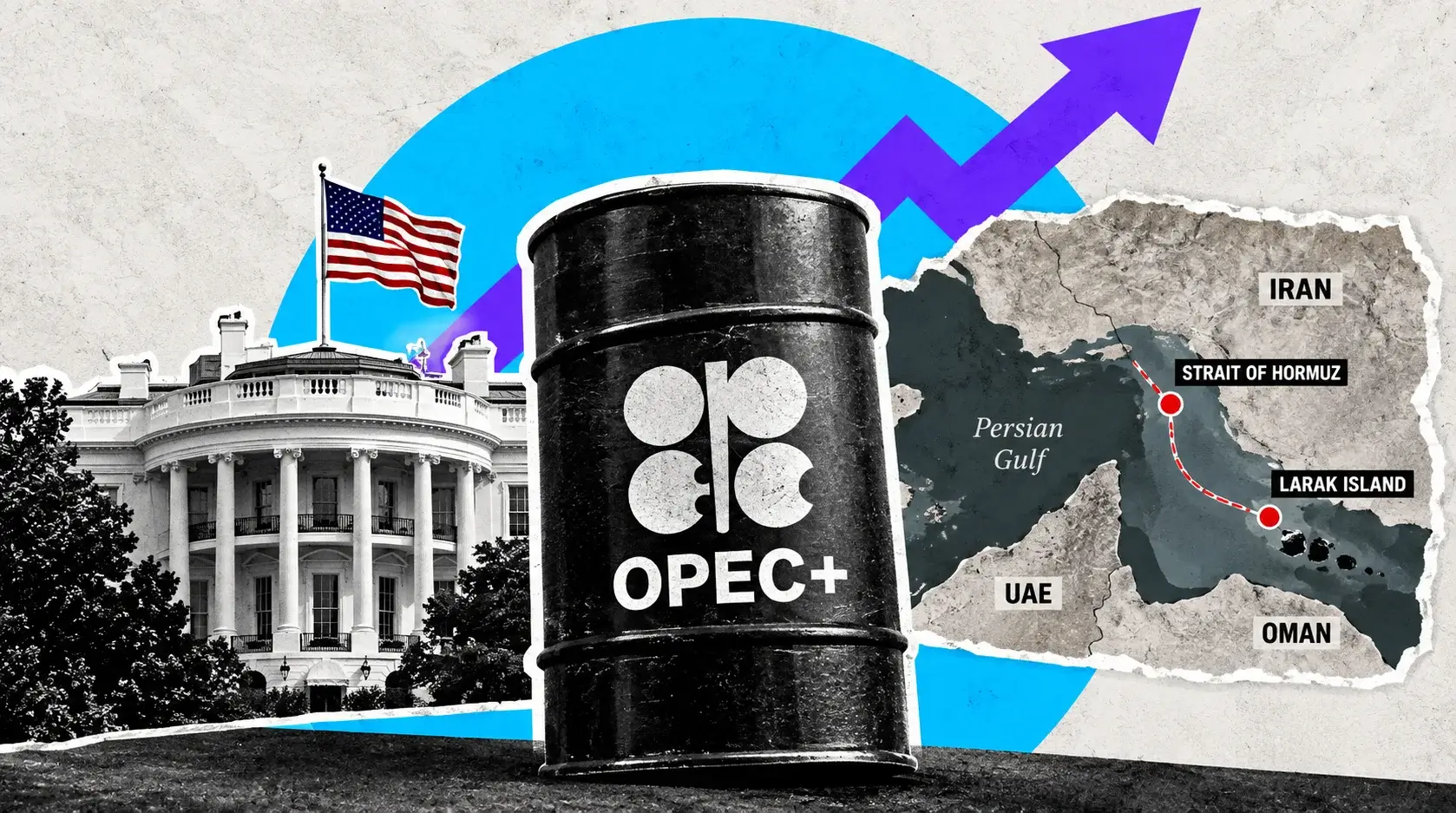
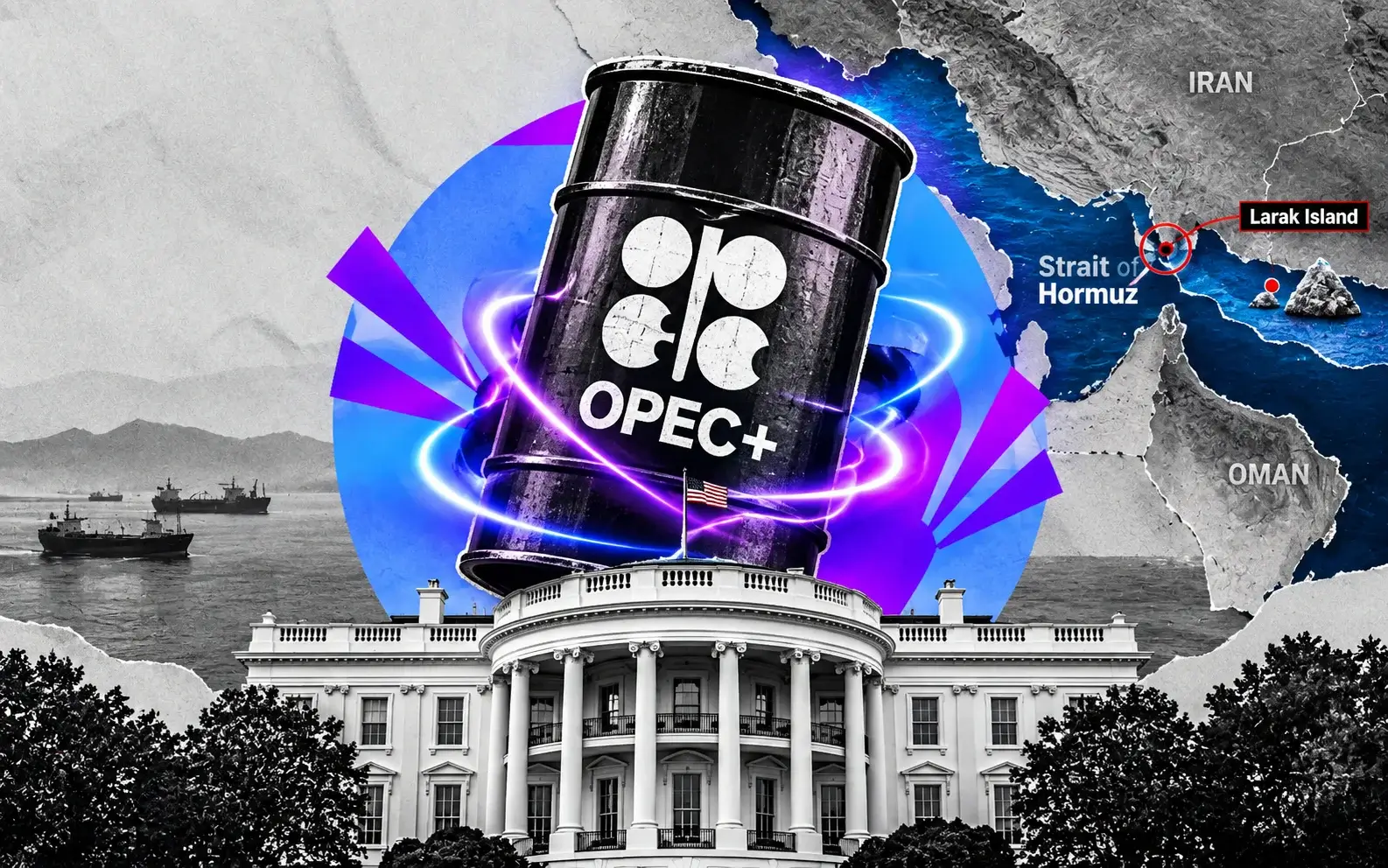
Oil started the week jumpy. Brent crude traded near $79 a barrel Monday after spiking above $82 over the weekend and into the early session, while West Texas Intermediate hovered around $75. The catalyst for the spike was geopolitical: President Trump warned Iran against any action threatening shipping through the Strait of Hormuz, and the abrupt postponement of US-Iran talks in Switzerland on Friday revived fears that the fragile truce could unravel. By midday, Brent had pared back to about $79.25, down roughly $3 from the weekend high but still elevated against Friday's $80.57 close.
The choppiness is the story. Oil is caught in a tug-of-war between two powerful, opposing forces, and Monday's price action — a spike above $82 followed by a fade to $79 — is that tension in miniature. On one side, a structural supply recovery is pulling crude lower as the Strait of Hormuz reopens and Gulf producers ramp. On the other, a fragile, repeatedly stalling peace process keeps injecting a risk premium that snaps prices higher on every escalation headline. The market cannot decide which force wins, so it whipsaws.
The thesis here is clear: the war premium is draining out of oil, but it refuses to die. Crude has already shed roughly 20% to 25% from its 2026 peaks as the de-escalation unlocked Hormuz shipping, and the structural bias points lower toward $72 WTI as supply normalizes. But the truce is fragile enough that any genuine Hormuz disruption spikes prices back toward $90 or beyond. The trend is down; the tail risk is up.
The fundamental backdrop has shifted decisively toward supply recovery. US Central Command lifted restrictions on traffic to and from Iranian ports, tankers carrying stranded crude began exiting the strait, nearly 10 to 12 million barrels transited or positioned near the waterway in a single day last week — including the first Saudi-owned tankers since the conflict began — and Kuwait announced it would increase production. The plumbing of the global oil trade is reopening, and that is structurally bearish for price.
The only number that truly matters is shipping flow through Hormuz, and that is where the contradiction lives. Iran claims it has again halted traffic and is demanding mandatory insurance for vessels, while in reality crude keeps flowing through the strait. The gap between Iran's rhetoric and the physical reality is the entire trade: as long as barrels move, oil drifts lower; the moment they genuinely stop, the premium explodes. PCE inflation data Thursday and the next Hormuz headline are the two switches that decide the next move.
The 20% Unwind: How the War Premium Drained Out
To forecast oil you have to understand the round trip it has just made. When the US-and-Israeli-led conflict with Iran began on February 28, crude prices ripped higher on fears of a supply shock, with both Brent and WTI surging more than 45% at the peak. Brent climbed to $107.77 and WTI to $102.18 by mid-May as the Strait of Hormuz — the chokepoint for roughly a fifth of global oil — sat under threat of closure. The war premium was enormous, pricing in a genuine supply catastrophe.
Then the de-escalation began, and the premium drained fast. Brent plunged almost 19% in May alone — its worst month since the Covid-19 pandemic — falling to around $92.56 by month-end as optimism built around a US-Iran ceasefire that would unlock Hormuz shipping. From the 2026 peaks, crude has now tumbled roughly 20% to 25%, with Brent near $79 and WTI near $75. The market has erased nearly all the gains it accumulated during the height of the conflict, returning prices to roughly where they sat before the war began.
The mechanism of the unwind is pure supply psychology. The entire run-up was a risk premium — a bet that Hormuz would close and barrels would stop flowing. As the ceasefire took hold and shipping resumed, that bet unwound, and the premium evaporated barrel by barrel with each piece of evidence that crude was still moving. Oil that rose on fear fell on the absence of fear, and the speed of the decline matched the speed of the de-escalation. A 25% round trip in four months is the signature of a pure geopolitical premium inflating and deflating.
The year-over-year picture shows how complete the round trip is. Brent at $79.25 sits roughly 59 cents above where it traded a year ago — essentially flat on a 12-month basis despite the violent intervening swings. The war took oil up 45% and the truce brought it all the way back. That flatness is the market's verdict that, absent the geopolitical premium, oil's fundamental equilibrium sits right around current levels, with the war having been a temporary distortion rather than a permanent repricing.
For the forecast, the 20% unwind establishes the structural bias as lower. The premium that drove oil to $107 has largely deflated, and the remaining premium — the difference between current prices and the pre-war baseline — is small and shrinking. As long as the de-escalation holds and barrels keep flowing, the path of least resistance is further normalization toward the low-$70s on WTI. The unwind is mostly done, but the last increment of premium is still draining, and that is the structural force pulling crude lower.
Hormuz Is the Only Number That Matters
Everything in the oil market right now reduces to a single variable: how many barrels actually move through the Strait of Hormuz. The strait is the chokepoint for roughly a fifth of the world's seaborne oil, and the entire war premium was a bet on its closure. With the ceasefire in place, the question is no longer whether Hormuz will close but whether it will stay open — and the physical shipping data is the answer that matters more than any headline.
The flow data has turned decisively positive. Nearly 10 to 12 million barrels of crude were observed transiting or positioned near the strait in a single day last week, including the first Saudi-owned tankers to move since the conflict began more than three months ago. US Central Command lifted restrictions on traffic to and from Iranian ports and coastal waters, and the Joint Maritime Information Center advised vessels to follow a route closer to Oman's coastline to reduce mine risk. Tankers carrying previously stranded crude began exiting the waterway. The strait is functionally open, and barrels are flowing.
The contradiction is that Iran keeps claiming otherwise. Tehran has announced — repeatedly — that it has halted traffic through the strait, most recently citing continued Israeli strikes in Lebanon as justification. Yet the physical reality contradicts the rhetoric: crude keeps flowing despite Iran's claims of closure. This gap between what Iran says and what tankers actually do is the central tension in the oil market, and it is why prices spike on the announcements but fade when the data shows barrels still moving. The market is learning to trade the flows, not the words.
The shipping-flow nuance is where the risk lives, though. Market data suggested shipping activity slowed at points, with no outbound vessels seen leaving the Persian Gulf on certain mornings even as large volumes transited on other days. The flow is real but uneven, and the uncertainty about whether it can return to fully normal levels is what keeps a residual premium in the price. Shipping companies, not politicians, will ultimately decide when the strait is truly open, because they bear the risk of sending a tanker through a contested waterway.
For the forecast, Hormuz flow is the master variable. As long as the 10-to-12-million-barrel daily transits continue and tankers keep exiting, oil drifts lower toward its fundamental equilibrium in the low-$70s. If Iran genuinely halts traffic — not in rhetoric but in physical reality — the premium explodes back toward $90 or $100 in a session, because a fifth of global supply would be at risk. Every oil trader is now a Hormuz-flow analyst, watching tanker-tracking data more closely than price charts, because the strait is the only number that matters.
The Fragile Truce: Talks Postponed, Threats Renewed
The peace process that drove oil's decline is real but precarious, and last week exposed just how precarious. Planned US-Iran talks at Bürgenstock in Switzerland on Friday were abruptly postponed, with the White House confirming that Vice President JD Vance was no longer traveling, citing unresolved logistical issues around the negotiations. That postponement sent oil higher into the weekend, because a stalled negotiation raises the odds that the interim accord never becomes a durable settlement.
The rhetoric over the weekend reinforced the fragility. President Trump renewed threats of US strikes unless Iran curbs its proxies in Lebanon, threatened tolls in the absence of a deal, and warned Tehran against closing the Strait of Hormuz. Iran, for its part, demanded an end to the war in Lebanon as a condition for further talks, said the US had failed to secure a Lebanese ceasefire, announced it had again halted Hormuz traffic, and said Sunday's talks would exclude substantive issues like its nuclear program. Both sides hardened their positions, and the market priced the rising risk.
The mixed signals make the truce hard to handicap. Even as Trump renewed his threats, Vice President Vance praised the talks' progress, describing the Switzerland discussions as laying a "very good foundation" for a final deal. That split — threats from the President, optimism from the Vice President — captures the genuine uncertainty about whether the framework holds. The interim accord stopped the shooting and reopened the strait, but converting it into a lasting peace is proving difficult, and every stall reintroduces the supply risk that the ceasefire removed.
The Lebanon dimension is the wildcard that could reignite everything. The Israel-Hezbollah ceasefire is the foundation of the broader US-Iran de-escalation, and Iran has tied further negotiations to ending the Lebanon conflict. Continued Israeli strikes on Hezbollah targets, which have persisted, give Iran a justification to stall talks and threaten Hormuz. If the Lebanon situation escalates, it could unravel the entire framework and send oil ripping back toward its wartime highs. The truce is only as stable as the Lebanon ceasefire, and that ceasefire is shaky.
For the forecast, the fragile truce is the source of the upside tail risk. The base case is that the de-escalation holds, talks eventually resume, and oil continues its structural drift lower as supply normalizes. But the postponed talks, the renewed threats, and the Lebanon wildcard mean the probability of re-escalation is far from zero, and any genuine breakdown would spike crude back toward $90 or $100. The truce caps the downside on the geopolitical premium while keeping a live upside tail, which is exactly why oil is so choppy near $79.
The Supply Recovery: Tankers, Kuwait, and the Ramp
The structural bearish force in oil is the supply recovery, and it is gathering momentum on multiple fronts. The most immediate is the resumption of tanker traffic through Hormuz: vessels carrying previously stranded crude began exiting the strait, and the nearly 10 to 12 million barrels observed transiting in a single day represent a dramatic normalization from the conflict's peak, when traffic had effectively frozen. The first Saudi-owned tankers in over three months began moving, signaling that the world's largest exporters are confident enough to resume shipments.
Production is ramping alongside the shipping recovery. Kuwait announced it would begin increasing production, and Persian Gulf producers more broadly are preparing to raise output as the security situation stabilizes. After months of constrained supply during the conflict, the producers that hold the world's spare capacity are moving to put barrels back on the market. That additional supply, arriving just as the risk premium deflates, is a one-two punch for prices — more oil flowing into a market that no longer fears a shortage.
The Iranian supply picture is the swing factor on the bearish side. Iran's crude loadings collapsed during the conflict, falling to below 0.3 million barrels per day in May from 1.5 million in April and 1.7 million in March. If the de-escalation holds and Iran's exports recover toward those pre-conflict levels, it would add more than a million barrels a day back to global supply — a significant bearish force. The US authorization of Iranian oil sales through a temporary license is the mechanism that would unlock that recovery, and it points toward more supply, not less.
The infrastructure to support normalized flows is being built out. Lloyd's of London and Chubb launched a $400 million marine war-risk insurance facility to help vessels and cargo safely resume transit through the Strait of Hormuz, addressing one of the key practical obstacles to fully restored shipping. Insurance availability is what allows tanker operators to commit to routes through a still-contested waterway, and a dedicated war-risk facility is a concrete step toward normalizing the flow. The market is building the plumbing for sustained supply recovery.
For the forecast, the supply recovery is the engine of the structural downtrend. Tankers flowing, Kuwait ramping, Iranian exports potentially recovering, and war-risk insurance being arranged all point toward more oil reaching the market in the coming weeks and months. That supply, combined with the deflating risk premium, is what pulls crude toward the low-$70s on WTI. The recovery is not instantaneous — there is genuine debate about how long full normalization takes — but the direction is unmistakable, and it is the bearish counterweight to the geopolitical tail risk.
Iran's Leverage: Insurance, Tolls, and Closure Claims
Iran is not a passive player in the supply recovery — it is actively using its control over Hormuz as leverage, and that leverage is the mechanism through which the risk premium persists. Tehran announced that vessels passing through the strait would require mandatory insurance policies, which are currently free but could incur charges later, reinforcing its claims of sovereignty over the strategic waterway. That is a way for Iran to assert control and extract value without physically closing the strait — a softer form of pressure that keeps a premium in the price.
The closure claims are the louder form of leverage. Iran has repeatedly announced it has halted Hormuz traffic, most recently tying the closure to continued Israeli strikes in Lebanon. These announcements spike oil prices even when the physical flow data contradicts them, because the market cannot fully discount the risk that the rhetoric becomes reality. Iran understands that the threat of closure is itself valuable — it keeps a premium in the price and gives Tehran a bargaining chip in the negotiations, without the cost of actually stopping the flow of its own exports.
Trump's "tolls" threat is the counter-leverage. The President threatened tolls in the absence of a deal, a form of economic pressure aimed at Iran's ability to profit from the strait. The back-and-forth over who controls and who profits from Hormuz transit is a negotiation playing out in real time, with each side using the waterway as a pressure point. For the oil market, this maneuvering keeps the strait in the headlines and the premium in the price, because the future of Hormuz governance remains genuinely uncertain.
The insurance dimension is where the leverage becomes concrete. The $400 million Lloyd's and Chubb war-risk facility exists precisely because the insurance question is the practical bottleneck for shipping. If Iran imposes its own mandatory insurance regime and charges for transit, it raises the cost of moving oil through Hormuz, which would keep a structural premium in the price even after the shooting stops. The cost of insuring a Hormuz transit is now a real input into the oil price, and Iran's ability to influence that cost is genuine leverage.
For the forecast, Iran's leverage is why the premium will not fully disappear even as the supply recovers. Tehran has every incentive to keep the strait contested — to extract insurance revenue, to maintain a bargaining chip, and to keep a floor under oil prices that benefits its own exports. That means even in the bullish-for-supply, bearish-for-price scenario, a residual premium persists because Iran will keep reminding the market it controls the chokepoint. The leverage caps how low oil can fall as long as Iran holds the strait, which is part of why $72 WTI is a floor rather than a way station.
Read More
-
Yen Stalls at 160 Despite a 3% JGB and Tokyo Core CPI at 2.0% — Intervention Sits at 164, Friday's Payrolls Decide
02.09.2026 · TradingNEWS ArchiveEnergy
-
Dell Rebounds to $565.86 as a $95 Billion AI Backlog Meets 22x Forward Earnings — $595 High in Sight
25.09.2026 · TradingNEWS ArchiveStocks
-
XRP-USD ($1.53) Outperforms as ETF Inflows Return, but August Buyers Guard $1.60 — $1.70 Upside vs. $1.25 Floor
25.09.2026 · TradingNEWS ArchiveCrypto
-
Brent Holds $105 While WTI Heads for a 7% Weekly Loss as a 3M-Barrel Build and a Diesel Ban Threat Split the Market
25.09.2026 · TradingNEWS ArchiveCommodities
-
S&P 500 Gains 0.22%, Nasdaq Tops 27,000, Dow Up 0.40% on MSFT Launch and AKAM Deal
25.09.2026 · TradingNEWS ArchiveMarkets
-
Sterling Slides to 1.3216 as a Divided Bank of England Trails the Fed — 1.3424 Upside vs. 1.3000 Risk
25.09.2026 · TradingNEWS ArchiveForex
Oil is the asset where the Iran story lives most directly. Here's the forecast.
The Tape: Brent Near $79, WTI Around $75 as the Hormuz Premium Flickers Back
Oil started the week jumpy. Brent crude traded near $79 a barrel Monday after spiking above $82 over the weekend and into the early session, while West Texas Intermediate hovered around $75. The catalyst for the spike was geopolitical: President Trump warned Iran against any action threatening shipping through the Strait of Hormuz, and the abrupt postponement of US-Iran talks in Switzerland on Friday revived fears that the fragile truce could unravel. By midday, Brent had pared back to about $79.25, down roughly $3 from the weekend high but still elevated against Friday's $80.57 close.
The choppiness is the story. Oil is caught in a tug-of-war between two powerful, opposing forces, and Monday's price action — a spike above $82 followed by a fade to $79 — is that tension in miniature. On one side, a structural supply recovery is pulling crude lower as the Strait of Hormuz reopens and Gulf producers ramp. On the other, a fragile, repeatedly stalling peace process keeps injecting a risk premium that snaps prices higher on every escalation headline. The market cannot decide which force wins, so it whipsaws.
The thesis here is clear: the war premium is draining out of oil, but it refuses to die. Crude has already shed roughly 20% to 25% from its 2026 peaks as the de-escalation unlocked Hormuz shipping, and the structural bias points lower toward $72 WTI as supply normalizes. But the truce is fragile enough that any genuine Hormuz disruption spikes prices back toward $90 or beyond. The trend is down; the tail risk is up.
The fundamental backdrop has shifted decisively toward supply recovery. US Central Command lifted restrictions on traffic to and from Iranian ports, tankers carrying stranded crude began exiting the strait, nearly 10 to 12 million barrels transited or positioned near the waterway in a single day last week — including the first Saudi-owned tankers since the conflict began — and Kuwait announced it would increase production. The plumbing of the global oil trade is reopening, and that is structurally bearish for price.
The only number that truly matters is shipping flow through Hormuz, and that is where the contradiction lives. Iran claims it has again halted traffic and is demanding mandatory insurance for vessels, while in reality crude keeps flowing through the strait. The gap between Iran's rhetoric and the physical reality is the entire trade: as long as barrels move, oil drifts lower; the moment they genuinely stop, the premium explodes. PCE inflation data Thursday and the next Hormuz headline are the two switches that decide the next move.
The 20% Unwind: How the War Premium Drained Out
To forecast oil you have to understand the round trip it has just made. When the US-and-Israeli-led conflict with Iran began on February 28, crude prices ripped higher on fears of a supply shock, with both Brent and WTI surging more than 45% at the peak. Brent climbed to $107.77 and WTI to $102.18 by mid-May as the Strait of Hormuz — the chokepoint for roughly a fifth of global oil — sat under threat of closure. The war premium was enormous, pricing in a genuine supply catastrophe.
Then the de-escalation began, and the premium drained fast. Brent plunged almost 19% in May alone — its worst month since the Covid-19 pandemic — falling to around $92.56 by month-end as optimism built around a US-Iran ceasefire that would unlock Hormuz shipping. From the 2026 peaks, crude has now tumbled roughly 20% to 25%, with Brent near $79 and WTI near $75. The market has erased nearly all the gains it accumulated during the height of the conflict, returning prices to roughly where they sat before the war began.
The mechanism of the unwind is pure supply psychology. The entire run-up was a risk premium — a bet that Hormuz would close and barrels would stop flowing. As the ceasefire took hold and shipping resumed, that bet unwound, and the premium evaporated barrel by barrel with each piece of evidence that crude was still moving. Oil that rose on fear fell on the absence of fear, and the speed of the decline matched the speed of the de-escalation. A 25% round trip in four months is the signature of a pure geopolitical premium inflating and deflating.
The year-over-year picture shows how complete the round trip is. Brent at $79.25 sits roughly 59 cents above where it traded a year ago — essentially flat on a 12-month basis despite the violent intervening swings. The war took oil up 45% and the truce brought it all the way back. That flatness is the market's verdict that, absent the geopolitical premium, oil's fundamental equilibrium sits right around current levels, with the war having been a temporary distortion rather than a permanent repricing.
For the forecast, the 20% unwind establishes the structural bias as lower. The premium that drove oil to $107 has largely deflated, and the remaining premium — the difference between current prices and the pre-war baseline — is small and shrinking. As long as the de-escalation holds and barrels keep flowing, the path of least resistance is further normalization toward the low-$70s on WTI. The unwind is mostly done, but the last increment of premium is still draining, and that is the structural force pulling crude lower.
Hormuz Is the Only Number That Matters
Everything in the oil market right now reduces to a single variable: how many barrels actually move through the Strait of Hormuz. The strait is the chokepoint for roughly a fifth of the world's seaborne oil, and the entire war premium was a bet on its closure. With the ceasefire in place, the question is no longer whether Hormuz will close but whether it will stay open — and the physical shipping data is the answer that matters more than any headline.
The flow data has turned decisively positive. Nearly 10 to 12 million barrels of crude were observed transiting or positioned near the strait in a single day last week, including the first Saudi-owned tankers to move since the conflict began more than three months ago. US Central Command lifted restrictions on traffic to and from Iranian ports and coastal waters, and the Joint Maritime Information Center advised vessels to follow a route closer to Oman's coastline to reduce mine risk. Tankers carrying previously stranded crude began exiting the waterway. The strait is functionally open, and barrels are flowing.
The contradiction is that Iran keeps claiming otherwise. Tehran has announced — repeatedly — that it has halted traffic through the strait, most recently citing continued Israeli strikes in Lebanon as justification. Yet the physical reality contradicts the rhetoric: crude keeps flowing despite Iran's claims of closure. This gap between what Iran says and what tankers actually do is the central tension in the oil market, and it is why prices spike on the announcements but fade when the data shows barrels still moving. The market is learning to trade the flows, not the words.
The shipping-flow nuance is where the risk lives, though. Market data suggested shipping activity slowed at points, with no outbound vessels seen leaving the Persian Gulf on certain mornings even as large volumes transited on other days. The flow is real but uneven, and the uncertainty about whether it can return to fully normal levels is what keeps a residual premium in the price. Shipping companies, not politicians, will ultimately decide when the strait is truly open, because they bear the risk of sending a tanker through a contested waterway.
For the forecast, Hormuz flow is the master variable. As long as the 10-to-12-million-barrel daily transits continue and tankers keep exiting, oil drifts lower toward its fundamental equilibrium in the low-$70s. If Iran genuinely halts traffic — not in rhetoric but in physical reality — the premium explodes back toward $90 or $100 in a session, because a fifth of global supply would be at risk. Every oil trader is now a Hormuz-flow analyst, watching tanker-tracking data more closely than price charts, because the strait is the only number that matters.
The Fragile Truce: Talks Postponed, Threats Renewed
The peace process that drove oil's decline is real but precarious, and last week exposed just how precarious. Planned US-Iran talks at Bürgenstock in Switzerland on Friday were abruptly postponed, with the White House confirming that Vice President JD Vance was no longer traveling, citing unresolved logistical issues around the negotiations. That postponement sent oil higher into the weekend, because a stalled negotiation raises the odds that the interim accord never becomes a durable settlement.
The rhetoric over the weekend reinforced the fragility. President Trump renewed threats of US strikes unless Iran curbs its proxies in Lebanon, threatened tolls in the absence of a deal, and warned Tehran against closing the Strait of Hormuz. Iran, for its part, demanded an end to the war in Lebanon as a condition for further talks, said the US had failed to secure a Lebanese ceasefire, announced it had again halted Hormuz traffic, and said Sunday's talks would exclude substantive issues like its nuclear program. Both sides hardened their positions, and the market priced the rising risk.
The mixed signals make the truce hard to handicap. Even as Trump renewed his threats, Vice President Vance praised the talks' progress, describing the Switzerland discussions as laying a "very good foundation" for a final deal. That split — threats from the President, optimism from the Vice President — captures the genuine uncertainty about whether the framework holds. The interim accord stopped the shooting and reopened the strait, but converting it into a lasting peace is proving difficult, and every stall reintroduces the supply risk that the ceasefire removed.
The Lebanon dimension is the wildcard that could reignite everything. The Israel-Hezbollah ceasefire is the foundation of the broader US-Iran de-escalation, and Iran has tied further negotiations to ending the Lebanon conflict. Continued Israeli strikes on Hezbollah targets, which have persisted, give Iran a justification to stall talks and threaten Hormuz. If the Lebanon situation escalates, it could unravel the entire framework and send oil ripping back toward its wartime highs. The truce is only as stable as the Lebanon ceasefire, and that ceasefire is shaky.
For the forecast, the fragile truce is the source of the upside tail risk. The base case is that the de-escalation holds, talks eventually resume, and oil continues its structural drift lower as supply normalizes. But the postponed talks, the renewed threats, and the Lebanon wildcard mean the probability of re-escalation is far from zero, and any genuine breakdown would spike crude back toward $90 or $100. The truce caps the downside on the geopolitical premium while keeping a live upside tail, which is exactly why oil is so choppy near $79.
The Supply Recovery: Tankers, Kuwait, and the Ramp
The structural bearish force in oil is the supply recovery, and it is gathering momentum on multiple fronts. The most immediate is the resumption of tanker traffic through Hormuz: vessels carrying previously stranded crude began exiting the strait, and the nearly 10 to 12 million barrels observed transiting in a single day represent a dramatic normalization from the conflict's peak, when traffic had effectively frozen. The first Saudi-owned tankers in over three months began moving, signaling that the world's largest exporters are confident enough to resume shipments.
Production is ramping alongside the shipping recovery. Kuwait announced it would begin increasing production, and Persian Gulf producers more broadly are preparing to raise output as the security situation stabilizes. After months of constrained supply during the conflict, the producers that hold the world's spare capacity are moving to put barrels back on the market. That additional supply, arriving just as the risk premium deflates, is a one-two punch for prices — more oil flowing into a market that no longer fears a shortage.
The Iranian supply picture is the swing factor on the bearish side. Iran's crude loadings collapsed during the conflict, falling to below 0.3 million barrels per day in May from 1.5 million in April and 1.7 million in March. If the de-escalation holds and Iran's exports recover toward those pre-conflict levels, it would add more than a million barrels a day back to global supply — a significant bearish force. The US authorization of Iranian oil sales through a temporary license is the mechanism that would unlock that recovery, and it points toward more supply, not less.
The infrastructure to support normalized flows is being built out. Lloyd's of London and Chubb launched a $400 million marine war-risk insurance facility to help vessels and cargo safely resume transit through the Strait of Hormuz, addressing one of the key practical obstacles to fully restored shipping. Insurance availability is what allows tanker operators to commit to routes through a still-contested waterway, and a dedicated war-risk facility is a concrete step toward normalizing the flow. The market is building the plumbing for sustained supply recovery.
For the forecast, the supply recovery is the engine of the structural downtrend. Tankers flowing, Kuwait ramping, Iranian exports potentially recovering, and war-risk insurance being arranged all point toward more oil reaching the market in the coming weeks and months. That supply, combined with the deflating risk premium, is what pulls crude toward the low-$70s on WTI. The recovery is not instantaneous — there is genuine debate about how long full normalization takes — but the direction is unmistakable, and it is the bearish counterweight to the geopolitical tail risk.
Iran's Leverage: Insurance, Tolls, and Closure Claims
Iran is not a passive player in the supply recovery — it is actively using its control over Hormuz as leverage, and that leverage is the mechanism through which the risk premium persists. Tehran announced that vessels passing through the strait would require mandatory insurance policies, which are currently free but could incur charges later, reinforcing its claims of sovereignty over the strategic waterway. That is a way for Iran to assert control and extract value without physically closing the strait — a softer form of pressure that keeps a premium in the price.
The closure claims are the louder form of leverage. Iran has repeatedly announced it has halted Hormuz traffic, most recently tying the closure to continued Israeli strikes in Lebanon. These announcements spike oil prices even when the physical flow data contradicts them, because the market cannot fully discount the risk that the rhetoric becomes reality. Iran understands that the threat of closure is itself valuable — it keeps a premium in the price and gives Tehran a bargaining chip in the negotiations, without the cost of actually stopping the flow of its own exports.
Trump's "tolls" threat is the counter-leverage. The President threatened tolls in the absence of a deal, a form of economic pressure aimed at Iran's ability to profit from the strait. The back-and-forth over who controls and who profits from Hormuz transit is a negotiation playing out in real time, with each side using the waterway as a pressure point. For the oil market, this maneuvering keeps the strait in the headlines and the premium in the price, because the future of Hormuz governance remains genuinely uncertain.
The insurance dimension is where the leverage becomes concrete. The $400 million Lloyd's and Chubb war-risk facility exists precisely because the insurance question is the practical bottleneck for shipping. If Iran imposes its own mandatory insurance regime and charges for transit, it raises the cost of moving oil through Hormuz, which would keep a structural premium in the price even after the shooting stops. The cost of insuring a Hormuz transit is now a real input into the oil price, and Iran's ability to influence that cost is genuine leverage.
For the forecast, Iran's leverage is why the premium will not fully disappear even as the supply recovers. Tehran has every incentive to keep the strait contested — to extract insurance revenue, to maintain a bargaining chip, and to keep a floor under oil prices that benefits its own exports. That means even in the bullish-for-supply, bearish-for-price scenario, a residual premium persists because Iran will keep reminding the market it controls the chokepoint. The leverage caps how low oil can fall as long as Iran holds the strait, which is part of why $72 WTI is a floor rather than a way station.
The Inventory Picture: Still Undersupplied
Beneath the geopolitical noise, the physical oil market carries a bullish undercurrent that the price decline obscures: inventories remain tight. UBS noted that the market is "strongly undersupplied," pointing to falling on-land crude and refined-product inventories even during the conflict, when oil stored on tankers rose due to rerouted US exports to Asia. The sharp inventory drawdowns suggest that, beneath the war premium and its unwind, the fundamental supply-demand balance has been tighter than the price alone implies.
The Iranian loadings collapse is the proximate cause of the tightness. With Iran's crude exports falling to below 0.3 million barrels per day in May from 1.7 million in March, the market lost more than a million barrels a day of supply during the conflict. That lost supply had to be made up from inventories and spare capacity, drawing down stocks. The inventory drawdowns are the physical evidence that the conflict genuinely tightened the market, even as the price was driven more by the premium than by the fundamentals.
The rebalancing timeline is the key uncertainty, and the experts disagree. Saudi Aramco's CEO warned that even if the Strait of Hormuz reopened, it would take months for the market to rebalance, and that delays in reopening could push normalization into 2027. That view — that the physical market takes time to heal even after the geopolitics calm — is a counterweight to the bearish supply-recovery narrative. Depleted inventories, damaged infrastructure, and the slow restoration of full production mean the market may stay tighter for longer than the price decline suggests.
The infrastructure damage is the lingering bullish factor. The conflict caused significant damage to refineries, pipelines, and other energy infrastructure across the Gulf, and that damage does not repair instantly. Even as tankers resume transit, the physical capacity to produce, refine, and ship oil at full pre-war rates takes time to restore. That supply-side scarring is why some analysts believe oil prices will stay elevated in the $90-to-$100 range even after Hormuz reopens — the market cannot simply flip a switch back to full supply.
For the forecast, the inventory picture is the bullish counterweight to the supply-recovery story. The market is structurally tighter than the price implies, inventories are drawn down, and full rebalancing could take months or push into 2027. That tightness limits how far oil can fall even as the premium deflates and barrels resume flowing — it is part of why the floor sits around $72 WTI rather than lower. The bears have the geopolitical premium deflating in their favor, but the bulls have a genuinely undersupplied physical market that takes time to heal.
The Levels: $72 WTI Floor, $82 Cap, $90+ Tail
Oil near $79 Brent and $75 WTI is trading a defined map, and the levels reflect the tug-of-war between supply recovery and geopolitical risk. On WTI, the structural support sits around $72 — the level toward which the supply recovery and deflating premium would pull crude if the de-escalation holds and barrels keep flowing. That is the bearish target, the price at which oil would settle as it normalizes toward its pre-war fundamental equilibrium. A break below $72 would signal the premium has fully deflated and the market is pricing a durable peace.
The immediate cap on Brent is around $82, the level crude spiked to over the weekend on Trump's Hormuz warning before fading. That spike-and-fade defines the upper boundary of the current range — the price at which escalation fears max out before the physical-flow data pulls prices back. As long as barrels keep moving through Hormuz, rallies toward $82 get sold because the supply reality undercuts the fear. The $82 cap is where the geopolitical premium runs into the wall of actual shipping data.
The upside tail is the scenario that breaks the range. If Iran genuinely closes the Strait of Hormuz — not in rhetoric but in physical reality — oil spikes back toward $90 to $100 or higher, because a fifth of global seaborne supply would be at risk. That is the tail risk the fragile truce keeps alive, and it is why oil cannot fully normalize despite the supply recovery. The wartime highs of $107.77 Brent and $102.18 WTI from mid-May are the reference points for how high crude can go if the strait actually shuts. The tail is fat, and it is the reason shorts cannot get complacent.
The Friday close levels frame the near-term battle. Brent settled at $80.57 and WTI near $77.54 on Friday, and Monday's action — a spike above $82 then a fade to $79 Brent and $75 WTI — shows the market probing both directions around those levels. The choppiness reflects a market without conviction, whipsawing between the supply-recovery pull lower and the escalation-fear push higher. Neither side has control, which is the signature of a headline-driven, range-bound market.
For the forecast, the levels reduce to a range with a fat upside tail. The structural bias points toward the $72 WTI floor as supply normalizes, the $82 Brent cap holds as long as barrels flow, and the $90-to-$100 tail stays live as long as the truce is fragile. Oil near $79 Brent sits in the middle, whipsawing on headlines. The trade is to fade rallies toward $82 if Hormuz stays open and respect the tail risk if the truce breaks — a range-bound market with an asymmetric upside risk that keeps the downside from running away.
The Analyst Split: $72 Bears vs $90-100 Bulls
The forecasting community is divided on oil, and the split captures the supply-recovery-versus-geopolitical-risk debate precisely. The bearish camp, focused on the supply recovery, sees crude drifting toward $72 WTI as Hormuz normalizes, Gulf producers ramp, and Iranian exports recover. With the premium deflating and barrels flowing, the bears argue oil returns to its pre-war fundamental equilibrium in the low-$70s, especially if the de-escalation proves durable.
The bullish camp, focused on the physical tightness and the fragile truce, sees oil staying elevated in the $90-to-$100 range. Amos Hochstein, the former senior energy advisor, argued that oil would likely remain between $90 and $100 through the rest of 2026 and into 2027 even if Hormuz reopened, citing the structural tightness and the slow rebalancing. Saudi Aramco's CEO reinforced that view, warning that the market takes months to rebalance even after the strait reopens, with normalization potentially pushing into 2027. The bulls point to drawn-down inventories, damaged infrastructure, and the residual premium from Iran's leverage.
The gap between the camps is wide — $72 versus $90-100 — and it reflects genuine disagreement about which force dominates. The bears weight the supply recovery and the deflating premium; the bulls weight the physical tightness and the fragile truce. Both are looking at the same market and reaching opposite conclusions because the outcome genuinely hinges on an uncertain variable: whether the de-escalation holds and how fast supply normalizes. The wide spread is the quantification of that uncertainty.
The current price sits between the camps, closer to the bearish view. At $79 Brent and $75 WTI, the market is pricing a successful de-escalation with a residual risk premium — below Hochstein's $90-to-$100 range but above the bears' $72 target. That positioning suggests the market currently leans toward the supply-recovery narrative while keeping enough premium to account for the truce's fragility. The price is the market's weighted average of the two scenarios, tilted toward normalization.
For the forecast, the analyst split frames the range and the asymmetry. The most probable path, given that barrels are flowing, is the bearish drift toward $72 WTI as supply normalizes — but the bullish $90-to-$100 scenario stays live as a tail risk if the truce breaks or rebalancing proves slower than expected. The risk/reward at $79 Brent favors the bears on the trend but respects the bulls on the tail. The market is pricing normalization; the question is whether the truce cooperates, and the analyst split is the debate over that single question.
The Demand Side: Macro, the Fed, and Disinflation
Oil is not just a supply story — the demand side matters, and it ties directly into the macro backdrop dominating every market this week. Lower oil prices are fundamentally disinflationary, feeding into cooling headline inflation over time, which is precisely why the crude decline matters beyond the energy market. As oil fell from $107 to $79, it eased the inflation pressure that drove central banks hawkish, setting up a potential rate-relief story that takes two to three months to feed through the data.
Thursday's PCE inflation print is the macro catalyst that connects oil to the broader market. The Fed's preferred inflation gauge will reflect, in part, the energy-price moves of recent months, and a cooler print — helped by lower oil — would ease the hawkish pressure that has lifted the dollar and weighed on risk assets. The oil decline is one of the inputs that could pull inflation lower, making crude a variable the Fed and the bond market are watching closely. Lower oil is a tailwind for the disinflation thesis that every market is hoping for.
The demand outlook itself is mixed. The global economy faces a hawkish Fed, a stalling eurozone, and elevated rates — conditions that temper oil demand growth. At the same time, the IEA dialed back its oversupply warning after winter shocks, suggesting the demand picture is firmer than the most bearish forecasts assumed. The demand side is neither booming nor collapsing; it is steady enough to support prices but not strong enough to drive a rally on its own. Demand is a wash, leaving supply and geopolitics as the dominant forces.
The feedback loop between oil and rates is worth noting. Lower oil eases inflation, which could allow the Fed to soften, which would support economic growth and, in turn, oil demand. Conversely, if the truce breaks and oil spikes back toward $100, it would reignite inflation, force the Fed to stay hawkish, and ultimately dampen demand. Oil is both a cause and an effect in the macro picture — its price shapes inflation and rates, which in turn shape the demand for oil. That circularity makes the crude price a central macro variable, not just a commodity.
For the forecast, the demand side reinforces the structural-bias-lower view while connecting oil to the macro picture. Steady-to-soft demand, a disinflationary tailwind from lower prices, and a hawkish Fed that lower oil could eventually soften all point toward crude settling in a lower range absent a supply shock. The PCE print is the immediate macro catalyst, and oil's own decline is one of the forces that could deliver the cool print the market wants. Oil and the Fed are linked, and Thursday is when that link gets tested.
The Energy Equities Read-Through
The oil decline ripples directly into the energy equity complex, and the read-through has been clearly negative for the producers. As crude fell from $107 toward $79, energy stocks came under pressure, with names like APA, Devon Energy, Marathon Petroleum, and EOG Resources selling off more than 3% on the de-escalation theme, while majors Chevron and Exxon Mobil fell more than 2.5%. Lower oil means lower revenue and margins for the producers, and the equity market has priced that mechanically.
The Energy sector's relative performance tells the rotation story. As oil's war premium deflated, energy went from a leadership sector during the conflict to a laggard during the de-escalation. The same de-escalation that crushed oil prices crushed the energy equities that had ridden the wartime rally, and capital rotated out of the sector. The Energy SPDR and the individual producers reflect the crude price with leverage — they outperform when oil rips and underperform when it falls, and the recent direction has been down.
The flip side is the beneficiaries of lower oil. Airlines and cruise operators, for which fuel is the largest variable cost, rose on the crude decline — United Airlines, Delta, Norwegian Cruise Line, Carnival, and Royal Caribbean all caught a bid as lower fuel prices boosted their margin outlook. The transports are the mirror image of the producers: what hurts the oil companies helps the fuel consumers. The energy-price move creates winners and losers across the equity market, and the rotation from producers to transports is one of the cleaner expressions of the lower-oil theme.
The integrated majors are the more defensive play within energy. Chevron and Exxon, with their downstream refining and chemicals operations, are less exposed to the crude price than the pure-play exploration-and-production names, and they have held up somewhat better through the decline. Their refining margins can actually benefit from lower crude input costs, providing a partial hedge against falling oil prices. For investors who want energy exposure with less crude-price sensitivity, the integrated majors are the relative safe haven within a sector under pressure.
For the forecast, the energy equity read-through confirms the bearish oil bias and its market-wide effects. If oil continues its structural drift toward $72 WTI, the producers face continued pressure, the transports continue to benefit, and the Energy sector stays a laggard. If the truce breaks and oil spikes back toward $90-100, the trade reverses violently — producers rip, transports get hit. The energy equities are a leveraged bet on the same oil thesis, and they amplify whichever way crude breaks. The sector is positioned for lower oil, with the upside tail as the risk to that positioning.
The Two Switches: PCE and the Strait
Oil's next major move hinges on two binary switches, and watching them is the entire game. The first is Thursday's PCE inflation print — the macro switch. A cool reading would validate the disinflation thesis that lower oil is helping to deliver, ease the hawkish Fed pressure, and support risk appetite broadly, which is mildly supportive for oil demand even as it confirms the lower-inflation story. A hot reading would keep the Fed hawkish, pressure growth, and dampen the demand outlook, reinforcing the bearish oil bias through the demand channel.
The second switch is the Strait of Hormuz — the geopolitical switch, and the more violent of the two. As long as the physical flow data shows barrels moving — the 10-to-12-million-barrel daily transits — oil drifts lower toward $72 WTI. The moment Iran genuinely halts traffic, not in rhetoric but in reality, oil spikes toward $90-100 in a session. This switch is binary and sudden: the strait is either open or closed, and the price gaps on the transition. It is the single most important variable, and it can flip overnight on a headline.
The interplay between the switches is what makes the setup complex. If PCE comes in cool and Hormuz stays open, oil has a clear path lower toward $72 — both switches bearish. If PCE runs hot but Hormuz stays open, oil drifts lower on demand concerns despite the macro noise. If Hormuz closes, the PCE print becomes almost irrelevant for oil, because a supply shock overwhelms any demand-side consideration — the strait switch dominates the macro switch when it flips. The hierarchy is clear: Hormuz first, PCE second.
The probability weighting favors the bearish base case on both switches. The most likely path is that Hormuz stays open — barrels keep flowing despite Iran's rhetoric — and that PCE comes in roughly in line, leaving the supply recovery as the dominant force pulling oil lower. But the Hormuz switch carries a fat tail: even a low-probability closure would have an outsized price impact, which is why the market keeps a premium in the price despite the bearish base case. The asymmetry is the key — bearish base case, explosive upside tail.
For the forecast, the two switches define the decision tree. The base case is both switches staying benign — Hormuz open, PCE in line — pulling oil toward $72 WTI on the supply recovery. The bull case is the Hormuz switch flipping, spiking oil toward $90-100 regardless of PCE. Traders should watch tanker-tracking data for the Hormuz switch and Thursday's print for the macro switch, with Hormuz the dominant variable. The strait is the switch that matters most, and its binary, sudden nature is why oil stays choppy and why the downside cannot run away despite the structural bearish bias.
The Forecast: Lower Bias, Upside Tail
Oil near $79 Brent and $75 WTI is a market with a clear structural bias and a fat tail risk, and reconciling the two is the forecast. The bearish case dominates the trend: the war premium has largely deflated, crude has shed 20% to 25% from its 2026 peaks, Hormuz is functionally open with 10 to 12 million barrels transiting daily, Kuwait and the Gulf producers are ramping, Iranian exports could recover from their collapsed levels, and the supply recovery is gathering momentum. The path of least resistance is lower toward $72 WTI.
The bullish tail is real and explosive. The truce is fragile — talks were postponed Friday, Trump renewed his Hormuz and Lebanon threats, Iran keeps claiming closures and demanding transit insurance, and the Lebanon ceasefire that underpins everything is shaky. The physical market is genuinely undersupplied, with drawn-down inventories and damaged infrastructure that take months to heal, and analysts like Hochstein and Aramco's CEO see oil staying in the $90-to-$100 range. If Hormuz genuinely closes, crude spikes toward $90-100 or the wartime highs of $107 in a session.
The near-term map is a range with an asymmetric tail. The structural support is $72 WTI, the bearish target as supply normalizes. The immediate cap is $82 Brent, where escalation fears max out before the flow data pulls prices back. The upside tail runs to $90-100 and the $107 wartime high if the strait shuts. Oil near $79 Brent sits in the middle, whipsawing on headlines — a spike above $82 over the weekend, a fade to $79 Monday. The market has no conviction, and the choppiness is the signature.
The two switches decide the next leg. Thursday's PCE is the macro switch — a cool print supports the disinflation thesis that lower oil is helping deliver. The Strait of Hormuz is the geopolitical switch — the dominant variable, binary and sudden, that spikes oil toward $90 if it flips. The hierarchy is Hormuz first, PCE second, because a supply shock overwhelms any demand consideration. Watching tanker-tracking data is more important than watching any price chart.
The base case is a lower bias with an upside tail. The most probable path is that Hormuz stays open, barrels keep flowing, the supply recovery dominates, and oil drifts toward $72 WTI as the last of the war premium deflates — while the fragile truce keeps a $90-100 tail alive that prevents the downside from running away. The trend is down; the tail is up. The single number that matters is shipping flow through Hormuz: as long as barrels move, oil grinds lower toward $72; the moment they genuinely stop, the premium explodes back toward $90. Everything between here and Thursday is positioning around that strait, with PCE the macro input and Hormuz the switch that overrides everything.