Oil Crude Cracks to 3-Month Lows at $76 as Friday's Iran Deal Threatens to Flood the Market With Stranded Barrels
WTI has slid five straight sessions to $76 and Brent to $78, down ~40% from the conflict peak | That's TradingNEWS
Key Points
- WTI near $76, Brent near $78, both at 3-month lows on a fifth straight decline ahead of Friday's US-Iran signing.
- The interim deal reopens the Strait of Hormuz and resumes Iranian exports, with 100+ stranded tankers set to flood supply.
- Brent is off ~40% from its conflict peak; $71.73 marks the June floor, while a contested truce risks a snapback.
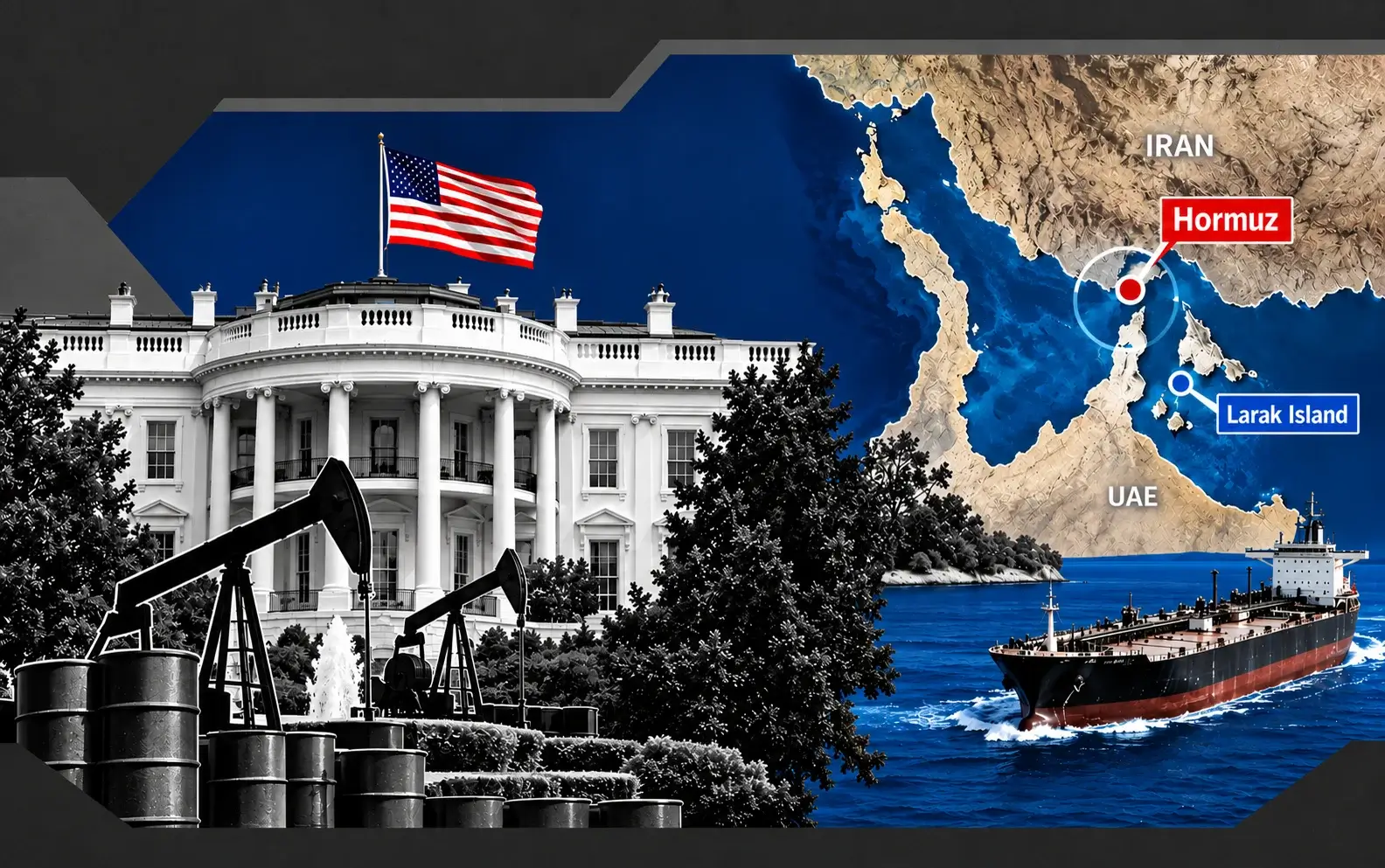
Oil is collapsing. West Texas Intermediate is trading near $76 a barrel and Brent near $78, both sliding for a fifth straight session and printing their lowest levels since early March. The decline is relentless and one-directional, driven by a single force: the market is front-running Friday's scheduled signing of a US-Iran peace agreement that would reopen the Strait of Hormuz and unleash a wall of supply onto a market that's spent three months pricing scarcity.
The move is a supply-shock unwind in real time. Crude rocketed higher when the US-Israeli conflict with Iran erupted on February 28, choking off the Strait of Hormuz — the chokepoint that handles roughly 20% of global crude and gas flows — and sending Brent to a peak above $113. Now the conflict is ending, and the same supply that vanished is about to come flooding back. Every session lower is the market unwinding the war premium, and the slide to three-month lows reflects a crowd convinced the barrels are coming.
The timing is loaded. The two nations are set to sign an interim deal in Switzerland on Friday, granting Tehran broad economic incentives including the immediate resumption of its oil exports, with tankers from other nations expected to resume transit through the Strait once the agreement takes effect. The signing lands two days after the Federal Reserve's rate decision and on the eve of the Juneteenth US market holiday — a compressed window of catalysts that's keeping the tape volatile and the bias lower.
The one-line thesis for the forecast: oil is in a supply-shock unwind, with WTI at $76 and Brent at $78 down roughly 40% from the conflict peak, and Friday's signing — not the Fed — is the catalyst that decides whether the disinflationary collapse extends toward $70 or the temporary, contested nature of the 60-day truce sparks a snapback. The entire move is about supply returning, and the only question is how fast and how durably.
The setup is a market in freefall, pricing a flood of barrels before they arrive, sliding into a signing that could either confirm the collapse or — if the deal proves fragile — reverse it violently. The catalyst is Friday.
The 40% Collapse From the Conflict Peak
To grasp the magnitude of the unwind, follow the round trip. Brent has fallen nearly 40% from its conflict peak, a collapse that's erased the entire war premium that built up over three months of fighting. The benchmark surged above $113 in March as the Strait of Hormuz seized up, hit $107.77 as late as May, and has now cratered toward $78 as the conflict winds down — one of the most violent commodity reversals in recent memory.
The peak was a genuine supply shock. When the conflict began on February 28, Iran effectively closed the Strait of Hormuz, with shipping traffic dropping over 95%, and the disruption rippled across the region — Iraq declared force majeure and cut nearly 1.5 million barrels per day of output, China told refiners to halt fuel exports, and the International Energy Agency compared the crisis to both 1970s oil shocks occurring simultaneously. Brent rallied more than 50% from the conflict's start, and analysts warned of $140 if the blockade held.
The collapse is the mirror image. As the US and Iran moved from stalemate toward a deal — through a series of fragile ceasefires, breached provisions, and renewed strikes that whipsawed prices through the spring — the war premium drained out. Brent suffered its worst month since the Covid pandemic in May, falling nearly 19%, and the slide has continued into June as the signing approaches. The 40% drop from the peak is the supply shock reversing as fast as it built.
The speed of the unwind reflects how much premium was in the price. Oil at $113 was pricing a prolonged blockade of 20% of global flows; oil at $76 is pricing a resolution that brings those flows back. The market has swung from extreme scarcity to anticipated surplus in a matter of weeks, and the violence of the move reflects the binary nature of the catalyst — either the Strait stays blocked and prices spike, or it reopens and prices crater. The market is betting on the latter.
For the forecast, the 40% collapse frames the setup. Oil has round-tripped from a war-premium peak to a three-month low, and the question is whether the unwind is complete or has further to run. With Friday's signing set to confirm the supply return, the bias is lower — but a 40% drop also means much of the bad news is priced, which is the setup for a snapback if the deal disappoints. The peak was scarcity; the trough is anticipated glut.
Friday's Signing: The Supply Unleash
The catalyst that's driving everything is the interim agreement set to be signed in Switzerland on Friday, and its terms are explicitly bearish for oil. The deal grants Tehran broad economic incentives, the centerpiece of which is the immediate resumption of Iranian oil exports — barrels that have been largely off the market since the conflict began, now set to return to global supply in one stroke. The signing is the trigger that converts the anticipated supply return into reality.
The mechanism is direct. Iran was a major exporter before the conflict, and its barrels vanishing from the market was part of what drove the price spike. Bringing them back — immediately, per the deal's terms — adds supply to a market that's already anticipating it, which is why prices have slid five straight sessions in front of the signing. The market doesn't wait for the barrels to physically arrive; it prices the supply the moment the deal looks certain, and Friday makes it certain.
The 60-day framework is the structure. The agreement is a 60-day memorandum of understanding that pauses hostilities and reopens the Strait pending future negotiations — an interim arrangement rather than a permanent settlement. That temporary nature is the source of the market's lingering caution: the deal brings barrels back now, but it's a contested, time-limited framework that could unravel, which is why shipping firms remain wary of its long-term durability even as they reposition for the reopening.
The timing creates a compressed catalyst window. The signing lands Friday, two days after the Fed's Wednesday decision and on Juneteenth — a US market holiday — which means the oil market will react to the signing with US markets closed, setting up potential gaps when trading resumes. The IEA also releases its monthly Oil Market Report today, and the EIA's crude inventory data lands the same day, stacking supply-side catalysts on top of the geopolitical one.
For the forecast, Friday is the decisive event. A clean signing that confirms the immediate resumption of Iranian exports and the Hormuz reopening extends the slide toward $70 and below; a deal that proves contested or delayed in implementation could spark a snapback as the market re-prices the supply that doesn't materialize as fast as expected. The signing is the catalyst that resolves the supply question, and the bias is lower into it.
The Strait of Hormuz Reopening
The single most important physical development is the reopening of the Strait of Hormuz, the chokepoint whose closure drove the entire price spike. The Strait handles roughly 20% of global crude and gas flows, and its de facto closure — with shipping traffic dropping over 95% since the conflict began — has now surpassed three months, the most severe disruption oil markets have faced. The deal's reopening of the Strait is what unlocks the supply flood.
The scale of the chokepoint cannot be overstated. One-fifth of the world's seaborne oil passes through the Strait of Hormuz, and its effective closure removed that capacity from the market, forcing buyers to scramble for alternatives and driving the price spike. Reopening it restores the single largest oil transit route on the planet, allowing not just Iranian barrels but the broader Gulf's output to flow freely again. The reopening is the supply unlock that dwarfs any single producer's contribution.
The reopening is already drawing a response. Tanker operators are repositioning vessels toward the region in anticipation of the Strait reopening once the agreement takes effect, a physical signal that the market expects the flows to resume quickly. When tankers start moving toward a chokepoint, it's a bet that the chokepoint is about to open — and the repositioning is the shipping industry pricing the deal before the ink dries.
The caution is the durability question. While tankers reposition, shipping companies remain wary of the arrangement's long-term stability, given the contested 60-day framework and the history of breached ceasefire provisions through the conflict. A reopening that proves partial or temporary — the kind some analysts have warned about, citing damaged infrastructure and ongoing security challenges — would limit the supply return and support prices. The reopening is the bullish-for-supply catalyst, but its durability is the bearish-for-supply risk.
For the forecast, the Hormuz reopening is the structural driver of the collapse. Restoring 20% of global flows is a massive supply addition that justifies the slide to three-month lows, and the tanker repositioning confirms the market expects it. The risk to the bearish thesis is a reopening that's partial or fragile — but with the signing set for Friday and tankers already moving, the bias is toward the supply returning. The Strait is the chokepoint, and it's about to open.
The Stranded Tankers and Iranian Barrels
Beyond the structural reopening, there's an immediate supply wall: the more than 100 oil-laden ships currently stuck in the Gulf. These tankers, loaded with crude but unable to transit the closed Strait, represent a pent-up supply that would hit the market the moment the Strait reopens — a flood of barrels released all at once, on top of the resumed production. The release of these stranded vessels is the near-term supply shock that's pressuring prices.
The dynamic is a coiled spring of supply. Over 100 tankers sitting full in the Gulf is inventory that's been removed from the market but not consumed — it's waiting to flow the instant the chokepoint clears. When the Strait reopens, those barrels move at once, adding a concentrated burst of supply that could overwhelm demand in the near term and accelerate the price decline. It's not just the resumed production; it's the backlog releasing simultaneously.
The Iranian export resumption compounds it. The deal's immediate resumption of Iranian oil exports adds Tehran's barrels to the stranded-tanker release and the broader Gulf reopening — three sources of supply hitting the market in a compressed window. Iran was a significant exporter before the conflict, and bringing its production back online, combined with the tanker backlog and the Hormuz reopening, is a supply wave that the market is pricing aggressively into the slide.
The refinery restocking adds another layer. Additional supplies from the region are expected to boost refinery inventories worldwide, as refiners that ran down stocks during the disruption rebuild them once the flows resume. That restocking demand provides some near-term support, but it's a one-time effect that fades once inventories normalize — and the underlying supply addition from Iran, the tankers, and the broader Gulf is the dominant force.
For the forecast, the stranded tankers and Iranian barrels are the immediate supply catalyst. The 100-plus ships releasing at once, plus resumed Iranian exports, plus the broader Hormuz reopening, is a concentrated supply flood that justifies the front-running slide to $76. The near-term risk is a glut as all three sources hit simultaneously, which is the bearish case for a move toward $70. The barrels are coming; the only question is the timing.
OPEC+, the UAE Exit, and the Supply Glut
The supply picture extends beyond Iran, and it's uniformly bearish. The market is also pricing higher OPEC+ export quotas and increased production from the UAE, which exited the cartel during the conflict — a structural addition to global supply that compounds the Iranian return. The combination of resumed Iranian exports, higher OPEC+ quotas, and the UAE's independent production ramp is a multi-source supply wave hitting the market at once.
The UAE exit is a significant structural shift. A major Gulf producer leaving OPEC during the conflict and ramping production independently removes a chunk of supply discipline from the market — the UAE no longer constrained by cartel quotas is free to pump at will, adding barrels outside the OPEC+ coordination framework. That's a lasting change to the supply landscape that pressures prices beyond the immediate Iran resolution.
The OPEC+ dynamic is the other shoe. The cartel cut output sharply during the conflict — OPEC production fell to its lowest level since June 2020 at the height of the disruption — and the unwinding of those cuts as the conflict resolves adds supply back. Higher export quotas mean the barrels that were held back during the crisis flow again, layering onto the Iranian return and the UAE's independent production. The supply discipline that supported prices during the conflict is reversing.
The glut risk is the cumulative effect. Stack the Iranian resumption, the stranded-tanker release, the UAE's independent production, and higher OPEC+ quotas, and the market faces a potential supply wave that could overwhelm demand — the renewed global oil surplus the IEA has warned about. A market that was pricing extreme scarcity at $113 could swing to pricing a glut, which is the bearish case for a sustained move lower toward and below $70.
For the forecast, the OPEC+ and UAE dynamics broaden the bearish supply story beyond Iran. The supply return isn't just one producer coming back; it's a coordinated unwinding of the conflict-driven cuts plus a structural shift from the UAE exit. That multi-source supply wave is the foundation of the slide to three-month lows and the case for further downside. The glut risk is real, and it's not just about Iran.
US Inventories and the Demand Picture
The one counterweight to the bearish supply story comes from the demand side and US inventories, which offer a mixed signal. Industry data showed US crude inventories declined by 8.3 million barrels last week — a substantial draw that suggests demand is holding up even as the supply outlook turns bearish. A draw of that size is a bullish data point that runs against the supply-glut narrative.
The inventory draw matters for the near-term balance. An 8.3 million-barrel decline means US refiners and consumers are pulling crude out of storage faster than it's being replenished, a sign of firm demand that provides some support beneath the price. If the draws continue, they could partially offset the supply wave from the Hormuz reopening, slowing the descent toward $70. The draw is the bulls' best near-term argument against the supply collapse.
But the demand outlook is clouded by the conflict's economic damage. The IEA has warned that the conflict may cause a larger-than-expected demand hit — the energy-price spike and economic disruption during the war dampened consumption, and the recovery in demand may lag the recovery in supply. Chinese imports of Saudi crude, for instance, are expected to decline sharply, reflecting weaker Asian demand. A supply flood meeting soft demand is the recipe for the surplus the IEA flagged.
The EIA's framework captures the uncertainty. The agency's recent outlook assumed the Strait would remain effectively closed into early summer with flows slowly resuming in the third quarter — a more cautious timeline than the Friday signing now implies. If the reopening happens faster than the EIA assumed, the supply addition hits sooner, accelerating the inventory builds and the price decline. The actual timing of the reopening versus the official forecasts is a key swing variable.
For the forecast, the demand picture is the mixed counterweight to the bearish supply story. The 8.3 million-barrel draw suggests demand is firm enough to provide some support, but the IEA's demand-hit warning and the soft Asian imports point to a market where supply returns faster than demand recovers. The balance tilts bearish — a supply wave meeting uncertain demand — but the inventory draws are the reason the slide could stall rather than crash.
The IEA and EIA Surplus Warnings
The major forecasting agencies have flagged the surplus risk, and their warnings frame the bearish case. The International Energy Agency cautioned that the conflict may cause a larger-than-expected demand hit and contribute to a renewed global oil surplus — a double bearish signal where supply returns while demand stays soft. The IEA's monthly Oil Market Report, released today, is a key catalyst for refining that view.
The surplus mechanism is straightforward. If supply floods back from the Hormuz reopening, the Iranian resumption, the stranded tankers, and the OPEC+ unwinding while demand lags due to the conflict's economic damage, the market swings into oversupply — inventories build, and prices fall to clear the excess. That's the surplus the IEA warned about, and it's the foundation of the bearish forecast for a move below $70.
The EIA's outlook reinforces it with caution. The agency noted Brent averaged $107 in May, down $10 from April in the first monthly decline since December 2025, and assumed the Strait would stay effectively closed into early summer with flows resuming in the third quarter. The agency also flagged that OECD inventories would not return to pre-conflict levels during its forecast period — a tighter picture than a full supply flood would imply, which is the nuance that complicates the pure-glut thesis.
The forecasts have been volatile, reflecting the conflict's uncertainty. During the conflict, the major banks raised their Brent forecasts — one prominent shop lifted its 2026 Brent projection to $85 from $77 citing extended supply disruptions — while the longer-term pre-conflict forecasts had pointed much lower on OPEC+ output increases. The wide range of forecasts captures the binary nature of the situation: extreme scarcity if the conflict persists, surplus if it resolves.
For the forecast, the agency warnings frame the bearish supply-glut case. The IEA's surplus warning and the prospect of supply returning faster than demand recovers point to further downside, with the WTI June range stretching down to $71.73. But the EIA's note that inventories won't fully normalize and the 8.3 million-barrel draw suggest the glut may be less severe than feared. The surplus risk is the dominant theme, but the picture is more nuanced than a straight collapse.
The Technical Map
The chart reflects the freefall. WTI at $76 has slid five straight sessions to its lowest level since early March, a relentless one-directional move that's broken through prior support and confirmed the downtrend. The price action is a clean descent driven by the supply-return thesis, with each session lower extending the unwind of the war premium. The trend is firmly down, and the momentum is bearish.
The support structure sits below current price. The first line is the recent lows near $75, with the June range floor at $71.73 marking the next significant support — the level that defines how far the supply-glut thesis can push prices in the near term. A break below $71.73 would open the door toward $70 and the low-$70s, levels that would reflect a full pricing of the supply flood. The descent has been orderly, but the supply catalysts ahead could accelerate it.
The resistance is overhead and well-defined by the downtrend. The recent breakdown levels around $78-79 (where Brent sits) and the prior congestion now act as resistance, with the pre-deal highs far above. For WTI, reclaiming the $79-80 zone would be the first sign the slide is stalling, while the conflict-era highs above $100 are a distant memory. The structure is a downtrend with resistance stacked above price — the opposite of the bullish alignment during the conflict.
Momentum is bearish but approaching stretched. A five-session slide to three-month lows is the kind of move that can become oversold in the near term, setting up the potential for a technical bounce — particularly if the Friday signing proves contested or the inventory draws continue. The market is pricing the supply return aggressively, and any disappointment on the deal's terms could trigger a sharp snapback off the oversold lows.
For the forecast, the technical map confirms the bearish bias with a snapback risk. WTI at $76 in a five-session downtrend targets $71.73 and then $70 if the supply flood materializes, but the stretched momentum and the contested-truce risk mean a bounce is possible if the deal disappoints. The trend is down; the catalyst is Friday; and the levels are $71.73 below and $79-80 above. The descent is orderly, but the supply catalysts could break it either way.
The Disinflation Read-Through to the Fed
Oil's collapse has a major macro consequence: it's the disinflationary force that's reshaping the Fed's calculus. The same crude that spiked CPI during the conflict is now cratering, and lower fuel prices are easing the inflation concerns that drove both the Fed and global central banks hawkish. Oil's decline is helping consumers and cooling the headline inflation that's been the central macro story of 2026.
The connection runs through energy's weight in inflation. The conflict's energy spike drove US CPI to 4.2% year over year, with energy prices up 23.5% over the trailing year — the primary driver of the hot inflation that flipped the Fed from pricing cuts to a 50.5% hike probability. Oil collapsing 40% from its peak reverses that energy contribution, which means the headline inflation that scared the Fed is starting to cool in real time. Lower oil is disinflationary, and disinflation is the argument for a less-hawkish Fed.
The timing creates a fascinating disconnect. The Fed prints its dot plot today based on the backward-looking May CPI that was driven by the now-collapsing energy prices, while oil keeps draining into Friday's signing. A committee that turns hawkish on stale energy data could be staring at materially lower fuel prices within 48 hours — a disconnect that complicates the hawkish case and gives the doves their best argument. The oil collapse may make the dot plot obsolete before the ink dries.
The read-through cuts the other way for oil itself, though. Oil is driven by the Iran supply story, not the Fed — the 2 PM dot plot matters far less for crude than Friday's signing. A hawkish Fed that strengthens the dollar would add modest downward pressure on dollar-priced oil, while a dovish one would ease it, but those are second-order effects compared to the supply flood from the Hormuz reopening. Oil is largely decoupled from the Fed; its catalyst is the deal.
For the forecast, the disinflation read-through is oil's macro significance rather than its driver. The crude collapse is easing the inflation the Fed is fighting, which is the strongest argument for a softer dot plot — but oil's own path depends on the supply story, not the rate decision. The Fed matters for the broader market and the dollar; Friday's signing matters for oil. The two catalysts are separate, and crude's bias is set by the barrels, not the dots.
Read More
-
Yen Stalls at 160 Despite a 3% JGB and Tokyo Core CPI at 2.0% — Intervention Sits at 164, Friday's Payrolls Decide
02.09.2026 · TradingNEWS ArchiveEnergy
-
CHAT Fund Holds $96.37 as Korean Memory and Chip Exposure Drive a 109.73% Year — Break of $98.02 Opens $105.20
18.09.2026 · TradingNEWS ArchiveStocks
-
First-Generation XRPR and XRPI Ride XRP's Rebound to $1.386 as Spot Funds Post First Outflow — Break of $1.40 Opens $1.54
18.09.2026 · TradingNEWS ArchiveCrypto
-
NG Holds $2.9255 as Storage Surplus Narrows From 5.5% to 3.7% in 3 Weeks — Break of $3.00 Opens $3.15
18.09.2026 · TradingNEWS ArchiveCommodities
-
Dollar Surges to 157.90 as BoJ's Divided Hike Fails to Lift the Yen — Break of 158.87 Opens 159
18.09.2026 · TradingNEWS ArchiveForex
The Durability Question: A Temporary, Contested Truce
The single biggest risk to the bearish thesis is the fragility of the deal itself. The agreement is a 60-day ceasefire framework that reopens the Strait, but it remains a temporary and contested arrangement rather than a full political settlement — and the conflict's history is littered with breached provisions, renewed strikes, and collapsed ceasefires that whipsawed prices through the spring. A deal that unravels would reverse the supply return and spark a violent snapback.
The history is a warning. Through the conflict, multiple ceasefires were declared and then breached — at one point a senior Iranian official stated three provisions of an agreement had already been violated, renewed strikes raised doubts about a truce's durability, and tanker traffic was repeatedly suspended after attacks. The path from conflict to resolution has been anything but linear, and the Friday signing is an interim step rather than a guaranteed peace. The market pricing a clean reopening may be underestimating the fragility.
The structural damage adds to the durability concern. Analysts have warned that even if the Strait reopens, the reopening may be partial — citing significant damage to infrastructure, refineries, and pipelines across the Gulf, depleted inventories, and ongoing security challenges for tanker traffic. A reopening that's slower or more limited than the market expects would mean less supply returning, supporting prices against the bearish thesis. The physical reality may not match the market's optimism.
The contested nature is the snapback catalyst. If the Friday signing proves fragile — if provisions are breached, if the reopening is partial, if security concerns keep tankers cautious — the supply that the market has priced wouldn't fully materialize, and crude could snap back violently off its oversold three-month lows. The market has front-run the supply return; any disappointment reverses that, and the move higher could be as sharp as the slide lower.
For the forecast, the durability question is the bull case and the primary risk to the bearish thesis. The market is pricing a clean, durable reopening, but the 60-day framework's contested nature, the conflict's history of breached deals, and the structural damage to Gulf infrastructure all argue the supply return could be slower or more fragile than expected. The bias is lower into Friday, but the snapback risk if the deal disappoints is the reason the collapse isn't a sure thing.
The Two Roads Out of Friday
The forecast resolves into a clean binary centered on Friday's signing. The bearish road: the deal is signed cleanly, the Strait reopens, Iranian exports resume immediately, the 100-plus stranded tankers release, and the OPEC+ and UAE supply additions hit the market. That outcome extends the slide through $75 toward the $71.73 June floor, with a break there opening $70 and the low-$70s as the supply glut overwhelms demand. The IEA's surplus warning materializes, and crude continues its descent.
The bullish road: the signing proves contested, delayed, or partial — provisions get disputed, the reopening is slower than expected, security concerns keep tankers cautious, or the structural Gulf damage limits the supply return. That outcome, combined with the oversold technical condition and the 8.3 million-barrel inventory draw, sparks a snapback off the three-month lows, with crude bouncing toward the $79-80 resistance and potentially higher if the deal genuinely unravels. The war premium that drained out would partially return.
The probability lean tilts bearish on the supply story. The signing is scheduled, tankers are repositioning, and the multi-source supply wave — Iran, stranded tankers, OPEC+, UAE — is a powerful downward force that's already driven five straight sessions lower. The base case is the supply returns and crude grinds toward $70. But the durability risk is real, and the conflict's history of breached deals means the snapback scenario carries genuine weight.
The wildcard is the implementation timing. Even if the deal is signed Friday, the actual pace of the supply return — how fast the Strait reopens, how quickly Iranian barrels flow, whether the stranded tankers release smoothly — determines how far and fast prices fall. A faster-than-expected reopening accelerates the decline; a slower one supports prices. The signing is the catalyst, but the execution over the following weeks is what sets the trajectory.
The Levels That Decide the Next Move
The map into Friday is precise. On the downside, the recent lows near $75 are the first support, the June range floor at $71.73 is the critical level that defines how far the supply-glut thesis can push, and $70 is the psychological line below that — the level that would reflect a full pricing of the supply flood. A clean Friday signing that unleashes the barrels targets $71.73 and then $70.
On the upside, the $78-79 zone where Brent sits and the $79-80 area for WTI are the first resistance, with the prior breakdown levels stacked above. A snapback driven by a contested deal could push crude toward those levels and higher if the truce genuinely unravels. The conflict-era highs above $100 are far above and would only come back into play if the deal collapses entirely and the Strait re-closes — a tail risk, not a base case.
The catalysts to watch beyond Friday: the IEA Oil Market Report released today refines the demand and surplus outlook, the EIA crude inventory data shows whether the draws continue, and the Baker Hughes rig count on June 18 signals US production trends. The compressed calendar — Fed Wednesday, IEA and EIA data, signing Friday, Juneteenth holiday — means the market will digest multiple catalysts in a short window, with potential gaps when US trading resumes after the holiday.
The macro read-through stays constant: oil's collapse is the disinflationary force easing the inflation the Fed is fighting, which matters for the broader market and the dollar even though it's not crude's own driver. Oil is largely decoupled from the 2 PM dot plot; its fate rests on Friday's signing and the pace of the supply return. The Fed sets the macro tone; the deal sets the oil price.
The bottom line for the forecast is unchanged from the open: oil is in a supply-shock unwind, with WTI at $76 and Brent at $78 down 40% from the conflict peak at three-month lows, and Friday's signing — not the Fed — is the catalyst that decides whether the disinflationary collapse extends toward $70 or the contested 60-day truce sparks a snapback. The barrels are coming: Iranian exports, 100-plus stranded tankers, OPEC+ quotas, UAE production. The only questions are how fast and how durably. The supply wave is real, the bias is lower, and the snapback risk lives entirely in whether the deal holds.