Oil Price Forecast: Brent Crude Powers to $103.80 and WTI Hits $97.60 as Trump Slams Iran Offer
Brent up 2.50%, WTI up 2.28% after "TOTALLY UNACCEPTABLE" Truth Social post | That's TradingNEWS
Key Points
- Brent (BZ=F) at $103.80 +2.50%, WTI (CL=F) at $97.60 +2.28% after Trump rejects Iran peace offer.
- Aramco warns recovery slips into 2027; 1B barrels of seaborne supply lost as Hormuz stays shut.
- US diesel inventories at lowest since 2005; China cuts imports 5.5M bpd to absorb global shock.
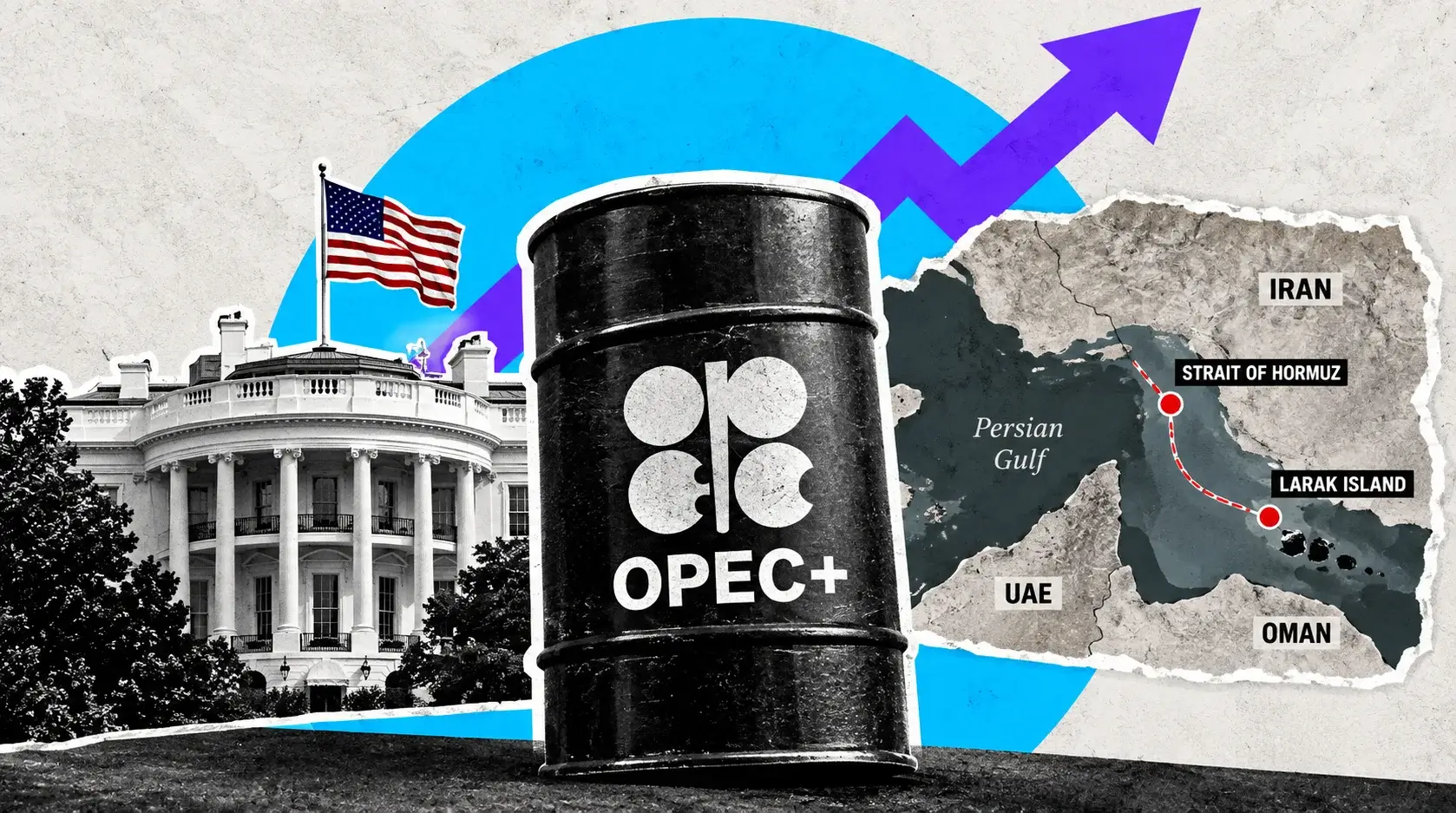
Oil markets opened the new trading week with a sharp upside repricing, with Brent crude (BZ=F) changing hands at $103.80 per barrel — up 2.50% or $2.53 — after briefly piercing $105.94 in the overnight session, and WTI (CL=F) at $97.60 advancing 2.28% or $2.18 with Asian-hour prints crossing $98.62 before the move settled. The Fortune retail benchmark placed Brent as high as $107.67 per barrel at the 8:55 AM Eastern read, up 48 cents from Sunday's $107.19 print, with the trailing-month gain of 11.64% and a twelve-month return of 66.33% reflecting the magnitude of what has become a structural Middle East supply shock rather than a tactical price spike. Murban crude added 3.72% to $102.50, WTI Midland advanced 1.63% to $99.64, the Indian Basket cratered 8.85% to $102.50, and the OPEC Basket fell 4.10% to $107.70 — the divergence between regional grades telegraphs precisely the kind of pricing dislocation that historically marks the back end of an extended supply disruption rather than the opening salvo of a new one. Natural gas exploded 5.37% to $2.905, gasoline futures climbed 2.34% to $3.609, and heating oil added 1.56% to $3.960, each move reflecting the same energy-shock transmission running through the entire complex. The catalyst is unambiguous — Trump's flat rejection of Iran's revised peace framework as "TOTALLY UNACCEPTABLE" on Truth Social Sunday evening crushed any optimism that had been priced in over the past week and forced traders to re-embed the full Hormuz risk premium back into the curve.
Tehran's Counteroffer and Why the Strait of Hormuz Clause Killed the Deal
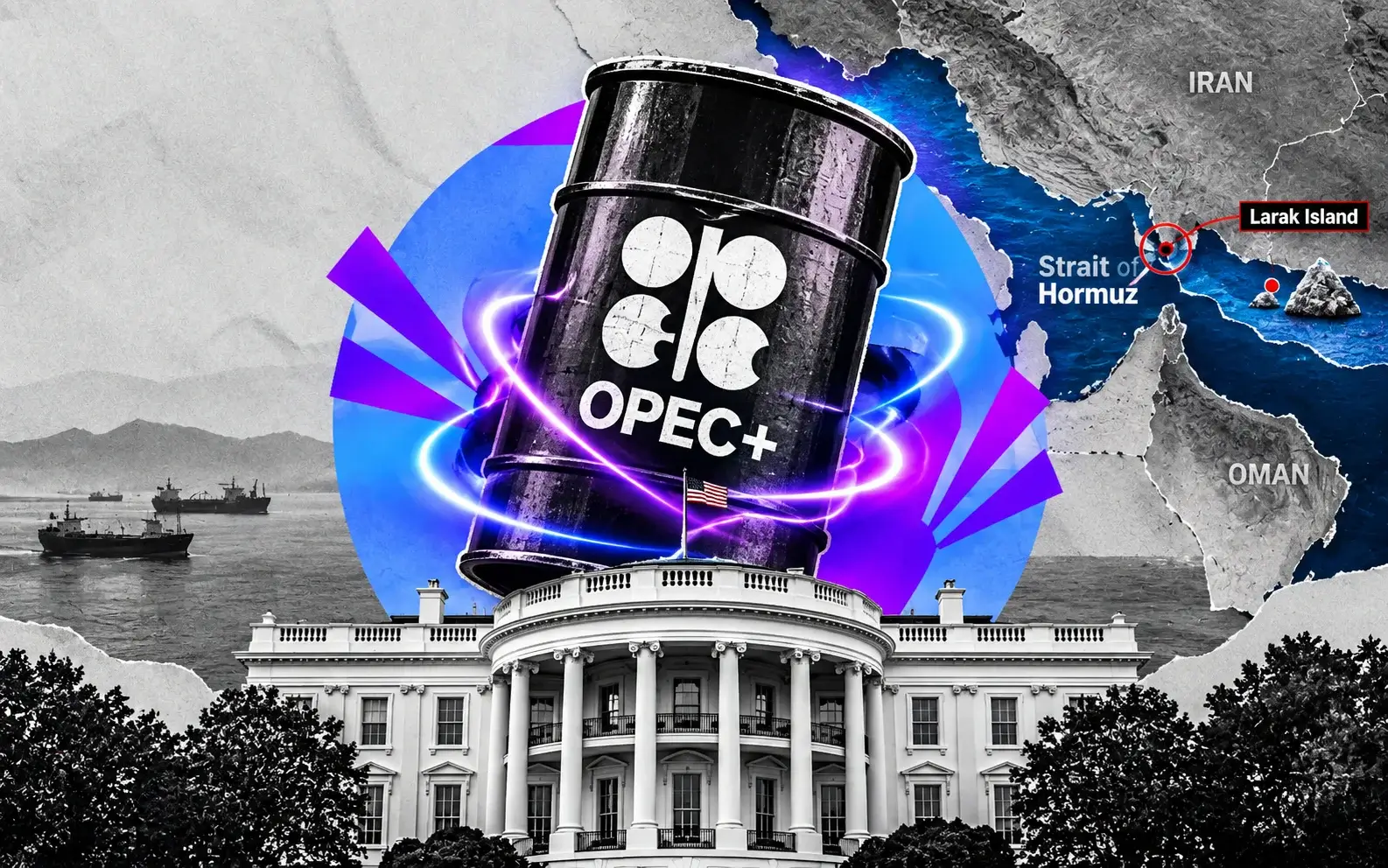
Iran's revised framework, transmitted via Pakistan acting as a mediator between Washington and Tehran, demanded three terms that crossed every American red line simultaneously. The package called for an immediate end to the war on all fronts, lifting of the US naval blockade combined with recognition of Iranian sovereignty over the Strait of Hormuz, suspension of US-Israeli military operations against Iran, and compensation for war damage. Trump's social-media verdict landed within hours: "I have just read the response from Iran's so-called 'Representatives.' I don't like it — TOTALLY UNACCEPTABLE." Washington's own terms had centered on restoration of free transit through the Strait of Hormuz and suspension of Iranian nuclear enrichment, per Axios reporting. Israeli Prime Minister Benjamin Netanyahu compounded the deadlock by stating the war with Iran will not be over until its enriched uranium stockpiles are "taken out" — a condition Tehran considers categorically unacceptable. The ceasefire that began on April 8 had been mostly observed despite occasional fire exchanges, and on April 21 Trump extended the truce indefinitely to give Iran time to present a "unified proposal." That window has now closed, and the market is repricing for the possibility of renewed kinetic operations rather than a diplomatic resolution. Earlier on Sunday, Trump had accused Iran of "playing games" with delay tactics, suggesting his patience was wearing thin — and the Monday tape is the market's first attempt to price what comes next as the geopolitical calendar shifts toward Trump's Beijing visit on Wednesday, where Iran and Chinese influence over the Strait will sit at the top of the bilateral agenda.
Why Prices Are Not Higher Despite the Largest Supply Shock in History
The bizarre puzzle confronting every oil desk on the street is why Brent (BZ=F) is trading at $103.80 rather than $130-$150 given that nearly 1 billion barrels of seaborne supply have been lost since the Strait of Hormuz closed roughly 10 weeks ago. Morgan Stanley analyst Martijn Rats laid out the two structural reasons in a Monday client note that sits at the top of every active commodity desk's reading list. First, the United States has cranked up exports aggressively — average seaborne net exports of crude and refined products from the big-seven Middle East producers (Saudi Arabia, UAE, Kuwait, Iraq, Iran, Qatar, Bahrain) have collapsed year-on-year by 12.3 million barrels per day over the past 30 days, but other producers have collectively added 5.5 million barrels per day to offset that loss. The US alone accounts for an extra 3.8 million barrels per day, with net seaborne exports jumping from 5.2 million a year ago to 8.9 million today. That single-country contribution easily eclipses every other producer combined — Canada at 0.4 million extra barrels per day, Russia at 0.2 million fewer barrels, and Argentina, Venezuela, Guyana, Colombia, and Norway each adding 0.2 million or fewer. Second, China has slashed imports, with net seaborne imports falling from approximately 14 million barrels per day a year ago to 8.5 million today — a 5.5 million barrel adjustment that Morgan Stanley describes as "remarkable" and "the single most important component of the puzzle." Combined, the US export response and Chinese demand restraint have buffered the market by 4.1 million barrels per day in excess of the 6.8 million net contraction of seaborne export supply estimated by the bank. That arithmetic is precisely why WTI (CL=F) has not yet broken to $130 even as the supply math screams for it.
The China Inventory Question That Will Determine the Next $20
Beijing's behavior over the past 10 weeks has been the single variable holding Brent (BZ=F) below $130 despite a supply backdrop that would historically demand triple-digit prints at the upper end of the range. Chinese reduced imports do not reflect a refusal to take cargoes from term suppliers — state-trading houses have continued accepting their term allocations but immediately re-offered those cargoes spot in the Atlantic basin instead of routing them East. The flow of cargoes initially sold to Chinese players is actually rising, not falling, but they are getting sold on to other buyers, usually before ever leaving Africa. Morgan Stanley calls this "the textbook signature of inventory-driven destocking by sophisticated traders" — the supplier relationship is preserved but the trader stops adding to its own position. Satellite data on floating roof tanks suggests China entered the conflict with above-normal inventories, and the same data indicates inventories have recently continued building, though that read is hard to reconcile with the 5.5 million barrels per day decline in net imports — Morgan Stanley assumes some swap from underground caverns into floating roof tanks may explain the apparent discrepancy. Critically, the bank estimates China entered 2026 with 1.0-1.5 billion barrels of crude in storage, plus refined product inventories — meaning Beijing could sustain the current import-restraint posture for months, possibly through the balance of the year, even if inventories are drawing at several million barrels per day. The flip side carries the asymmetric upside risk: if Chinese buffers do begin to exhaust before Hormuz reopens, China and other Asian buyers will return to spot crude markets with no Middle East 7 supply still available to find, triggering the demand-destruction regime that maps to Brent at $130-$150. Dated Brent already reached $141 briefly on April 6 — the level is not a hypothetical, it is a recent print waiting to be revisited.
The US Export Valve and the Inventory Drawdown That Threatens the Buffer
The US export response has been the second pillar holding down the global crude tape, but the underlying inventory dynamics are getting visibly stressed. Domestic crude production has not grown meaningfully recently, which means the export increase is overwhelmingly coming from inventories including the Strategic Petroleum Reserve. EIA weekly data show diesel inventories at the lowest level for the time of year since 2005, gasoline inventories below the five-year seasonal range after sitting above it earlier this year, and crude oil stocks drawing meaningfully across the back half of April and into early May. US fuel exports hit a record high last week, the kind of throughput that puts visible pressure on the storage cushion that has been buffering American consumers from the global price shock. Morgan Stanley's base case assumes the Strait reopens before US inventories require curtailment of exports, with a June reopening followed by 70% of pre-conflict flows restored by the end of August and full recovery by November. If that base case slips — if a Hormuz reopening drifts into late June or July — WTI (CL=F) would need to be priced to "stay at home," which mechanically pulls the WTI-Brent spread wider and forces additional regional crude grades to find absorption buyers at progressively higher prices. The export valve remains open today, but the bank explicitly notes the ability to maintain elevated export levels is "hard to gauge but appears under more pressure." Tankers stranded once again after Trump called off "Project Freedom" earlier last week, with another report suggesting Trump may now be weighing restarting Project Freedom with an expanded scope — the policy oscillation itself adds volatility to the export thesis.
Aramco's Verdict on the Recovery Timeline and the Pipeline Pivot
Saudi Aramco CEO Amin Nasser delivered the most consequential single voice on the recovery question over the weekend, warning that the ongoing energy supply shock is the largest the world has ever experienced and continued Hormuz disruption could delay full oil market normalization into 2027. Speaking on a Monday analyst call, Nasser said the longer the supply disruptions continue — "even for another few more weeks" — the longer the time required for the market to rebalance and stabilize. The market is losing roughly 100 million barrels of oil for every week the maritime chokepoint remains closed, Nasser said, with only two to five vessels now crossing the Strait daily compared to approximately 70 before the conflict began. Even if the Strait opens today, it will still take months for the market to rebalance — meaning the structural tightness that has held Brent (BZ=F) above $100 for months has a durability that the daily headlines do not always reflect. Aramco has ramped up its East-West pipeline to its expanded capacity of 7.0 million barrels per day to divert crude from production heartland to the Red Sea port of Yanbu, which Nasser explicitly called a "critical lifeline" for global supply. The financial transmission into Aramco's own earnings has been dramatic — adjusted net income rose nearly 26% in Q1 2026 to $33.6 billion, beating analyst expectations of $31.16 billion, with revenue climbing 7% to $115.49 billion. Net income rose 25% year-on-year to $32.04 billion versus $25.51 billion in Q1 2025, and on a quarterly basis net income jumped 72.9% from Q4 2025's $18.53 billion to $32.04 billion. Cash flow from operating activities totaled $30.7 billion, free cash flow reached $18.6 billion versus $19.2 billion a year earlier, and the board declared a $21.89 billion base dividend in line with the sustainable distribution strategy. Aramco shares rose 0.8% after the print to SAR27.42, and the company maintained a strong capital structure with gearing at 4.8% versus 3.8% at the end of 2025 and return on average capital employed of 20.7%. The $3 billion share buyback announced in March reflects management confidence in long-term cash generation capacity.
Russia's Fossil Fuel Tape and the Sanctioned Shadow Fleet Hitting Record Share
Moscow's energy export complex is delivering its own record-breaking print even as Western sanctions tighten around the periphery. Russia's fossil fuel export revenues climbed 4% month-on-month to EUR 733 million per day in April 2026 — the highest revenues in two and a half years — despite a 7% drop in export volumes, per the Centre for Research on Energy and Clean Air. The composition tells the durable story: Russian crude oil export revenues fell 9% month-on-month to EUR 374 million per day, but that monthly decline still left April's revenues 68% higher than February 2026 and 44% higher than April 2025. The dip in crude revenues was driven by a 24% month-on-month drop in seaborne crude export volumes following Ukrainian drone strikes targeting Russia's export infrastructure. Pipeline crude exports rebounded 36% as flows through the Druzhba pipeline to Hungary and Slovakia resumed on April 23 after almost three months of inactivity, delivering EUR 27 million per day in revenue. LNG revenues exploded 25% to EUR 58 million per day, with China and Japan absorbing the displaced EU volume — China's Russian LNG imports surged 32% month-on-month to EUR 379 million, and Japan's jumped 57% to EUR 163 million. Pipeline gas export revenues climbed 15% to EUR 82 million per day even as export volumes dropped 7%, with the European market price up 24% year-on-year handing Russia higher earnings on lower volumes. Seaborne oil products generated a 32% revenue jump to EUR 173 million per day on just a 9% volume increase, and coal added 5% to EUR 45 million per day on a 3% volume rise. Early Mineral Extraction Tax revenues based on Russia's $93 per barrel Urals reference price put Kremlin earnings at EUR 7.8 billion for April alone — and the April average Urals price actually climbed 19% month-on-month to $112.30 per barrel, more than double the updated EU and UK price cap of $44.10 per barrel that took effect on February 1, 2026.
The Shadow Tanker Architecture That Cannot Be Disrupted
April 2026 set a new structural record — sanctioned "shadow" tankers were responsible for 54% of Russia's fossil fuel exports, the highest share ever recorded, up sharply from 48% in March. G7+ tankers transported a further 38% of volume, with the remainder carried by non-sanctioned shadow tankers. For crude specifically, sanctioned shadow tankers carried 69% of Russian crude exports, G7+ tankers 23%, and non-sanctioned shadow vessels 8%. The oil products picture inverts the relationship — G7+ tankers transported 67% of Russian oil products in April, with sanctioned shadow tankers handling 26% and non-sanctioned shadow vessels 7%. The false-flag picture deserves attention — 47 shadow vessels were operating under false flags at the end of April, with 16 of them (34%) apparently idle having not loaded any cargo in over six months. Five vessels delivered EUR 236 million of Russian crude and oil products while flying false flags in April, with eight of the 47 false-flag vessels most recently loading Iranian rather than Russian cargo, telegraphing the shared infrastructure servicing both sanctioned oil trades. Total Russian fossil fuel exports in April moved through 346 vessels — 218 G7+ owned or insured tankers and 128 shadow tankers — with 42% of the shadow fleet (54 vessels) at least 20 years old. The cleanup and compensation cost from a potential oil spill by aged tankers with dubious insurance could exceed EUR 1 billion for coastal taxpayers per the CREA risk assessment. The Swedish Coast Guard boarded and detained the UK and EU sanctioned shadow tanker Flora 1 on April 3 after authorities traced a 12-kilometre oil spill in the Baltic Sea to the vessel, though it was released the following day after no conclusive evidence linked it to the spill.
Read More
-
Yen Stalls at 160 Despite a 3% JGB and Tokyo Core CPI at 2.0% — Intervention Sits at 164, Friday's Payrolls Decide
02.09.2026 · TradingNEWS ArchiveEnergy
-
Dell Rebounds to $565.86 as a $95 Billion AI Backlog Meets 22x Forward Earnings — $595 High in Sight
25.09.2026 · TradingNEWS ArchiveStocks
-
XRP-USD ($1.53) Outperforms as ETF Inflows Return, but August Buyers Guard $1.60 — $1.70 Upside vs. $1.25 Floor
25.09.2026 · TradingNEWS ArchiveCrypto
-
Brent Holds $105 While WTI Heads for a 7% Weekly Loss as a 3M-Barrel Build and a Diesel Ban Threat Split the Market
25.09.2026 · TradingNEWS ArchiveCommodities
-
S&P 500 Gains 0.22%, Nasdaq Tops 27,000, Dow Up 0.40% on MSFT Launch and AKAM Deal
25.09.2026 · TradingNEWS ArchiveMarkets
-
Sterling Slides to 1.3216 as a Divided Bank of England Trails the Fed — 1.3424 Upside vs. 1.3000 Risk
25.09.2026 · TradingNEWS ArchiveForex
Who Is Actually Buying Russian Crude and the China Concentration
China remained the largest global buyer of Russian fossil fuels in April 2026, accounting for 41% (EUR 7.3 billion) of Russia's export revenues from the top five importers. Crude oil made up 75% of China's purchases at EUR 5.5 billion, followed by pipeline gas at EUR 565 million, oil products at EUR 528 million, and coal at EUR 348 million. China's imports of Russia's Sokol grade crude saw a 36% month-on-month rise — the highest volume in over two years — even as total Chinese seaborne crude imports fell 25% month-on-month. The Dalian refinery imported Russian crude for the first time since September 2025, restarting what had previously been the largest Chinese processor of Russian feedstock. India was the second-largest buyer at EUR 5 billion total, with crude oil constituting 90% of purchases at EUR 4.5 billion. The IndianOil Vadinar refinery increased Russian imports by 87% even as the Vadinar and Jamnagar refineries decreased their Russian feedstock by 92% and 38% respectively due to maintenance-related shutdowns. The state-owned Visakhapatnam refinery resumed Russian imports in March after stopping in November 2025, with April purchases rising 149% month-on-month. Turkey ranked third at EUR 3 billion, with pipeline gas at EUR 1.2 billion, oil products at EUR 1.1 billion, crude at EUR 505 million, and coal at EUR 169 million. The EU was fourth at EUR 1.7 billion despite the introduction of REPowerEU Regulation 2026/261 banning spot-market LNG purchases from April 25, and Saudi Arabia was fifth at EUR 683 million entirely in oil products imports. France was the EU's largest individual importer at EUR 413 million of Russian LNG, followed by Hungary at EUR 380 million, Belgium at EUR 363 million, Slovakia at EUR 228 million, and Spain at EUR 181 million — with Spain's imports collapsing 56% month-on-month after halving its imports following the REPowerEU implementation.
The Refining Loophole and the Eight Shipments That Slipped Through
Despite the EU's ban on imports of oil products made from Russian crude that took effect January 21, 2026, eight shipments of refined products from refineries running on Russian crude — flagged as high risk under EU guidance — were unloaded at EU ports in April. Seven shipments came from Turkish refineries and one from Georgia. Cyprus received four of the shipments, with Italy, the Netherlands, Romania, and Spain each receiving one. Refineries using Russian crude in India, Turkey, Brunei, and Georgia exported EUR 760 million of oil products to sanctioning countries in April, with EUR 145 million heading to the EU, EUR 399 million to Australia, and EUR 216 million to the US. An estimated EUR 232 million of those products were refined from Russian crude. The Hengyi refinery in Brunei saw a 16% rise in Russian crude imports and exported two shipments of diesel valued at EUR 76 million to Australia in April. As much as 64% of the SOCAR-owned STAR refinery's feedstock and 14% of Jamnagar's came from Russia. The Kulevi refinery in Georgia has run exclusively on Russian crude with no shipments of non-Russian crude — and continued exporting refined products to the EU after the ban took effect, narrowly escaping addition to the EU sanctions list in March. The 30% month-on-month decline in exports from these refineries to sanctioning countries reflects tightening enforcement, but the structural loophole remains active and the EU's 20th sanctions package adopted in April only established the basis for a future maritime services ban contingent on agreement from G7 and Price Cap Coalition members.
Demand Destruction and the Modi-Led Conservation Push
The demand-side response to crude above $100 is finally beginning to show measurable signs of activation. Indian Prime Minister Narendra Modi urged citizens to work from home and limit foreign travel to reduce fuel consumption and save foreign exchange — austerity measures Modi explicitly framed as a response to the prolonged Iran conflict. Modi also called for Indians to refrain from buying gold for at least a year to ease rupee pressure tied to import flows. India's headline inflation accelerated as high energy prices began biting through the broader consumer basket. China's consumer prices rose 1.2% year-on-year in April per the National Bureau of Statistics — driven by surging oil costs and increased holiday travel demand — while the producer price index jumped 2.8% year-on-year, beating the Bloomberg forecast of 1.8% and marking the quickest pace since July 2022. Domestic Chinese gas prices rose 19.3% year-on-year on international commodity price fluctuations. Chinese car sales slumped as gasoline demand cratered, the first visible behavioral demand response of the cycle. South Korean airlines cut flights amid soaring oil prices, Lufthansa warned the Strait closure will add $2 billion in fuel costs, Germany has sought Israeli jet fuel as Hormuz disruptions cripple airline operations, global jet fuel exports hit a 10-year seasonal low in April, and global coal demand surged as the Middle East energy crisis deepens — the demand destruction map is becoming more visible session by session.
Tuapse Refinery Strikes and the Russian Refined Product Collapse
A specific operational data point matters for the global refined product balance — Ukrainian drone strikes have driven a 65% year-on-year drop in oil product export volumes between January and April 2026 from the Rosneft-owned Tuapse refinery, which was Russia's fifth-largest export installation for refined fuels in 2025 at 8% of total seaborne exports. The refinery exported EUR 4.7 billion of oil products in 2025, predominantly diesel and gasoil, with shipments collapsing after the December 30, 2025 drone strikes hit transport pipelines, loading terminals, and the central processing unit. Drone strikes intensified again on April 16, with repeated attacks on April 20, April 28, and May 1 — each strike forcing fires, refinery shutdowns, heightened inspections and security checks, increased insurance costs, and tanker-loading delays. The composite effect on global refined product availability has been one of the structural reasons heating oil futures climbed 1.56% to $3.960 and diesel inventories sit at the lowest seasonal level since 2005. The continuing degradation of Russian refining capacity through Ukrainian drone strikes represents the most underrated supply variable in the entire complex, because every barrel of crude that cannot be refined inside Russia must be exported as crude rather than higher-margin refined product, which compresses Russian export economics even when crude prices are high.
The European Power Market and the Clean Energy Buffer
The transmission of the oil shock into European electricity markets has been meaningfully softer than the 2022 episode, and the magnitude is worth quantifying. Dutch TTF gas prices rose 68% to EUR 52.8/MWh within two days of the February 28 conflict initiation, but the EU is now projected to save EUR 5.8 billion in electricity costs in 2026 as clean energy deployment displaces expensive gas-fired generation. In 2025, every EUR 1/MWh rise in gas prices increased EU electricity prices by EUR 0.37/MWh — an 8% reduction in sensitivity versus 2022. Clean energy generation in the EU rose 28% on average versus pre-crisis levels, and the bloc's cleanest energy mixes (Denmark, Finland, France, Sweden, Slovakia) will save up to EUR 8.5 billion on electricity bills in 2026 — 58% more than the five countries with the dirtiest mixes (Poland, Italy, Greece, Estonia, Netherlands). Spain and Portugal cut gas-price sensitivity by 53% through a 21% increase in clean energy generation since 2022, including a 74% rise in solar output. Poland's gas-fired power generation rose 132% between 2022 and 2025, contributing to an 87% increase in electricity price sensitivity to gas markets — an outlier that demonstrates how policy choices on the energy mix translate directly into vulnerability to crude shocks. Hungary also recorded rising exposure despite rapid solar growth, with insufficient grid infrastructure and flexibility constraints forcing continued reliance on gas-fired generation to stabilize electricity systems. Europe's renewable-plus-battery market is set to quintuple by 2030, per Monday reporting, which would meaningfully extend the buffer that has shielded EU consumers from the worst of the oil-driven inflation transmission.
Major Oil Producer Earnings and the Trading Windfall
The corporate earnings tape has confirmed the upside transmission across the integrated complex. BP reported Q1 profits more than doubled, Shell announced earnings jumped, and Europe's oil majors collectively reaped up to $4.75 billion from trading on Iran war volatility. Crude output by OPEC fell by 830,000 barrels per day month-on-month in April to 20.04 million bpd per a Reuters survey. The first LNG tanker has now broken the Hormuz blockade, the first oil tanker reached South Korea through Hormuz since the war began, and Japan received its first Central Asian crude since the conflict initiated — incremental positives that have so far been insufficient to materially shift the structural supply picture. Iran has cut oil production as exports collapsed under sustained pressure from the US naval blockade, with the US Energy Secretary confirming the production reduction in weekend remarks. A $7 billion oil bet on the conflict outcome is now under investigation, reflecting the magnitude of speculative positioning that has built up around the Hormuz reopening question. Pakistan rejected LNG bids as its energy crisis deepened, plastics crisis hit Asia as oil crunch reverberated through petrochemical feedstock costs, and Australia ordered LNG exporters to reserve 20% of gas for the domestic market — each headline a discrete tell on how the supply shock is propagating through downstream industries.
The Trump-Xi Summit and the Beijing Variable
The single most consequential near-term catalyst sits in Trump's Beijing visit on Wednesday, where Iran sanctions, trade frameworks, semiconductor export controls, and global energy security will dominate the bilateral agenda. The question that every oil desk is now modeling is whether Beijing will leverage its influence over Tehran to broker a Hormuz reopening, and whether China will accept the kind of trade concessions Trump is reportedly pushing in exchange. The US has hit Iran-flagged oil tankers while peace talks continued, Iran has seized a tanker carrying its own oil, and the US blockade of Hormuz holds firm under pressure — each operational data point making the Trump-Xi meeting more consequential rather than less. The base case across the major sell-side desks is that a Hormuz reopening in June with US and Chinese buffers still partly intact represents the most probable path, with the bearish risk being a closure that extends into late June or July and forces Brent (BZ=F) to "do work it has so far been able to avoid" — namely sustained pricing in the $130-$150 zone that triggers demand destruction. The cleanest tactical playbook for active commodity desks heading into the Beijing summit is to monitor whether Trump emerges from the meeting with credible Chinese commitments on reopening logistics, whether the US export buffer can hold through the inventory drawdown, and whether Chinese inventory destocking continues to absorb the supply shortfall or finally begins to require spot-market re-engagement.
The Sanctions Architecture and the Price Cap That Stopped Working
The G7+ oil price cap policy has visibly failed to impose a durable constraint on Russian crude export earnings, working only briefly and selectively for Urals while leaving other grades and export channels largely unaffected. Urals prices have dipped below the original $60 per barrel cap level — now lowered to $44.10 per barrel as of February 1, 2026 — for only short periods, while ESPO crude has consistently traded well above the cap due to its structural orientation toward China and Pacific markets. The CREA recommendation to lower the cap to $30 per barrel — still well above Russia's $15 average production cost — would have slashed Russian oil export revenue by 38% (EUR 184 billion) from the start of EU sanctions in December 2022 through April 2026, and in April alone a $30 cap would have cut revenues by 47% (EUR 7 billion). The maritime services ban being negotiated would be the first sanctions tool to target Russian export volumes rather than just prices, but the massive spike in crude prices following the Hormuz closure has forced a policy rethink to avoid additional supply crunches. The current $44.10 cap, if fully enforced in April, would have reduced revenues by 46% (approximately EUR 6.7 billion) — meaning the gap between policy ambition and enforcement reality remains the binding constraint. Attestation fraud, where opaque trading entities in the UAE and Hong Kong underreport prices to maritime insurers and vessel owners who lack direct access to pricing data, has emerged as the central enforcement failure point.
The Iran Production Math and the OPEC Spillover
Iran has cut oil production as exports collapsed under sustained pressure from the US naval blockade, the US Energy Secretary confirmed in weekend remarks. The OPEC production cut of 830,000 barrels per day month-on-month to 20.04 million bpd in April reflects the same Iran disruption working through the cartel's collective output. The first Mexican fuel oil cargo in 9 months arrived in Asia, the first oil tanker reached South Korea through Hormuz since the war began, and Japan received its first Central Asian crude — each shipment a discrete signal that supply rerouting is occurring even as the headline blockade holds. More than 40 India-bound ships remain trapped near Hormuz, with the operational gridlock contributing to the supply shortfall that the US export response has been partially offsetting. Oil tankers are now going dark to exit the Strait of Hormuz, a behavior that reflects the desperation of operators to extract vessels from a maritime environment with no commercial throughput. Iraq denied a US claim that a deputy minister helped Iran's oil sales, the US has cracked down on Iraq oil links to Iran, and a Chinese firm has taken US banks to court over a pre-sanction payment freeze — the legal and diplomatic infrastructure around the sanctions enforcement architecture is straining under the pressure of an extended supply disruption.
Where the Tape Sits as the Beijing Summit Approaches
The structural setup for Brent (BZ=F) at $103.80 and WTI (CL=F) at $97.60 is wedged between two scenarios with materially different price targets. The base case sees the Strait of Hormuz reopen in June with US and Chinese buffers still partly intact, 70% of pre-conflict flows restored by August, and full recovery by November — a trajectory that would compress Brent back toward the $80-$90 range as the supply shock unwinds and Aramco's predicted 2027 normalization timeline shortens. The bull case for crude — and the bear case for global growth — sees Hormuz remain closed into late June or July, US inventory buffers exhaust forcing WTI to "stay at home," Chinese inventory destocking finally requiring spot-market re-engagement, and the demand-destruction regime forcing Brent toward the $130-$150 zone with refined product prices targeting the demand-destruction signal. Dated Brent's April 6 print at $141 confirms the level is operationally reachable rather than theoretical. The OPEC Basket at $107.70 already trades meaningfully above WTI, reflecting the regional grade dislocation that an extended closure produces. The clean tactical posture for the coming sessions is to monitor whether the Trump-Xi summit delivers credible Chinese commitments on reopening logistics, whether US diesel inventories continue to drain through the lowest seasonal level since 2005, whether Chinese state-trading houses begin retaining cargoes rather than re-offering them in the Atlantic basin, and whether Aramco's East-West pipeline at 7.0 million barrels per day capacity holds without operational incident. The bias leans bullish in the very short term given Trump's Iran rejection, the loss of nearly 1 billion barrels of seaborne supply, the 100 million barrels per week ongoing loss rate Nasser has flagged, and the US inventory drawdown that constrains the export buffer — with a tactical setup that favors Brent retesting the $107 zone and potentially $120 if the Beijing summit fails to deliver a credible Hormuz path. The medium-term bias leans bearish on the assumption that Hormuz eventually reopens, US shale output expands modestly to absorb residual tightness, and the demand destruction visible in China car sales and global airline cuts continues to anchor consumption growth at lower levels. The data carries the next move — the Beijing summit outcome, the April CPI release Tuesday in the US that will measure energy pass-through, Aramco's monthly export data, the EU sanctions enforcement on refined product imports from third-country refineries, and any escalation in Ukrainian drone strikes on Russian refining infrastructure will sequentially calibrate whether the Hormuz premium expands toward $130 or compresses back toward $90.