Oil Price Forecast: Brent (BZ=F) Surges Past $112 as Iran Strikes US Warship Claim Sends Crude Markets Into Violent 2-Way Whipsaw
Brent crude (BZ=F) jumps 3.7% to $112.14 and WTI (CL=F) climbs to $105.62 | That's TradingNEWS
Key Points
- Brent crude (BZ=F) surges 3.7% to $112.14; WTI (CL=F) climbs 3.6% to $105.62; Brent up nearly 50% since war began and hasn't dropped below $100 for nearly two weeks.
- Iranian Fars News Agency claims missiles struck US warship near Jask Island; CENTCOM denies hit
- Goldman Sachs estimates Hormuz closure has reduced global daily oil production by 14.5 million barrels
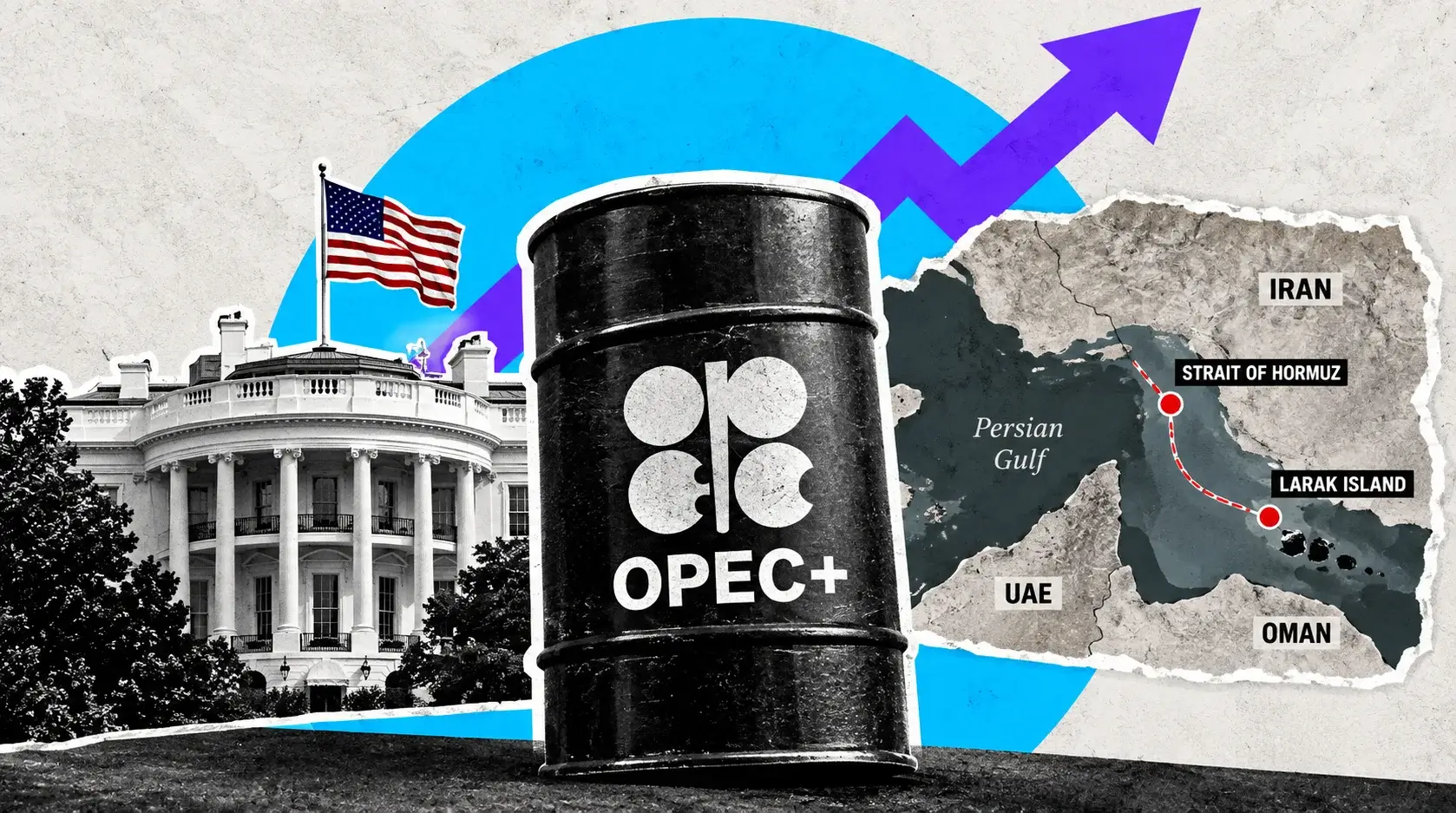
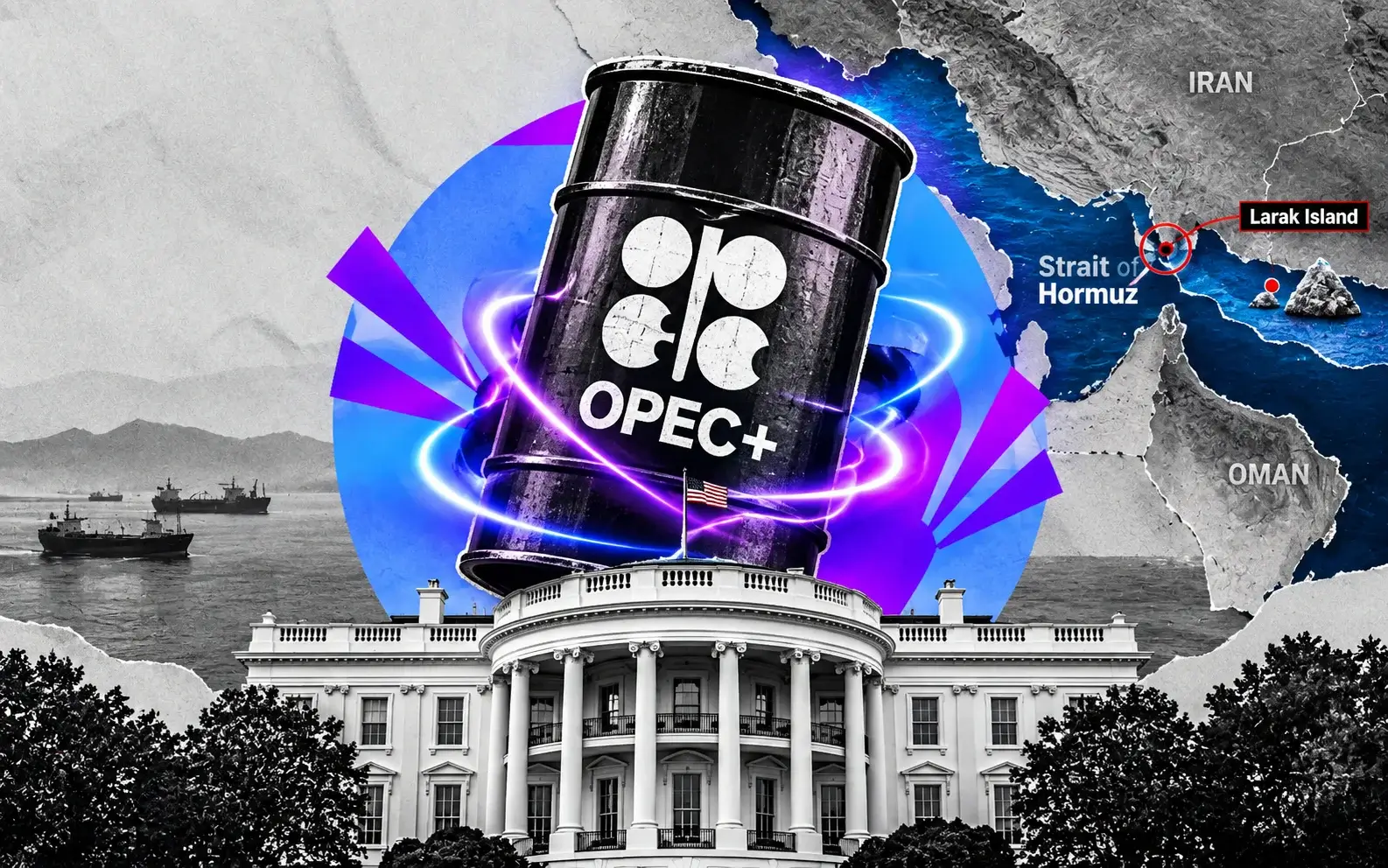
Brent crude (BZ=F) is hammering through the $112 line and pushing toward $115 per barrel Monday as the Strait of Hormuz situation transforms from a manageable risk into what the International Energy Agency has officially labeled the largest energy disruption in history. The international benchmark last printed at $112.14, up roughly 3.7% on the session, with intraday strength carrying the contract from earlier sub-$108 prints to fresh multi-week highs. WTI crude (CL=F) climbed to $105.62 per barrel, up 3.6%, with the U.S. benchmark testing the upper end of its recent range as Iranian missile-strike claims and U.S. denials whipsawed the tape into a violent two-way grind.
The session has been a textbook case of how oil markets process geopolitical risk in real time. Brent opened the European day near $107.64, slipped briefly to $108 as President Trump rolled out his "Project Freedom" initiative to guide stranded vessels through the strait, then exploded higher through $112 as Iranian state media via Fars News Agency claimed two missiles struck a U.S. warship near Jask Island that ignored Iranian Revolutionary Guard warnings. U.S. Central Command denied the strike outright, confirming via X that "no U.S. Navy ships have been struck" and that two U.S.-flagged merchant vessels had successfully transited the waterway. The United Arab Emirates clarified that an Adnoc-affiliated tanker was actually the vessel hit by Iranian drones — no injuries reported, but the damage to investor sentiment was already done.
The single most important number to internalize about the current oil market: Goldman Sachs estimates the closure of the strait, combined with attacks on regional energy infrastructure, has reduced global daily production by 14.5 million barrels. That's roughly 15% of total global oil supply taken offline simultaneously. The 2022 Russian invasion of Ukraine — which most commodity traders treated as the worst supply shock of their careers — barely impacted physical supply. The current crisis is multiple times more severe in volume terms, and the price action is finally catching up to that reality.
The Real Oil Price Doesn't Exist Anymore — Here's Why That Matters
There's a structural truth about the current oil market that most traders are missing because they're staring at a single Brent or WTI quote and assuming it represents reality. It doesn't. The market has fractured into multiple parallel pricing universes that move independently of each other, and understanding that fragmentation is essential to making any sensible trading decision right now.
The physical market — where actual barrels change hands between producers, traders, and refiners — is dramatically tighter than the futures screen suggests. Saudi Aramco is currently charging European customers a record premium for Arab Light over Brent, reflecting just how desperate refiners have become to secure immediately-available cargoes. What once traded at modest premiums or even discounts to benchmark is now commanding double-digit additions above Brent before freight and insurance are even factored in.
The financial market — where futures, swaps, and options trade — is pricing a different time horizon entirely. Paper barrels reflect expectations of where oil might trade weeks or months from now, not what refiners must pay today to keep their facilities operating. That's why Brent front-month is trading near $112 while deferred contracts a few months out are pricing materially lower — the financial market is already betting that some form of resolution arrives before inventories show terminal strain.
The math that matters most for actual delivered cost: freight rates that previously sat near $1 per barrel have spiked to as much as $25 per barrel. Insurance is no longer a rounding error — it's become a meaningful cost line. For Asian refiners in particular, the genuine delivered cost of crude has run far above the screen quotes they see on Bloomberg terminals. Inland North American crude — particularly grades from Colorado, Nebraska, Utah, and Canadian production — is still trading below $80 per barrel in some cases. The same physical commodity, the same week, with delivered prices ranging from sub-$80 to well over $130 depending on geography and timing.
The Forecast Ladder: From Barclays $100 To ANZ's $200 Worst-Case
The sell-side analyst community has been forced to dramatically revise its Brent crude (BZ=F) forecasts in recent weeks, and the spread of those forecasts tells you everything you need to know about how uncertain the path forward really is.
Barclays Commodities Research, led by analyst Amarpreet Singh, just lifted its 2026 Brent forecast to $100 per barrel from $85 previously — and explicitly flagged that risks are skewed higher depending on how long the impasse drags on. Singh's specific framing: flows through the Strait of Hormuz remain at a trickle, inventory draws are accelerating, and last year's U.S. supply builds have already been largely offset despite a longer transmission lag. The longer the strait stays disrupted, the bigger and stickier the price shock becomes.
ANZ analysts have laid out an even more severe worst-case scenario: if the U.S. and Iran fail to reach a deal and the Strait of Hormuz remains effectively closed through 2027, Brent could surge toward $200 per barrel. Their math: global oil supply would fall by 15-20 million barrels per day, most of the International Energy Agency's coordinated stockpile releases would be exhausted, and demand destruction would intensify while damage to key Persian Gulf infrastructure delays recovery. In that scenario, prices stay above $100 for most of 2027.
ANZ's base case is more moderate but still bullish. Even if Hormuz reopens in June, some permanent loss of capacity keeps disruptions in place through year-end and into 2027. The ongoing threat of sudden re-closure embeds a geopolitical risk premium that keeps Brent above $90 per barrel for the remainder of 2026, with prices easing only to $80-$85 in 2027 as the market gradually rebalances.
The other major Wall Street bank with skin in the game is Goldman Sachs, whose 14.5 million barrels-per-day disruption estimate has become the most widely cited number among institutional traders. The Financial Times has framed the situation in even starker terms: Brent is up nearly 50% since the start of the war and hasn't dropped below $100 for nearly two weeks running.
Project Freedom: Why The Market Doesn't Believe It
President Trump's "Project Freedom" rollout was supposed to be the catalyst that calmed oil markets. Instead, it's done almost the exact opposite — and the reasons matter for anyone trying to forecast where Brent goes next.
The plan announced Sunday on Truth Social: the U.S. will help "free up" stranded commercial vessels in the Gulf starting Monday. Trump framed it as a humanitarian gesture, noting that many vessels are running low on food "and everything else necessary for largescale crews to stay on board in a healthy and sanitary manner." U.S. Central Command later confirmed the operation involves guided-missile destroyers, more than 100 land- and sea-based aircraft, multi-domain unmanned platforms, and 15,000 service members.
What Project Freedom doesn't include: actual U.S. Navy escorts for vessels transiting the strait. That proposal got shot down by administration officials who cited the need for further preparation. CENTCOM's language was deliberately careful — they would "support" vessels seeking to transit, not escort them through. Without escorts, commercial operators face the same risk calculus they did before the announcement: transit the strait and gamble that Iranian forces won't fire on you, or wait it out until conditions improve.
Saul Kavonic, head of energy research at MST Financial in Sydney, framed the market response: "The market is becoming accustomed to some of Trump's posts about progress on Iran negotiations proving premature later on." That single observation explains why Brent didn't move on the Sunday announcement. Traders have been burned multiple times this cycle by Trump statements that suggested progress only to have negotiations stall hours later.
June Goh, senior oil market analyst at Sparta Commodities in Singapore, pushed the analysis further: "Global observable oil inventories are starting to fall sharply, which should weigh on market sentiment more than political statements for a reopening of the strait. Normalising the flow through the Strait of Hormuz will take more than what Project Freedom is offering, whilst the yawning gap in oil supply will take months to resolve."
The transit data backs up the bearish read on Project Freedom's effectiveness. Only 20 vessels crossed the strait on Wednesday, the most recent day for which figures are available per Windward maritime intelligence tracking. The pre-war daily average was 129 transits, according to United Nations Trade and Development (UNCTAD) data. The strait is currently running at roughly 15% of normal traffic levels — a drop so severe it explains why Brent can't break below $107 even on positive headlines.
The Iranian Calculus: Why The Blockade May Last Longer Than The Market Expects
Here's the structural reality that most market commentary is glossing over. For Iran, the prospect that economic pain from a U.S. naval blockade forces Tehran into serious negotiations is genuinely dim. The Iranian government still maintains technical control over its oil and gas production, including the ability to scale output up or down strategically. Even if the blockade cuts revenues and damages long-term production capacity, why would economic misery sway a regime with a long history of prioritizing ideology over wellbeing?
Senior Iranian officials have signaled they will not cooperate with Project Freedom. Ebrahim Azizi, head of Iran's parliamentary National Security Commission, warned Sunday that any "American interference" in the strait would be considered a breach of the April 7 ceasefire. Iran's Navy declared it had blocked "American-Zionist" warships from entering the strait, escalating rhetoric that suggests escalation rather than de-escalation is the more likely path forward.
Christof Rühl, adjunct senior research scholar at the Center on Global Energy Policy at Columbia University and advisor to Crystol Energy, framed the geopolitical math sharply in his Financial Times analysis: the world is watching a race between two blockades. Washington blocks Iran's oil income while Tehran threatens the world's oil artery. Both sides are using energy disruption to inflict economic damage and force political concessions. Neither side has shown any indication of folding first.
The Iranian regime's tolerance for economic pain is fundamentally different from democratic political systems. A theocracy can suppress domestic economic suffering through repression and ideological mobilization. Democratic systems — particularly the United States and major European economies — face political accountability that creates real pressure to resolve crises that hurt consumer pocketbooks. The asymmetric political calculus argues for the disruption persisting longer than market consensus expects, not shorter.
Why The Oil Intensity Argument Cuts Both Ways
One of the most popular bullish arguments for why current prices remain manageable is that the global economy uses dramatically less oil per dollar of GDP than it did during prior crises. The numbers genuinely support that thesis on the surface: in 1973, the year of the first oil shock, global economies consumed roughly 131 liters of oil per $1,000 of GDP in 2025 dollars. By 1980, that figure dropped to 116 liters. Last year, it had plummeted to just 52 liters per $1,000 of GDP.
That's a 60% reduction in average oil burden over five decades. Adjusted for both inflation and efficiency improvements, today's hypothetical $115-per-barrel Brent compares with an effective $339 average price in 1980 in today's dollars. By that math, oil prices have substantial runway before the burden resembles past crisis levels.
But Rühl's deeper analysis exposes why this bullish framing is genuinely dangerous to embrace uncritically. The improvements in oil intensity are a double-edged sword. Consumption today is concentrated in high-value uses where there is no substitute — road freight, air freight, maritime shipping, petrochemical feedstock for industrial production. These are load-bearing economic activities that can't simply absorb price increases through reduced consumption. They're either operating or they're not. Once disrupted, they cascade through the broader economy in ways that prior diversified-consumption oil shocks didn't.
The traditional economic transmission mechanism — oil prices push inflation, central banks tighten, growth slows into recession — is actually less concerning than the modern alternative. When current price increases hit high-value irreplaceable uses, the cost shows up as lost economic activity and value creation, caused by shutting down specific operational nodes. Oil concentrated in high-value uses behaves a little like rare earth elements: tiny compared with overall GDP but essential for much of it. If the supply disruption requires demand destruction, the resulting demand response can be sudden, disproportionate, and unpredictable.
Modern wealthy service-based economies don't have an escape hatch when transport disruptions hit. Supply chains become vulnerable. Disruptions become unpredictable. The longer the dual blockades continue, the more likely a crisis-like adjustment in leading economies replaces the slow-growth recession traders are mentally modeling.
The Geographic Arbitrage That Won't Last
The single most underappreciated feature of the current oil market is the dramatic geographic dispersion in actual delivered prices, and the implications for North American producers and consumers.
North American crude remains the cheapest basin in the world right now. Inland grades from Colorado, Nebraska, Utah, and parts of Canada are trading materially below seaborne benchmarks. Thanks to the shale revolution, deep domestic production capacity, and extensive pipeline infrastructure, U.S. refiners are still accessing crude at levels that look surreal compared with Asian and European peers paying massive premiums for delivered seaborne cargoes.
That regional advantage is already starting to erode. An armada of tankers is heading toward U.S. coastal terminals because American crude has become one of the most attractive barrels available on global markets. Mars crude from the Gulf of Mexico has become particularly valuable as one of the more exportable U.S. medium grades. As foreign demand for U.S. exports rises, North American prices will climb to close some of the regional spread, while extreme international price differentials may begin to narrow.
The structural implication: if Hormuz disruption persists, the United States becomes the barrel of last resort for global markets. That's good for U.S. producers like Exxon Mobil (NYSE:XOM), Chevron (NYSE:CVX), ConocoPhillips (NYSE:COP), and pure-play shale operators. It's bad for U.S. consumers who eventually pay the convergence in retail gasoline prices. Fortune data shows consumer-facing oil prices already climbing aggressively, with one quoted at $115.01 per barrel versus $111.20 the prior day and $59.90 a year ago — a 92% year-over-year appreciation that's already showing up at the gas pump.
The Strategic Petroleum Reserve Card And Why It Matters
The U.S. Strategic Petroleum Reserve sits as a genuinely consequential lever in the current crisis, even if most traders are underweighting its potential impact. The SPR exists explicitly for emergencies — sanctions-driven supply shocks, severe weather damage to infrastructure, war-related disruption. Hormuz qualifies on multiple counts.
The SPR isn't a long-term solution. It can't replace a structural supply shortfall. What it can do is provide immediate relief to soften crippling price hikes during acute supply shocks, keeping critical sectors operating — emergency services, public transportation, key industries that can't simply shut down when feedstock pricing spikes. A coordinated SPR release combined with similar moves from International Energy Agency member states could absorb 1-2 million barrels per day of physical demand for several months. That's not nothing, but it's also not the 14.5 million barrels per day that Goldman Sachs estimates are currently disrupted.
The bullish counter-argument: every SPR barrel released is a barrel that needs to be replaced eventually, which creates forward demand for production once normalization arrives. SPR releases extend the price spike chronologically rather than eliminating it.
The Trading Scenarios For Active Energy Desks
Path one — bullish breakout extension. Brent (BZ=F) holds above $110, breaks $115 with conviction, and tracks toward $120-$125 as Hormuz disruption persists through May and into June. WTI (CL=F) follows with a move toward $110-$115. Trigger conditions: failed U.S.-Iran negotiations, fresh Iranian missile attacks on commercial shipping, sustained physical premium expansion in Saudi Aramco OSPs, accelerating inventory draws across major demand centers, and SPR release announcements that signal authorities expect prolonged disruption.
Path two — range chop with elevated baseline. Brent stays trapped between $105-$115, WTI between $98-$108, as the market oscillates between Hormuz escalation headlines and Project Freedom optimism cycles. Statistically the most likely path through May. ANZ's $90+ Brent floor for 2026 holds, but the upside is capped by demand destruction concerns and gradual SPR releases. Traders extract premium through elevated baseline volatility rather than directional bets.
Path three — bearish reversal. Brent breaks below $105, loses $100 decisively, and tracks toward $90-$95 if a genuine U.S.-Iran breakthrough emerges. WTI follows toward $85-$90. Trigger conditions: surprise diplomatic announcement of partial Hormuz reopening, full ceasefire commitment with verifiable enforcement mechanisms, major SPR release coordinated across IEA members, or signs of significant demand destruction in major Asian consumer markets.
Path four — worst case. Brent breaks above $130 and accelerates toward $150-$200 if Hormuz stays closed through 2027. ANZ's worst-case scenario plays out in real time. Global recession concerns spike, central banks face impossible choices between fighting inflation and supporting growth, equity markets enter sustained drawdown, and the dollar oscillates between safe-haven strength and stagflation weakness. Probability looks low but is non-trivial given Iranian regime intransigence.
Why Refined Products Matter More Than Crude For Most Consumers
Here's the underappreciated angle that most oil market commentary glosses over. Consumers don't buy crude oil. They buy gasoline, diesel, jet fuel, and heating oil — and refined products often rise faster than the crude they're made from during acute shocks. Refining capacity is constrained, distribution systems get stressed, and end-market panic buying amplifies the squeeze on retail pricing.
U.S. retail gasoline has surged $1.41 per gallon in nine weeks — the steepest velocity in Energy Department records going back to the early 1990s. The absolute level isn't yet matching the $5.07 per gallon peak from June 2022, but the speed of the increase is unprecedented and gives households almost no time to adjust their spending patterns.
Diesel and jet fuel are running tighter than gasoline because refining slates favor heavier production runs, but those products are critical for freight and aviation industries that can't substitute easily. Marathon Petroleum (NYSE:MPC), Valero Energy (NYSE:VLO), and Phillips 66 (NYSE:PSX) are positioned to capture refining margin expansion if crack spreads continue widening through Q2.
The political pressure that builds from gas pump pain is what historically forces administrations to deploy SPR releases, accelerate diplomatic efforts, or even exempt sanctions to bring barrels back to market. Watch retail gasoline more closely than crude itself for the leading indicator of when the U.S. policy response shifts.
Read More
-
Yen Stalls at 160 Despite a 3% JGB and Tokyo Core CPI at 2.0% — Intervention Sits at 164, Friday's Payrolls Decide
02.09.2026 · TradingNEWS ArchiveEnergy
-
Nasdaq, S&P 500 and Dow Slide as Yields Hit 5.22% and Oil Rips to $96; NVDA Up 1.58% on Record Buyback
28.09.2026 · TradingNEWS ArchiveStocks
-
Bitcoin Breaks Range as Rate-Hike Odds Hit 70.3% — $82,744 Support Guards the Path to $96,700
28.09.2026 · TradingNEWS ArchiveCrypto
-
Brent Holds $105 While WTI Heads for a 7% Weekly Loss as a 3M-Barrel Build and a Diesel Ban Threat Split the Market
25.09.2026 · TradingNEWS ArchiveCommodities
-
Sterling Slides to 1.3216 as a Divided Bank of England Trails the Fed — 1.3424 Upside vs. 1.3000 Risk
25.09.2026 · TradingNEWS ArchiveForex
The Dollar And Inflation Connection
The U.S. Dollar Index at 95.34 (or 98.32 depending on the basket weighting) is firmer Monday on safe-haven flows tied to Hormuz tensions. The dollar/oil relationship matters because the U.S. is now a major energy exporter, which means higher crude prices structurally support the dollar through energy export revenues — the opposite of how the dollar/oil correlation worked in past decades when the U.S. was a net importer.
Higher oil prices feed directly into inflation expectations. U.S. 10-year Treasury yields climbed to 4.458% Monday from 4.38% Friday close, with the VIX spiking 9.24% to 18.56 as Hormuz tensions reignited. The bond market is pricing the Fed staying higher for longer — CME FedWatch shows just 5.1% probability of a June rate cut. Higher rates plus higher oil plus a firmer dollar equals a punishing macro cocktail for risk assets.
For oil specifically, dollar strength typically caps upside because most international transactions price in greenbacks. But the current dollar bid is partially driven by the same Hormuz disruption that's lifting oil — meaning the negative correlation between dollar strength and oil prices has temporarily broken down. Both can rise together while the energy crisis persists.
The Position View: Buy The Dips, Lean Bullish On Persistence
Here's the honest read on Brent (BZ=F) at $112 and WTI (CL=F) at $105. The bullish ingredients are stacking with genuine substance: Goldman Sachs 14.5 million bpd disruption estimate confirms historic supply shock, strait transit running at 15% of normal levels with no clear path to recovery, Barclays revising 2026 forecast to $100 with risks skewed higher, ANZ's $90+ floor through 2026 baseline scenario, physical market premiums at record levels for Saudi OSPs, U.S. retail gasoline up $1.41 per gallon in nine weeks signaling demand-side damage already in motion, Iranian intransigence suggesting no near-term diplomatic breakthrough, and Project Freedom credibility gap that's already priced into market expectations.
The bearish ingredients: demand destruction beginning to show in high-value transport sectors as freight costs spike, SPR releases coordinated through IEA could absorb 1-2 million bpd temporarily, U.S. shale ramping production where economically feasible to exploit elevated prices, deferred futures pricing lower than spot signaling market expectations of resolution, and the historical pattern that geopolitical premiums fade faster than fundamentals deteriorate.
Position view: bullish bias on Brent (BZ=F) and WTI (CL=F) into May with Brent target $115-$120 and WTI target $108-$112. Buy the dips toward $107 Brent and $100 WTI with stops below $100 Brent. Avoid chasing above $115 Brent without a fresh escalation catalyst, but don't fade strength either — the supply math doesn't support a meaningful pullback unless a genuine diplomatic breakthrough materializes. Tactical traders can position for volatility expansion through long straddles given the binary nature of Hormuz outcomes. Long energy equities including XOM, CVX, COP, and refiners MPC, VLO, PSX positioned to capture continued price strength and margin expansion.
The single most important number to watch this week isn't a price level — it's the daily transit count through the Strait of Hormuz. If that figure climbs from 20 toward 50, oil prices ease meaningfully and the bull case weakens. If it stays at 20 or drops further, prices have substantially more upside to absorb. The Friday April Nonfarm Payrolls also matters as a secondary catalyst because labor market data shapes Fed policy expectations that drive dollar trajectory and consumer spending capacity.
Longer-term, the ANZ worst-case scenario of $200 Brent through 2027 should not be dismissed even if it appears low-probability. The Iranian regime's calculation, the structural inability of the U.S. naval response to fully reopen the strait, and the cumulative physical inventory damage all argue that the upside risk distribution remains skewed higher. Traders who were positioned for Brent at $80 entering 2026 are now facing $112 spot prices and rising forecast bands. The market has been wrong-footed multiple times this cycle by underestimating how long the disruption could persist.
The Financial Times framing from Christof Rühl deserves repeating: democratic systems eventually pay political prices for gambling away economic stability. Theocracies can suppress economic pain longer. That asymmetry argues the disruption persists longer than current market consensus, which means Brent stays elevated longer than current futures curves suggest. The path from $112 to $90 requires a diplomatic breakthrough that the Iranian regime has shown no interest in producing. The path from $112 to $130 requires only continued status quo.
For the trader watching the tape day-to-day, energy is the cleanest macro trade going. For the longer-term portfolio holder, energy exposure through majors and refiners offers the most direct hedge against the persistence scenario that increasingly looks like the base case rather than the tail risk.