Oil Price Pulls Back to $102 WTI and $110 Brent — Buy the Dip or Sell the Bounce?
Hormuz traffic collapses 97% as Iran expands control zone; JPMorgan warns of $150 non-linear spike | That's TradingNEWS
Key Points
- WTI crude (CL=F) drops 4% to $102.20, giving back part of Monday's 4.39% surge to $106.42 as Tuesday's Hormuz tensions ease.
- Brent crude (BZ=F) slides 3.36% to $110.60, off $3.85 after Monday's 5.8% spike to $114.40 — the highest 2026 settlement.
- Brent up 91.34% from $60.91 a year ago, and 3.67% above last month's $112.42 print as the war premium remains structurally embedded.
Crude markets are pulling back hard on Tuesday after Monday's vertical move drove Brent to its highest settlement of 2026. WTI is changing hands at $102.20 per barrel, off $4.26 or 4.00%, while Brent sits at $110.60, down $3.85 or 3.36% on the session. Murban crude is trading at $105.80, off 1.37%, and the OPEC basket has pulled back 3.77% to $116.50. WTI Midland is down 4.33% to $105.70. The Indian basket holds firm at $118.70, unchanged on the day. Natural gas is sliding 2.79% to $2.787, and the refined products complex is bleeding alongside crude with gasoline futures off 2.80% at $3.633 and heating oil down 1.99% at $3.992. The pullback is not the resolution. It is the breath the market takes before the next leg, and the data underneath the price action is unambiguously alarming.
The Brent Picture Tells the Story Cleanly
Brent's intraday slide to roughly $110.60 to $111.43 from yesterday's close of $114.40 is the headline relief, but context flattens that read fast. The international benchmark briefly traded above $115 on Monday before settling 5.8% higher at $114.40 — its strongest finish of 2026. The retreat on Tuesday gives back only a fraction of the prior session's spike and leaves prices roughly $40 above the $70 baseline that ruled before the war began at the end of February. From a year ago, Brent has moved 91.34% higher from $60.91. From one month ago, it is up 3.67% from $112.42. The reference point that matters: this is the lowest closing price of 2026 only when held against the immediate spike, and the curve is doing something far more dangerous beneath the spot quote.
WTI's Pullback Masks the Real Shock to Consumers
The US benchmark, traded as CL=F, has dropped 2% to $104.20 after climbing 4.39% to close at $106.42 on Monday. The 4.00% intraday slide to $102.20 keeps WTI well above the threshold that historically destabilizes the US consumer. The transmission to the pump is already brutal. The national average for a gallon of regular gasoline now stands at $4.48, up from $2.98 before the conflict ignited. California has cracked $6 per gallon. Andy Lipow at Lipow Oil Associates has flagged $5 per gallon as the realistic ceiling if the Strait of Hormuz stays shut into next month — a print that would nearly retest the all-time record of $5.02 set in June 2022 during the immediate aftermath of Russia's invasion of Ukraine. The squeeze on the household sector is real, measurable, and progressing in real time.
The Buffer Math That Defines the Next Sixty Days
The reason the price action has not been even more violent comes down to a single mechanical reality: the world has been drawing aggressively on inventories to absorb the supply shock. Global inventories started the year at roughly 8.4 billion barrels — a figure that on paper looks comfortable. JPMorgan's commodities desk under Natasha Kaneva estimates only 0.8 billion barrels are realistically accessible without pushing the system into operational stress. Roughly 280 million barrels had already been consumed to cushion the conflict by April 23. Floating storage can be tapped quickly. Onshore inventories that are genuinely accessible run closer to 580 million barrels — the rest is locked into pipeline fills, minimum tank levels, and operational constraints that cannot be drained without breaking the circulation network. The market does not fail because oil disappears. It fails because the working volume gets too thin to keep the pipes pressurized, the terminals loading, and the refineries securing the right grades on time.
The Five-Layer Inventory Onion
The way Kaneva's team frames the drawdown sequence is worth working through carefully. The first layer to come off was tanker cargoes and storage vessels — the easiest barrels to redirect. The second layer was commercial inventories at refineries and terminals, including Cushing. The third layer was government strategic reserves, including the US SPR in Louisiana and Texas. The market is now at the fourth layer — the demand-destruction phase, where higher prices are mechanically rationing oil rather than supply releases. Observed global oil demand fell 2.8 million barrels per day on average in March and is currently tracking a 4.3 million barrel-per-day decline through April. Demand losses are projected to deepen to roughly 5.5 million barrels per day in May. OECD commercial inventories are now on track to approach operational stress levels by early June at this rate, with the floor potentially being breached by September if Hormuz stays shut. The fifth layer — the operational minimums — is the zone nobody wants to touch.
The 80 Million Barrels Per Week Drawdown
Barclays' Ajay Rajadhyaksha — historically more constructive than the JPMorgan desk on this trade — has now flipped meaningfully more cautious. His team estimates global inventories are bleeding at as much as 80 million barrels per week, with the trajectory pointing to a precarious level by later this month if nothing changes. The framing he is using captures the situation precisely: the world has lost its job but is living off its crude oil savings and unemployment cheques. The savings are running out. The cheques are about to stop. The buffers worked. They were designed to absorb a disruption. They were not designed to absorb a new normal. Every week that passes without resolution moves the market closer to the point where the insurance runs out and price becomes the only adjustment mechanism left.
The $150 Brent Spike Risk That Is No Longer Theoretical
JPMorgan's analysts now flag a growing risk of a non-linear spike in oil prices toward $150 per barrel for Brent. Goldman Sachs has separately laid out a path that could take crude through the 2008 record of $147. These are not lazy upside targets pulled from a ruler. They are the level math that emerges when working volumes hit the operational floor and refiners begin bidding aggressively for nearby supply. The 6-month forward Brent contract posted its largest single-day increase since March 2022 on Monday, settling at $91.99 — a print that captures the way the curve is rebuilding the persistent disruption premium that markets had previously been pricing as transitory. Iran has separately warned of $140 oil if the Trump administration maintains the Hormuz blockade. The $125 oil scenario is being modeled by economists as the line where global recession risk crosses from probable to embedded. None of these levels look ridiculous given current trajectory.
The Strait of Hormuz Is the Whole Trade
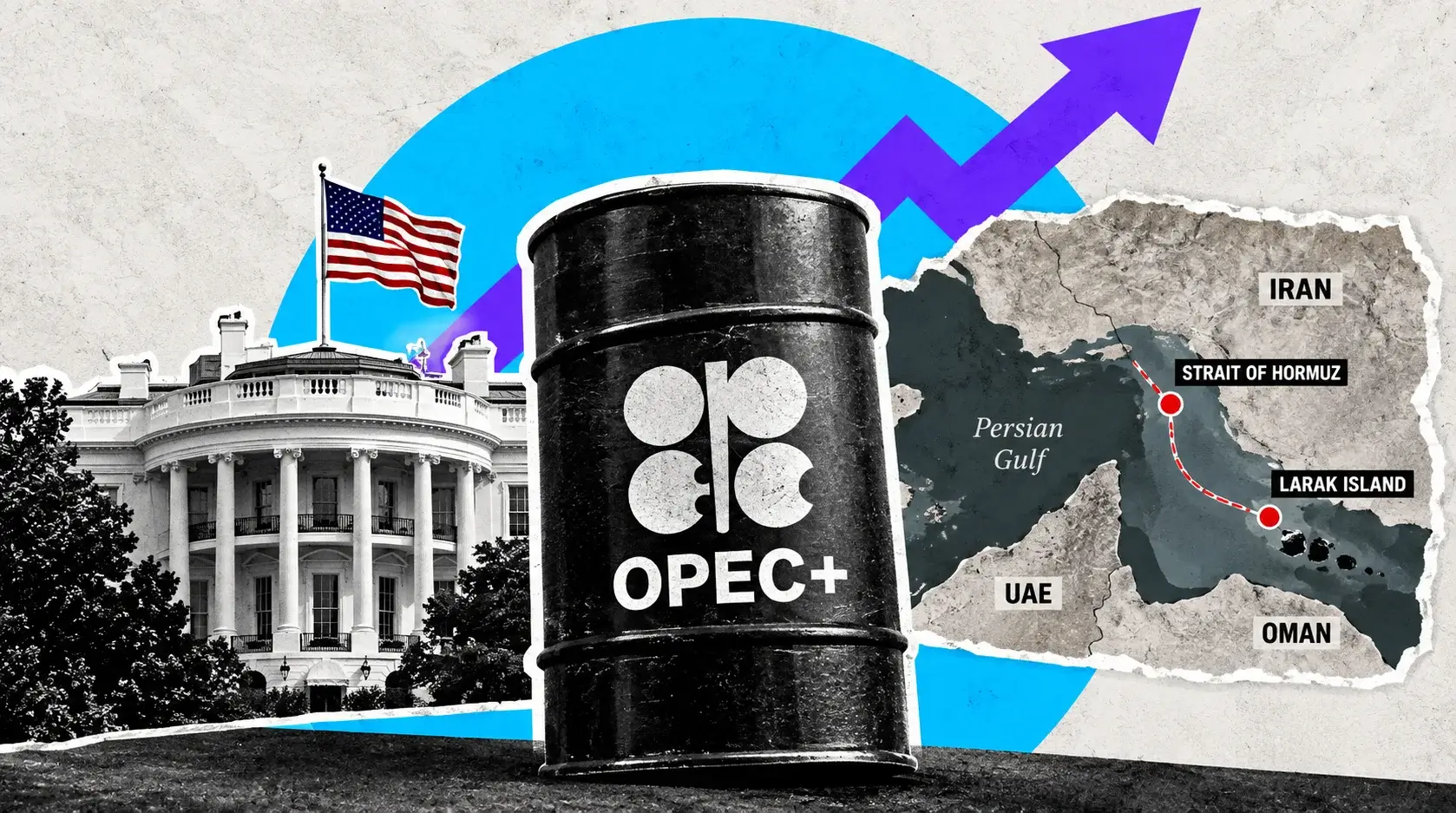
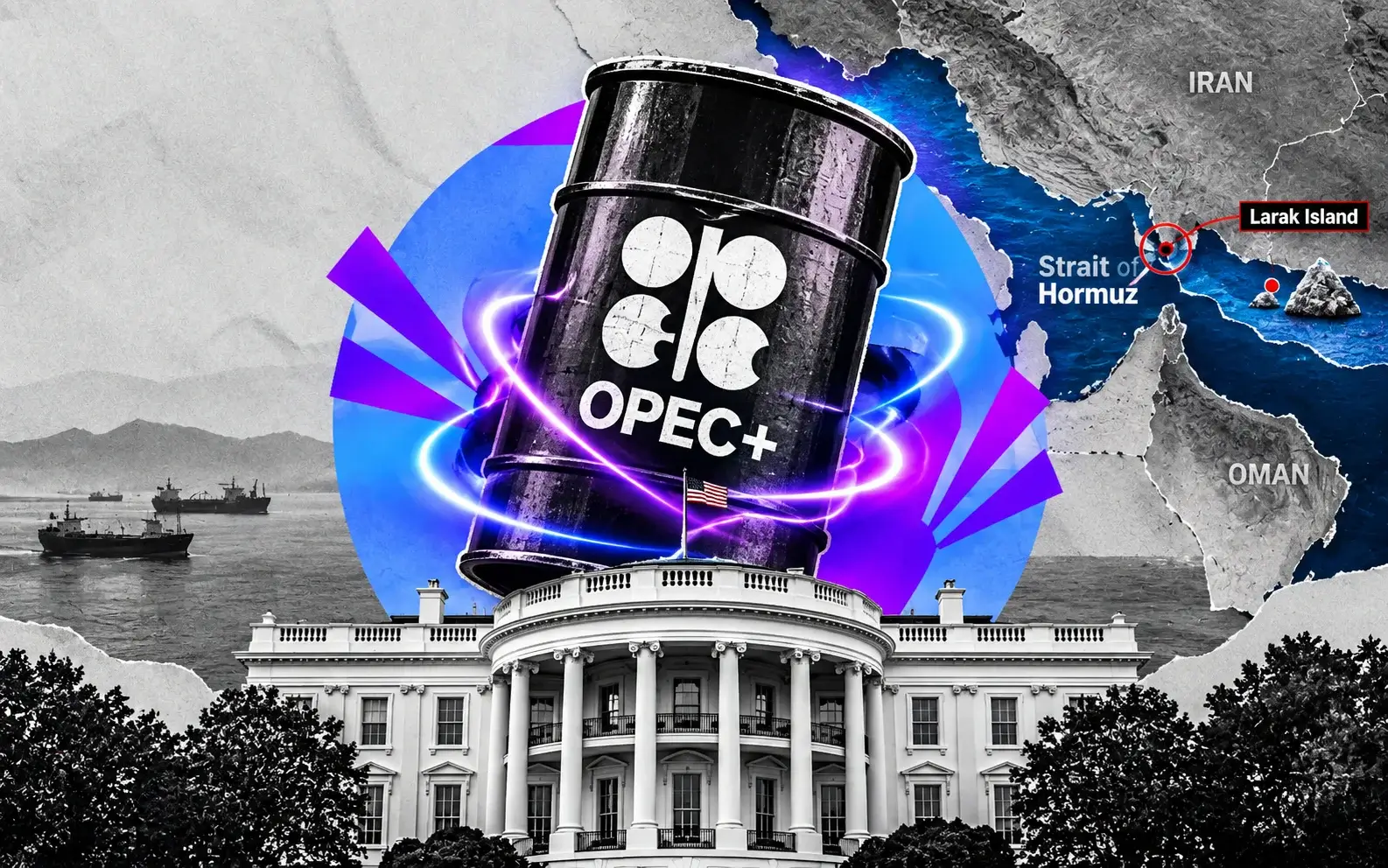
The chokepoint that ordinarily moves roughly a fifth of global oil and natural gas supply has been effectively closed since the United States and Israel launched their February 28 attacks on Iran. Pre-war traffic averaged more than 120 ships per day through the strait. Yesterday, only four vessels crossed, per S&P Global Market Intelligence. Saudi Arabia and the UAE have rerouted some volumes through alternative pipelines, but roughly 10 to 12 million barrels of crude per day remain choked off from the global market. Trump's "Project Freedom" initiative began Monday with US Navy escorts attempting to guide stranded ships out of the waterway. The response from Tehran was an attack on the Fujairah oil terminal in the UAE, drone-and-missile strikes against US escorts, and an explicit warning that any US forces approaching the strait will be engaged. The four-week-old ceasefire is structurally fragile. Trump declined Monday to confirm whether the truce remained in effect. Iran's parliamentary speaker Mohammad Bagher Qalibaf accused Washington of undermining regional security and warned that Tehran will respond.
The IRGC's Expanded Control Zone and What It Means
Iran's Islamic Revolutionary Guard Corps unveiled an expanded control map Monday that pushes the area Tehran claims jurisdiction over outward from the Strait itself. The new zone runs from a line connecting Kuh-e Mobarak in Iran to a point south of Fujairah in the UAE, and from another line stretching from the end of Iran's Qeshm Island to Umm Al Quwain in the UAE. Dubai sits just outside the new declared boundary. Roughly 60 vessels of all types have moved toward Dubai since Monday, joining a cluster of at least 363 ships now anchored off the emirate per Bloomberg tracking data. The maritime intelligence picture has degraded sharply since the war began as ships go dark to avoid being targeted. Kharg Island — Iran's primary export terminal — is now operating under near-total dark posture per Windward, with Iranian crude routed to Asia via Indonesia's Lombok Strait to avoid the more visible Strait of Malacca corridor. The shadow fleet logistics are working overtime, and so are the surveillance gaps that obscure the real flow data.
Real Damage Already Hitting Specific Players
The disruption is no longer abstract. An explosion has rocked a South Korean cargo ship in the Strait of Hormuz, the latest in a string of incidents that confirm the corridor is not safely navigable. Iraq is now offering massive discounts on crude shipped through Hormuz to attract buyers willing to take the transit risk. Chevron's CEO has explicitly warned of emerging physical shortages of crude rather than just price tension — the kind of statement that does not get delivered casually by a major's chief executive. The First India-bound LPG tanker only cleared Hormuz over the past day since the US blockade began. Pakistan has just imported its first LNG cargo in weeks, providing brief relief in an energy crisis. Russian oil cargo is set to arrive in Japan amid supply strains. The UAE has withdrawn from OAPEC. China has ordered its refiners to ignore US sanctions on key Iranian oil buyers. Each of these data points is one stitch in a fabric coming apart.
The 8-Year Inventory Low and the Goldman Read
Goldman Sachs has published research confirming that global oil inventories have now fallen to an 8-year low. That is the structural floor reading paired with the demand-destruction overlay — exactly the combination that historically precedes the violent leg higher in commodity bull markets. The Atlantic basin has been running surge exports to compensate for the Hormuz shortfall, but the net crude supply loss is still tracking 9 million barrels per day per Vortex. The math does not balance at current consumption levels. Either price destroys enough demand to balance the deficit, or operational stress forces an outright supply-side break. There is no third option that does not involve Hormuz reopening cleanly within weeks.
Why the Equity Market Has Not Cracked Yet
The S&P 500 is up 0.79% to 7,257.43, the Dow is up 0.53% to 49,200.69, and the Nasdaq has gained 0.92% to 25,298.20 even as the underlying energy shock continues to deepen. The disconnect between the equity tape and the commodity tape is what worries the cautious side of the analyst community most. Q1 corporate earnings have come in strong enough — DuPont, Cummins, American Electric Power, Pinterest, and Anheuser-Busch InBev have all topped expectations — to keep the bid in stocks intact. AI capex narratives continue to support megacap tech. The Fear and Greed Index sits at 67, firmly in greed territory. Wells Fargo's Scott Wren captured the pattern accurately: this has become a "why ask why" market that is choosing to look past the energy shock. That works until it does not. The buffers Rajadhyaksha and Kaneva are tracking will eventually exhaust, and when they do, the equity market's ability to ignore the cost shock collapses with them.
The Treasury Curve Is Flashing the Warning
The bond market is doing what the equity market is refusing to do. The 10-year Treasury yield slipped to 4.42% on Tuesday from 4.45% the prior session, but that level remains well above the 3.97% print just before the war began. The 30-year US yield closed Monday above 5.00% for the first time since mid-2025. UK 30-year gilts hit 5.77%, the highest since 1998. UK 10-year gilts are pressing 5.1%, the highest since 2008. Long-end yields are repricing the persistence of energy-driven inflation, and that yield reset is the mechanism by which the oil shock will eventually transmit into equity multiples even if corporate earnings stay resilient near-term. The cost of mortgages and consumer credit has already moved meaningfully higher. The transmission to investment-grade credit and then to high-yield is the next domino if Hormuz stays shut.
The Australian Hike and Global Central Bank Response
The Reserve Bank of Australia delivered another rate hike to 4.35% Tuesday, citing the conflict-driven surge in fuel and commodity prices that has been compounding inflation pressure. The Australian dollar is benefiting modestly from the move, with AUD/USD pressing toward 0.7197. The broader implication is that central banks globally are being forced to lean restrictive into a geopolitical supply shock — the worst possible policy mix for risk assets if the duration extends. The Bank of England has tilted more hawkish. The European Central Bank is staring at a stagflation scenario where it cannot ease policy to support growth without amplifying the inflation embedded in the energy channel. Japanese authorities burned roughly $35 billion last Thursday to push the yen up about 3% before the intervention impact faded — USD/JPY is back at 157.67. The currency carry-trade unwind risk that emerges from any potential BoJ tightening would compound the energy shock if it lands.
Refinery Strain and the Product Margin Story
The refining picture is the part of this story that does not get enough attention. Ukraine has just struck the 400,000 barrels-per-day Kirishi refinery near St. Petersburg with a drone attack, taking another meaningful chunk of Russian refining capacity offline. Chevron's Q1 results showed a swing to a refining loss even as upstream beat estimates on the price surge. Pakistan and Indian refiners are raising LPG and jet fuel prices to reflect input cost pressure. The product crack spreads are doing exactly what they always do under chokepoint stress — widening violently as refiners struggle to source the right grades on time. Aviation fuel, distillates, and gasoline are all trading at premiums that reflect the operational floor that JPMorgan's desk has flagged for OECD product inventories at roughly 35 days of forward demand or 1.6 billion barrels.
Read More
-
Yen Stalls at 160 Despite a 3% JGB and Tokyo Core CPI at 2.0% — Intervention Sits at 164, Friday's Payrolls Decide
02.09.2026 · TradingNEWS ArchiveEnergy
-
Nasdaq, S&P 500 and Dow Slide as Yields Hit 5.22% and Oil Rips to $96; NVDA Up 1.58% on Record Buyback
28.09.2026 · TradingNEWS ArchiveStocks
-
Bitcoin Breaks Range as Rate-Hike Odds Hit 70.3% — $82,744 Support Guards the Path to $96,700
28.09.2026 · TradingNEWS ArchiveCrypto
-
Brent Holds $105 While WTI Heads for a 7% Weekly Loss as a 3M-Barrel Build and a Diesel Ban Threat Split the Market
25.09.2026 · TradingNEWS ArchiveCommodities
-
Sterling Slides to 1.3216 as a Divided Bank of England Trails the Fed — 1.3424 Upside vs. 1.3000 Risk
25.09.2026 · TradingNEWS ArchiveForex
Corporate Activity Continuing Through the Crisis
Despite the macro turmoil, the corporate energy sector keeps moving. Shell and INEOS have struck a Gulf of Mexico exploration deal. The US-Canada oil pipeline is approaching final approval as shippers lock in volumes — a bullish North American supply-resilience story. Equinor has signed $1.8 billion in drilling deals to keep oil and gas output high. Repsol is set to sell 49% of its Spanish renewables portfolio to UAE's Masdar. Venezuela oil exports have hit a seven-year high as the US courts production from the country to fill the Iranian shortfall. ExxonMobil beat Q1 earnings on the price surge despite a 6% production drop. The industry is rotating capital toward security-of-supply assets at a pace that signals genuine concern about the duration of the disruption.
The Demand-Destruction Threshold and What Triggers It
The line between managed adjustment and forced adjustment is being crossed in real time. Consumers are driving less. Industrial users are cutting runs. Airlines are trimming schedules. Refiners are reducing throughput. The 5.5 million barrel-per-day demand pullback projected for May would be one of the largest peacetime demand contractions on record outside of the 2020 COVID shock. The historical analogues are limited. The early-1970s Arab embargo took prices vertical and triggered a recession that lasted years. The 2008 spike to $147 broke the financial system months later. The 2022 Russia-Ukraine spike fed a global inflation shock that took two years to control. The current setup combines elements of all three, with the additional complication that the strategic reserves have already been substantially drawn down and provide less ammunition for the next shock.
What a $125 Brent Print Does to the Global Economy
The $125 Brent threshold is the level analysts have flagged as the line where global recession risk transitions from probable to embedded. Above $125, the demand destruction required to balance the market becomes severe enough to drag developed-economy GDP into outright contraction. Above $140, the math gets actively destructive. Iran's threat of $140 oil if the blockade holds is therefore not an empty warning — it captures the ceiling at which Tehran believes Washington's political capacity to maintain the operation breaks. The non-linear spike toward $150 that JPMorgan flags is the move that occurs if working inventories breach the operational floor and refiners are forced to bid aggressively for nearby cargoes simultaneously. That is the airpocket scenario where price discovery becomes disorderly.
Bullish Case for Crude
The constructive case for being long oil here is built on hard data. Inventories at 8-year lows. Hormuz handling roughly four ships per day versus the 120-plus pre-war pace. Demand destruction running 4.3 million barrels per day with May projections of 5.5 million. Iran expanding rather than contracting its declared control zone. The four-week ceasefire flashing every signal of imminent failure. Forward Brent contracts repricing higher persistent disruption. Ukraine continuing to strike Russian refining capacity. Major oil executives openly warning of physical shortages. Global recession-risk thresholds at $125 with current price action at $111 already pressing through demand-elastic levels. The operational floor is roughly 60 days away from being breached on current trajectory. Every layer of the inventory onion that has been peeled is irreversible without months of supply normalization. The asymmetric risk on the upside extends toward $150-plus if Hormuz stays closed into the autumn.
Bearish Case for Crude
The skeptical case is real and worth respecting. Trump has explicitly said the war could continue another two or three weeks but also signaled that "time is not of the essence" — language that points to a negotiated resolution being closer than the headlines imply. OPEC+ has already announced output increases. The US is the world's largest oil producer and has scope to lift output further. Saudi Arabia and the UAE are routing alternative supply through pipeline infrastructure. Strategic reserves still have meaningful capacity. Demand destruction is already mechanically reducing the deficit. The political incentive structure for the Trump administration is heavily skewed toward a deal — gasoline at $5 per gallon is the kind of number that drives midterm election losses and the administration is acutely aware of that. Speculative positioning in WTI and Brent futures is already crowded long. A clean ceasefire announcement with a Hormuz reopening would unwind 15 to 20 dollars of premium in a single session.
Positioning Stance: Bullish Lean With Tactical Risk Discipline
The honest read on crude here leans bullish with strict level discipline rather than aggressive accumulation at current spot. The fundamental backdrop — collapsing inventories, demand destruction running below replacement, expanding Iranian control zone, Hormuz at 3% of pre-war traffic, $80 million-barrel-per-week drawdowns, operational floor 60 days away, and major oil executives openly warning of physical shortages — argues structurally for higher prices. The technical map points to $114.40 Brent as the immediate resistance to clear, with $120 the next magnet on a confirmed break. Above $125 the path opens to $140 and the $147 to $150 zone where JPMorgan and Goldman have laid out their non-linear spike scenarios. The downside support sits at the $100 round number for Brent and $95 for WTI — levels where any meaningful break would signal a genuine ceasefire trade is in motion. The lean is to buy dips into the $100 to $108 Brent zone, defend stops below $95 WTI, and target $125 to $150 on continuation. The trade has to respect that one Trump tweet announcing a Hormuz reopening will erase the premium in a single session — but it also has to respect that the operational floor is real, the math does not balance at current demand, and the bears need a political resolution that is far from baked in. The market is not asking whether the buffer breaks. It is asking when. The price level at which it breaks is what every barrel between now and September is being priced against.