Solana Drops to $71.50 as the Highest-Beta Major Falls Hardest in the Chip Rout, Stalling Its Bounce Off $60
SOL's bull case is specific — Firedancer killing the outage stigma, Alpenglow's near-instant finality | That's TradingNEWS
Key Points
- Solana fell ~3% to $71.50 as the chip rout hit the highest-beta major hardest, stalling its bounce off the $60 early-June low; it's down ~75% from its $295 January 2025 high.
- The bull case is specific: Firedancer's 1M-TPS reliability fix, Alpenglow's 150ms finality (Q3), and staking-enabled spot ETFs (Morgan Stanley filed MSOL) — fighting memecoin fragility and outage history.
- The $75-76 resistance (200-day MA + sell signal) caps the recovery; $71.33 is critical support, a break risks $68. Realistic 2026 range $52-$150, not the $250-$1,000 dreams.
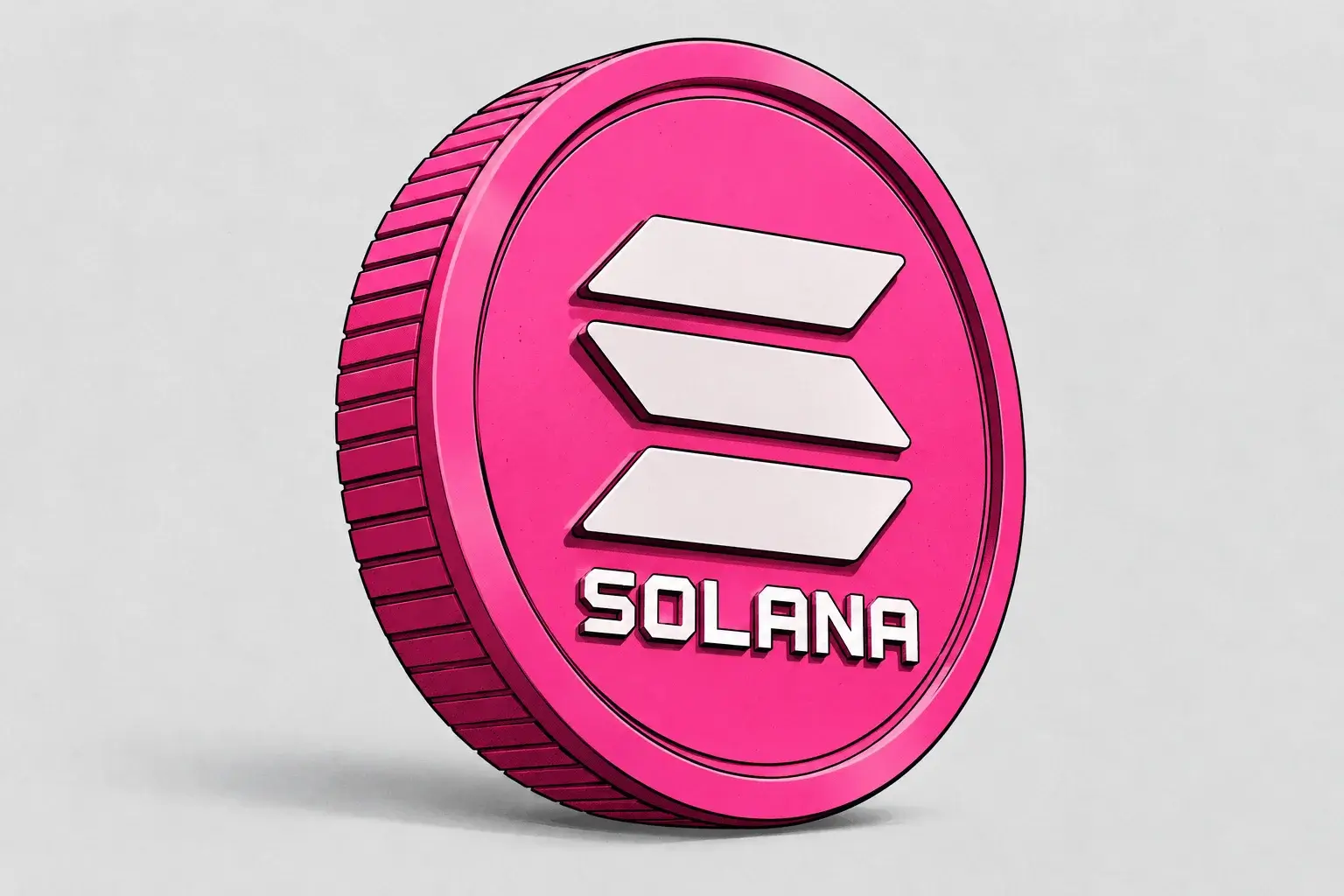
Solana (SOL) is trading around $71.50, down roughly 3% on the session as the global chip rout drags crypto lower and SOL, the highest-beta major in the space, falls harder than its peers. The token had been mounting a recovery off its early-June lows near $60, clawing back to the low $70s on optimism around a Morgan Stanley ETF filing and the network's upgrade roadmap — but the risk-off tide that swept in with the equity selloff has stalled the bounce. SOL sits down roughly 16% over the past month and about 75% below its all-time high near $295 from January 2025, ranked seventh by market cap.
The thesis here is that Solana is a high-beta recovery attempt running straight into the wrong macro, with a genuinely compelling but upgrade-dependent bull case fighting a fragile, speculation-dependent bear case. Unlike Bitcoin, which trades as a high-beta AI proxy, Ethereum, which is buried under idiosyncratic baggage, or XRP, which carries the cleanest institutional-payments story, Solana's identity is the fast chain — the high-throughput Layer 1 built for speed and low cost, home to DeFi, NFTs, gaming, and the memecoin casino. Its 2026 bull case rests on two specific developments: the network upgrades finally killing its outage reputation, and the staking-enabled spot ETFs opening an institutional demand channel. And its defining vulnerability is that as the highest-beta major, it falls hardest in exactly the kind of downturn happening today.
That sets up the tug-of-war. The bull case is specific and real — Firedancer's million-transactions-per-second throughput erasing the outage stigma, Alpenglow's near-instant finality bringing institutional-grade speed, staking-enabled ETFs offering a unique yield-bearing channel, and real-world-asset tokenization from names like Franklin Templeton. The bear case is just as specific — memecoin dependence that deflates metrics when speculation cools, an outage history that any new failure would reprice instantly, intense competition from Ethereum's Layer-2 networks, and the high-beta reality that punishes SOL in risk-off tape. The thesis: Solana's bounce off $60 is a relief rally trapped below the $75–76 resistance where the 200-day moving average sits, and whether it's the start of a recovery or a lower high depends on the upgrades and ETF flows beating the risk-off macro. The line is $75–76, and the macro decides the break.
The Scoreboard
Here's where Solana stands. SOL is around $71.50, down roughly 3% on the day in the chip rout, off about 2.6% over the past week and 16.1% over the past month — a token recovering off its lows but still firmly in a downtrend on the longer timeframes. The early-June crash bottomed around the $62–63 zone before buyers stepped in and pushed the price back toward the low $70s, a bounce of roughly 15% off the lows. But that recovery has stalled at resistance, and the risk-off tape is now pressing it back down.
The longer arc is sobering. SOL peaked near $98 in mid-May 2026, then sold off sharply through late May and early June, bottoming around $62–63 before the current bounce. Against its all-time high near $295 from January 2025, the token is down roughly 75% — a brutal drawdown that reflects the broad 2026 crypto correction driven by record ETF outflows, the hawkish Fed, and the liquidity rotation into AI stocks and IPOs. At one point during the decline, SOL was the most oversold on its monthly chart in its history, a measure of how severe the selloff has been.
The character of the current market is a post-crash recovery attempt fighting a bearish backdrop. The daily chart shows a clean structure: the peak near $98, the sharp selloff to the $62–63 floor, and the bounce back toward the low $70s — a classic recovery off major support that still sits well below the levels defining the prior range. The technical signals lean bearish, with the majority of indicators flashing sell and the moving averages skewed negative, and the Crypto Fear & Greed Index sitting at 22, deep in fear territory. The scoreboard says Solana bounced hard off $60 but remains in a downtrend below its key resistance, with the risk-off macro now testing whether the recovery has legs.
The High-Beta Problem
The single most important thing to understand about Solana's price action is its beta, and it's the highest among the major cryptos. SOL amplifies Bitcoin's direction and broad market sentiment — it rallies harder when crypto is risk-on and falls harder when it's risk-off. On a day like today, when the chip rout is driving a broad de-risking across all markets and crypto is bleeding, that high beta is a wrecking ball, which is why SOL is down 3% while Bitcoin holds up somewhat better. The token falls hardest in downturns, and this is a downturn.
The high beta is a function of Solana's profile: a fast-growing, speculation-heavy Layer 1 whose activity is tied to retail trading, memecoins, and DeFi — the most sentiment-sensitive corners of crypto. When risk appetite is strong, capital floods into SOL and its ecosystem, driving the price up sharply; when risk appetite evaporates, that capital flees just as fast, and SOL drops more than the lower-beta majors. The token's reliance on speculative activity means its metrics and its price can deflate quickly when the mood sours, amplifying both the upswings and the downswings.
This beta dynamic is why Solana is so tightly tied to Bitcoin's direction and the broad macro. SOL can't decouple from Bitcoin in the near term — when BTC falls, SOL falls more; when BTC rallies, SOL rallies more. With Bitcoin under pressure near its own critical support in the risk-off tape, SOL lacks the tailwind it would need to sustain its bounce. The high beta means Solana will bottom when crypto risk appetite bottoms, and the same Fed and AI-trade forces driving the broad selloff are the ones that matter most for SOL's near-term direction. The beta is the reason the relief rally stalled, and it's the reason any sustained recovery requires the macro to turn risk-on first.
The Post-Crash Recovery Attempt
The current setup is a classic post-crash recovery, and whether it holds is the central question. SOL peaked near $98 in mid-May, then sold off through late May and early June to bottom around $62–63, where buyers stepped in and drove the price back toward the low $70s. That bounce off a major support level is the kind of move that can either mark the start of a durable recovery or turn out to be a relief rally inside a broader downtrend — a lower high before another leg down. The price action since the bounce will determine which.
The bullish read is that $60–63 marked a durable floor. The token reached its most oversold monthly reading in history during the selloff, a condition that often precedes significant bounces, and the recovery off the lows showed buyers willing to defend the level. Catalysts including the Morgan Stanley ETF filing, whale accumulation, and the upgrade roadmap provided fundamental reasons for the bounce, and a TD Sequential buy signal suggested the short-term selling pressure had been exhausted. If $60 holds as the cycle low, the recovery could build toward the resistance levels above.
The bearish read is that the bounce is a relief rally that fades. The token is still well below the levels that defined its prior range, the moving averages remain bearishly aligned, and the broader downtrend is intact until SOL reclaims its key resistance. Relief rallies within downtrends are common — a sharp bounce off oversold conditions that runs into overhead supply and rolls over. The risk-off macro stalling the bounce at the $75 resistance is exactly the pattern of a relief rally failing. The honest read is that the recovery off $60 is real but unproven — it's a bounce off major support that needs to clear the $75–76 resistance to confirm it's more than a relief rally, and the risk-off tape is making that confirmation hard to come by.
The $75-76 Line: The 200-Day MA Wall
The level that decides whether Solana's bounce becomes a recovery is the $75–76 resistance, and it's a formidable wall. This zone aligns with the 200-day moving average and a recent sell signal, making it the technical line that separates the downtrend from a potential reversal. SOL has been rejected at this resistance, with the rejection at the $75 zone the primary reason for the token's inability to sustain its bounce. The structure is bearish below $75; a decisive reclaim of $75–76 would be the first sign of a genuine trend change.
The support side of the map is just as important. The immediate support is $71.33, the swing low that's the critical short-term level — a successful defense of it could stabilize prices and keep the consolidation intact. Below that, $68.01 is the next support, and a break there opens a retest of $67 and potentially the $62–63 zone where the early-June crash bottomed. The $71.33 level is the line being tested in the risk-off tape today; hold it and SOL consolidates, lose it and the lower supports come into play. The token is caught between the $75–76 resistance above and the $71.33 support below, a tight range that the macro will resolve.
The technical posture reinforces the importance of the $75–76 wall. The majority of indicators flash bearish — roughly 43% of the signals favor the bears, with the moving averages skewed heavily negative at three buy versus nine sell. The structure is bearish below $75, which means rallies run into the overhead supply at the 200-day moving average and fade. For SOL to turn the trend, it needs to reclaim $75–76 on strong volume, then push toward the next resistance levels at $90 and $100 that defined its prior range. Until it does, the bias stays lower, and the $75–76 line is the wall the bulls have to break. The 200-day moving average is doing exactly what it does in a downtrend — capping the rallies — and it's the single most important level on the chart.
The Firedancer Fix: Killing the Outage Stigma
The first pillar of Solana's bull case is the Firedancer upgrade, which directly addresses the network's biggest historical weakness: reliability. Built by Jump Crypto, Firedancer is a ground-up rewrite of a Solana validator client, already live on mainnet and a core part of the 2026 roadmap. Test benchmarks have shown over 1 million transactions per second per core — a staggering throughput figure that, if realized in production, would make Solana one of the fastest blockchains in existence. The upgrade is designed to eliminate the software bottlenecks that caused Solana's reliability problems.
The significance of Firedancer is reputational as much as technical. Solana suffered nine major outages in 2022 that severely damaged institutional confidence — a chain that goes down can't be trusted to settle high-value transactions, and the outages became the central knock against Solana's institutional case. Firedancer was built specifically to address this by providing a second, independent validator client, reducing the single points of failure that caused the outages. A diverse, resilient validator-client ecosystem reduces the risk of network-wide failures and supports long-term security and throughput growth. Each period of continued stability rebuilds the institutional confidence the outages destroyed.
The Firedancer fix is the bull case's foundation because it removes the biggest objection to Solana. As long as the outage history hangs over the chain, institutions hesitate to build on it or hold it; as Firedancer proves the network can run reliably at scale, that objection fades, opening the door to the institutional adoption the bulls expect. The continued execution solidifies Solana's infrastructure foundation for future adoption, and the nearing mainnet expansion of Firedancer is cited as a potential positive catalyst that could renew institutional interest. The flip side is the risk: any future outage would reprice the stock immediately, undoing the confidence Firedancer has rebuilt. Firedancer is the fix that turns Solana's biggest weakness into a potential strength — if it holds.
Alpenglow and the Speed Upgrade
The second pillar of the upgrade story is Alpenglow, Solana's most significant consensus upgrade, targeting deployment in the third quarter of 2026. Alpenglow aims to slash block finality from roughly 12 seconds to around 150 milliseconds — a transformation that would bring institutional-grade speed to the network. Finality is the time it takes for a transaction to become irreversible, and cutting it from seconds to milliseconds makes Solana fast enough to compete with centralized payment systems and financial infrastructure, a critical requirement for the institutional and payments use cases the bulls envision.
The speed upgrade matters because it sharpens Solana's core value proposition. The chain's identity is built on being fast and cheap — its Proof-of-History consensus combined with Proof-of-Stake validation already enables rapid block finalization, making it a preferred platform for high-frequency DeFi operations and gaming. Alpenglow takes that further, pushing finality to near-instant levels that would make Solana viable as a backbone for global payments and real-world applications where settlement speed is paramount. Combined with Firedancer's throughput, Alpenglow positions Solana as one of the highest-performance blockchains available.
Together, Firedancer and Alpenglow represent the technical case for Solana's revaluation. The two upgrades address the chain's historical weaknesses head-on — Firedancer the reliability, Alpenglow the finality — and if both roll out successfully, they remove the speed and reliability objections that have capped institutional adoption. The Multi-Chain Protocol launch slated for 2026 adds in-protocol transaction ordering to improve cross-chain operations, further extending the roadmap. The risk, as with all crypto upgrades, is execution and timing — upgrades often have a delayed price impact as the market waits to see real-world adoption rather than benchmark figures. But the upgrade roadmap is the substance behind the bull case, and the successful rollout of Alpenglow in the third quarter is one of the specific catalysts that could shift Solana's trajectory.
The Staking-Enabled ETF Edge
The third pillar of Solana's bull case is its spot ETFs, which carry a unique feature that distinguishes them from Bitcoin and Ethereum products: staking. Solana's spot ETFs launched with staking enabled, passing the validator rewards through to shareholders. That yield component makes SOL ETFs uniquely attractive relative to other crypto ETF products — a holder gets exposure to the price plus a staking yield, something Bitcoin and Ethereum ETFs don't offer. The staking yield turns the SOL ETF into a yield-bearing instrument, a meaningful differentiator in the institutional channel.
The ETF momentum has been building. Spot Solana ETFs are live and have attracted some of the only consistent positive inflows among major crypto assets, opening an institutional demand channel that didn't exist before. The endorsement deepened when Morgan Stanley filed for a US spot Solana ETF — the "Morgan Stanley Solana Trust," ticker MSOL — a major signal of institutional demand from a top-tier traditional-finance name. That filing followed actions by other asset managers including Bitwise and Fidelity that pushed Solana ETF assets above $1 billion. The Morgan Stanley filing boosted credibility and speculative demand, and SOL rebounded on the news as the market interpreted it as validation of the asset.
The staking-ETF edge is the institutional bridge for Solana, though the flows have been modest relative to the larger assets. The yield-bearing structure gives SOL ETFs a genuine advantage in attracting institutional capital seeking both exposure and income, and the growing roster of issuers — Bitwise, Fidelity, and now Morgan Stanley's filing — signals expanding traditional-finance interest. The caveat is scale: Solana's ETF inflows, while consistently positive, have been small compared to Bitcoin's and even XRP's, so the channel is more a promising structural development than a current price driver. The staking-enabled ETF is a unique selling point that could become a major demand source as the products mature and the upgrades rebuild institutional confidence — it's the third leg of the bull case, tying the technical improvements to an institutional access point that pays a yield.
Read More
-
Yen Stalls at 160 Despite a 3% JGB and Tokyo Core CPI at 2.0% — Intervention Sits at 164, Friday's Payrolls Decide
02.09.2026 · TradingNEWS ArchiveEnergy
-
QQQ ETF ($706.22) Slides 7.4% Below Its High as the Market Reprices the AI Capex Bill — $686.57 Target if $700 Breaks
22.10.2026 · TradingNEWS ArchiveStocks
-
XRPI ($7.00) and XRPR ($10.74) Slide Toward 52-Week Lows as Spot XRP ETF Flows Stall at $708,510
22.10.2026 · TradingNEWS ArchiveCrypto
-
NG ($2.775) Decoupled From Europe’s €88 Gas Crisis as LNG Feedgas Hits 18.9 Bcf/d — $3.30 Upside on Cold Weather
22.10.2026 · TradingNEWS ArchiveCommodities
-
Dollar-Yen (157.35) Loses 157.65 as the Yen Rallies on Haven Demand — 155 Target if 156 Breaks
22.10.2026 · TradingNEWS ArchiveForex
The Memecoin Dependence
The first major weight on the bear side is Solana's dependence on memecoin activity, which is both its blessing and its curse. Solana became the home of the memecoin casino, with platforms like Pump.fun driving enormous retail trading volume through the network — at its peak, Pump.fun was one of the most-used decentralized applications across any blockchain. That memecoin activity generates fees, drives daily active wallets, and showcases the network's speed and low cost. It's a real source of activity that has powered Solana's growth.
But the memecoin dependence is fragile, and that's the problem. Solana's reliance on memecoin activity means its metrics can deflate fast when speculation cools, as the recent Pump.fun slowdown demonstrated. Memecoin trading is the most sentiment-sensitive activity in crypto — it thrives in euphoric, risk-on environments and collapses when the mood sours. When the speculation fades, Solana's transaction volumes, fee revenue, and active-wallet counts drop sharply, which undermines the fundamental metrics the bulls point to. The network's activity is built partly on a speculative foundation that can evaporate quickly, making its fundamentals less stable than those of chains with more durable use cases.
The memecoin dependence is why even bullish forecasts for Solana carry heavy caveats. A chain whose activity surges on memecoin manias and craters when they fade has volatile, hard-to-value fundamentals — the metrics look great in a bull market and terrible in a bear market, regardless of the underlying technology. The bull case requires Solana to grow real, non-memecoin activity like DeFi, payments, and tokenization to reduce the dependence on speculation, which is exactly what the upgrades and the institutional initiatives aim to enable. But until that real activity dominates, Solana's metrics remain tied to the memecoin cycle, and the recent Pump.fun slowdown is a reminder of how quickly the activity can deflate. The memecoin dependence is the bear's first weight, and it's the reason the high beta cuts so deep.
The Outage History
The second bear weight is Solana's history of network outages, which remains a reputational risk even as Firedancer addresses it. The nine major outages in 2022 severely damaged institutional confidence and became the defining knock against the chain — a blockchain that goes down repeatedly can't be relied upon for high-value settlement or institutional use, and the outages gave Solana a reputation for instability that it's still working to shed. The reliability problem was real and recurring, not a one-off, and it shaped how institutions viewed the chain for years.
The risk is asymmetric, which is what makes it a persistent weight. Continued stability slowly rebuilds confidence, but any future outage would reprice risk immediately — a single network failure would undo months of rebuilt trust and remind the market why it doubted Solana in the first place. The improvement with Firedancer reduces the probability of outages by adding a second independent validator client, but it doesn't eliminate the risk, and the market knows that one bad outage could send the stock sharply lower. The outage history is a sword hanging over the chain that the upgrades have dulled but not removed.
This is why the Firedancer rollout carries so much weight beyond its technical specs. The upgrade isn't just about throughput — it's about proving Solana can run reliably and finally killing the outage stigma. Every month without an outage builds the case; one outage shatters it. The reputational scar from 2022 means Solana has to earn institutional trust through sustained reliability, and it's a higher bar than chains without an outage history face. The outage history is the bear's second weight, the reason institutional adoption has lagged the technology, and the risk that any network hiccup would reprice instantly. Firedancer is the answer, but the answer has to hold under real-world load to retire the concern.
The Ethereum L2 Competition
The third bear weight is competition, and it's intensifying from multiple directions. Solana competes with Ethereum and its scaling solutions — Layer-2 networks like Base, Arbitrum, and Optimism — for developers and DeFi capital. Capital rotates out of Solana when Ethereum gains momentum and rotates in when Ethereum fees spike, making Solana's ecosystem activity partly a function of Ethereum's dynamics. The Layer-2 networks offer fast, cheap transactions on top of Ethereum's security, directly challenging Solana's core value proposition of speed and low cost.
The competitive landscape is crowded and well-funded. Beyond the Ethereum Layer-2s, other high-throughput chains compete for the same developers, applications, and capital, all racing to offer the fastest, cheapest, most scalable platform. Solana has held its own — it ranked second only to Ethereum for new developer inflows in 2025, adding over 11,500 developers, and its DeFi ecosystem with platforms like Jupiter and Tensor continues to drive on-chain volume. It even surpassed major centralized exchanges like Coinbase and Kraken in spot trading volume, a sign of growing dominance. But the competition for developers and DeFi capital is relentless, and Solana can't take its position for granted.
The competition matters because it caps Solana's ability to capture the full value of the blockchain buildout. If the Ethereum Layer-2s and other fast chains capture a growing share of developers and capital, Solana's growth slows and its valuation premium erodes. The bull case assumes Solana maintains and extends its lead through superior performance — the Firedancer and Alpenglow upgrades are partly a response to the competitive pressure, aimed at staying ahead on speed and reliability. But the competitive threat is real and persistent, and it's the third bear weight: Solana operates in a winner-take-most market where its lead is contestable, and the Ethereum ecosystem's Layer-2 scaling directly attacks its speed advantage. The competition is why Solana has to keep executing on its roadmap just to hold its position.
RWA Tokenization and Real Activity
The counterweight to the memecoin dependence is the growth of real, non-speculative activity on Solana, particularly real-world-asset tokenization. Major financial institutions have begun using Solana for tokenized financial products — Franklin Templeton and Société Générale have utilized the network for tokenized money market funds and bonds, bringing traditional-finance assets onto the chain. The RWA growth on Solana has reached into the billions, with record tokenization volume providing a foundation of real, institutional activity that's independent of the memecoin cycle.
This real activity is what the bull case needs to mature. Tokenization of real-world assets — bonds, money market funds, and eventually a broad range of financial instruments — represents durable, institutional demand for Solana's blockchain, the kind of activity that doesn't evaporate when memecoin speculation cools. As banks and financial institutions explore Solana to reduce settlement times and tokenize assets, the network develops a base of genuine utility that supports its valuation more reliably than speculative trading. The institutional focus on tokenization and cross-border payments is a key component of Solana's projected long-term growth.
The RWA story connects the upgrades to the use case. The Firedancer reliability and the Alpenglow speed are precisely what institutions need to trust Solana with tokenized financial assets — a chain that's fast and doesn't go down is a chain that can settle real financial transactions. As the upgrades prove out and the institutional confidence rebuilds, the RWA tokenization can scale, shifting Solana's activity mix away from memecoins toward durable institutional use. That shift is the long-term bull thesis: Solana evolving from a speculation-driven fast chain into institutional-grade financial infrastructure. The RWA growth is the evidence that the transition is underway, the real activity that offsets the memecoin fragility, and the foundation for the institutional adoption the upgrades and ETFs are meant to unlock. It's the bull case's most credible non-speculative pillar.
The $250-$1,000 Dreams Versus the Realistic Range
Solana attracts wildly divergent forecasts, and separating the realistic from the fantastical is essential. At the bullish extreme, Standard Chartered's Geoff Kendrick holds a $250 target for 2026 (trimmed from $310), which would be roughly 4x from current levels, while some analyst panels cite $250 to $336. Longer-term forecasts get even more aggressive — 2030 projections span from $116 in conservative models up to Finder's $892, Benzinga's $1,258, and VanEck's bullish $3,211. These reflect the optimism around Solana's technology and institutional potential, but they assume a great deal goes right.
The realistic near-term range is far more grounded. Conservative technical models see SOL consolidating in the $52 to $95 range for the rest of 2026, with InvestingHaven citing an average target near $95 and a bullish stretch to $150 to $225. Algorithmic models point toward $125 as a 2030 level in conservative scenarios. The honest near-term picture is a token trading around $71 with a realistic 2026 range of roughly $52 on the downside to $150 on the upside, averaging near $95 — meaningful upside from current levels if the catalysts align, but a far cry from the $250-plus moonshots.
The gap between the dreams and the realistic range is a useful lens on Solana sentiment. The $250-$1,000-plus targets reflect the genuine optimism around the upgrades, the ETFs, and the institutional adoption, but they require sustained ETF inflows, flawless upgrade execution, a shift away from memecoin dependence, and a risk-on macro all at once. The $1,000 level is most realistically a 2028-to-2031 scenario built on the next halving cycle and sustained institutional adoption, not a near-term event. The realistic case is that Solana is a high-risk, high-reward asset trading well below its potential, with credible 2026 upside toward $95-$150 if the bull catalysts deliver — but with heavy caveats around the memecoin fragility, the outage risk, the competition, and the high beta. The dreams are possible over years; the realistic range is the near-term reality.
The Forecast: $75-76 Decides, Upgrades Versus Macro
Strip it down and Solana is a high-beta recovery attempt caught in the wrong macro, with a specific bull case fighting a specific bear case. The token bounced off $60 to the low $70s on the Morgan Stanley ETF filing, whale accumulation, and the upgrade roadmap — but the risk-off chip rout has stalled the bounce, and as the highest-beta major, SOL falls hardest in exactly this kind of downturn. The bull case is real and specific: Firedancer killing the outage stigma with million-TPS throughput, Alpenglow bringing 150-millisecond finality, staking-enabled ETFs offering a unique yield, and RWA tokenization building real institutional activity. The bear case is just as specific: memecoin dependence, outage history, Ethereum L2 competition, and the high-beta reality.
The level that decides the near-term path is $75–76, where the 200-day moving average and a sell signal converge. The structure is bearish below $75, and SOL has been rejected there, which is why the bounce stalled. A decisive reclaim of $75–76 on volume would be the first sign of a genuine trend change, opening the path toward $90 and $100. Below, $71.33 is the critical support being tested in the risk-off tape; a hold keeps the consolidation intact, while a break opens a retest of $68 and potentially the $62–63 crash low. The $75–76 wall is the line that separates a relief rally from a recovery, and the $71.33 support is the line that separates consolidation from another leg down.
The catalysts are the upgrade rollouts and the ETF flows against the risk-off macro, with Bitcoin's direction as the transmission mechanism. The successful deployment of Alpenglow in the third quarter, the continued Firedancer execution, and progress on the Morgan Stanley ETF could provide the fundamental fuel to break $75–76 and turn the trend. But the high beta means SOL can't sustain a recovery while the broad macro is risk-off and Bitcoin is weak — the chip rout, the hawkish Fed, and the AI-trade unwind are pressing all crypto lower, and Solana more than most. The honest read is that Solana has a genuinely compelling, upgrade-and-ETF-driven bull case with realistic 2026 upside toward $95-$150, but it's the asset that falls hardest in downturns, and today's risk-off tape is testing whether the bounce off $60 was a bottom or a lower high. The fundamentals favor the bulls over time; the macro and the beta favor the bears in the near term; and $75–76 is where the two collide. Until the macro turns risk-on, $75 is the wall, $71.33 is the line, and the upgrades are the long-term hope against the short-term tide.