USD/JPY Price Forecast: Pair Retreats to 158.50 as Dollar Loses Iran War Premium
DXY drops to 99.34 from 100.64 ten-month highs as geopolitical de-escalation dominates | That's TradingNEWS
Key Points
- USD/JPY retreated from 160.00 to 158.50 as the DXY slid from ten-month highs of 100.64 to 99.34
- ING forecasts a 25bp BoJ hike in April after Japan's Tankan hit its highest level since December 2021 and JGB yields reached 2.35%
- Friday's NFP is the decisive catalyst — February showed -92,000 jobs with unemployment at 4.4%, and a repeat soft print revives Fed cut expectations and sends USD/JPY toward the 50-day SMA at 156.96.
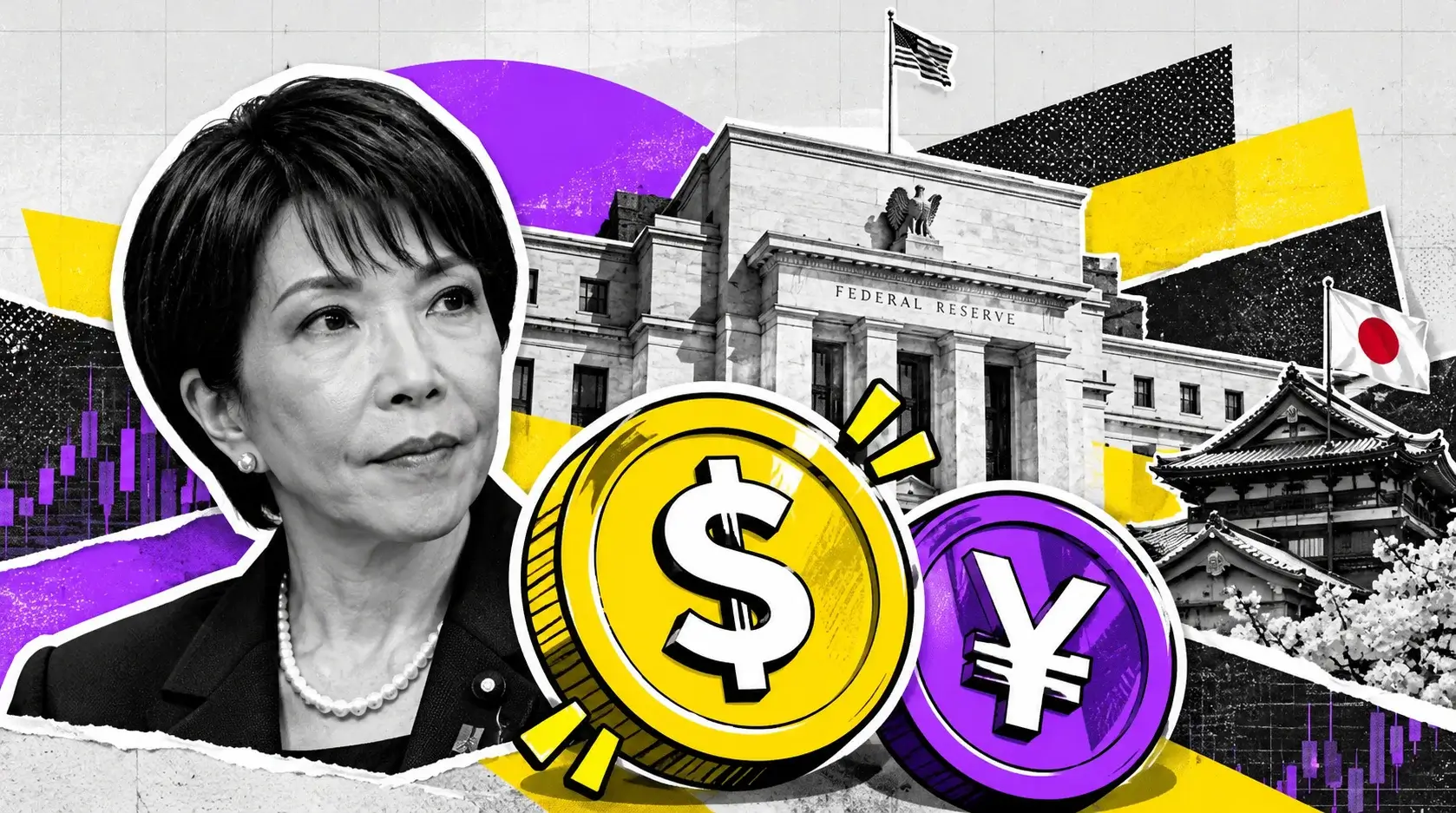
USD/JPY is trading at 158.50 on April 1, 2026, down 0.14% on the session after touching a one-week low of 158.27 earlier in the day. The pair retreated from 160.00 — the psychological level that has previously triggered direct intervention by Japanese authorities — as risk sentiment improved on Trump's Iran exit comments and the U.S. Dollar Index slipped toward 99.34, close to a one-week low after hitting ten-month highs of 100.64 on Tuesday. The week's price action tells the story in a single sequence: USD/JPY climbed from the mid-157s toward 160.00 on dollar safe-haven demand, touched the intervention trigger zone, then reversed as geopolitical de-escalation unwound the war premium. The pair is now oscillating in a 158.00 to 159.50 range with two competing forces — a Fed that is frozen at 3.50% to 3.75% with zero probability of movement, and a Bank of Japan that ING explicitly forecasts will deliver a 25 basis point rate hike in April. That divergence — the Fed stationary while the BoJ tightens — is the medium-term structural setup that makes USD/JPY a directional short on any sustained move above 159.50 and a buy on any dip toward the 50-day SMA near 156.96.
The BoJ Tankan Survey Hit Its Highest Level Since December 2021 — and ING Is Calling a 25bp April Hike
The Bank of Japan's Q1 2026 Tankan survey showed large manufacturer sentiment rising to a headline index of 17, the highest reading since December 2021. This marked the fourth consecutive quarterly increase, a sustained improvement that reinforces market expectations of continued monetary policy normalization by the BoJ. The Manufacturing PMI was revised up to 51.6 from the flash reading of 51.4 — below February's 53 but representing three consecutive months of expansion. ING economist Min Joo Kang was direct: the BoJ is expected to deliver a 25 basis point rate hike in April, with underlying inflation approaching the 2% target and the Tankan's output price index indicating higher prices expected in both the short and medium terms. Japan's policy rate currently sits at 0.75%. A 25 basis point hike to 1.00% at the April meeting would be the most significant BoJ tightening signal in years, and the market has already begun pricing it — 10-year Japanese government bond yields are now trading near 2.35%, showing a consistent upward trend. The critical caveat: some BoJ officials noted the Tankan survey may not fully capture the impact of the Iran war. Japan is one of the world's most energy-import-dependent major economies, sourcing a substantial proportion of its energy needs from the Persian Gulf. A prolonged conflict that keeps oil above $100 and LNG prices at elevated levels puts direct upward pressure on Japan's inflation while simultaneously threatening its economic growth — the same stagflationary trap the UK is navigating, and which complicates the BoJ's tightening path even as the data nominally supports a hike.
The 160.00 Psychological Level Has Triggered Intervention Before — And Japanese Authorities Are Watching
The most important single number in the entire USD/JPY market is 160.00. This level previously triggered direct intervention by Japanese authorities — the Ministry of Finance and the Bank of Japan have historically acted to sell dollars and buy yen when the pair approaches or breaches this threshold, given the direct inflationary impact of yen weakness on Japan's import-dependent economy. The pair touched 160.00 earlier this week before retreating as Trump's Iran comments softened the dollar broadly. Japanese officials in Tokyo have recently issued fresh warnings that they are ready to take "decisive action" in the event of excessive yen volatility — standard language for imminent intervention risk. The fact that the pair backed off 160.00 without requiring a formal intervention reflects how sensitively positioned the market is to those warnings. Every participant in USD/JPY knows the intervention threshold exists, which creates a self-reinforcing dynamic: sellers emerge at or near 160.00 anticipating official action, creating a technical ceiling even without the actual deployment of Ministry of Finance reserves. The 161.493 level is identified as key resistance on the longer timeframe — a level corresponding to highs not seen since 2024. A sustained move toward that zone would confirm a stronger bullish structural bias but would also raise the intervention probability from high to near-certain.
The Dollar at 99.34 Has Lost Its Hormuz War Premium — But the Structural Dollar Uptrend Remains Intact
The U.S. Dollar Index is at 99.34, down from Tuesday's ten-month high of 100.64. The DXY's three-week March rally was built entirely on one thing: geopolitical safe-haven demand from the Iran conflict, amplified by oil-driven inflation fears that prevented the Fed from cutting rates. Trump's statement that U.S. forces will leave Iran in two to three weeks is unwinding that safe-haven premium across every dollar pair simultaneously. The Euro gained 0.43% against the dollar Wednesday. GBP gained 0.64%. The AUD surged 0.68%. CHF added 0.90%. These are broad, coordinated dollar weakness moves driven by a single geopolitical narrative shift rather than any change in the underlying U.S. economic picture. The ISM Manufacturing PMI came in at 52.7 — above the 52.3 consensus. The ISM Prices Paid index surged to 78.3 versus a 70.5 prior reading and a 73.0 consensus — the highest level in nearly four years. The ADP private employment number came in at 62,000, above the 40,000 consensus. Every U.S. macro data point Wednesday was dollar-supportive. The dollar is still falling because geopolitical narrative is overwhelming economic data in the current environment. Once the Iran narrative stabilizes — after Trump's 9 p.m. ET address — the macro fundamentals reassert and the dollar's structural support from the 4.336% 10-year Treasury yield and the 3.50% to 3.75% Fed funds rate becomes relevant again.
The Technical Setup: Price Below 21-Day SMA at 158.80, RSI Near 50, MACD at Zero — Classic Consolidation Configuration
The USD/JPY daily chart is showing a textbook consolidation pattern after the pair failed to sustain a break above the 160.00 psychological resistance. Price is hovering just below the 21-day SMA at approximately 158.80 — the immediate resistance level that needs to be reclaimed on a closing basis before any recovery toward 160.00 becomes viable. The RSI is hovering near the neutral 50 mark — not overbought, not oversold, reflecting a genuine balance between buying and selling pressure over the 14-session measurement window. The MACD has slipped marginally below its signal line but remains near the zero line, confirming consolidation rather than a full-scale reversal. The longer-term uptrend from the multi-month structural trendline remains the dominant technical feature — the current pullback from 160.00 toward 158.50 is a correction within that uptrend, not a break of it. The critical downside levels: the 21-day SMA at 158.80 is immediate resistance and a re-close below it maintains the short-term bearish pressure. The 50-day SMA at approximately 156.96 is the next meaningful support, defining the lower boundary of the current consolidation range. The 157.822 level aligns with recent lows and represents where a sustained bearish break would validate further downside toward 156.96. On the upside, the 21-day SMA retest at 158.80 is the first gate, followed by 159.523 as the near-term neutrality zone, with 160.00 as the psychological ceiling and 161.493 as the structural bull target.
Read More
-
Yen Stalls at 160 Despite a 3% JGB and Tokyo Core CPI at 2.0% — Intervention Sits at 164, Friday's Payrolls Decide
02.09.2026 · TradingNEWS ArchiveEnergy
-
QQQ ETF ($706.22) Slides 7.4% Below Its High as the Market Reprices the AI Capex Bill — $686.57 Target if $700 Breaks
22.10.2026 · TradingNEWS ArchiveStocks
-
XRPI ($7.00) and XRPR ($10.74) Slide Toward 52-Week Lows as Spot XRP ETF Flows Stall at $708,510
22.10.2026 · TradingNEWS ArchiveCrypto
-
NG ($2.775) Decoupled From Europe’s €88 Gas Crisis as LNG Feedgas Hits 18.9 Bcf/d — $3.30 Upside on Cold Weather
22.10.2026 · TradingNEWS ArchiveCommodities
-
Dollar-Yen (157.35) Loses 157.65 as the Yen Rallies on Haven Demand — 155 Target if 156 Breaks
22.10.2026 · TradingNEWS ArchiveForex
Friday's NFP Is the Most Important Near-Term Catalyst for USD/JPY Direction
The event risk calendar for USD/JPY this week is dense and sequentially important. Wednesday's ADP number at 62,000 was above the 40,000 consensus — a mild positive for dollar bulls. The ISM Manufacturing PMI and Prices Paid data were both above expectations — more dollar support. But the event that will define USD/JPY's next directional move is Friday's nonfarm payrolls report. The February official government count showed a -92,000 decline in payrolls with the unemployment rate rising to 4.4% — the single largest employment miss in years outside of COVID-19. A repeat of that weakness, or even a soft print below 50,000, would revive Fed rate cut expectations rapidly, potentially pricing the first cut for June or July. That repricing would weaken the dollar materially and push USD/JPY toward the 50-day SMA support at 156.96 or below. A strong jobs number — above 100,000 — reinforces the Fed hold posture, re-strengthens the dollar, and sends USD/JPY back toward 159.50 to 160.00. The JOLTS data released Tuesday showed job openings dropping to 6.882 million against the 6.9 million consensus, with hiring collapsing to 3.1% — the lowest level since April 2020. That labor deterioration data points toward a soft NFP outcome and is the primary reason USD/JPY faces continued downward pressure even with dollar-supportive ISM data Wednesday.
The BoJ-Fed Policy Divergence Is the Medium-Term Framework — and It Points Lower for USD/JPY
The medium-term directional case for USD/JPY is being shaped by a policy divergence that is unambiguous in its direction: the Bank of Japan is tightening while the Federal Reserve is frozen. Japan's policy rate is at 0.75% and ING is forecasting 1.00% by end of April. The 10-year JGB yield at 2.35% is rising with the trajectory of BoJ normalization expectations. Meanwhile, the Fed holds at 3.50% to 3.75% with zero probability of any change at the April 29 meeting. In a world where the BoJ is raising rates and the Fed is not, the interest rate differential between U.S. and Japanese bonds is narrowing — and when the yield differential narrows, carry trades that were funding yen weakness by borrowing in yen and investing in dollars become less profitable. The unwinding of yen carry trades is one of the most powerful sustained trend drivers in the forex market, capable of producing multi-hundred-pip moves in USD/JPY over weeks to months. The structural uptrend that has defined USD/JPY for multiple years was built on massive yield differential in favor of the dollar. That differential is narrowing. A sustained BoJ tightening cycle while the Fed holds or eventually cuts would invert the structural forces that drove USD/JPY to 160.00.
The Verdict on USD/JPY at 158.50: Sell Rallies Toward 159.50-160.00, Target 156.96, Manage Around Trump's Speech
USD/JPY at 158.50 is a sell on any recovery toward the 159.50 to 160.00 zone, with a primary target of the 50-day SMA at 156.96 and a secondary target at 155.54 if the BoJ delivers its expected April 25 basis point hike and NFP disappoints on Friday. The stop on any short position sits above 160.50 — above the intervention trigger zone and the key resistance at 161.493. The rationale is structural and multi-layered: Iran war de-escalation is removing the dollar safe-haven premium that drove the DXY to 100.64, the BoJ is the only major central bank in active tightening mode while the Fed is frozen, Japan's JGB yields at 2.35% are attracting capital flows back into yen-denominated assets, and the 160.00 intervention ceiling caps upside even in the bull scenario. Trump's 9 p.m. Wednesday address is the immediate risk — if escalation language emerges unexpectedly, the safe-haven bid returns and USD/JPY challenges 160.00 again. If the speech confirms de-escalation, the pair moves toward 157.50 in the session. Friday's NFP is the week's defining data point. The technical structure confirms the trade: price below the 21-day SMA, RSI at neutral, MACD at zero, intervention ceiling at 160.00, BoJ hike incoming. Everything points the same direction.