USD/JPY Price Forecast: Yen Slides Below 155 as BoJ Tightens Grip and Carry Trade Cracks
Dollar-yen rebounds from 152 after JGB yields hit 4%, but election risk, Fed cut bets and intervention threats keep 150–160 trading band on edge | That's TradingNEWS
USD/JPY Price Outlook: Yen Regains Leverage As Carry Trade Cracks
USD/JPY slides below 155.00 and loses its anchor
USD/JPY just finished a whipsaw month that stripped the pair of its easy narrative. It fell to a weekly low near 152.09 before recovering to about 154.75, ending January down roughly 1.3% and, crucially, back under the 155.00 line that had acted as a pivot for months. That drop came after an earlier surge toward 159.45 from an October low near 147.06, a move built on yield spreads and a one-way carry trade that is now under open attack. Price bounced from the 50-week EMA, so the long-term uptrend is not broken yet, but momentum has clearly rolled over. Beneath 152.00, the next meaningful zone sits around 150.00, and below that a broader 145.00–140.00 band that defined the last major intervention zone. On the topside, 155.00 is now the first test, with 158.00 and the 159.45 peak capping any squeeze unless fundamentals flip back in the dollar’s favor.
BoJ’s 0.75% policy rate and JGB spike compress the USD/JPY carry
The core of the story is that Japan is no longer the simple “free money” leg for global carry. The Bank of Japan is holding a policy rate around 0.75%, but it is now explicitly signaling that 0.75% is not a ceiling. At the same time, the government bond market has moved into territory unthinkable under the old yield-curve-control regime. The 10-year JGB is trading near 2.25%, roughly double last year’s level, and the 40-year yield briefly pushed above 4.0% before easing back toward 3.9% after a well-bid auction. That combination – a live hiking bias and long-end yields above 4% – has turned the JGB curve into a volatility source instead of a shock absorber. For USD/JPY, every tick higher in Japanese yields chips away at the interest-rate advantage that supported the move to 159+. The wider the long-end spread narrows, the less sense it makes to fund in yen at scale, and the more fragile leveraged long-dollar positions become when spot starts to move against them.
BoJ Summary of Opinions, neutral rate and the path toward 1.5%–2.0%
Near term, the BoJ’s Summary of Opinions and the way policymakers talk about the “neutral rate” will dictate how far USD/JPY can fall before dip buyers step in. If board members frame a neutral rate somewhere in the 1.5%–2.0% area, markets will treat that as a roadmap for multiple hikes over 2026. That would imply a much tighter US-Japan rate gap even if the Fed cuts slowly. The economic backdrop gives the BoJ cover to lean that way. GDP and inflation projections have been revised higher, and forward guidance has shifted from emergency support to managing a more normal cycle. Services PMIs have turned up, and earlier data pointed to stronger domestic demand. At the same time, December retail sales surprised to the downside and household spending is expected to fall about 1.3% month-on-month after a 6.2% spike in November. With private consumption near 55% of GDP and services around 70%, the BoJ must balance wage growth and demand against the risk that higher rates and a stronger yen crush consumption. That tension argues for cautious but persistent tightening – exactly the path that undermines the carry trade without collapsing the economy, and that is bearish for USD/JPY over the medium term.
Yen weakness, import prices and intervention risk cap USD/JPY upside
Authorities are not just looking at growth; they are staring at imported inflation as well. A weaker yen pushes up energy and food costs, eroding household spending power and creating the worst mix for Japan: rising prices with weakening demand. That is why verbal warnings around ¥155–¥160 matter. The last slide in USD/JPY was accelerated by open commentary that intervention remained on the table and that rapid, one-sided moves would not be tolerated. Traders remember the 2024 carry-trade unwind that drove the pair sharply lower, and they are now reluctant to push toward 160 without a very strong dollar tailwind. In practice, that makes 155.00 not just a chart level but a political line. Above 155.00, every extra yen higher increases the probability of intervention headlines or outright action. As a result, the risk-reward on fresh long-dollar positions has deteriorated even before the BoJ hikes again.
Election on February 8 adds fiscal and political noise to USD/JPY
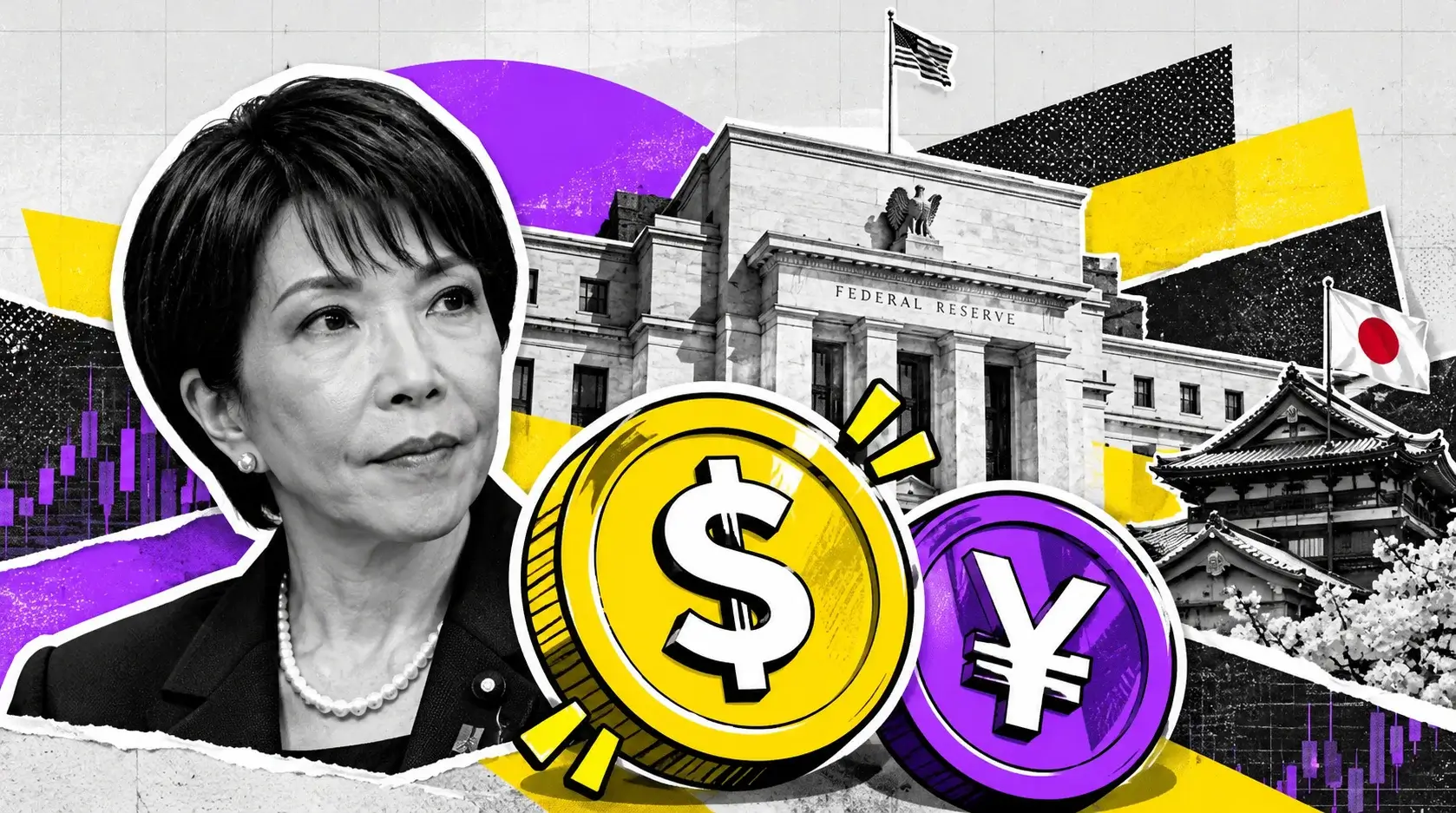
Japan’s snap election on February 8 is another volatility source for USD/JPY. Prime Minister Sanae Takaichi is going to the polls with high personal approval and an explicit agenda to use fiscal spending while navigating a debt-to-GDP ratio near 240%. The last leg higher in USD/JPY, from about 147.06 in October to above 159 in January, was partly driven by concerns that aggressive spending and heavy issuance would cheapen the yen over time. A strong electoral win would give the government more room to press that agenda, which on its face is yen-negative. At the same time, markets know that larger deficits and higher long-term yields can force the BoJ to normalize faster, which is yen-positive if the central bank leans hawkish. That cross-current – more fiscal risk but more tightening pressure – keeps the risk premium high and reinforces the idea that USD/JPY rallies will meet selling rather than trend in a straight line. Diplomatic angles matter too: any improvement in relations with key trading partners after the vote could support the yen via confidence and capital inflows.
US side of USD/JPY: jobs, ISM services and fading March cut odds
On the dollar leg of USD/JPY, the focus is shifting from the size of Fed cuts to their timing. The ISM Services PMI is expected to slip from 54.4 to about 53.8, still in expansion but hinting at slower momentum in a sector that is roughly 80% of US GDP. The labor market is projected to hold an unemployment rate around 4.4%, with wage growth easing from 3.8% year-on-year to about 3.6%. Softer wages would point to weaker consumer demand and cooler demand-driven inflation, the kind of mix that justifies rate cuts later in the year. Yet Fed-watch data show the market has already shifted away from aggressive early easing. The probability of a March 2026 cut has dropped to roughly 13.4% from over 50% at the end of December, and odds of a June cut have slid from about 84.5% to near 61.8%. That repricing helped the dollar stabilise after an initial selloff, but it does not restore the wide rate gap that launched USD/JPY toward 160. Instead, it sets up a creeping compression as US yields drift lower while JGB yields stay high or climb further. For USD/JPY, that backdrop supports a series of lower highs rather than a clean breakout.
Read More
-
Yen Stalls at 160 Despite a 3% JGB and Tokyo Core CPI at 2.0% — Intervention Sits at 164, Friday's Payrolls Decide
02.09.2026 · TradingNEWS ArchiveEnergy
-
AMD ($560.68) Rebounds 10% From Its October Low on the Meta Helios Win — November 3 Report Holds the Key to $649
27.10.2026 · TradingNEWS ArchiveStocks
-
Ethereum ($2,312) Lags Bitcoin and AI Stocks as BitMine Nears Its 5% Cap — Break of $2,295 Opens $2,200
27.10.2026 · TradingNEWS ArchiveCrypto
-
Brent ($113.88) Trades a $2.35 Range as Houthi Strikes Meet Saudi-Iran Diplomacy — Break of $117 Unlocks $120
27.10.2026 · TradingNEWS ArchiveCommodities
-
Nasdaq Rips 1.3%, S&P 500 Hits 7,728, Dow Stalls as BA Drops to $171
27.10.2026 · TradingNEWS ArchiveMarkets
-
GBP/USD (1.3310) Can’t Cash In on 5.43% Gilt Yields as Budget Risk Meets a Firm Dollar — Break of 1.3274 Opens 1.3200
27.10.2026 · TradingNEWS ArchiveForex
Fed chair politics, metals crash and the broader dollar shock
The shift in dollar behavior is not just about the calendar of cuts; it is also about the incoming leadership tone. The nomination of a more hawkish Fed chair candidate has already re-priced expectations, and markets reacted violently across assets. Silver spiked toward about $122 before collapsing below $90 in a matter of days, while gold swung lower after trading far above its levels near $1,700 two years ago. Those moves translated into double-digit percentage drops, roughly 12% for gold and over 25% for silver in a short window. That metals rout is a direct expression of higher real-yield fears and a stronger dollar impulse, and it fed into FX via a broad squeeze on dollar shorts. USD/JPY rode that wave partially higher but failed to reclaim 159, confirming that while global dollar flows matter, the pair is no longer a one-way policy trade. The dollar can spike on surprise hawkish signals, but each spike runs into the reality of a BoJ that is not pinned at zero and a yen that now responds to domestic yields as much as to US ones.
Yen carry trade turns from free funding into a volatility switch
The yen carry trade sits at the center of this transition. For years, traders could borrow yen at near-zero rates, buy anything with a yield, hedge only partly and rely on the BoJ to keep bond volatility under control. Late January showed the new regime. With the policy rate around 0.75%, 10-year JGBs near 2.25% and 40-year yields pushing above 4.0% before settling, the price of that funding has risen and, more importantly, become unstable. Liquidity gauges on JGBs have flashed stress, with “kinks” along the curve revealing that large flows can now move yields in jumps rather than smooth steps. When that happens, risk systems start demanding less leverage across portfolios, and carry that uses yen funding is often the first to be cut. Crypto markets have already provided a clean stress-test. Bitcoin traded around $86,642–$89,398 in late January, then plunged toward $75,500 as over $2.5 billion in leveraged positions were liquidated. Desks were all talking about yen volatility and intervention risk at the same time, illustrating how a funding shock in Japan can force liquidations in unrelated assets. For USD/JPY, that means sharp, disorderly moves lower whenever JGB volatility spikes or intervention fears resurface.
Cross-asset context: oil, equities and safe-haven rotation around USD/JPY
Cross-asset signals echo the same story. WTI crude oil failed to break above about $66 a barrel and pulled back, reflecting doubts about growth and the impact of possible strikes on Iranian assets. The German DAX is clinging to support around 24,500 after a strong breakout, relying on fiscal support to keep the bull case alive. Silver’s slide from near $122 to below $90 and gold’s violent reversal have turned those markets into symbols of how fast excess optimism can unwind when the dollar spikes. Even in FX, pairs like GBP/USD, which faded from above 1.3750 with a weekly shooting-star pattern, and EUR/USD, which reversed from a breakout and is now at risk of dropping toward 1.16, show that dollar strength has become more selective and jumpy rather than a simple trend. USD/JPY sits at the center of this rotation. When risk sentiment sours and traders scramble for cash, the dollar can gain broadly and push USD/JPY higher. When the focus shifts back to JGB yields, BoJ policy and intervention threats, the yen reasserts itself and the pair falls even in a firm-dollar environment. That tug-of-war reinforces the view that 155–160 is an exhaustion band rather than the start of a new sustained leg higher.
Technical structure on USD/JPY: EMAs, key levels and scenario map
Technically, USD/JPY is sending mixed but increasingly heavy signals. On the daily chart the pair trades below its 50-day EMA while still holding above the 200-day EMA, a configuration that usually points to bearish near-term momentum within a still-intact longer-term uptrend. The recent low near 152.09 came just as the 50-week EMA acted as dynamic support, triggering the current rebound. For bulls, reclaiming and holding above 155.00 is the first requirement. A sustained break would open room toward 158.00 and then the prior high around 159.45, though any push toward that zone will collide with heightened intervention risk. For bears, the roadmap is cleaner. A daily close back below 152.00 would put the psychologically important 150.00 handle in play. A decisive break of 150.00 would signal that the 200-day EMA has failed and would align the chart with the fundamental story of narrower rate spreads, making 145.00–140.00 a realistic medium-term target band on a 4–16 week horizon. The structure therefore favors selling strength while the pair trades below 155.00 rather than chasing breakouts higher.
USD/JPY stance: medium-term bearish, Sell on rallies
Pulling everything together – a BoJ edging away from ultra-easy policy, JGB yields at multi-year highs, a Fed that is still likely to cut in 2026, elevated intervention risk above 155, and a fragile yen carry trade – the balance of evidence points to a medium-term bearish view on USD/JPY. The pair can still stage sharp squeezes higher on data surprises or Fed headlines, and a clean break and daily close above 155.00 could trigger a run at 158.00–159.00. But those moves are opportunities, not a reason to abandon the structural shift underway in Japan. The more rational stance is Sell on rallies into the 155.00–158.00 area, with the base case that USD/JPY gravitates toward 150.00 and then 145.00–140.00 over the coming months as rate differentials compress and carry trades are scaled back. In this regime, the yen is no longer a passive funding currency; it is an active risk factor. That change alone is enough to justify a Sell rating on USD/JPY on any strength while the BoJ keeps hiking risk on the table and the Fed edges, however slowly, toward easier policy.