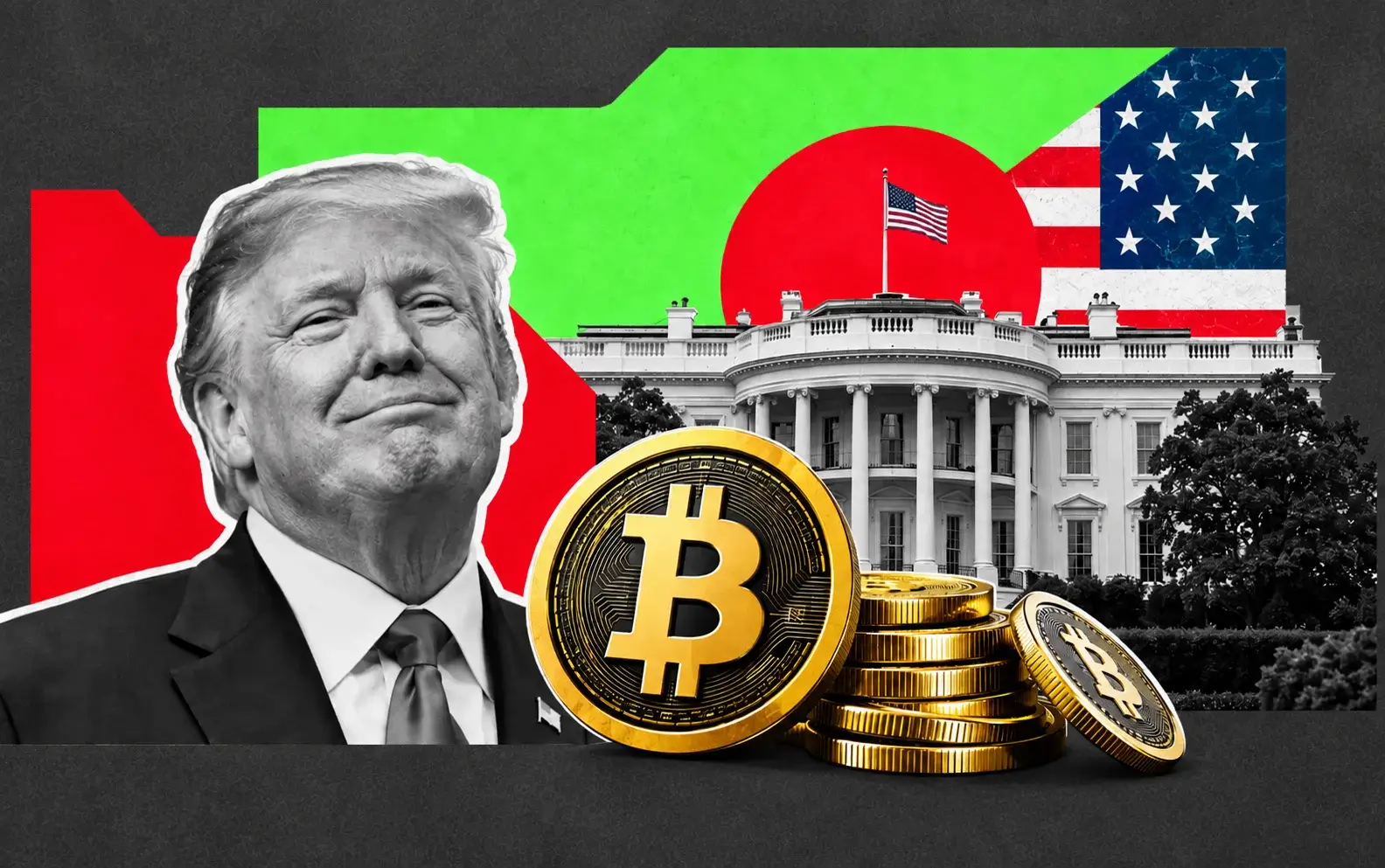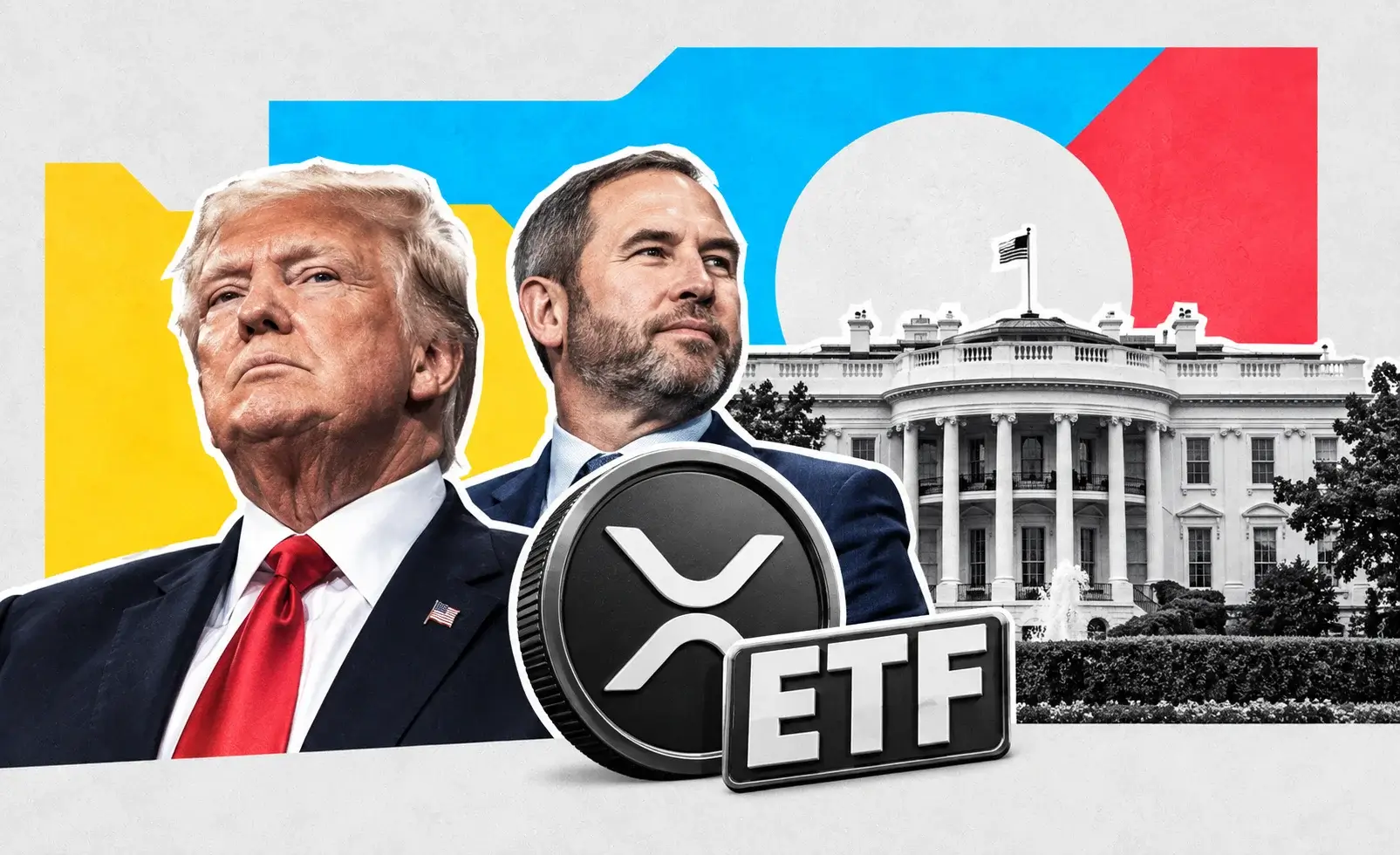
XRP ($1.28) Tests $1.25 Support as Commodity Status Survives Senate Defeat — 16.4% Upside to $1.49
XRP remains one of 16 digital commodities under SEC-CFTC guidance from March 17 | That's TradingNEWS
Key Points
- XRP fell 9.4% to $1.28 after the Clarity Act vote, nearly eight times bitcoin's 3.8% decline.
- Spot XRP ETFs logged zero net flows on September 15 while bitcoin and ether funds lost $592 million.
- XRP must reclaim $1.35 to open $1.49, while a close below $1.25 exposes the $1.10 support zone.
No major digital asset priced the Clarity Act more aggressively than XRP, and none paid a steeper price when the Senate killed it. XRP-USD traded at $1.28 on Wednesday, September 16, 2026, down 9.4% over 24 hours after the Senate voted 49-50 on Tuesday to block the Digital Asset Market Clarity Act from advancing. The token started Tuesday's session near $1.47, fell to an intraday low of $1.27 and recovered only as far as $1.29. The peak-to-trough decline inside one session measured 13.6%.
The relative damage is the story. Bitcoin fell 3.8% over the same window. Ether fell 4.53%. Solana dropped 4.74%. XRP's 9.4% decline ran nearly eight times bitcoin's percentage move. At $1.28, XRP carries a market capitalization of $80.79 billion on 63.1 billion circulating tokens. Trading volume surged 41.2% to $6.49 billion over 24 hours, equal to 8.0% of market value, confirming that real selling rather than thin-liquidity drift drove the move.
The broader context shows how much optimism was priced in and then removed. XRP bottomed at $0.9877 on August 17, rallied 70% in three days to $1.66 by August 22, pulled back to $1.44 when leveraged traders were forced out, and spent early September in a $1.31–$1.49 range. On Monday, September 14, XRP surged 9.8% to $1.49 as prediction-market odds on the bill briefly climbed back toward 33% after President Trump accepted new ethics provisions. Tuesday erased that entire move and more. XRP is now down 9.5% for the week, though still up 29% over 30 days.
The thesis for this forecast rests on a distinction the market ignored on Tuesday. The Clarity Act would have codified XRP's commodity status in federal statute. But XRP already holds that status administratively: the Securities and Exchange Commission and the Commodity Futures Trading Commission classified XRP as one of 16 digital commodities in a joint document issued on March 17, 2026. The bill's failure made that status reversible, not revoked. A 9.4% decline, eight times bitcoin's, overprices the actual legal loss.
The technical damage, however, is real. XRP lost the $1.31–$1.35 support band and now trades below the long-term daily moving average near $1.35. It is testing a cluster of rising moving averages between $1.25 and $1.29. A reclaim of $1.35 opens a run back to $1.43 and $1.49, a 16.4% gain. A daily close below $1.25 exposes $1.20 and the $1.10 support zone, a 14.1% decline. The Federal Reserve decision at 2:00 p.m. ET decides which comes first.
Tuesday's Collapse: From $1.47 to $1.27 in One Afternoon
XRP's decline on Tuesday, September 15, unfolded in distinct stages that traders could track in real time, culminating in a sharp afternoon drop around the Senate vote.
The setup started over the weekend. Senate Republicans released the final text of the Clarity Act on Sunday, incorporating 126 amendments sought by Democrats, including new ethics provisions that addressed concerns about public officials profiting from crypto ventures. President Trump agreed to that version. Prediction-market odds that the bill would become law in 2026 recovered to around 30% by September 14, after falling as low as 14% on September 8. XRP responded with a 9.8% surge to $1.49 on Monday, its strongest session in weeks. On September 14 alone, the token gained 2% to $1.38 before extending the move.
The first leg down came overnight. As negotiations broke down, prediction-market odds dropped 12 points to 18.5% by Tuesday morning. XRP slipped from its Monday high toward $1.45, and spot bitcoin ETFs saw sellers position ahead of the vote.
The second leg came with the vote itself. The Senate's procedural motion drew 49 votes in favor and 50 against, 11 short of the 60 required for cloture. All Democrats voted no, joined by Republicans Susan Collins, Josh Hawley, Jerry Moran and Thom Tillis. XRP fell toward $1.30 within minutes and extended the decline to $1.27. A significant volume spike coincided with the drop. Across crypto markets, $288.44 million in long positions were liquidated within four hours of the vote.
The third leg was the post-vote bleed. By 6:25 UTC on Wednesday, XRP traded near $1.28, down more than 11% from the start of Tuesday's session. Prediction-market odds of the bill becoming law in 2026 collapsed to 5%. Tillis entered a motion to reconsider at 3:01 p.m. on Tuesday, but the House will not act before the November midterms.
The broader crypto market suffered alongside XRP. Total crypto liquidations reached $670 million over 24 hours, with $572 million from long positions. An index of the 20 largest digital assets fell 4.79%. Spot bitcoin ETFs lost $450.33 million and spot ether ETFs lost $141.47 million, their worst days in months.
Buyers stepped in at $1.27, preventing an immediate slide toward $1.20. That intraday low aligned with the top of a dense cluster of rising moving averages between $1.25 and $1.29, which is why the decline paused where it did.
The Clarity Act: What XRP Lost and What It Kept
The legislative failure hit XRP harder than any other large-cap digital asset because XRP's investment case has been tied to regulatory status for years. Understanding what changed on Tuesday is essential to forecasting where the token goes next.
The Digital Asset Market Clarity Act would have created a comprehensive federal framework for digital assets. It would have divided oversight between the SEC and the CFTC, given the CFTC authority over spot crypto markets, set registration requirements and strengthened anti-money-laundering protections. For XRP specifically, the bill would have formally separated digital commodities from securities in federal statute, locking in XRP's classification as a commodity.
That statutory lock mattered because of XRP's history. Ripple spent years in a legal battle with the SEC over whether XRP was a security, a fight that has largely resolved in Ripple's favor. Ripple CEO Brad Garlinghouse has long argued that XRP already has greater legal clarity than most tokens because of that court battle.
The key fact for the forecast is that XRP's commodity classification did not disappear on Tuesday. On March 17, 2026, the SEC and CFTC issued a joint interpretive document classifying XRP as one of 16 digital commodities. That guidance remains in force. XRP can still trade on U.S. exchanges, spot XRP ETFs continue to operate, and institutions can hold the token under the current classification.
What XRP lost is permanence. The March 17 guidance is an administrative document that any future administration could reverse. With Democrats increasingly likely to take control of Congress after the November midterms, and with all Democratic senators voting against the bill, the risk of a future regulatory reversal rose. Large institutional allocators, pension funds and insurers with long investment horizons wanted statutory certainty before committing capital at scale. Estimates of billions of dollars in institutional XRP ETF inflows following passage were contingent on that codification.
The regulatory path remains open. Senate Banking Committee Chairman Tim Scott said after the vote that it was time for the SEC and CFTC to establish clear rules of the road until Congress legislates. SEC Chair Paul Atkins confirmed that the agency's Project Crypto initiative proceeds regardless of the bill's fate.
Garlinghouse addressed the result publicly soon after the vote. Speaking at the Economic Club of Kansas City in a session on digital asset disruption, he said crypto would win with or without the Clarity Act and argued that existing financial infrastructure has failed to keep pace with newer technology. Ripple's chief legal officer also moved to reassure XRP holders after the failure.
For price, the distinction between administrative and statutory status explains why a 9.4% decline may overshoot. XRP lost a catalyst, not its legal standing.
Prediction Markets: From 90% in February to 5% After the Vote
The collapse in prediction-market odds tracks XRP's price path through 2026 more closely than any technical indicator, and the numbers show how much of the token's valuation rested on legislative hope.
Traders have put $20.56 million into the largest prediction market on whether the Clarity Act would be signed into law in 2026. In February, that market priced a 90% probability of enactment. By early May, the odds had fallen to 62% as banking-sector pushback and conflict-of-interest clauses stalled the bill in the Senate Banking Committee. By August, odds sat in a 20%–24% range. They fell to 18% by September 6 and 14% by September 8.
The final week produced a whipsaw. After Republicans released their final text with ethics provisions and President Trump accepted it, odds climbed back to 33% on September 14. Overnight, as negotiations broke down, they fell 12 points to 18.5% by Tuesday morning. After the vote, the odds stood at 5%. One major crypto firm had anticipated a 10% chance of passage before the vote, lower than the market's own pricing.
A second prediction market offers slightly more hope. It forecasts Senate passage before January 1 at about 20%, a figure that depends on Tillis's motion to reconsider producing a second vote before the elections. That path requires at least seven Democratic senators to change their votes, which none signaled on Tuesday.
XRP's price moved in lockstep with those odds. At $1.51 in late August, with odds in the 20%–24% range, the base-case outlook sat near $1.65–$1.70, with $2 requiring passage plus record ETF inflows. At $1.49 on Monday, with odds at 33%, XRP traded near its September high. At $1.28, with odds at 5%, XRP has priced in legislative failure.
The math implies the market assigned a significant premium to the bill. The move from $1.49 at 33% odds to $1.28 at 5% odds represents a $0.21 decline for a 28-point drop in probability. On that ratio, each 10 percentage points of enactment probability was worth $0.075 per token, or $4.73 billion in market capitalization on 63.1 billion circulating XRP.
Reversing that math frames the upside risk. If Tillis's motion to reconsider gains traction, or if Senate leaders signal a second vote before the midterms, prediction-market odds could recover toward 20%, which on the same ratio would add $0.11 to XRP's price.
Longer-dated crypto prediction markets show broad caution. Contracts pricing bitcoin above $100,000 in 2026 sit at 17%, and ether above $3,500 at 31%.
Spot XRP ETFs: $1.55 Billion Cumulative, Zero Flow on Vote Day
The spot XRP ETF data offers the most important counterweight to Tuesday's price damage, because institutional money did not run for the exit the way it did in bitcoin and ether funds.
U.S. spot XRP ETFs launched in November 2025 and have recorded more than $1.55 billion in cumulative net inflows since then. At $1.28, that equals 1.21 billion XRP, or 1.9% of circulating supply. The funds recorded their 2026 monthly inflow high of $131.94 million in May.
September flows had been steady before the vote. The funds took in $1.55 million on September 8, $12.29 million on September 9 and $5.14 million on September 10, bringing total inflows across those three sessions to $18.98 million. During the same period, spot bitcoin ETFs recorded three consecutive days of outflows. During the week of XRP's late-August rally, spot XRP ETFs recorded $39.78 million in net inflows, their best week since May. The funds also posted five straight weeks of net inflows through August.
On Tuesday, September 15, spot XRP ETFs logged zero net flows. That stands in sharp contrast to the $450.33 million that left bitcoin ETFs and the $141.47 million that left ether ETFs on the same day. XRP fund holders did not sell into the legislative shock.
Two readings of that zero-flow print are possible. The bullish reading is that XRP ETF investors are long-horizon allocators who view the March 17 commodity classification as sufficient and were not trading the vote. The bearish reading is that XRP ETF demand had already faded, so there was little marginal buying or selling to register. The flow rate has cooled sharply from early 2026.
The broader expectation gap is significant. Pre-launch projections called for up to $8 billion of year-one inflows into spot XRP ETFs. Ten months after launch, cumulative inflows of $1.55 billion equal 19% of that projection. Estimates that billions of dollars in additional institutional inflows would follow Clarity Act passage were explicitly conditioned on statutory commodity classification. With that path blocked for 2026, those projected inflows are deferred.
Institutional allocation beyond ETFs continues. Grayscale's new bitcoin-free Next Gen portfolio gives XRP a 26.11% weighting, the second-largest allocation behind ether. That inclusion places XRP among the core holdings in a diversified digital asset strategy for institutional clients.
For the forecast, ETF behavior over the next week is the critical signal. If XRP funds post outflows as prices fall, the institutional floor is weaker than it appeared. If inflows resume near the September pace of $18.98 million over three sessions, it confirms that institutional holders see the administrative classification as enough.
Read More
-
Yen Stalls at 160 Despite a 3% JGB and Tokyo Core CPI at 2.0% — Intervention Sits at 164, Friday's Payrolls Decide
02.09.2026 · TradingNEWS ArchiveEnergy
-
Semtech ($158) Holds $153 as Data Center Revenue Hits $100M and EPS Guide Jumps to $1.05 — 12% Path to Record High
16.09.2026 · TradingNEWS ArchiveStocks
-
Ethereum ($2,392) Holds $2,361 Low as Exchange Supply Hits 6.06M ETH Into Fed Decision — 8.7% Upside to $2,600
16.09.2026 · TradingNEWS ArchiveCrypto
-
WTI ($103.20), Brent ($107.60) Hold Above $100 as 10M Barrels a Day Stay Shut In — 9.7% Upside to $118
16.09.2026 · TradingNEWS ArchiveCommodities
-
S&P 500 SPX Rises to 7,624, Nasdaq IXIC Gains 234 Points, Dow DJI Stalls as INTC Rips 4% Into Fed Decision
16.09.2026 · TradingNEWS ArchiveMarkets
-
GBP/USD (1.3480) Loses 1.3500 as Fed Hike Flips Rate Gap Against Bank Rate at 3.75% — 80 Pips to August Low at 1.3400
16.09.2026 · TradingNEWS ArchiveForex
On-Chain Supply: 240 Million XRP Leave Exchanges
Exchange reserve data and whale behavior show a supply picture that tightened through the summer, which helps explain why XRP held $1.27 rather than cascading lower.
XRP reserves on Binance, Upbit and Bithumb, three of the largest exchanges for XRP trading, have fallen by roughly 240 million tokens since late May. At $1.28, that equals $307 million in XRP moved off exchanges into self-custody, ETF custody or institutional holdings. Tokens held off exchanges are not immediately available for sale, which reduces selling pressure during sharp declines.
Whale behavior has diverged from retail and ETF flows. In August, the gap between collapsing retail participation and ETF flow momentum on one side and accelerating whale accumulation on the other reached its widest level since spot XRP ETFs launched. Large holders were buying while smaller participants stepped back.
The late-August rally showed how quickly that supply dynamic can flip. Between August 19 and August 22, XRP rallied 70% in three days to $1.66. Heavily leveraged traders then got forced to close their positions, pulling XRP down to $1.44. That sequence, a sharp squeeze followed by a leverage flush, repeated on a smaller scale this week: Monday's 9.8% surge to $1.49 followed by Tuesday's liquidation-driven decline to $1.27.
Futures activity has amplified volatility. A spike in leveraged XRP futures trading on September 15 increased market risk heading into the vote. Institutional long exposure in futures rose even as taker and smart-money indicators stayed bearish in early September. That mix of rising leverage and weak spot conviction set up exactly the type of forced selling that hit on Tuesday.
Ripple's escrow releases add a supply variable. Ripple holds a significant portion of total XRP supply in escrow and releases tokens on a scheduled basis. Traders watch for any official statement regarding escrow releases, since additional supply entering the market during a price decline would add pressure.
The volume signature on Tuesday confirms that the decline was driven by genuine selling. The 41.2% increase in 24-hour trading volume to $6.49 billion coincided with the drop to $1.27. After the vote, volume cooled as XRP stabilized near $1.28, a sign that selling pressure was fading rather than accelerating.
For the forecast, the on-chain picture supports a floor near $1.20 to $1.25. Reduced exchange reserves and whale accumulation limit how much supply can hit the market quickly. The leverage flush has cleared out the most vulnerable positions. A move below $1.20 would require either new selling from large holders or escrow-driven supply.
Ripple's Business: RLUSD at a Record $2.44 Billion and 75 Licenses
Ripple's commercial expansion continues regardless of the Clarity Act, but the link between that growth and demand for XRP itself is looser than many holders assume.
Ripple USD, the company's regulated dollar-backed stablecoin, reached a record supply of roughly $2.44 billion on September 8. About $1.03 billion of that supply, or 42.2%, was issued on the XRP Ledger. RLUSD had reached $1.6 billion in market capitalization in August, making it the third-largest U.S.-regulated stablecoin. Its growth from $1.6 billion to $2.44 billion in roughly a month represents a 52.5% increase. Adoption includes LMAX and Mastercard. Ripple has targeted the $13 trillion Treasury market with RLUSD.
Ripple's regulatory footprint is extensive. The company has secured more than 75 operational licenses globally. Institutional participants including Aviva Investors and Kyobo Life Insurance have launched or expanded pilots on the XRP Ledger. The ledger absorbed $1.3 billion in newly tokenized real-world assets in the first weeks of 2026 alone. Rakuten integrated XRP into one of Japan's largest consumer ecosystems in April.
Protocol development continues. The next major XRP Ledger upgrade, xrpld version 3.3.0, bundles several enterprise-focused amendments. Confidential Transfers for Multi-Purpose Tokens use zero-knowledge proofs to hide balances and transfer amounts for institutional privacy. The Batch amendment allows up to eight transactions to be processed atomically as one, reducing costs and enabling atomic swaps. Other additions include Sponsored Fees, Permission Delegation and Dynamic MPT parameters.
The events calendar offers a major catalyst. Ripple Swell 2026, combined with the XRPL Developer Summit, will be held in New York from October 27 to October 29, gathering major banks, fintech firms and blockchain developers. The event is widely anticipated as a venue for new partnership announcements.
The structural tension is important for the forecast. As RLUSD grows and institutions settle transactions in dollar-denominated stablecoins rather than native XRP, the velocity-of-use argument for XRP as a bridge currency weakens. Institutions can access XRP Ledger settlement infrastructure without using XRP as the medium of exchange. Many Ripple products use the XRP Ledger or RLUSD without requiring significant XRP exposure beyond the network functions that consume the native token, such as transaction fees and reserves.
That tension explains a recurring frustration among XRP holders: strong commercial and institutional news has not produced proportionate price gains. Ripple's business strength supports the long-term network thesis, but the price of XRP depends more heavily on speculative flows, ETF demand and regulatory catalysts than on stablecoin adoption.
The Fed at 2 P.M.: Liquidity, Leverage and Altcoin Beta
The Federal Reserve decision is the second major catalyst for XRP inside 24 hours, and altcoins carry the highest sensitivity to changes in global liquidity.
Fed funds futures price a 92.9% probability of a 25-basis-point hike to 3.75%–4.00%, the first increase since July 2023. The rate has held at 3.50%–3.75% since December 2025. At the July 29 meeting, the committee held on a 9-to-3 vote, with three members dissenting in favor of a hike. At Jackson Hole on August 28, Chair Kevin Warsh said the Fed still has work to do on inflation. One month ago, futures priced a 33% probability of a September hike.
The inflation data forced the move. August U.S. CPI rose 3.4% year over year, per the Bureau of Labor Statistics, with core CPI up 0.3% against a 0.2% forecast. July PCE ran at 3.7%, per the Bureau of Economic Analysis. Oil above $100 a barrel, driven by the war with Iran and the shutdown of Saudi Arabia's East-West Pipeline, has pushed energy inflation higher.
Futures price a 39.1% probability of a second hike in October and 26.4% in December. The dot plot at 2:00 p.m. will show whether the committee sees today's move as a single adjustment or the start of a hiking cycle. Warsh's press conference at 2:30 p.m. carries its own risk: his July press conference drove a 1,000-point intraday Dow reversal and a 12-basis-point surge in the 30-year Treasury yield.
For XRP, the transmission runs through liquidity and leverage. Higher interest rates raise the cost of borrowing for leveraged crypto positions and reduce speculative appetite across risk assets. Altcoins, which carry higher volatility than bitcoin, typically fall harder when liquidity tightens and rally harder when it loosens. XRP's 9.4% decline against bitcoin's 3.8% on Tuesday illustrates that beta, amplified by XRP's specific exposure to the Clarity Act.
The bond market shows the pressure. The 10-year Treasury yield hit 5.045% on Tuesday, its highest since 2007, before easing to 4.967% on Wednesday. The 2-year yield hit a 52-week high of 4.671%. The U.S. Dollar Index reached 99.57. Each of those moves tightens financial conditions for speculative assets.
Global tightening extends through the week. The European Central Bank's deposit rate rises to 2.50% effective today, the Bank of England decides Thursday and the Bank of Japan is expected to hike to a 31-year high on Friday. A BOJ hike could unwind yen-funded carry trades, historically a source of leveraged crypto liquidity.
A restrained dot plot would give XRP room to rebound toward $1.35, since leveraged longs have already been flushed and sentiment is washed out. A hawkish dot plot would compound the legislative damage and push XRP toward $1.20.
Cross-Asset Context: XRP Versus Bitcoin, Ether and Gold
XRP's performance relative to other assets shows how isolated its decline was, and that isolation creates both risk and opportunity.
Bitcoin fell 3.8% to $75,500 over 24 hours and traded at $75,716 on Wednesday morning. At $1.28, XRP trades at 1,689 satoshis, or 0.0000169 BTC. XRP's decline was eight times bitcoin's in percentage terms. Bitcoin's commodity status is settled in U.S. practice, so the bill's failure affected it primarily through sentiment and ETF flows. XRP's investment case depended far more directly on the statute.
Ether fell 4.53% to $2,392. Ethereum's regulatory position has been strengthened through spot ETF approvals and staking guidance, which reduced its dependence on the bill. Solana fell 4.74% to $97.12. The index of the 20 largest digital assets fell 4.79%. Total crypto market capitalization declined 4.70%.
XRP underperformed every major digital asset on Tuesday by a wide margin. That concentration reflects how much legislative optimism was embedded specifically in XRP's price after its 70% late-August rally and Monday's 9.8% surge.
Traditional markets moved in the opposite direction on Wednesday. The S&P 500 rose 0.5% and the Nasdaq gained 0.9% by late morning. Intel jumped 7.2% on reports of SK Hynix manufacturing talks. Gold rallied 1.16% to $4,342.50, and silver climbed 1.62% to $64.58. Capital is flowing into equities and precious metals while crypto remains under pressure.
Crypto equities confirm the sector-specific damage. Coinbase fell 10.10% to $172.11 on Tuesday and Circle dropped 11.41% to $86.30, losing $7.9 billion in combined market value. Robinhood fell 3% to $110.92.
The relative picture offers a potential setup. When a single asset falls eight times more than its sector benchmark on a policy event, and the underlying legal status of that asset has not changed, the underperformance often partially reverses once the initial liquidation clears. XRP's 29% gain over 30 days, even after Tuesday's decline, shows the late-August rally built a buffer that has not been fully erased.
The risk is that XRP's premium over bitcoin during the rally was entirely built on the bill. If that premium fully unwinds, XRP could underperform further even if bitcoin stabilizes. A reclaim of 1,780 satoshis, equal to $1.35 at a $75,800 bitcoin price, would signal that relative weakness has stopped.
The Technical Map: $1.35 Resistance, $1.25–$1.29 MA Cluster, $1.10 Support
XRP's chart has shifted from a breakout structure back toward its multi-month range, and the key levels are clearly defined by moving averages and prior price action.
The most important level lost on Tuesday is $1.35. That region helped XRP consolidate through early September and aligns with the long-term moving average on the daily chart. What had served as support is now the first major obstacle to any recovery. At $1.28, XRP trades 5.5% below $1.35. A daily close above $1.35 would signal that the Clarity Act selloff has run its course.
The broader support band that failed was $1.31 to $1.35, where 2.29 billion XRP previously traded. High-volume price zones act as strong support on the way down and strong resistance on the way up, because traders who bought there look to exit at break-even.
Immediate support sits in the dense cluster of rising moving averages between $1.25 and $1.29. XRP is testing that cluster now. Buyers stepped in at the intraday low of $1.27, preventing a slide toward $1.20. A daily close below $1.25 would break the cluster and signal a deeper retracement.
The $1.28 to $1.30 area also marks the flat lower boundary of a descending triangle that built on the daily chart from February through April 2026. A descending triangle is a bearish continuation pattern when its lower boundary breaks. XRP's late-August breakout from a falling wedge, which had capped price since early 2026, took the token out of that structure. Tuesday's decline has returned price to the triangle's base.
Below $1.25, support sits at $1.20, then the $1.10 to $1.38 support region that traders identified in early September. The $1.10 level marks a 14.1% decline from current prices. The August 17 cycle low at $0.9877 marks a 22.8% decline and represents the base of the entire late-summer rally.
On the upside, resistance above $1.35 sits at $1.38, the September 14 level, then $1.43, the September 11 high, where uncollected liquidity could draw price. Above that, $1.45 to $1.49 marks Tuesday's pre-vote level and Monday's high. The $1.55 to $1.64 zone and the $1.66 August 22 high form the upper resistance band.
From $1.28, the key distances are: $1.35 at 5.5% above, $1.43 at 11.7% above, $1.49 at 16.4% above, $1.66 at 29.7% above, $1.25 at 2.3% below, $1.20 at 6.3% below and $1.10 at 14.1% below.
Catalysts Ahead: Fed Tonight, Tillis Motion, Swell in October
XRP's calendar over the next six weeks contains several catalysts that could reverse or extend Tuesday's damage.
The immediate catalyst is the Federal Reserve decision at 2:00 p.m. ET Wednesday and Warsh's press conference at 2:30 p.m. A restrained dot plot supports a rebound in crypto broadly. A hawkish dot plot pressures altcoins hardest.
The second catalyst is the Bank of Japan decision on Friday, expected to deliver a hike to a 31-year high. A BOJ hike could trigger an unwind of yen-funded carry trades and pressure leveraged crypto positions.
The third catalyst is Thom Tillis's motion to reconsider. Tillis entered the motion at 3:01 p.m. on Tuesday, keeping a procedural path open for a second vote. Any signal from Senate leadership that a second vote could occur before the midterms would lift prediction-market odds and XRP. The motion requires at least seven Democratic senators to change their votes, and the political calendar makes that difficult.
The fourth catalyst is regulatory action by the SEC and CFTC. With Senate Banking Chairman Tim Scott urging both agencies to establish clear rules until Congress acts, and the SEC confirming Project Crypto proceeds, new agency guidance could partially replace the certainty the bill would have provided. Any formal rulemaking that reinforces the March 17 commodity classification would support XRP.
The fifth catalyst is spot XRP ETF flow data. After zero net flows on Tuesday, the next several sessions will show whether institutional holders buy the dip, hold steady or begin redeeming.
The sixth catalyst is the xrpld 3.3.0 upgrade. Activation of Confidential Transfers, Batch transactions and Sponsored Fees would strengthen the ledger's institutional appeal.
The seventh catalyst is Ripple Swell 2026 in New York from October 27 to October 29, combined with the XRPL Developer Summit. Swell has historically served as a venue for partnership announcements with banks and payment firms.
The eighth catalyst is the November midterm elections. The outcome will determine whether the Clarity Act can be revived in 2027 or whether a Democratic-controlled Congress pursues a different approach to crypto regulation. A result that preserves Republican control of the Senate would revive statutory hopes. A Democratic Senate would push the timeline further out and raise the risk of stricter oversight.
RLUSD growth continues as a background catalyst, with supply at a record $2.44 billion.
Scenarios and Price Targets: $1.49 Recovery Versus $1.10 Retest
Three scenarios cover the realistic outcomes for XRP through the end of September, driven by the Fed decision, ETF flows and any legislative follow-up.
The bull case is macro relief and a legislative lifeline. The Fed raises rates to 3.75%–4.00% with a restrained dot plot that frames the move as a response to an energy shock. Crypto liquidity improves, and bitcoin reclaims $77,000. Spot XRP ETFs post inflows near September's pace of $18.98 million over three sessions. Senate leaders signal that Tillis's motion to reconsider could produce a second vote, lifting prediction-market odds back toward 20%. The SEC and CFTC reaffirm the March 17 commodity classification. XRP reclaims $1.35 within days, clears $1.38 and $1.43, and retests Monday's $1.49 high by the end of September, a 16.4% gain. Probability: 25%.
The base case is range consolidation. The Fed hikes with an ambiguous message, legislative odds stay near 5%, and ETF flows remain flat to modestly positive. XRP holds the $1.25–$1.29 moving average cluster on most tests and chops between $1.20 and $1.38 as the market digests the loss of the legislative catalyst. Whale accumulation and reduced exchange reserves prevent a deeper decline. Target range: $1.20 to $1.38 through the end of September. Probability: 50%.
The bear case is a hawkish Fed and institutional capitulation. The Fed's dot plot signals multiple additional hikes, the 10-year Treasury yield returns above 5.045%, and the Bank of Japan's Friday hike tightens liquidity further. Spot XRP ETFs record outflows for the first time this month. XRP breaks below $1.25 on a daily close, triggering another round of long liquidations, and slides through $1.20 to the $1.10 support zone, a 14.1% decline. A continued crypto selloff exposes the $0.9877 August low. Probability: 25%.
The risk-reward is balanced. Upside to $1.49 is 16.4%. Downside to $1.10 is 14.1%. The base case, with a 50% probability, places XRP in a $1.20–$1.38 range that sits around current levels.
The single variable to watch this week is the daily close relative to $1.25. A close above $1.35 confirms a recovery. A close below $1.25 triggers the bear case.
Verdict: Neutral-Bearish Below $1.35 — $1.49 Requires a Reclaim, $1.10 in Play Below $1.25
XRP at $1.28 has absorbed the heaviest damage of any major digital asset from the Clarity Act's failure. The token fell 9.4% over 24 hours, nearly eight times bitcoin's 3.8% decline, dropping from $1.47 at the start of Tuesday's session to a $1.27 low as the Senate voted 49-50 against cloture. Prediction-market odds of 2026 enactment collapsed from 33% on Monday to 5%. Trading volume jumped 41.2% to $6.49 billion. XRP lost the $1.31–$1.35 support band and now trades below the long-term daily moving average.
The legal reality is less damaging than the price move suggests. XRP remains one of 16 digital commodities under the SEC and CFTC's joint classification of March 17, 2026. Spot XRP ETFs, holding more than $1.55 billion in cumulative inflows, logged zero net flows on the vote day while bitcoin and ether funds lost a combined $592 million. Exchange reserves have fallen by 240 million XRP since late May. Ripple's RLUSD stablecoin reached a record $2.44 billion in supply, and Ripple Swell arrives October 27 to October 29.
The structural headwinds remain. Statutory commodity status is off the table for 2026, deferring the institutional inflows that were conditioned on it. Cumulative ETF inflows sit at 19% of pre-launch projections. RLUSD's growth strengthens Ripple's business but weakens the bridge-currency case for XRP itself. The Fed is priced at 92.9% to hike today, and altcoins carry the highest sensitivity to tighter liquidity.
The verdict is neutral-bearish below $1.35, with a base-case range of $1.20 to $1.38 through the end of September. A daily close above $1.35 shifts the outlook to constructive and opens $1.43 and $1.49, a 16.4% gain, particularly if Tillis's motion to reconsider gains traction or ETF inflows accelerate. A daily close below the $1.25–$1.29 moving average cluster sets a downside target at $1.20 and then $1.10, a 14.1% decline, with the $0.9877 August low as the line that separates a correction from a full reversal of the late-summer rally.