
XRP Price Forecast: XRP-USD at $1.39 After Every Regulatory Win Has Been Delivered — Standard Chartered Targets $2.80
With the SEC/CFTC Commodity Classification Done, $1.44B in ETF Inflows Live, Weekly RSI Approaching a Bullish Cross, and March 27 SEC Deadline 3 Days Away | That's TradingNEWS
Key Points
- $1.44B in ETF Inflows — But 84% Is Retail, Weekly Flows Collapsed From $200M to $2M — XRP-USD jumped 2.8% on ETF milestone news but the composition reveals the institutional wave hasn't started: only 16% of $1.44B XRP ETF assets are institutional filers versus Bitcoin ETFs that flipped to institutional majority within a year driving BTC from $40K to $126K.
- Five 2030 Targets Spanning $0.50 to $1,000 — The $4–$20 Range Is Where Evidence Points — Standard Chartered targets $28 requiring a $1.7T market cap, Dom Kwok targets $1,000 requiring $61T larger than all stock markets combined, Bitget targets $4.20–$10 at a $256B–$610B cap needing the least to go right
- The $1.44 Resistance Is the Only Number That Matters This Week — XRP-USD faces a clustered resistance zone at $1.4155–$1.4385 capping every intraday rally while the weekly RSI approaches a bullish cross that has preceded major advances in prior cycles. A confirmed daily close above $1.44 opens the path to $1.60
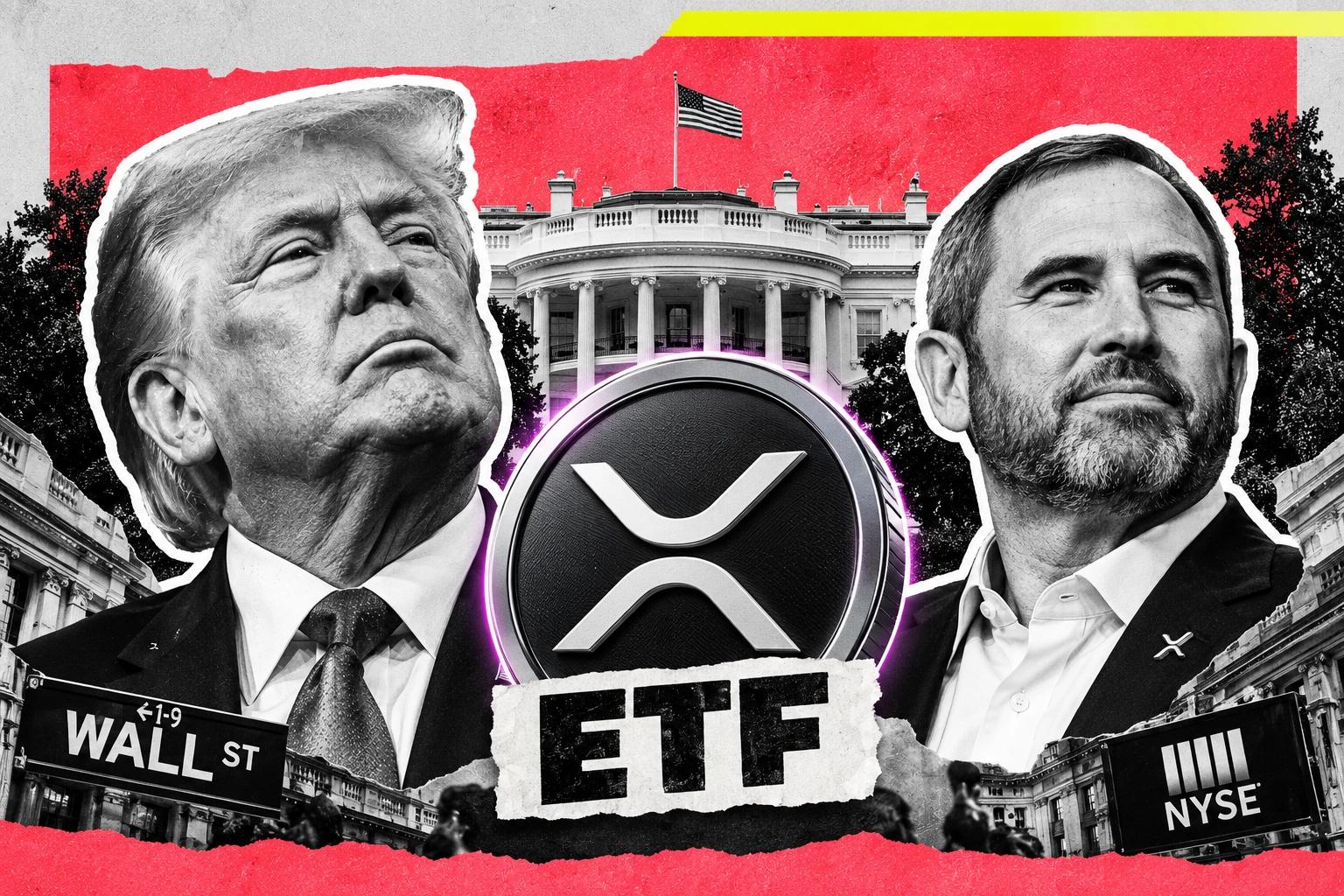
XRP-USD is trading at $1.39 on Tuesday, March 24, 2026 — down 3.68% on the session and sitting in one of the most analytically confounding positions of any major digital asset in the market. The SEC case that hung over Ripple and XRP for five years ended. The joint SEC-CFTC framework on March 17, 2026 classified XRP as a digital commodity alongside Bitcoin — the most consequential regulatory development in the token's history. Seven spot XRP ETFs launched in November 2025 and pulled in $1.44 billion in total inflows. Goldman Sachs became the largest institutional XRP ETF holder with $153 million in positions. Mastercard added Ripple to its crypto payments program. A $1 billion XRP treasury firm filed for a Nasdaq listing. And yet XRP-USD sits at $1.39 — more than 40% below the $2.40 it briefly touched in the first week of January 2026 and more than 60% below the $3.65 it reached at its July 2025 high. Every institutional catalyst the XRP community spent years demanding has materialized, and the price has done nothing but fall. That is the central analytical challenge that every serious price analysis must confront before issuing any directional call.
The token hit a 15-month low of $1.16 in early February 2026. It recovered to the $1.33–$1.50 consolidation range where it has been trading for approximately six weeks. The $85 billion market cap at current prices reflects 61.34 billion tokens in circulation. The RSI sits at 49.8 — technically neutral but tilting bearish. The MACD gives a strong sell signal on the daily chart. ADX and CCI are neutral. The Stoch RSI gives a strong buy — suggesting possible short-term oversold conditions that could produce a tactical bounce. The BBP signals intraday buyer dominance with price consolidating near the middle of the $1.4052–$1.435 day range, reflecting moderate volatility and a complete absence of momentum consensus in either direction. The SMA-20 sits at $1.4155, SMA-50 at $1.4187, and the Ichimoku Kijun at $1.4385 — three layers of resistance stacked between current price and any meaningful recovery. The SMA-200 is at $2.0988 — 50.9% above Tuesday's price — confirming that the primary trend remains firmly bearish on a longer time horizon regardless of what any short-term indicator suggests.
The $1.44 Billion ETF Paradox: Why Institutional Flows That Should Have Launched XRP-USD Are Failing to Move It
The spot XRP ETF launch in November 2025 was supposed to be the institutional catalyst that permanently altered the XRP-USD price structure. Seven funds live, $1.44 billion in total inflows by March 23, 2026, with Bitwise, Canary Capital, and 21Shares leading daily activity. Goldman Sachs holding $153 million in positions — the single largest institutional ETF allocation. March 27, 2026 is the SEC's final decision deadline for additional applications from Grayscale, WisdomTree, and Franklin Templeton. Grayscale is working to convert its $2.1 billion XRP Trust into a spot ETF — a conversion that would dramatically expand total market liquidity and accessible AUM in a single regulatory action. Franklin Templeton has proposed a management fee of just 0.15% — among the lowest in the digital asset space — positioning itself as the cost-leader for any institutional allocator building long-term XRP-USD exposure. Bloomberg analysts place the probability of at least one additional approval before year-end 2026 at 95%.
Those are impressive numbers on paper. The problem is inside the composition of those $1.44 billion in inflows: only 16% of XRP ETF assets are tied to institutional filers. The remaining 84% is retail money. Weekly flows that had been running at $200 million at launch dried up to under $2 million by early March 2026. That collapse in weekly inflow velocity — from $200 million to $2 million in roughly 16 weeks — is the single most important data point in the entire XRP-USD investment thesis right now, because it reveals that the expected institutional capital wave has not materialized. Compare this to Bitcoin's spot ETFs after their January 2024 launch: the institutional-to-retail ratio flipped within the first year, with massive inflows from pension funds, family offices, and registered investment advisors driving Bitcoin from $40,000 to $126,000 over the subsequent 18 months. XRP's ETF ratio at 16% institutional after four months of trading is the exact opposite of that trajectory — and it is the most direct evidence that the digital commodity classification has not yet produced the institutional capital rotation that the most bullish forecasters assumed was coming.
The March 27 SEC deadline creates a specific near-term binary. If Grayscale's $2.1 billion Trust conversion is approved as a spot ETF, total AUM in the XRP ETF ecosystem nearly triples overnight and the institutional ratio potentially improves as Grayscale's shareholder base skews more sophisticated than retail exchange buyers. If all three applications are deferred or rejected, the flow slowdown accelerates and XRP-USD tests the $1.33 support level that has been the floor since mid-February. The 95% Bloomberg probability of eventual approval provides a medium-term floor for the thesis, but "eventually approved before year-end" is a very different catalyst timeline than "approved by March 27."
What the $1.40 Technical Structure Is Actually Telling You — Support, Resistance, and the Weekly RSI Cross That Could Change Everything
XRP-USD's technical architecture at current levels is defined by two numbers: $1.40 as the support floor that has held on multiple tests and $1.60 as the resistance ceiling that has halted every rally since late 2025. The key is understanding why those levels have such magnetic properties on the price action. The $1.40 level corresponds to a significant concentration of buyer activity from the November 2025 rally phase — large numbers of positions were opened in the $1.33–$1.45 zone after ETF approval, creating a pool of holders who have been defending that zone on every subsequent pullback. The $1.60 level is the point at which sellers who bought during the July 2025 run to $3.65 and held through the decline reach levels where exit execution becomes rational — the "I'll sell when I get close to breaking even" cohort that creates persistent overhead supply.
Volume has been flat throughout the consolidation — the classic low volatility signature of a market coiling before a decisive directional move. The weekly RSI is described as "inches away from a bullish cross" — a signal that the market is structurally preparing to turn bullish on the longer timeframe even as daily momentum indicators lean bearish. The last time a bullish RSI cross appeared on XRP-USD's weekly chart was at a comparable technical juncture in 2020, and it preceded a sustained multi-month advance. The pattern recognition here is sound: low volume consolidation + weekly RSI approaching a bullish cross + price holding above a defended support zone + volume likely to spike on a resistance test = the setup for either a confirmed breakout above $1.60 or a final capitulation below $1.33 that resolves the ambiguity definitively.
The intermediate resistance levels between $1.40 and the critical $1.60 ceiling are: $1.4155 (SMA-20), $1.4187 (SMA-50), and $1.4385 (Ichimoku Kijun). All three are clustered within approximately 30 pips of each other, creating a dense resistance cluster between $1.41 and $1.44 that has been containing intraday rallies throughout March. Breaking through that cluster with conviction — which requires a daily close above $1.44 followed by price holding above that level on the subsequent day — would be the first technical signal that the bullish weekly RSI cross is translating into actual buying pressure rather than just the absence of sellers. The support levels below $1.40 are: $1.33 as the first significant floor, $1.26 as secondary support, and $1.16 as the February 2026 low that would need to break before any analyst begins discussing a genuine bear market resumption for XRP-USD.
The SWIFT Challenge Is Real But Misframed — Ripple Is Not Trying to Kill SWIFT, It's Trying to Own the Liquidity Layer
The most overused and analytically misleading framing in XRP-USD coverage is the "XRP will replace SWIFT" narrative — a claim that drives both the most extreme price targets and the most vicious bear arguments, and that both camps get wrong in different directions. SWIFT is a messaging network connecting over 11,500 financial institutions across more than 200 countries. It does not move money. It sends instructions about where money should go. The real inefficiency in the SWIFT system is not the messaging layer — it is the capital that backs those messages: pre-funded nostro accounts parked idle in dozens of countries simultaneously, representing trillions of dollars in locked-up liquidity that earns no return and creates no value while it sits waiting for potential transactions.
A typical international wire transfer through SWIFT takes one to five business days to settle. Fees run $25 to $50 per transaction before foreign exchange markups are included. For the $5 trillion in daily cross-border volume that flows through SWIFT-connected infrastructure, those economics represent a massive and persistent inefficiency tax on global commerce. XRP-USD's technical profile — 3-5 second settlement, up to 1,500 transactions per second, base fee of 0.00001 XRP — addresses exactly those metrics. Ripple's On-Demand Liquidity service converts source currency to XRP, transmits it across the XRP Ledger in seconds, and converts to destination currency at the receiving end — eliminating the need for pre-funded nostro accounts entirely and releasing that trapped capital for productive use.
CEO Brad Garlinghouse stated explicitly at the XRPL Apex 2025 event in Singapore that Ripple's goal is not to partner with SWIFT but to replace its liquidity layer specifically. He projected XRP capturing up to 14% of SWIFT's liquidity volume within five years — and applying Dominic Basulto's transaction velocity model, 14% capture produces approximately $20 in XRP-USD price. That is not a complete SWIFT replacement — it is a meaningful but achievable market share capture of the specific layer where SWIFT is most inefficient and most vulnerable to technological displacement. The hybrid model already exists in practice: Santander uses XRP-based rails for retail remittances while continuing to rely on SWIFT for large-value institutional transfers. This is not a contradiction — it is the market naturally allocating transaction type to the most cost-efficient infrastructure for that specific use case.
Ripple-powered payment corridors now span more than 55 countries, with particularly strong activity in Asia-Pacific — Japan to Philippines and U.S. to Mexico corridors are operational. SBI Remit has integrated RippleNet. Zand Bank and Mamo in the UAE launched Ripple Payments in May 2025. RLUSD — Ripple's regulated stablecoin launched in late 2024 — surpassed a $1 billion market cap in 2025, providing documented proof that institutional demand exists for regulated Ripple ecosystem products. The critical nuance for XRP-USD price: banks using RippleNet for messaging and settlement can choose to settle in RLUSD or fiat rather than XRP, meaning the growth of RippleNet adoption does not automatically translate into demand for XRP-USD tokens. This is the analytical distinction that separates realistic from fantastical price targets, and it is the reason the institutional adoption data must be tracked at the specific ODL corridor level rather than the general RippleNet partnership announcement level.
Five Analysts, Five Radically Different 2030 Targets: $0.50 to $1,000 and What the Market Cap Math Reveals About Each One
The spread between XRP-USD 2030 price targets from credentialed analysts is wider than for any other major digital asset — $0.50 on the bear end and $1,000 on the bull end, representing a 2,000x range that reflects genuine, irreconcilable disagreement about the core question: does XRP's utility as a settlement bridge translate into price appreciation, or can banks use Ripple's infrastructure without creating sustained demand for the token itself?
Standard Chartered's Geoffrey Kendrick cut his 2026 target from $8 to $2.80 in February 2026 — a 65% reduction that represented the largest percentage cut across all of the bank's crypto forecasts — before extending his timeline to show $7 by 2027, $12.60 by 2028, $19.60 by 2029, and $28 by 2030. At $28, XRP-USD's market cap with 61 billion tokens in circulation would be approximately $1.7 trillion — larger than Ethereum's current valuation and close to Bitcoin's 2025 peak. Kendrick's revised 2026 target of $2.80 sits 101% above Tuesday's $1.39. His framework requires trillions in XRP Ledger settlement volume and ETF inflows scaling well past the current $1.44 billion — but critically, he sees the February 2026 selloff having strengthened rather than weakened the long-term setup by removing overleveraged positions and creating a cleaner base for sustained appreciation. The $28 target aligns with the 161.8% Fibonacci extension from XRP's 2020 lows — a technically significant level that the community has monitored for years and that Kendrick's model independently identifies as a reasonable long-term price discovery point.
Dom Kwok, co-founder of EasyA and formerly of Goldman Sachs, published a $1,000 XRP-USD 2030 target when the token was trading near $3 in mid-2025 and has maintained it since. The market cap math at $1,000 with 61 billion tokens in circulation is $61 trillion — larger than every stock market on the planet combined. Kwok acknowledges the number looks extreme and argues that conventional market cap comparisons become inadequate when pricing a token that potentially routes a significant fraction of the $150 trillion in annual global cross-border payment volume. His institutional catalyst argument has gained credibility on one specific data point: Goldman Sachs, his former employer, is now the largest institutional XRP ETF holder with $153 million in positions — a fact that is unlikely to be coincidental given Kwok's prior institutional access. But the market cap arithmetic at $61 trillion remains the most fundamental objection to this target on any timeline shorter than 2040s.
Ryan Lee at Bitget Research targets $4.20 to $10 by 2030 — the most methodologically grounded range because it explicitly ties the price outcome to specific observable conditions: RLUSD adoption trajectory, RippleNet conversion of partnerships into actual XRP-denominated ODL volume, and whether Ripple successfully executes a public IPO. At $10, XRP-USD's market cap would be approximately $610 billion — in the range of where Ethereum peaked in 2025, achievable if ETF inflows scale past $5 billion and the CLARITY Act passes. At $4.20, the required market cap of approximately $256 billion still represents significant appreciation from current levels but does not require any extreme assumptions about SWIFT capture or cross-border payment market share. This is the range that requires the least to go right among the bullish forecasts.
Adam Spatacco, writing for Nasdaq with an investment banking background, sees XRP-USD falling back to $0.50–$1.00 by 2030 — the most explicit bear case from an analyst with institutional credentials. His argument is structural rather than technical: banks can use RippleNet for messaging and still settle in fiat or RLUSD without ever purchasing XRP-USD, meaning the token's price is decoupled from Ripple's business success. If that structural decoupling is correct — if RLUSD's $1 billion market cap is actually cannibalizing XRP-USD demand by providing a stable-value settlement option within Ripple's own ecosystem — then Spatacco's sub-$1 scenario becomes not just plausible but directionally correct. The growth of RLUSD is thus simultaneously the most important data point for the bull case (proving institutional demand for regulated Ripple products) and the most important risk for XRP-USD specifically (creating an alternative settlement token within the same ecosystem).
Dominic Basulto's transaction velocity model produces $4 XRP-USD at 1% SWIFT capture and $20 at 14% SWIFT capture — a linear relationship between market share and price that is more anchored to measurable real-world metrics than any other analytical framework. The 14% capture target that Garlinghouse stated at XRPL Apex 2025 produces $20 in Basulto's model — a number that happens to align approximately with Kendrick's $19.60 for 2029 through completely different methodologies. That convergence between a transaction velocity model and a Fibonacci extension model at similar price levels for the same time horizon is analytically meaningful — it suggests that $15–$20 represents a level where multiple frameworks independently agree that XRP-USD could trade if the adoption trajectory unfolds as the most optimistic but still grounded forecasters project.
The 5.66 Million XRP Ledger Wallets, the $1.44B ETF Base, and the CLARITY Act That Changes Everything If It Passes
The network growth metrics for XRP-USD provide a fundamentally different picture from the price performance. Over 5.66 million wallets on the XRP Ledger now hold balances — a user adoption figure that reflects genuine engagement with the ecosystem rather than speculative trading on centralized exchanges. Institutional inflows, though currently dominated by retail at 84%, have been consistent: on March 20, the Canary XRP ETF (XRPC) was the only fund to report new money coming in despite broader crypto market weakness — a signal that demand exists even in unfavorable market conditions. The 1-year AI price forecast from Meyka's model shows $3.59 — a 158% gain from current levels — while the 6-month forecast shows $2.28, up 64%. These model outputs are not guarantees but they reflect the base-case institutional scenario where ODL adoption continues expanding and ETF inflows normalize toward the Bitcoin/Ethereum pattern.
The CLARITY Act — the single most important scheduled catalyst for XRP-USD beyond any price action — remains pending in Congress. Its passage would establish a clear legal framework distinguishing commodity-classified digital assets from securities, directly enabling institutional allocators with compliance constraints to build XRP-USD positions that they currently cannot construct due to residual regulatory ambiguity despite the SEC/CFTC commodity classification. BitMine Chairman Tom Lee specifically cited the CLARITY Act as a fundamental catalyst for Ethereum's recovery; the same legislative logic applies to XRP-USD with equal or greater force given XRP's explicit commodity classification. XPRN — the proposed public XRP treasury management firm supported by Ripple Labs and SBI Holdings pursuing a Nasdaq listing — is the institutional adoption vehicle most analogous to what MicroStrategy's MSTR did for Bitcoin corporate treasury adoption. If XPRN gets Nasdaq-listed and begins weekly XRP-USD purchases with a multi-billion dollar balance sheet target, it creates a structural supply reduction dynamic that Bitcoin's treasury firm accumulation demonstrated can sustain elevated prices regardless of short-term sentiment.
The Traders Union's 6-month prediction of $2.28 (+64%) combined with the 1-year target of $3.59 (+158%) suggests that the model anticipates a meaningful acceleration in price appreciation beginning in the back half of 2026 — consistent with the thesis that CLARITY Act passage and Grayscale ETF conversion approval in Q2–Q3 2026 would be the catalysts that trigger the institutional inflow acceleration currently absent. The 3-month prediction of $1.22 (-12.41%) is the most near-term bearish signal — suggesting that before any sustained recovery, XRP-USD is likely to test the $1.16–$1.22 support zone once more, potentially creating the final washout that clears overleveraged retail positions and sets up the cleaner institutional accumulation base that the ETF thesis requires.
Read More
-
Yen Stalls at 160 Despite a 3% JGB and Tokyo Core CPI at 2.0% — Intervention Sits at 164, Friday's Payrolls Decide
02.09.2026 · TradingNEWS ArchiveEnergy
-
CHAT Fund Holds $96.37 as Korean Memory and Chip Exposure Drive a 109.73% Year — Break of $98.02 Opens $105.20
18.09.2026 · TradingNEWS ArchiveStocks
-
First-Generation XRPR and XRPI Ride XRP's Rebound to $1.386 as Spot Funds Post First Outflow — Break of $1.40 Opens $1.54
18.09.2026 · TradingNEWS ArchiveCrypto
-
NG Holds $2.9255 as Storage Surplus Narrows From 5.5% to 3.7% in 3 Weeks — Break of $3.00 Opens $3.15
18.09.2026 · TradingNEWS ArchiveCommodities
-
Dollar Surges to 157.90 as BoJ's Divided Hike Fails to Lift the Yen — Break of 158.87 Opens 159
18.09.2026 · TradingNEWS ArchiveForex
The $1.6 Ceiling, the $1.33 Floor, and the Only Trade That Makes Analytical Sense Right Now
The five-day trading range projection for XRP-USD sits between $1.33 and $1.45, with the probability of a sustained breakout above $1.44 resistance this week at less than 20%. That is not a bearish call — it is an accurate description of where the technical compression currently stands. Volume is flat. Momentum consensus is absent. The major resistance cluster at $1.41–$1.44 has been containing intraday rallies consistently. The weekly RSI bullish cross is imminent but has not yet confirmed. The March 27 SEC deadline for Grayscale, WisdomTree, and Franklin Templeton applications introduces a specific binary event within days that could spike volume in either direction — approval accelerates XRP-USD through $1.44 and tests $1.60, deferral sends price back toward $1.33.
The XRP-USD risks that deserve specific quantification rather than vague acknowledgment: the 43% crash risk flagged by analysts if the $1.33 support breaks and XRP-USD falls below the $1.16 February low — a scenario that would technically confirm the bear market has resumed and activate targets in the $0.80–$1.00 range. The stablecoin competition risk from RLUSD is genuinely double-edged — $1 billion market cap reached in under a year demonstrates strong institutional demand for Ripple ecosystem products, but every dollar that flows into RLUSD for settlement purposes is a dollar that could have flowed into XRP-USD under an ODL transaction. The 42% single-client concentration risk — which in XRP's case manifests as a small number of hyperscalers like Google and Amazon constituting an outsized share of crypto payment infrastructure decisions — means a single major platform decision to favor RLUSD over XRP for settlement reduces the ODL volume that underpins price support.
Bull, Base, Bear — And the Final Verdict on XRP-USD at $1.39
Hold existing positions. Add on a confirmed daily close above $1.44 targeting $1.60. Set stop at $1.30. Do not initiate new long positions at current price ahead of $1.44 confirmation.
Bull case for XRP-USD by end of 2026: $2.80 (Standard Chartered's revised target, implying 101% upside from $1.39). Bull case for XRP-USD by 2030: $12–$20 (convergence of Kendrick's trajectory, Basulto's 14% SWIFT capture model, and Bitget's upper range). These are the numbers that require a plausible rather than extreme set of conditions — CLARITY Act passage, Grayscale ETF conversion approval, ODL corridor expansion to triple or quadruple current volumes, and the institutional inflow ratio improving from 16% to 40%+ within 18 months as Bitcoin ETF adoption demonstrated was achievable.
Bear case for XRP-USD over the next three months: $1.16–$1.22 (Traders Union model, -12% to -17% from current price, representing a final retail flush before institutional accumulation). Bear case for 2030: $0.50–$1.00 if RLUSD completely displaces XRP as the settlement token of choice within Ripple's own network and ETF inflows stall permanently at current retail-dominated levels.
The technical case for patience rather than urgency is compelling. XRP-USD has cleared every regulatory hurdle but the price hasn't followed — which means either the market is mispricing a legitimate institutional adoption thesis or the token is genuinely decoupled from Ripple's business success. The March 27 SEC decision and the CLARITY Act vote are the two events that resolve that ambiguity. Until one of them delivers a definitive signal, buying ahead of $1.44 confirmation means paying up for a catalyst that hasn't fired yet. Wait for the confirmation. The opportunity will still exist at $1.45 if the thesis is correct — and if it isn't, the stop at $1.30 limits the damage to approximately 6% from current levels.