Oil Price Forecast: Brent Slides Toward $105 as Hormuz Tankers Test Passage and China Demand Cracks
Crude falls a second day with WTI near $101, but a shut Strait of Hormuz, 26-year-low OPEC+ output | That's TradingNEWS
Key Points
- Brent drops $3 toward $105 and WTI holds near $101 as tankers begin testing passage through Hormuz.
- China gasoline demand could fall 5.5% in 2026 as high prices bite, while OPEC+ output sits at a 26-year low.
- A Brent break below $100 with a real Hormuz reopening turns the tape bearish; re-escalation targets $120.
The crude complex is taking a genuinely meaningful step lower on Thursday, and the size of the move deserves close attention rather than a passing glance. Brent (BZ=F) has been quoted across a notably wide band through the session — one feed marked it at $107.82 a barrel as of 8:30 a.m. Eastern, down a sharp $3.05 from the prior morning, while another had it changing hands closer to $105.20, off roughly 0.38% on the day. WTI (CL=F) is holding marginally firmer in relative terms, trading near $101.10 and up a token $0.04 on one read, though other feeds put it lower by about 0.61% near the $100.75 area. The spread of quotes across the various sources tells the story of a market genuinely in flux, but the underlying direction is not in any real doubt: this is now the second consecutive session of softening, and it arrives on the heels of a brutal, near-vertical run higher. The move has to be placed in its proper frame to be understood correctly — Brent is still up roughly 8.98% over the trailing month and an extraordinary 62.74% above where it sat a year ago, when crude was trading down near $66.25. Wednesday's Brent close of $105.63 stood a full 48.3% above the $72.48 print recorded on February 27, the day before the war began. So a single $3 down day, however dramatic it looks on the screen, does not break the structure of this market. What it does is trim a war premium that had become genuinely extreme — it pares back excess, it does not erase the fear that built it.
The Strait of Hormuz Remains the Single Most Important Variable on the Board
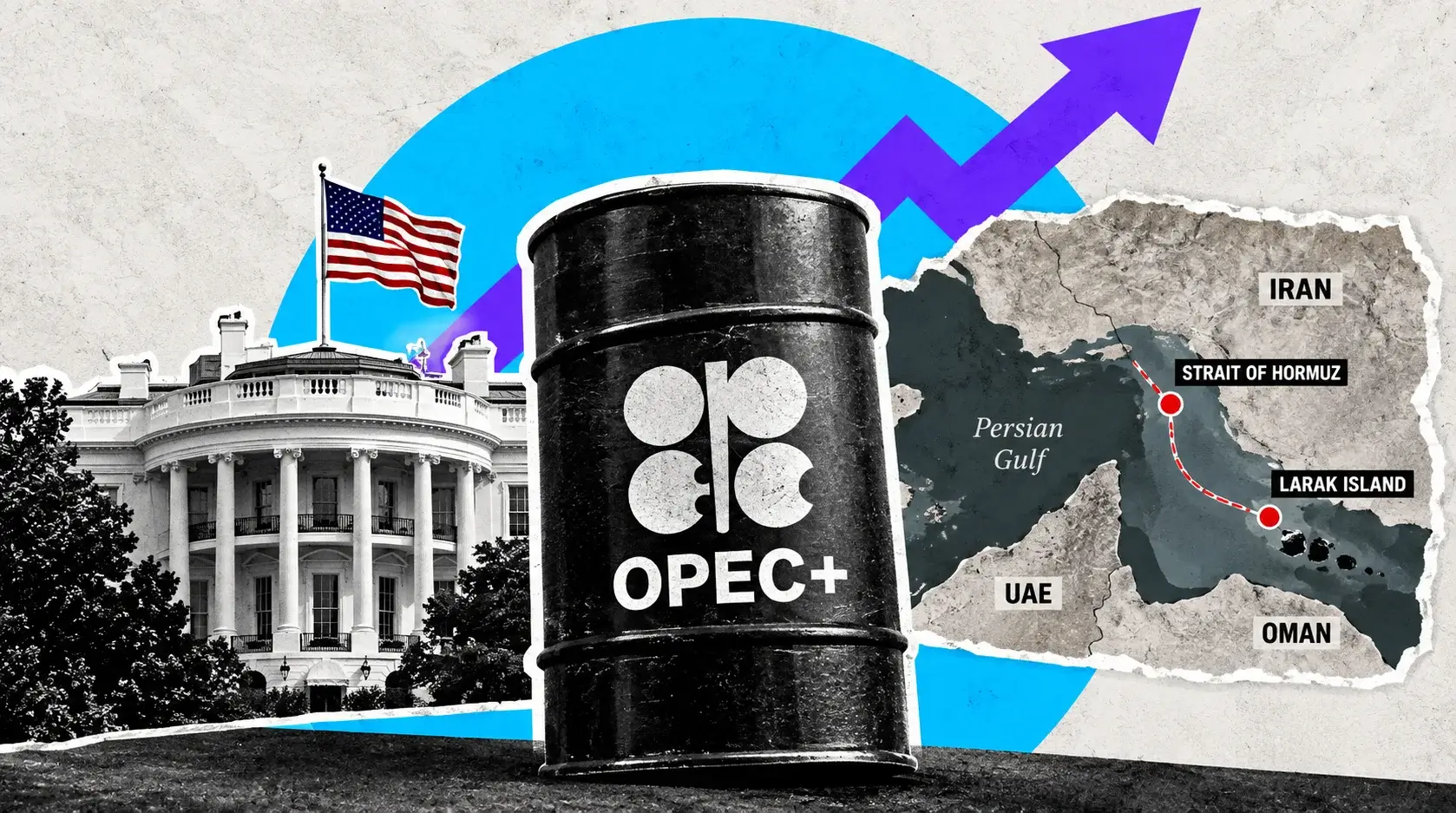
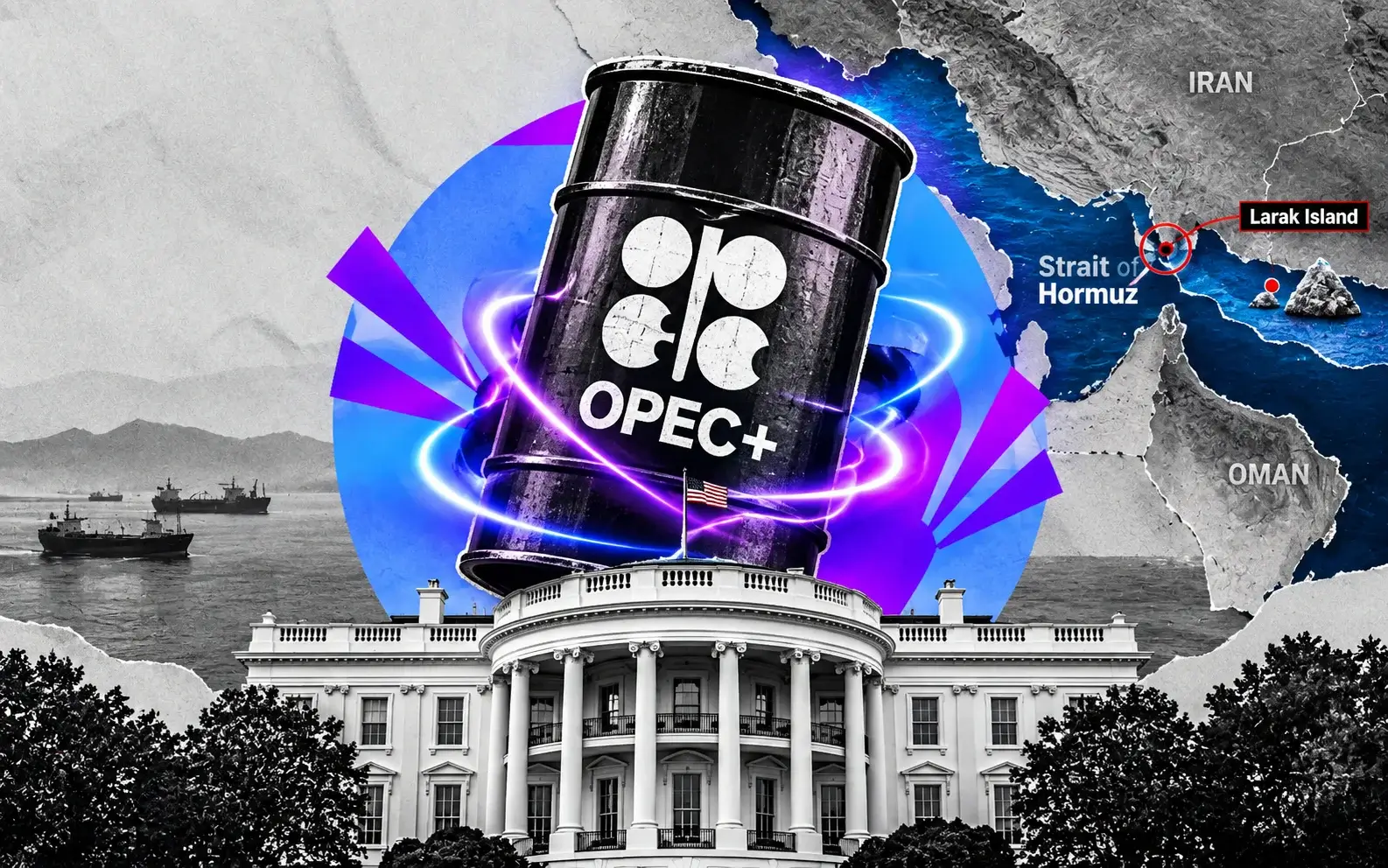
Everything happening in this market routes back, directly or indirectly, to one narrow chokepoint. The Strait of Hormuz remains effectively shut, and the U.S. naval blockade positioned outside it — aimed squarely at halting Iranian crude exports — remains firmly in force. But the global system has visibly begun improvising its way around the blockage, and that improvisation is what is leaking into the price tape right now. Tankers are testing passage on a careful, case-by-case basis: a Japan-bound crude tanker successfully cleared the strait amid an active Iranian crackdown, two India-bound LPG carriers transited in dark mode with their transponders off, and a Chinese tanker ran what amounted to a safe-passage test to probe the conditions. Iran, for its part, has turned Hormuz passage into a case-by-case arrangement rather than anything resembling a clean, declared reopening. That partial, improvised, furtive flow of barrels is the bearish pressure valve currently bleeding into the market — it is the single clearest reason crude is down two sessions running. But "leaking" is very much the operative word here, and the distinction matters enormously. The strait is not open. Korea's Industry Ministry made the conditionality of the situation strikingly explicit this week, stating it will only lift its domestic oil price cap once the strait stabilizes and international crude falls back below $100 a barrel — a clean, quotable signal that the $100 Brent level is being treated by policymakers as the dividing line between active crisis and the beginning of normalization. Until tankers are moving freely and openly rather than furtively and intermittently, the structural bid underneath this market stays firmly embedded.
Iran's Shadow Fleet and the Elaborate Sanctions Cat-and-Mouse Game
The supply picture in this market is being shaped far less by official channels than by an elaborate, well-developed evasion network operating in the gaps. Iran has continued shipping its oil to China — the buyer that takes more than 90% of all Iranian exports — straight through the war, and the mechanics of how it is doing so are worth laying out in detail. Iran's dark fleet has significantly ramped up ship-to-ship transfers just outside Malaysian waters, deliberately exploiting jurisdictional gaps that the Malaysian Maritime Enforcement Agency has openly admitted it simply cannot police. The numbers attached to this are concrete and substantial: at least 32 Iran-flagged tankers have reached Southeast Asian waters bound for the Eastern Outer Port Limits anchorage off Johor, Malaysia; at least 34 Iran-flagged tankers have begun the return journey, reporting empty back to Iran; and as many as 42 separate ship-to-ship transfers of Iranian oil took place in that single ghost-fleet hotspot, situated roughly 70 km off Malaysia's coast, between February 28 and May 12. The Malaysian authorities have been candid that the transfers are deliberately carried out just outside territorial waters, hugging maritime boundaries or sitting in remote areas not covered by radar, specifically to exploit the enforcement gaps. That barrels-always-find-a-way reality is genuinely bearish for price in the medium term — Iranian crude is demonstrably not fully removed from the global market. But it is moving covertly, expensively, and with real logistical inefficiency, and that friction keeps a persistent premium baked into the price of every barrel that moves through legitimate channels.
Russia Cashes In Handsomely While OPEC+ Output Sinks to Generational Lows
The war has produced a clear and identifiable set of winners on the supply side of the ledger, and Russia sits comfortably at the top of that list. Russia's oil revenues surged by $6.3 billion as elevated global prices more than offset its production losses — and the windfall is, by all accounts, getting bigger rather than smaller precisely because Hormuz stays shut. That dynamic carries an uncomfortable implication for anyone modeling the path forward: it means one of the world's largest producers now has every financial incentive in the world to see the disruption persist rather than resolve. Against that backdrop, the cartel's collective output has visibly collapsed. A Reuters survey placed OPEC+ production at a 26-year low amid the Iran war, and the IEA has formally revised its 2026 forecast to show the global oil deficit widening as the conflict steadily cuts production capacity offline. India, one of the largest importers in the world, is scrambling to adapt to the new reality — actively pushing the United States to extend a Russian oil waiver as its own imports hit a record high, while simultaneously rejecting Russian LNG cargoes that fall under sanctions. Brazil's crude exports to China have doubled as the Iran war upends and reroutes traditional crude flows across the globe. This is a market in which the entire supply map is being redrawn in real time, and the critical observation is that almost every single redraw points in the direction of tightness rather than slack.
The Demand Destruction Quietly Building Underneath the Headline Price
Here is the powerful counterweight that the bullish side of this market cannot afford to ignore: sustained high prices have begun, measurably and visibly, to destroy demand. China's gasoline consumption could plunge by 5.5% across 2026 as oil prices surge, and the country's independent teapot refiners have already slashed their output as the Hormuz crisis crushes their operating margins. That is real, quantifiable demand erosion occurring in the world's single largest crude importer — not a forecast, but a process already underway. The strain is visible across the globe in a dozen different forms: Cuba has simply run out of diesel and fuel oil as its blackouts worsen by the week; India's wholesale inflation has hit a 3.5-year high with fuel costs surging 25%; rising jet fuel and airline ticket prices are threatening to disrupt the entire summer air travel season. India's prime minister went so far as to order a 50% reduction in the size of his official motorcade purely to conserve fuel — a small gesture, but a genuinely telling one about the pressure being felt. The iron law of commodity markets is that when crude stays elevated for long enough, the market eventually solves the problem of high prices with high prices — demand simply buckles under the weight. That self-correcting process has now clearly started, and it represents the single most important bearish force in this entire market with real, durable staying power.
Read More
-
Yen Stalls at 160 Despite a 3% JGB and Tokyo Core CPI at 2.0% — Intervention Sits at 164, Friday's Payrolls Decide
02.09.2026 · TradingNEWS ArchiveEnergy
-
Dell Rebounds to $565.86 as a $95 Billion AI Backlog Meets 22x Forward Earnings — $595 High in Sight
25.09.2026 · TradingNEWS ArchiveStocks
-
XRP-USD ($1.53) Outperforms as ETF Inflows Return, but August Buyers Guard $1.60 — $1.70 Upside vs. $1.25 Floor
25.09.2026 · TradingNEWS ArchiveCrypto
-
Brent Holds $105 While WTI Heads for a 7% Weekly Loss as a 3M-Barrel Build and a Diesel Ban Threat Split the Market
25.09.2026 · TradingNEWS ArchiveCommodities
-
S&P 500 Gains 0.22%, Nasdaq Tops 27,000, Dow Up 0.40% on MSFT Launch and AKAM Deal
25.09.2026 · TradingNEWS ArchiveMarkets
-
Sterling Slides to 1.3216 as a Divided Bank of England Trails the Fed — 1.3424 Upside vs. 1.3000 Risk
25.09.2026 · TradingNEWS ArchiveForex
The Macro Channel: Oil Has Become an Inflation Story First and a Commodity Story Second
Crude is no longer trading purely as a commodity — it has been transformed into the central inflation story of the moment, and that linkage cuts in both directions for the price of a barrel. The energy spike has fed directly and unmistakably into the global inflation data: India's wholesale inflation sits at a 3.5-year high, and eurozone inflation jumped to 3% in April, with energy costs functioning as a key component of that move. That acceleration has forced central banks into an genuinely uncomfortable corner. ECB Governing Council member Martins Kazaks warned this week that the bank may be forced to raise interest rates if higher crude prices begin feeding into inflation expectations, and financial markets are now actively pricing a 25 basis-point hike at the June meeting, with the situation described as somewhat worse than the initial base-case forecast. The read-through to oil is direct and mechanical: if higher crude pushes the world's major central banks into a tightening cycle, the resulting hit to economic growth eventually and inevitably erodes oil demand — a self-defeating loop embedded in the price action. Higher oil leads to higher rates, higher rates lead to slower growth, and slower growth leads to softer demand. The macro channel is precisely the mechanism through which today's elevated war premium quietly plants the seeds of its own eventual unwinding.
The Futures Curve Versus the Apocalyptic Forecasts
There is a discipline worth applying to this market, and it concerns who to actually believe. Oil futures, for all of their well-documented imperfections, have consistently and substantially outperformed the apocalyptic forecasts emanating from the commodity analyst community — the calls for $200 Brent, and in some cases even $380. During the 2022 Russia-Ukraine supply shock, the futures curve was downward sloping at the very moment the G7 price cap first made its way into the press, and prices did indeed end up falling, directly contradicting the doom-laden forecasts circulating at the time. In the current episode, the pattern has repeated almost exactly: Dated Brent spiked far above front-month futures prices in the first weeks of the war, and the gap subsequently closed not because futures rose to meet the elevated physical price, but because the physical price fell back to meet the futures. The lesson for anyone positioning in this market is a pointed one — the stratospheric forecasts frequently function as a form of industry lobbying rather than genuine analysis, often intended to scare Western policymakers away from interfering in the oil sector, and the futures curve, currently structured to expect normalization, has demonstrably earned more credibility than the panic.
The Levels That Matter and Where the Weight of the Evidence Points
On the technical map, Brent (BZ=F) carries a set of clear and actionable reference points: $105 stands as immediate support, with the psychologically heavy $100 line sitting just beneath it — the level Korea's government explicitly flagged as the normalization threshold, meaning a sustained break there would represent a genuine structural shift in this market rather than just another down day. Resistance sits at the recent $110.87 high, with the $115 to $120 zone serving as the war-escalation target should the situation deteriorate again. WTI (CL=F) holds its support at the $100 mark, then the $98.93 area that defined the picture a month ago, with resistance layered at $102.70 and then $105. Pulling every thread of this together, the honest characterization is a Hold carrying a bearish tilt that is actively building — the daily tape is rolling over for a second consecutive session as Hormuz tankers begin to trickle through and Chinese demand visibly cracks under the weight of price, but the floor beneath the market stays firm for as long as the strait remains shut, OPEC+ output sits pinned at a 26-year low, and the IEA deficit continues to widen. The trigger that resolves the standoff is essentially binary: a sustained Brent break below $100 accompanied by a genuine, verifiable Hormuz reopening flips the structure decisively bearish and opens the path toward $90; a full re-escalation and shutdown sends crude charging back toward the $120 zone. Until the strait question is answered one way or the other, crude grinds within its range — but the grind, for the first time in this cycle, has finally and unmistakably tilted lower.