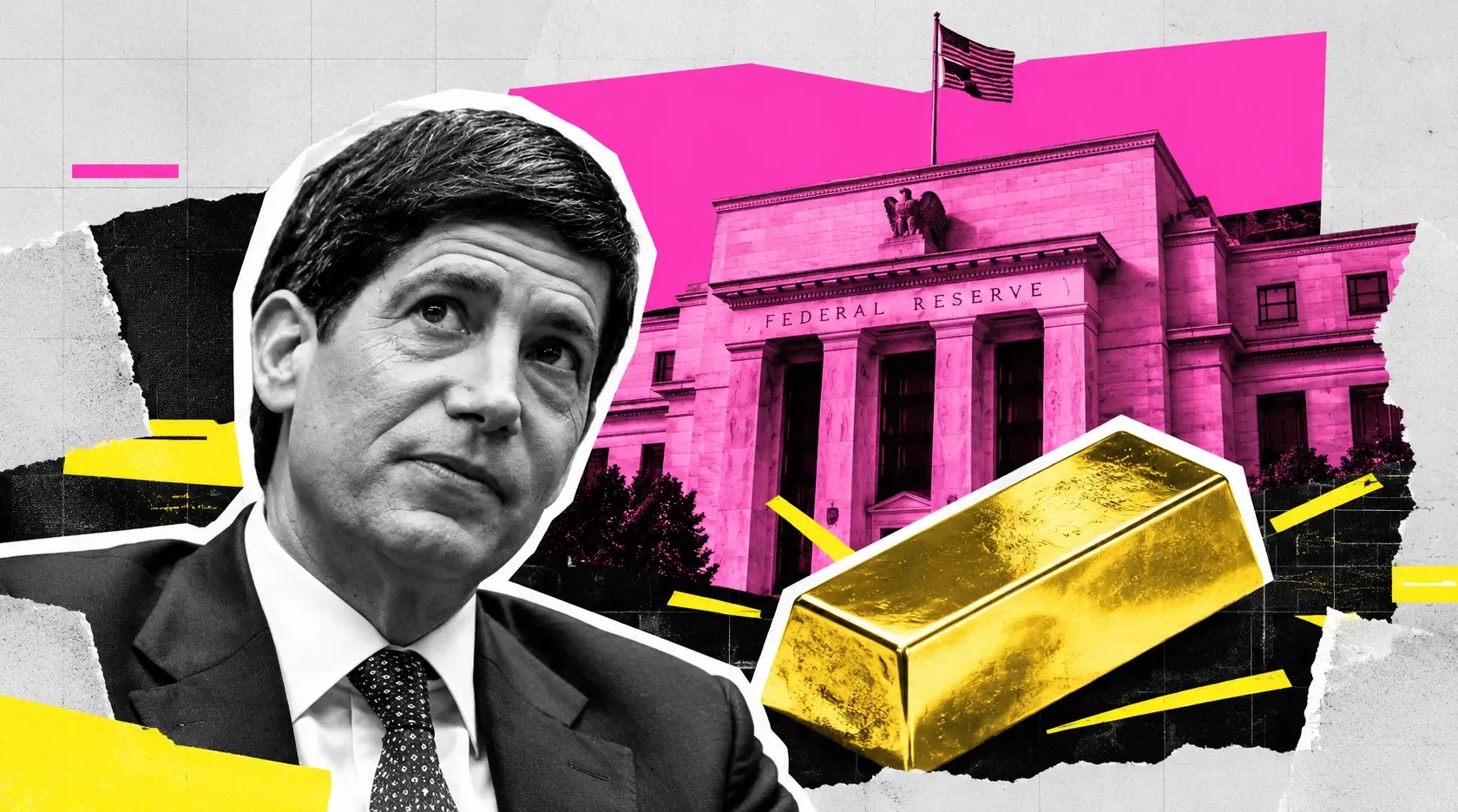
Gold Clings to $4,260 as a Hawkish Warsh Fed and a Fading War Premium Hit Bullion From Both Sides
XAU/USD plunged nearly 2% Wednesday to $4,219 as surging yields | That's TradingNEWS
Key Points
- Gold (XAU/USD) traded near $4,260, holding above Wednesday's $4,219 low after a near-2% plunge, well below the $5,602 January record.
- The Fed held at 3.50%–3.75% but the hawkish dot plot (9 of 18 projecting a 2026 hike) sent yields up, hitting non-yielding bullion.
- Key support sits at $4,218, then $4,170; resistance runs $4,300, $4,330, and $4,350–$4,380.
Gold spent Thursday trying to steady itself near $4,260 an ounce, clawing back part of a brutal Wednesday session that had knocked the metal down nearly 2% in the wake of the most hawkish Federal Reserve signal in years. The recovery was tentative and incomplete: an early bounce toward $4,300 faded as the session wore on, leaving bullion below that threshold and reflecting a market caught in an unusual squeeze. For once, both of gold's primary drivers turned against it at the same time, with a Fed pivoting toward rate hikes on one side and a signed US-Iran peace deal draining the war premium on the other.
The setup is rare and instructive. Gold typically thrives when at least one of two conditions holds — easy monetary policy or geopolitical fear — and right now neither is cooperating. Wednesday's Federal Open Market Committee meeting, the first chaired by Kevin Warsh, paired a rate hold with a dot plot that stunned markets, with half the committee now projecting a hike before year-end. Treasury yields surged in response, raising the opportunity cost of holding a metal that pays no interest. Then the geopolitical relief that lifted stocks and sank oil also undercut the haven demand that had powered gold's earlier rally.
Yet the metal's refusal to break down decisively hints at the structural support still beneath it. Central-bank buying, de-globalization trends, and a long-running diversification away from the dollar continue to provide a floor that pure macro models would not predict. Gold enters the long holiday weekend — with US markets closed Friday for Juneteenth — pinned between a hostile near-term backdrop and a durable longer-term bid. The question for traders is whether the $4,218 support shelf that held on Wednesday can survive a hawkish Fed and a fading war premium, or whether the path of least resistance now points lower toward the deeper technical levels that have not been tested in months.
Where Gold Trades Now: Spot, Futures, and the 24-Hour Swing
The numbers capture a market in flux. Spot gold changed hands near $4,256 to $4,275 through Thursday's session, after an intraday push toward $4,300 lost momentum and reversed. That followed Wednesday's slide of close to 2%, which dragged the metal down from a six-session high near $4,380 to an intraday low just below $4,219 — a swing of more than $160 that ranks among the wider single-day ranges of the year. The volatility underscores how sharply sentiment shifted once the Fed's projections hit the wire.
Futures told the same story across the COMEX contracts, with the most-active gold future and the smaller micro contract both whipsawing as traders repriced the rate path and the geopolitical picture in rapid succession. The bullion-backed exchange-traded products that track the metal moved in lockstep, while the mining complex — the large producers and the miner-focused funds — bore an amplified version of the move, since gold equities tend to magnify swings in the underlying metal in both directions.
Context frames the severity of the recent decline. Gold trades well below the record of roughly $5,602 set in late January 2026, a peak reached during a stretch of acute geopolitical anxiety and a global flight into safety. From that high, the metal has corrected by roughly a quarter, working through one of its more significant drawdowns of the cycle as the macro winds shifted from fear and easing toward stability and tightening. The 52-week range stretches from the low $3,200s to the high $5,500s, a span that captures just how dramatic gold's round trip has been over the past year. Holding the low-$4,200s now becomes the immediate technical battleground, since a clean break of that zone would mark a fresh leg lower and challenge the resilience that has so far kept the correction orderly rather than disorderly.
The Double Blow: A Hawkish Fed and a Vanishing War Premium
What makes gold's current predicament unusual is that both of its core demand pillars weakened simultaneously. The metal's appeal rests on two foundations: its role as a hedge against loose monetary policy and currency debasement, and its function as a safe haven during geopolitical turmoil. On Wednesday and Thursday, both foundations cracked at once, producing a one-two punch that few other assets faced.
The monetary side turned hostile when the Fed signaled a willingness to raise rates rather than cut them. Higher rates strengthen the dollar and lift the yields on interest-bearing alternatives, both of which erode gold's relative attractiveness, since the metal generates no income and competes directly with bonds for safe-asset allocation. A committee leaning toward hikes is close to a worst-case scenario for bullion's monetary thesis, removing the easy-policy tailwind that had supported prices through much of the cycle.
The geopolitical side weakened when the United States and Iran signed an interim agreement to end their conflict and reopen the Strait of Hormuz. The deal defused the Middle East tension that had injected a fear premium into gold during the spring, and as that premium unwound, so did a chunk of the haven demand that had lifted the metal toward its highs. The simultaneous loss of both supports explains why gold fell so hard on Wednesday and why its Thursday bounce struggled to gain traction. With neither monetary nor geopolitical conditions favoring bullion, the metal is leaning almost entirely on its structural, longer-horizon sources of demand to hold the line — a dependence that makes the coming sessions a genuine test of how deep that structural bid runs.
Warsh's Dot-Plot Bombshell and the Yield Shock
The proximate trigger for gold's slide was the Fed's projections, which landed with unexpected force. The committee held its benchmark rate steady in the 3.50% to 3.75% range, a decision markets had fully anticipated, but the accompanying dot plot delivered a shock. Half of the eighteen participating officials now project at least one rate hike before the end of 2026, a stark reversal from the March projections, and the median year-end rate forecast shifted meaningfully higher. The repricing was abrupt and decisive.
New Chair Kevin Warsh reinforced the hawkish message with his stylistic choices. He withheld his own dot from the projection materials, declined to offer guidance on the next policy move, and announced an effort to overhaul the central bank's communication practices, signaling a break from the heavily telegraphed approach of recent years. Crucially, he stressed that inflation has remained above the Fed's 2% target for several years and reiterated a firm commitment to restoring price stability, a framing that left little doubt about the committee's priorities. The combination of a hawkish dot plot and an uncompromising tone repriced the entire rate curve.
The immediate transmission to gold ran through yields. Shorter-term Treasury yields surged as traders priced in the higher rate path, and rising yields are kryptonite for bullion. When safe government debt offers a higher return, the opportunity cost of holding a non-yielding metal climbs, and capital rotates out of gold and into interest-bearing securities. That mechanical relationship drove much of Wednesday's nearly 2% drop, as the metal's monetary appeal eroded in real time. Until the yield picture stabilizes or reverses, the rate channel will remain the dominant headwind for gold, capping rallies and keeping the metal vulnerable to further repricing if the data validates the Fed's hawkish lean.
The US-Iran Memorandum and the Safe-Haven Unwind
The geopolitical leg of gold's decline traced to the signed US-Iran agreement. President Trump put his name to an interim deal aimed at ending the conflict and reopening the strategically vital Strait of Hormuz, with reporting indicating the accord includes a swift reopening of the waterway and the removal of sanctions on Iranian oil exports, while talks on nuclear matters and additional economic arrangements continue. The agreement marked a meaningful de-escalation of the Middle East tensions that had supported gold for weeks.
The market implication for bullion was straightforward and negative. Gold had accumulated a fear premium as the conflict raged and oil prices spiked, with investors crowding into the metal as insurance against escalation and supply disruption. Once the deal was signed and the prospect of a reopening Hormuz became concrete, that insurance lost much of its value, and the premium began to bleed out of the price. Safe-haven demand fell as both sides committed to suspending hostilities and restoring energy trade, removing one of the key pillars that had lifted gold toward its recent highs.
The interplay with the oil market matters here too. Cheaper crude, driven by the prospect of restored Iranian supply and a reopening strait, reduces the energy-driven inflation that can sometimes support gold as an inflation hedge. In the near term, the disinflationary signal from falling oil reinforces the hawkish Fed's case rather than gold's, since lower inflation expectations dampen the metal's appeal as a store of value. The Thursday bounce showed that some buyers viewed the deal-driven dip as an opportunity, and a degree of residual caution remains given that the agreement is interim and negotiations continue. But the net effect of the geopolitical thaw was to strip away a layer of demand that gold had been relying on, leaving the metal more exposed to the unfriendly monetary backdrop.
Wednesday's Plunge: Anatomy of a $160 Range
Wednesday's session deserves a closer look, because it crystallized the shift in gold's narrative. The metal entered the day having challenged resistance near $4,380, the upper end of a multi-session rally fueled by haven demand and hopes that the Fed might retain an easing bias. Those hopes were dashed the moment the projections were released, and the reaction was violent. Gold reversed sharply, plunging to an intraday low near $4,219 as the hawkish dot plot triggered a wave of selling and profit-taking at the elevated levels.
The intraday range of more than $160 reflected the scale of the repricing. A move of that magnitude in a single session signals a fundamental reassessment rather than routine noise, as traders who had positioned for a dovish or neutral Fed scrambled to unwind those bets. The decline completely erased the gains of the preceding several sessions, wiping out the rally that had carried gold toward $4,380 and returning the metal to the lower reaches of its recent range. The speed of the move also pointed to the role of momentum and leverage, with stop-losses and forced liquidations likely amplifying the descent once key technical levels gave way.
The episode illustrated gold's heightened sensitivity to monetary surprises in the current environment. With the geopolitical premium already under pressure and the metal trading at elevated levels, the market was vulnerable to exactly the kind of hawkish shock the Fed delivered. The fact that gold found support near $4,219 and did not break decisively lower offered a measure of reassurance to bulls, suggesting that buyers remain willing to step in at that level. But the session left the metal in a weakened technical posture, having surrendered its recent gains and shifted the burden of proof onto the buyers to demonstrate that the low can hold.
Thursday's Bounce: Dip Buyers Step In
Thursday brought a partial recovery that revealed the two-sided nature of gold's current market. The metal rose back above $4,250 and probed toward $4,300 in early trading, recouping a portion of Wednesday's losses as dip buyers emerged and as the dust settled on the Fed shock. The bounce found initial support around the metal's near-term moving-average structure, which provided a technical base from which buyers could mount a recovery attempt.
The rebound, however, ran into resistance and faded. Gold struggled to sustain its push above $4,300 and slipped back toward the mid-$4,200s as the session progressed, erasing much of its intraday gain. The inability to hold the higher levels signaled that sellers remain in control of the broader structure and that the recovery was more a reflexive bounce than the start of a sustained reversal. Rallies in a downtrend often look like this: sharp, encouraging, and ultimately capped by overhead supply from traders looking to exit positions established at higher prices.
The push-and-pull captured gold's balancing act. On one hand, the structural buyers who view the metal as a long-term diversification tool and a hedge against currency debasement see the post-Fed dip as an entry point, providing demand on weakness. On the other hand, the macro backdrop of rising yields and fading geopolitical fear gives momentum traders and tactical sellers reason to fade rallies. The result is a choppy, range-bound character, with gold caught between a structural bid below and a macro-driven ceiling above. For the bounce to develop into something more durable, the metal would need to reclaim and hold above the resistance band overhead, a feat it has so far been unable to accomplish in the immediate aftermath of the Fed meeting.
Technical Picture: Support, Resistance, and the $4,218 Line
The chart frames the immediate stakes with precision. The critical support sits at Wednesday's low near $4,218 to $4,220, the level that halted the post-Fed plunge and that bulls must defend to keep the correction orderly. Below that, the next layers of support cluster near $4,195 and the weekly low around $4,170, with a deeper shelf in the $4,074 to $4,112 region that would come into play if the selling intensifies. A decisive break below $4,218 would open the door to those lower targets and confirm a resumption of the broader downtrend.
To the upside, resistance is layered and formidable. The immediate hurdle is the $4,300 level that capped Thursday's bounce, followed by a more significant band around $4,330 that has repeatedly turned back rally attempts. Above that, the $4,350 to $4,380 zone represents the next major test, marking the highs of the recent rally where selling pressure has consistently re-emerged. A sustained move through that region would be needed to suggest a more meaningful low is in place, with the heavier resistance in the $4,493 to $4,540 area standing as the boundary that would need to fall before the metal could credibly target a return toward its former highs.
The yearly-open level near $4,319 carries particular significance as a pivot that traders watch for guidance on the medium-term trend. Price action around this zone has been a reliable tell for whether the broader correction is stabilizing or extending. With gold currently trading below it, the technical bias leans cautious, and the metal needs to reclaim and hold above this pivot to neutralize the bearish setup. The configuration is one of a market pinned between a support shelf it must hold and a thicket of resistance it must overcome, with the low-$4,200s serving as the line in the sand that separates an orderly consolidation from a deeper decline.
Momentum and Moving Averages: A Market Below Its Trend
Beyond the horizontal levels, gold's momentum indicators and moving-average structure reinforce the cautious near-term picture. The metal trades below its shorter-term moving averages, which now act as dynamic resistance overhead rather than support, a configuration that typically accompanies a market in a corrective phase. The longer-term trend gauges have begun to roll over from their earlier steep ascent, reflecting the magnitude of the decline from the January record.
The technical rating across major analytical platforms has shifted toward a sell bias on the near-term horizon, with the daily and weekly signals leaning bearish following the Fed-driven breakdown. Momentum oscillators sit in territory that suggests the metal has room to fall further before reaching genuinely oversold conditions, leaving the door open to additional downside if the macro pressure persists. The descending structure that has governed recent price action remains intact, with gold trading below key trendline resistance.
There is a counterpoint worth noting, however. While the immediate signals lean bearish, some longer-horizon technical models flag the potential for stabilization, with the one-month outlook in certain frameworks pointing toward a buy signal even as the one-week rating stays negative. This divergence between near-term weakness and medium-term potential reflects gold's dual nature as both a tactical trade subject to macro swings and a strategic holding supported by structural demand. The metal's ability to defend support near $4,218 will be the key determinant of which signal prevails. A successful defense would lend credence to the view that the correction is maturing, while a failure would validate the bearish near-term momentum and likely usher in the deeper technical targets. For now, the trend bias points down, and rallies remain suspect until the metal can reclaim its moving-average structure.
Real Yields and the Opportunity-Cost Problem
At the core of gold's struggle lies the relationship between real yields and the metal's valuation. Gold pays no interest and generates no cash flow, which means its appeal is inversely tied to the real return available on safe alternatives. When inflation-adjusted yields on Treasury securities rise, the opportunity cost of holding bullion increases, and capital flows toward the income-generating asset. Wednesday's hawkish Fed signal sent shorter-term yields higher and lifted the entire real-yield structure, striking directly at gold's competitive position.
The mechanics are unforgiving for the metal. A Fed leaning toward hikes implies higher policy rates for longer, which keeps real yields elevated and sustains the headwind against gold. The shift from a market pricing rate cuts to one pricing hikes represents a fundamental change in the opportunity-cost calculus, and gold has had to adjust to a world where the safe-asset competition pays more. This is why the metal fell so sharply on the projections and why the yield trajectory will remain the single most important variable for its near-term path.
The longer-term wrinkle is that the relationship between gold and yields has at times broken down during this cycle, with the metal climbing to records even as real yields stayed elevated, driven by central-bank buying and de-globalization forces that operate outside the traditional model. That decoupling suggests the opportunity-cost framework, while dominant in the near term, does not fully capture the structural demand supporting gold. In the immediate aftermath of a hawkish Fed, though, the conventional relationship has reasserted itself, and rising real yields are doing exactly what theory predicts — pressuring the price. The metal's recovery prospects hinge in large part on whether yields stabilize, which in turn depends on the inflation data that will either validate or undercut the Fed's hawkish projections in the weeks ahead.
The Long View: From a $5,600 Record to a 24% Drawdown
Stepping back from the daily noise reveals the scale of gold's round trip. The metal reached an all-time high near $5,602 in late January 2026, a peak driven by a confluence of geopolitical chaos, fears of Western fragmentation, and a flight into safety that pushed bullion to extraordinary levels. From that summit, gold has corrected by roughly a quarter, a substantial drawdown that has unfolded in waves as the macro environment shifted from acute fear toward relative stability.
The decline has not been linear. Gold experienced sharp sell-offs interspersed with recovery rallies, reflecting the tug-of-war between the structural buyers accumulating on dips and the tactical sellers responding to improving geopolitical conditions and a more hawkish Fed. Earlier corrective episodes during the year were driven by speculative unwinding and shifting sentiment, while the more recent leg lower has been increasingly tied to fundamentals — stronger US economic data, rising rate expectations, and the unwinding of the war premium. This evolution in the drivers of the decline matters, because a fundamentally driven correction tends to be more durable than one rooted purely in positioning.
The drawdown places gold at an interesting juncture. After such a significant retreat from the highs, the metal has worked off much of the speculative excess that characterized the run to $5,600, and valuations look less stretched than they did at the peak. The question is whether the correction has further to run or whether it is approaching a level where structural demand reasserts control. The answer depends heavily on the macro path: a Fed that follows through on hikes and a geopolitical environment that stays calm would argue for further downside, while any reversal in the rate outlook or fresh geopolitical stress could quickly revive the haven and easy-money theses that powered the earlier rally. For now, gold sits in the uncomfortable middle, well off its highs but still searching for a durable floor.
Central Banks and the De-Globalization Bid
The structural force that distinguishes this gold cycle from prior ones is the persistent buying by central banks and the broader de-globalization trend. Official-sector demand has been a steady undercurrent supporting prices, as central banks around the world diversify their reserves away from the dollar and toward gold in response to geopolitical fragmentation and concerns about the long-term stability of the existing monetary order. This demand operates largely independent of the short-term swings in yields and sentiment that drive tactical traders.
The de-globalization theme provides a durable tailwind that helps explain why gold has held up better than a pure opportunity-cost model would predict. As the global economic and political order fragments into competing blocs, the appeal of a neutral, apolitical reserve asset that no single government controls grows stronger. This structural shift has underpinned the metal's elevated valuations even through periods of rising real yields, and it represents the floor of demand that bulls are counting on to defend support during the current correction. Central-bank buyers tend to be price-insensitive and patient, accumulating on weakness and providing a backstop that limits the depth of declines.
This structural bid is precisely why gold's defense of the $4,218 support level carries significance beyond the technical chart. If the official-sector and diversification demand is as robust as the longer-term trend suggests, it should manifest as buying interest on the dip, helping the metal hold the line against the macro headwinds. The Thursday bounce, while it faded, may partly reflect this structural demand stepping in. The risk is that even strong structural buying can be temporarily overwhelmed by a determined macro downdraft, particularly if a hawkish Fed and rising yields trigger tactical selling that outpaces the patient accumulation. The balance between these forces — patient structural demand against reactive macro selling — will shape gold's trajectory through the back half of the year, and it is the reason the metal's correction has so far been orderly rather than a rout.
Read More
-
Yen Stalls at 160 Despite a 3% JGB and Tokyo Core CPI at 2.0% — Intervention Sits at 164, Friday's Payrolls Decide
02.09.2026 · TradingNEWS ArchiveEnergy
-
QQQ ETF ($706.22) Slides 7.4% Below Its High as the Market Reprices the AI Capex Bill — $686.57 Target if $700 Breaks
22.10.2026 · TradingNEWS ArchiveStocks
-
XRPI ($7.00) and XRPR ($10.74) Slide Toward 52-Week Lows as Spot XRP ETF Flows Stall at $708,510
22.10.2026 · TradingNEWS ArchiveCrypto
-
NG ($2.775) Decoupled From Europe’s €88 Gas Crisis as LNG Feedgas Hits 18.9 Bcf/d — $3.30 Upside on Cold Weather
22.10.2026 · TradingNEWS ArchiveCommodities
-
Dollar-Yen (157.35) Loses 157.65 as the Yen Rallies on Haven Demand — 155 Target if 156 Breaks
22.10.2026 · TradingNEWS ArchiveForex
Gold Miners Under Pressure: Newmont, Barrick, and the Mining Complex
The weakness in bullion rippled through the gold-mining complex, where the leverage to the underlying metal cuts both ways. The major producers and the miner-focused funds tend to amplify gold's moves, rising faster than the metal in bull phases and falling harder in corrections, because their profitability is geared to the spread between the gold price and their relatively fixed production costs. As gold slid on the Fed shock, the miners felt an exaggerated version of the pain.
The largest producers anchor the sector and serve as bellwethers for investor sentiment toward gold equities. When the metal corrects sharply, the market reprices the earnings outlook for these companies, since a lower gold price compresses margins and reduces the cash flow available for dividends, buybacks, and exploration. The miner-focused exchange-traded funds, which bundle the major producers into a single vehicle, reflected the sector-wide pressure, and the broader precious-metals equity indices tracked the decline. The leverage that makes mining stocks attractive in a rising-gold environment becomes a liability when the metal is falling.
There is a contrarian angle for longer-term investors, however. After a significant correction in both the metal and the equities, gold-mining valuations have compressed from their peak levels, and the sector can offer outsized upside if and when bullion stabilizes and resumes an advance. Miners that have controlled costs and maintained strong balance sheets are positioned to benefit disproportionately from any recovery in the gold price, since the operating leverage works in their favor on the way up. For now, though, the sector remains hostage to the metal's direction, and with gold under near-term pressure, the miners are likely to stay volatile. Investors weighing the space face the same central question as those trading bullion directly: whether the correction has further to run or whether the structural demand floor is close at hand.
Macro Crosscurrents: Oil, Inflation, and the PCE Print
Gold's path forward is tangled in the same macro crosscurrents shaping the broader market, and untangling them is essential to forecasting the metal's next move. The signed US-Iran deal and the prospect of a reopening Strait of Hormuz have driven oil sharply lower, a disinflationary force with mixed implications for gold. On one hand, lower energy-driven inflation reduces gold's appeal as an inflation hedge in the near term. On the other, if cheaper oil eventually softens the overall inflation picture enough to pull the Fed back from its hawkish stance, that would lower yields and revive gold's monetary thesis.
The crucial test arrives with the personal consumption expenditures price index, the Fed's preferred inflation gauge, due later in the month. The reading will either validate or undercut the hawkish projections that drove gold lower. A cooler-than-expected print, perhaps aided by the oil decline, would ease the rate-hike pressure, push yields down, and likely provide a meaningful boost to bullion by restoring the easy-money component of its appeal. A hot reading would do the opposite, cementing the hawkish dot plot, keeping yields elevated, and extending gold's weakness as the opportunity-cost headwind intensifies.
The inflation backdrop is complicated by the fact that prices have run above the Fed's target for years and that the labor market has firmed, giving the committee both the latitude and the motivation to lean hawkish. Gold is therefore tethered to the inflation data in a way that makes the upcoming releases pivotal. The metal also remains sensitive to any shift in the geopolitical picture, since the interim nature of the Iran agreement means a breakdown in negotiations could quickly revive the haven premium that just unwound. These crosscurrents leave gold's near-term direction genuinely uncertain, dependent on the interplay of energy prices, inflation readings, and the durability of the geopolitical thaw.
Gold Price Forecast: Scenarios for the Days and Weeks Ahead
Synthesizing the drivers produces a forecast built around competing scenarios, given how balanced the near-term setup has become. In the bearish case, the hawkish Fed continues to dominate, yields stay elevated or rise further, the geopolitical calm persists, and gold loses the $4,218 support shelf. A break below that level would expose the next supports near $4,195 and $4,170, with a deeper decline toward the $4,074 to $4,112 zone possible if the selling accelerates. This path would require the macro headwinds to overwhelm the structural demand, extending the correction that began from the January record.
In the constructive case, gold defends $4,218, the structural and central-bank buying that has underpinned the cycle reasserts itself on the dip, and a combination of stabilizing yields and cooler inflation data eases the rate-hike pressure. That path would set up a recovery attempt toward the $4,300 resistance, then the $4,330 pivot, with a sustained break above $4,350 to $4,380 needed to confirm that a meaningful low is in place and to open the door toward the heavier resistance higher up. A fresh bout of geopolitical stress, given the interim nature of the Iran deal, could accelerate this scenario by reviving the haven premium.
The base case sits between these poles: choppy, range-bound trading in the low-to-mid $4,200s as the market waits for the inflation data and the yield picture to clarify. With US markets closed Friday for the holiday, thinner liquidity could exaggerate moves in either direction over the long weekend, making risk management essential. The defining tension remains the clash between a hostile near-term macro backdrop and a durable structural demand floor. Until the inflation data resolves the rate question, gold is likely to trade as a hostage to yields, with sharp two-way volatility around the $4,218 support and the $4,330 pivot rather than a clean directional trend.
What to Watch Next
The catalysts that will determine gold's direction are now clustered in the weeks immediately ahead. The personal consumption expenditures inflation print stands as the single most important release, since it will either confirm or challenge the Fed's hawkish projections and, by extension, set the trajectory for yields and the dollar that drive bullion. A soft reading would be the cleanest bullish trigger available for the metal; a hot one would likely extend the decline.
The yield curve and dollar deserve close attention as the immediate transmission channels. Any stabilization or reversal in shorter-term Treasury yields would relieve the opportunity-cost pressure on gold and could spark a recovery, while continued upward pressure on yields would keep the metal on the defensive. Traders should also monitor the geopolitical track, since the interim US-Iran agreement and the pace of the Strait of Hormuz reopening will shape both the haven premium and the oil-driven inflation picture. A breakdown in negotiations could quickly revive demand for gold as insurance.
Finally, the technical levels provide the clearest near-term roadmap. The $4,218 support is the line that separates an orderly consolidation from a deeper decline, while the $4,330 pivot and the $4,350 to $4,380 resistance band mark the levels gold must reclaim to signal a durable low. Central-bank buying behavior and the flows into bullion-backed funds will reveal whether the structural demand floor remains intact. Gold enters the holiday weekend squeezed between a hawkish Fed and a fading war premium, defending support near $4,218 while structural buyers provide a backstop. The resolution will come from the inflation data and the yield path in the days ahead, and for now the prudent stance is to respect the levels, watch the yields, and let the macro picture clarify before committing to a directional conviction.