S&P 500 Hits 7,517, Nasdaq Jumps 578 Points, Dow Climbs to 52,139 as NVDA Sheds $175B
Gainers beat losers 563 to 34 as the Russell 2000 rises 2.04% and the VIX drops 17.6% to 21.14 | That's TradingNEWS
Key Points
- S&P 500 rises 1.91% to 7,517.64 and Nasdaq gains 2.35% to 25,157.80 on a second day of post-midterm repair.
- Nvidia falls 3.87% to $179.42 on 185.6M shares as its board investigates CEO Jensen Huang.
- Brent crude drops 4.18% to $94.21, down from $112 at the start of November on Iran de-escalation hopes.
At 10:28 a.m. Eastern on Monday, November 9, the S&P 500 (SPX) was at 7,517.64, up 140.78 points or 1.91%. The Nasdaq Composite (IXIC) was up 578.38 points, or 2.35%, at 25,157.80. The Dow Jones Industrial Average (DJI) was up 853.31 points, or 1.66%, at 52,139.04. The Russell 2000 had gained 56.10 points, or 2.04%, to 2,810.21. All four indexes were trading within a few points of their session highs, and the S&P 500 had already pushed to 7,520.66 from a day low of 7,422.24. Nasdaq-100 futures were up 2.76%, the strongest of the major contracts.
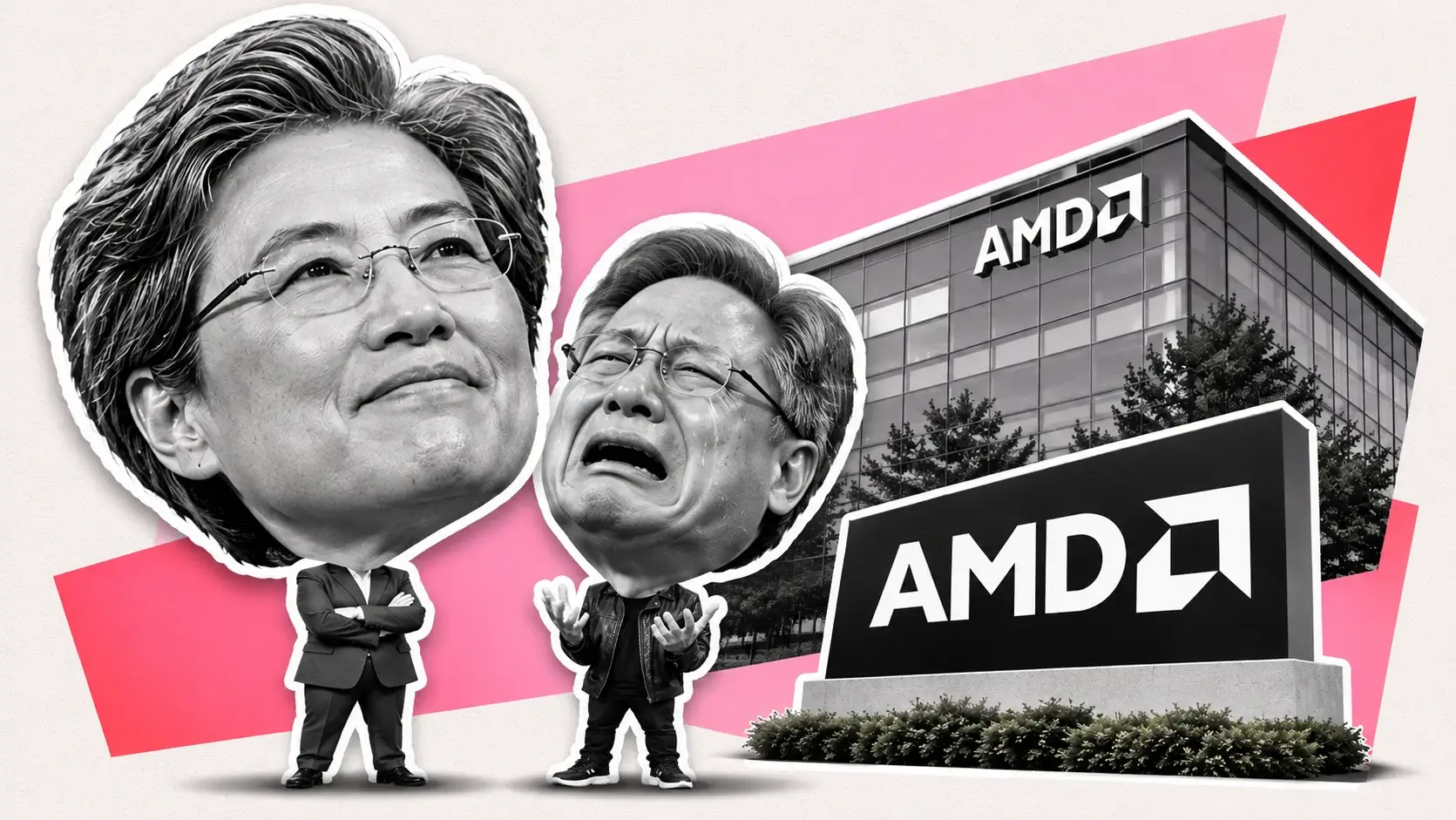
The biggest stock in the market went the other way. Nvidia (NVDA) traded at $179.42, down $7.22 or 3.87%, on 185.6 million shares by mid-morning, 58% above its three-month average daily volume of 117.3 million. The stock opened at $171.62, an 8.05% gap below Friday’s $186.64 close, after its board opened an independent investigation into chief executive Jensen Huang. At the low, Nvidia had lost $363 billion in market value. At $179.42 the loss is $175 billion, and the company is worth $4.337 trillion.
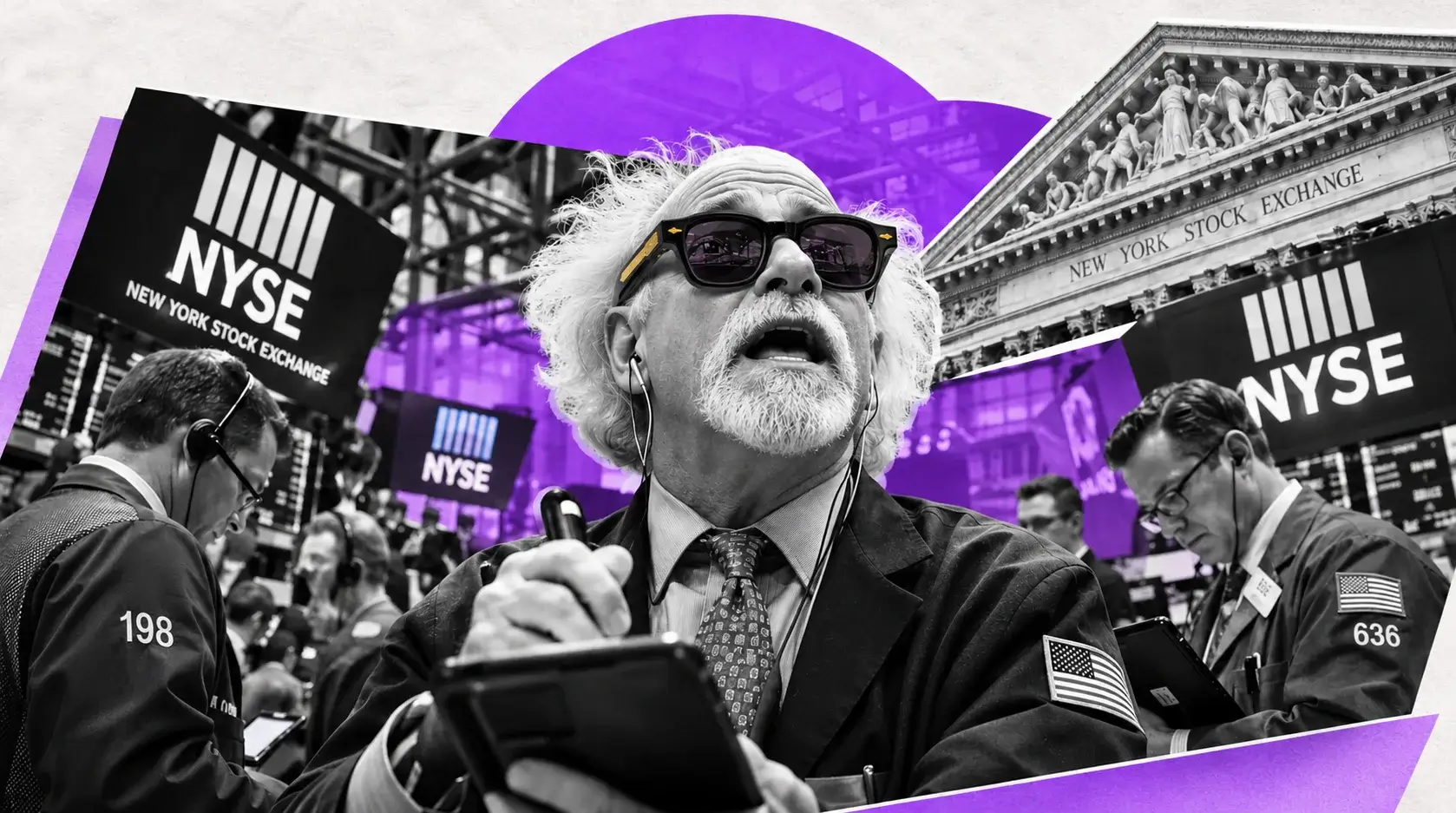
Breadth tells the real story. The gainers screen ran 563 names deep against 34 on the losers side, a ratio above 16 to 1. On a day when the single largest weight in the S&P 500 is down nearly 4%, the benchmark is still up close to 2%. That only happens when the rest of the market is buying everything.
The thesis is simple: the market is rallying around Nvidia, not through it. Crude oil is the fuel, a broad rotation is doing the lifting, and Nvidia’s governance problem is being treated as a single-name event. Brent crude was down 4.18% at $94.21, and West Texas Intermediate was down 3.56% at $87.60. The VIX collapsed 17.58% to 21.14, down from a session high of 25.08. Advanced Micro Devices (AMD) ripped 9.60% to $492.15, Amazon gained 4.13%, Tesla 5.41%, Alphabet 3.13% and Micron 5.91%. Constellation Energy (CEG) jumped 6.42% to $266.00 after a large earnings beat.
Context still matters. The S&P 500 is 4.2% below its 52-week high of 7,844.52, and the Nasdaq remains 9.3% below its 27,722.75 peak. This is a repair session four days after the worst single day since April 2025, and the second straight session of repair. It is not a breakout yet.
From Overnight Futures to the First Hour: How the Tape Was Built
The rally started in the overnight session, and the order of events matters. On Sunday night Nvidia traded 3.5% lower in overnight dealing after Huang’s weekend letter spread through client channels and retail platforms. Before dawn in London, spread-betting desks were quoting the stock at $176. Early index futures split by tech exposure: at 3:42 a.m. Eastern, Dow futures were up 0.6% and S&P 500 futures up 0.35%, while Nasdaq-100 contracts were down 0.3%.
As crude fell through the European morning, that split reversed. By 8:25 a.m. Dow E-minis were up 534 points, or 1.04%, S&P 500 E-minis up 52.5 points, or 0.71%, and Nasdaq-100 E-minis up 180.5 points, or 0.67%. Among the ETF proxies before the bell, the Russell 2000 tracker gained 1.28%, the Dow tracker 0.97%, the S&P 500 tracker 0.65% and the Nasdaq-100 tracker 0.53%. The less Nvidia an index held, the better it traded.
The opening bell set the day’s lows. The S&P 500 printed 7,422.24, the Dow 51,643.01 and the Nasdaq 24,762.57. Nvidia’s opening trade at $171.62 was the worst level of the morning for the stock. Within the first five minutes the Dow had added 540 points and the S&P 500 had gained 0.81%, so even the weakest open of the day was a solidly green tape.
What followed was a steady climb. The S&P 500 moved through 1.1% in the first half hour, through 1.3% at 7,472 by 9:40, and past 1.9% by 10:28. The Nasdaq accelerated from 0.82% at the open to 2.35%, a sign that the buying in tech names outside Nvidia grew stronger as the morning went on. The Dow added 313 points between the opening print and the 10:28 snapshot, and the Russell 2000 held a gain above 2%.
Nvidia went the opposite way inside the same hour. From the $171.62 open the stock recovered $7.80 to $179.42, cutting its loss from 8.05% to 3.87% by mid-morning. That pattern belongs to a governance-shock flush, not a fundamental re-rating. Stop orders and risk-desk sales hit at the open, and the bid came back once that supply cleared.
Crude, the other half of the trade, pared its losses. Brent hit $92.96 early, down 5.5%, before recovering to $94.21. Stocks kept pushing to new session highs anyway. That is the tape of a market that had already taken the oil signal and moved on to positioning. Shorts built during last week’s crash were covering into a rising market, and underweight funds were chasing.
Nvidia’s $175 Billion Governance Hit
The facts behind Nvidia’s decline are unusual for a company this size. In a memo dated November 8, Jensen Huang acknowledged an extramarital relationship with a businesswoman whom U.S. intelligence reportedly believes was gathering information for China. Reporting published Friday said U.S. officials had told the administration she was recruited by Chinese intelligence to collect information on the Nvidia chief. She is reportedly affiliated with Mega Speed, a cloud company that is also an Nvidia customer. Over the weekend the board opened an independent investigation into whether Huang was targeted by a foreign intelligence service, and said it has “no reason to believe” national security or company secrets were compromised.
The political response came quickly. The President called Huang a “fine person” who should stay on as chief executive, while saying he had not spoken with him and had not decided whether Huang would join an Asia trip later this month. An Nvidia spokesperson said Huang intends to remain in the role. China’s Foreign Ministry dismissed the allegations as smears.
The market’s problem is key-person risk, not the affair itself. Huang co-founded Nvidia in 1993, has run it for 33 years, and the company has never named a successor. At a $4.5 trillion valuation on Friday, the stock priced years of execution by a leadership team built around one person. At $179.42 the stock trades at 23.6 times trailing earnings, near the bottom of its 52-week range of $164.27 to $243.37, and is down 6.23% over 12 months. The S&P 500 is up 9% over the same period.
The governance hit lands on a stock that was already bruised. Nvidia fell 3.2% on Wednesday and 9.3% on Thursday as midterm results raised fears of data center restrictions, which left it down 2.6% for 2026 after annual gains of 239%, 171% and 39% over the prior three years. Friday’s 5.6% early bounce has now been erased.
Competitive pressure added to the morning’s damage. Alphabet (GOOGL) introduced two new tensor processing units, the TPU 8tx and the 8i Max. The 8tx pairs with AMD processors for confidential computing, and the 8i Max combines two TPU chips to boost compute and memory. Alphabet rose 3.13% to $293.69 and is worth $3.617 trillion. On the same morning Nvidia’s leadership came into question, its largest customer showed off its own silicon and its nearest merchant rival picked up a design win. The market answered by selling concentration in Nvidia, not by selling AI. Every other large AI name on the tape was green at 10:28.
AMD Rips 9.6% as the Chip Trade Rotates Away From Nvidia
The most important signal of the session sits in the semiconductor tape. AMD led, up $43.11 or 9.60% at $492.15, on 16.4 million shares by mid-morning, which put it on track to beat its three-month average of 22.3 million well before lunch. The move adds $70 billion to AMD’s market value, now $807.9 billion. The catalyst was an upgrade to outperform from perform with a $600 price target, which implies 34% upside from Friday’s $449.04 close and 22% from current levels. AMD also announced a wider partnership with Google Cloud, tied directly to the TPU 8tx confidential-computing design.
The upgrade rests on last week’s record quarter. Revenue reached $13.38 billion, up 45% year over year, data center revenue nearly doubled to $8.5 billion, and management guided to companywide growth of more than 80% in 2027. The upgrade case models 135% data center growth next year. At 96 times trailing earnings, AMD is priced for exactly that kind of acceleration. The 52-week range of $188.22 to $658.52 shows how hard the stock has swung in 2026, and the 11% loss last week, including a 14.6% drop on Thursday, explains why Monday’s bounce was so sharp.
The gap with Nvidia is the story. The two largest merchant GPU suppliers are 13.5 percentage points apart on the same morning. That spread only shows up when portfolio managers are deliberately reallocating inside a theme.
The rotation runs well beyond AMD. Micron (MU) gained 5.91% to $730.79, adding $45 billion in value to $828.9 billion, though it remains far below its $1,255.00 52-week high. Intel (INTC) climbed 4.03% to $58.55 on 41.5 million shares. Broadcom gained 5%. The optical and connectivity names got bid even harder: Coherent (COHR) jumped 15.17% to $222.06, Lumentum (LITE) 12.12% to $603.89, Astera Labs (ALAB) 12.96% to $215.43 and Semtech (SMTC) 11.08% to $114.65. MaxLinear (MXL) gained 11.17% and Vicor (VICR) 11.00%. In the first hour Monolithic Power Systems rose 9.1%, Arista Networks 8.9% and Applied Materials 8.2% ahead of Thursday’s report.
AI infrastructure names rebounded alongside them. CoreWeave (CRWV) gained 7.07% to $49.68 after losing 15.4% last week. Flex (FLEX) added 13.45% to $79.16 and Super Micro (SMCI) 2.82% to $29.57. Bitcoin miners turned AI hosts split. TeraWulf (WULF) rose 8.97% and Cipher Digital (CIFR) 6.57%, while IREN (IREN) slipped 0.12% to $21.61 and is still down 64% over 52 weeks.
The AI capex trade was not abandoned on Monday. It was redistributed, away from the one supplier with a governance cloud and toward the networking, optical, memory and power-delivery suppliers that win whichever accelerator gets built.
Crude Under $95: The Engine Behind the Dow’s 853 Points
The single most powerful input to Monday’s tape is crude oil. Brent traded at $94.21, down $4.11 or 4.18%, after touching $92.96 early, a 5.5% drop. WTI December futures fell $3.23, or 3.56%, to $87.60. RBOB gasoline futures were down 3.01% at $2.69 a gallon and heating oil fell 1.42% to $4.27. Both crude benchmarks broke below $100 last week for the first time since early October. Brent traded above $112 at the start of November, and WTI peaked at $110 on October 19.
The trigger was the President’s comment that a resumption of strikes on Iran was “highly unlikely” if negotiations progress, with Qatar’s prime minister in Washington for talks the same day. The diplomacy is far from settled. Tehran says progress is impossible unless the U.S. lifts its naval blockade, releases seized assets and removes sanctions. The Secretary of State said talks are not on the verge of a breakthrough and called some Iranian demands “outrageous and ridiculous.” The market priced the direction of travel rather than the noise.
The transmission into stocks runs through three channels. Lower crude cuts input costs for airlines, cruise lines, chemicals, trucking and consumer companies. It lowers headline inflation ahead of Tuesday’s October CPI release. And it eases pressure on the Fed’s hiking path, which supports small caps and long-duration growth stocks. American Airlines (AAL) gained 6.94% to $14.10 on 15.1 million shares, a direct read on fuel. Industrials and building suppliers ripped as well: CNH Industrial (CNH) gained 11.33%, Sterling Infrastructure (STRL) 12.31% and Ferguson (FERG) 12.17%.
Energy paid for the rally. First Solar (FSLR) slid 4.30% to $192.49 as the alternative-energy premium compressed with crude. Magnolia Oil & Gas (MGY) fell 2.88% to $22.99, and Sasol (SSL) dropped 6.84% to $13.81. Occidental Petroleum (OXY), which reports after the close, traded slightly lower in the first hour. Natural gas went the other way, up 4.40% to $3.13, because the Iran story moves oil much more than U.S. gas.
The rest of the commodity complex rose with risk appetite. Gold futures gained 1.21% to $4,124.20, silver rose 1.33% to $52.63 after trading lower before the bell, copper added 1.73% to $6.35 and platinum 1.70% to $1,563.10. Copper and platinum rising alongside equities while crude falls is the signature of a growth-on, inflation-off session. If Brent holds below $95 into the CPI print, Monday’s foundation stays intact. If the Iran talks stall and crude snaps back above $100, the support under the rally disappears.
Yields Refuse to Follow Oil Lower
The rates market is the one asset class not joining the celebration, and that tells you where the risk sits. The 10-year Treasury yield traded at 4.87%, up 1 basis point on the day, despite a 4% drop in Brent. The 5-year yield rose 2 basis points to 4.67%. The 30-year held flat at 5.26%, and the 13-week bill yielded 4.03%. Ten-year note futures slipped 0.06%.
That reaction is the key tell of the session. On a day when the oil-driven inflation story softens sharply, bonds are not rallying. The reason is the Federal Reserve. Policymakers delivered their first rate hike in three years in September, held in late October, and markets now price close to an 80% chance of another quarter-point hike at the December 8-9 meeting. A 10-year at 4.87% with a hike on the table leaves stocks with little valuation relief from the bond market. Bond traders want Tuesday’s CPI before they buy the oil narrative.
The path of yields over the past month frames the whole equity drawdown. The 10-year touched 5.36% at its 52-week peak, and its range stretches down to 3.96%. The 49-basis-point retreat from the October high is the main reason last week’s 4.36% S&P 500 collapse never became a credit event. A move back above 5% would put the November lows back in play.
The dollar weakened. The dollar index slipped 0.36% to 101.93, below its 52-week high of 102.95. The euro and pound currency indexes each gained 0.4%. A softer dollar supports multinational earnings and loosens global financial conditions, which helps explain why European equities rallied as hard as U.S. large caps.
Volatility is unwinding faster than anything else on the screen. The VIX collapsed 4.50 points, or 17.58%, to 21.14, against an intraday high of 25.08 at the open. The index closed Thursday at 28.18 after an 11.57-point spike in one session. Its 52-week range runs from 13.38 to 35.30. A 7-point drop in two sessions confirms that Thursday’s spike was forced liquidation, not the start of a lasting high-volatility regime. A VIX at 21 is still elevated, and the hedges bought last week are not all being unwound yet.
Crypto skipped the risk-on bid. Bitcoin fell 1.4% to $74,809.66 by 8:00 a.m. and traded 1.9% lower at $74,493 in the early session. The drag is specific to crypto: concern that a Democratic-controlled Congress will tighten digital-asset rules, the election of several high-profile crypto critics, reports of a $6 billion theft at Binance and the departure of the exchange’s chief financial officer.
The Hawkish Ceiling: 165,000 Jobs and an 80% December Hike
The rally has a hard ceiling, and the Bureau of Labor Statistics set it on Friday. The October Employment Situation report showed nonfarm payrolls up 165,000 against consensus estimates between 59,000 and 65,000, close to triple what economists expected. The unemployment rate fell to 4.1% from 4.2% even as 421,000 people joined the labor force, pushing participation to 61.9%. August and September payrolls were revised up by a combined 84,000. Health care added 42,000 jobs, warehousing and transportation 25,000, and manufacturing 19,000.
Wages are what the bond market heard. Average hourly earnings rose 14 cents, or 0.4%, to $38.00, the strongest monthly gain since January, after a 0.1% gain in September. Over 12 months, pay is up 3.1%. For a Fed that hiked in September for the first time in three years, a 0.4% monthly wage gain alongside falling unemployment removes the case for a pause.
Futures repriced on the spot. The market-implied probability of a quarter-point hike at the December 8-9 meeting jumped to 80% from 67% on Thursday. A day earlier, the AI selloff had briefly cut those odds as the market bet that a slower data center buildout would cool growth. The jobs report reversed that thinking within 24 hours.
That is why Monday’s oil collapse carries so much weight, and why the 10-year yield’s refusal to fall is a warning. Every dollar off a barrel of crude reduces the headline inflation rate the Fed is fighting. Brent at $94.21, against $112 at the start of the month, is a meaningful cut to energy inflation for November and December. The equity market is betting softer energy offsets hotter wages enough to hold the Fed to one more hike. The bond market is not taking that bet until it sees the data.
The calendar tests that bet immediately. Monday brings the New York Fed’s October consumer inflation expectations survey, which read 3.9% last month, plus September wholesale inventories. Tuesday brings the October consumer price index. A hot core reading would push December hike odds toward certainty and reopen the debate about hikes in 2027, which would hit the long-duration tech names that led Monday’s rebound. A soft headline helped by energy would give the rotation into small caps and cyclicals room to run.
The labor market is strong enough that the Fed can keep its focus on prices, and stocks have to live with that. Monday’s rally is happening under a tightening central bank. Buyers chasing the bounce are betting oil does the Fed’s work for it.
Thursday’s Wipeout Still Sets the Map
Monday’s 1.9% rally only makes sense against what happened four sessions ago. On Thursday, November 5, the S&P 500 lost 334.89 points, or 4.36%, to 7,353.73, its worst day since the April 2025 tariff shock. The Dow fell 1,833.06 points, or 3.44%, to 51,523.06. The Nasdaq Composite collapsed 1,421.52 points, or 5.52%, to 24,315.00, which put it 11.9% below its October 6 record close and into correction territory. The Nasdaq-100 had confirmed its own correction earlier in the week.
The scale was historic. Companies in the S&P 500 lost $3 trillion of combined market value in one session, and the Nasdaq-100 shed $2.3 trillion on its own. On the Nasdaq, decliners beat advancers by more than 5 to 1, and 430 stocks hit new 52-week lows. All 11 S&P 500 sectors finished lower. The day erased Wednesday’s 1,500-point Dow rally, which had been the best session in three months.
The trigger was political. Democrats won both chambers of Congress in Tuesday’s midterm elections and took statewide offices in data center strongholds, including Texas and Ohio. Several winning candidates campaigned on pausing approvals for new data centers, and voters across party lines blamed the facilities for higher power bills. One senator called for a national moratorium. The market went straight to the downstream math: a slower buildout means fewer AI chips sold, less power demand and less networking equipment. Data center operators IREN, Applied Digital and Nebius Group each fell more than 14% on Thursday. AMD fell 14.6% and Nvidia 9.3%.
Friday delivered a partial bounce. The Nasdaq rose 1.09% to 24,579.42, the S&P 500 gained 0.31% to 7,376.86, and the Dow slipped 237.33 points, or 0.46%, to 51,285.73. The semiconductor index recovered 4.6% after its 12% plunge, but still posted its biggest weekly decline since March 2025. For the week, the S&P 500 logged its largest loss since April 2025 and the Nasdaq-100 fell 5.5%.
Monday’s job is to keep repairing that damage. At 7,517.64 the S&P 500 has recovered 163.91 of Thursday’s 334.89-point loss, a 49% retracement. The Nasdaq at 25,157.80 has recovered 842.80 of its 1,421.52-point drop, or 59%. The Dow at 52,139.04 is 616 points above Thursday’s close and 1,217 points below Wednesday’s 53,356.12 close. In two sessions the market has retraced about half the post-election damage. The other half depends on Tuesday’s CPI and Thursday’s AI earnings.
Constellation Snaps 6.4% as Power Producers Answer the Election
The two biggest earnings reports of the morning came from power producers at the center of the political argument that sank the market Thursday. Both delivered numbers that contradict the case for an imminent AI power slowdown, and the market rewarded both.
Constellation Energy (CEG) snapped 6.42% higher to $266.00, a $16.05 gain from Friday’s $249.95 close, and one of the largest dollar moves in the utility sector. The company reported third-quarter GAAP earnings of $5.19 per share and adjusted operating earnings of $5.06, up from $3.04 a year ago and ahead of consensus estimates near $3.96, a 28% beat. Operating revenue jumped to $9.55 billion from $6.57 billion. Full-year adjusted operating guidance moved to $12.50 to $12.80 per share, up from $11.50 to $12.50, the second midpoint increase this year. Constellation has bought back $3.0 billion of stock in the first nine months of 2026, against $400 million in the same period of 2025.
The contract book is the counterargument to Thursday’s selloff. This quarter’s agreements add more than 1,000 megawatts of new emissions-free generation. They include an 890-megawatt nuclear uprate program for Google across 11 units, a separate 2,700-megawatt load-following agreement in PJM over 15 years, a 690-megawatt Calvert Cliffs contract with Amazon over 20 years and the first 270-megawatt deal under the new Peak+ product, with deliveries starting in 2028. Management stressed that the new megawatts come online with no costs borne by existing customers, a direct answer to the power-bill politics that decided several midterm races.
NRG Energy (NRG) reported adjusted EPS of $4.68, adjusted EBITDA of $2.013 billion and free cash flow before growth investments of $1.242 billion on GAAP net income of $561 million. It reaffirmed 2026 guidance and issued its first 2027 guidance. NRG also agreed to sell six natural gas plants to LS Power for $4 billion in cash, targeted to close in the second quarter of 2027. The proceeds fund $3 billion of buybacks across 2026 and 2027, including an incremental $1 billion starting before year-end, and $3 billion of total debt reduction in 2027. The 1.2-gigawatt “Bring Your Own Power” data center project remains on track. The stock rose 4.8% before the bell, from a level well below its 52-week high of $189.96.
Bloom Energy (BE) added a third data point, up 13.62% to $196.84, which lifts its value to $58.2 billion. Plug Power gained 3.97% ahead of results after the close. Hyperscaler demand for contracted power is still growing, and it is being locked in through multi-decade agreements. The political risk to new data center approvals is real, but it does not reach generation assets already under contract.
Losers Board: Ionis Collapses 28.5%, Biotech Bleeds, Defensives Fund the Rally
The losers board is short, 34 names deep against 563 gainers, and it splits cleanly into three groups: company-specific biotech blowups, energy, and defensive sectors that funded the rotation.
Ionis Pharmaceuticals (IONS) got smoked, down $11.24 or 28.53% to $28.17, on 5.05 million shares against a three-month average of 3.2 million. The company cut full-year sales guidance for its flagship drug Tryngolza by close to 50%. The stock is now below the bottom of its prior 52-week range of $38.31 to $86.74, a fresh low that cuts its value to $4.68 billion. A year ago, Tryngolza sales jumped 70% quarter over quarter and drove two guidance raises. A cut of this size in the product’s second full year moves the debate from launch momentum to whether peak sales estimates were ever credible.
The biotech damage spread. ImmunityBio (IBRX) fell 19.29% to $6.97 on 20.7 million shares, nearly double its 11.3 million average, giving back part of a 299.77% gain over 52 weeks. Arrowhead Pharmaceuticals (ARWR) dropped 18.88% to $47.18, and TG Therapeutics (TGTX) lost 7.68% to $55.24. Biotech was not uniformly red. Vir Biotechnology (VIR) climbed 11.95% to $13.67 after a Phase 3 hepatitis delta trial met its primary and secondary endpoints, and Immunovant (IMVT) jumped 15.26% to $35.19 on trial results and an earnings beat. Single-name binaries, not the sector, decided who won and who lost.
Earnings-day names drifted lower ahead of their prints. Hims & Hers (HIMS) fell 5.17% to $24.66 and monday.com (MNDY) 4.71% to $83.79, both reporting today. Life360 (LIF) dropped 6.92% to $44.09, and Asana (ASAN) lost 4.24% to $10.16.
Defensive sectors acted as the funding source. Hershey (HSY) slid 4.18% to $170.65, Boston Beer (SAM) 3.54% to $212.82 and Molson Coors (TAP) 2.95% to $39.14. Through last week’s chip collapse, staples worked as havens. On Monday money came out of that safety and went into cyclicals, small caps and AI infrastructure. Chinese ADRs lagged as well: Alibaba (BABA) fell 2.97% to $106.19, JD.com (JD) 2.88% to $28.27 and Tencent Music (TME) 2.88% to $9.28.
Nvidia, at minus 3.77%, is the largest stock on the losers board and by far the largest dollar loss of the day. None of these losers reads as systemic stress. Company-specific misses are punished hard, defensives are sold to fund risk, and everything else goes up. That is the opposite of Thursday’s indiscriminate liquidation.
Breadth: Small Caps and Megacaps Ex-Nvidia Rip Together
Monday’s rally runs deeper than last week’s leadership, and breadth is where the bullish case gets strongest. The Russell 2000 at 2,810.21, up 2.04%, is beating the S&P 500 and the Dow. The NYSE Composite is up 1.60% at 24,333.74. Russell 2000 futures are up 2.14%. The 563-to-34 split on the movers screens is the most lopsided reading since the post-election melt-up on Wednesday.
Small caps lead when two conditions hold: yields stop rising and domestic growth is not in doubt. Monday meets both. The 10-year at 4.87% is well below its 5.36% peak, and Friday’s 165,000-job print shows the domestic economy is not rolling over. Many Russell 2000 companies carry floating-rate debt, so the retreat in long yields since October goes straight to interest expense. Cheaper fuel adds another layer of relief for small industrial and transport companies.
The gainers board is full of cyclicals and domestic stories. CECO Environmental (CECO) blew through resistance, up 24.80% to $54.55. Warby Parker (WRBY) gained 16.95% to $29.80. QXO (QXO) rose 15.27% to $13.32 on 8.7 million shares. Ferguson (FERG) climbed 12.17% to $262.15 and is within $9.49 of its 52-week high after lifting its sales growth outlook on a third-quarter beat. Sterling Infrastructure (STRL) gained 12.31%, and Surgery Partners (SGRY) jumped 11.87% after an amended merger agreement that followed an unsolicited proposal. Planet Labs (PL) rose 12.31% after signing a multi-launch agreement with Stoke Space. Firefly Aerospace (FLY) gained 13.49%, and Viasat (VSAT) 14.21%.
The megacap complex contributed outside Nvidia. Amazon (AMZN) gained 4.13% to $270.02, adding $116 billion to its $2.919 trillion value. Tesla (TSLA) rose 5.41% to $377.60. Alphabet climbed 3.13%, Micron 5.91% and Intel 4.03%. Google, Microsoft and Amazon held up well through the post-election week while chips collapsed, which shows the market sees the hyperscalers as buyers of AI capacity with pricing power, not as victims of a data center slowdown.
SpaceX (SPCX), the newest megacap, rose 5.66% to $141.86 on 40.4 million shares, lifting its value to $1.934 trillion. The stock traded above its $135 June IPO price but far below its June 16 record of $225.64. One bullish argument holds that delays in U.S. data center construction could let SpaceX acquire stalled projects that already have grid connections.
The Trade Desk (TTD) gained 14.50% to $14.81 on 17.5 million shares ahead of results after the close. The stock is still down 70.11% over 52 weeks, so the move reads as short covering ahead of a binary event. Nokia (NOK) rose 7.05% and IonQ (IONQ) 6.73%.
Small caps up 2.04%, the Dow up 1.66%, the S&P 500 up 1.91% and the Nasdaq up 2.35%, with one megacap of size in the red. That is broad participation, not narrow leadership.
Read More
-
Yen Stalls at 160 Despite a 3% JGB and Tokyo Core CPI at 2.0% — Intervention Sits at 164, Friday's Payrolls Decide
02.09.2026 · TradingNEWS ArchiveEnergy
-
Oklo Eyes $30 After 38% 2-Day Rally as $3.13B Cash Pile Offsets Aurora’s 2028–2029 Startup Slip
09.11.2026 · TradingNEWS ArchiveStocks
-
XRP Heads for $1 Test After Binance Hacker Dumps 139M Tokens and ETF Inflows Stall for Four Days
09.11.2026 · TradingNEWS ArchiveCrypto
-
Brent ($93) Extends 16% Weekly Collapse as Iran Deal Heads to Trump — Physical Murban at $99 Warns of Snapback
09.11.2026 · TradingNEWS ArchiveCommodities
-
SCHD ETF Holds Up in the Sell-Off, but Texas Instruments, a 15.64% Healthcare Weight and 1.95% Dividend Growth Cap the Upside — $35
06.11.2026 · TradingNEWS ArchiveMarkets
-
Pound Rallies to 1.3423 as Bank of England Matches Fed at 4% and Eyes 4.25% in February
09.11.2026 · TradingNEWS ArchiveForex
Global Tape: Taiwan Rips 4.9%, Europe Rallies, a Reallocation Call Hangs Over U.S. Tech
The rebound started overseas, and the Asian close shows where the chip money went. Taiwan’s TAIEX ripped 1,960.06 points, or 4.94%, to 41,661.70, a direct bet on the foundry and component suppliers that win regardless of whose accelerator gets built. Japan’s Nikkei 225 gained 1,340.73 points, or 2.33%, to 58,775.50. The rest of Asia was mixed. South Korea’s Kospi fell 0.81% to 5,018.85 after opening higher, Hong Kong’s Hang Seng slipped 0.13% to 24,448.95, Shanghai gained 0.32% to 3,660.79, and Singapore’s Straits Times Index fell 2.21%.
European markets added momentum through the U.S. morning. Germany’s DAX gained 431.53 points, or 1.67%, to 26,251.89, within 1.7% of its 52-week high of 26,692.90. The Euro Stoxx 50 rose 1.92% to 6,288.94. France’s CAC 40 climbed 1.22% to 8,238.46, and London’s FTSE 100 added 0.87% to 10,766.52. Tel Aviv’s TA-125 gained 1.74% to 3,890.31. Canada’s S&P/TSX rose 1.33% to 36,266.40 despite heavy energy weighting, Brazil’s Ibovespa added 1.03% and Mexico’s IPC 0.82%.
Europe has a structural edge when oil falls. The continent imports most of its crude, so every dollar off Brent goes almost directly into corporate margins and consumer spending. The Stoxx 600 finished last week up 0.2% while U.S. indexes logged their worst week since April 2025, a performance gap of more than 2 points in five sessions.
That gap has prompted institutional reallocation. A major global strategy desk cut U.S. equities and global technology to neutral from overweight on Monday and raised European equities outside the U.K. to overweight, citing Europe’s lower AI exposure and greater upside from falling oil. The same note raised global health care to overweight and warned that positioning in indices such as the Nasdaq could reset lower into net-short territory before sentiment stabilizes.
The cross-asset mix supports that call on paper. The dollar index is down 0.36% at 101.93, the euro and pound are both firmer, and energy costs are falling. A downgrade from an institution that size can trigger systematic rebalancing that weighs on U.S. megacaps for weeks, even on up days.
The U.S. tape argues the other side. The Nasdaq’s 2.35% gain beats every major European index on Monday, and the semiconductor and AI infrastructure names that led last week’s decline are leading the rebound. If the U.S. had truly lost its leadership role, the rotation would show up as underperformance on up days as well as down days. Monday shows the opposite, at least for one session. Retail flow remains the soft spot. Individual buyers sold heavily last week and have not stepped in to buy the dip the way they did through 2024 and 2025.
The Calendar That Decides Whether This Bounce Holds
Monday’s rally was built on oil, positioning and breadth. The rest of the week brings the data and earnings that will test it.
After today’s close, The Trade Desk reports after a 14.50% pre-earnings run, which sets a high bar for results. Hims & Hers, monday.com, Rocket Lab, Archer Aviation, Plug Power, Lucid and AST SpaceMobile (ASTS) also report. AST SpaceMobile has already ripped 12.77% to $36.46 on 7.6 million shares after management highlighted satellite production progress and a Blackbird rocket unveiling on Thursday. Take-Two Interactive, KKR, Occidental Petroleum, Skydance, Barrick Mining, NexGen Energy, USA Rare Earth and Praxis Precision Medicines round out a heavy after-hours slate. Praxis is already up 10.88% to $307.83.
Tuesday’s October consumer price index is the most important release of the week. With a December hike priced near 80% and the 10-year yield refusing to fall on a 4% oil drop, a hot core reading would strip away the energy relief that powered Monday. It would also hit hardest at the long-duration tech names that led the Nasdaq’s 2.35% gain. A soft headline helped by energy would extend the rotation into small caps and cyclicals and give bonds a reason to rally. Producer prices follow on Friday, November 13.
Thursday, November 12, brings the first hard read on AI capex since the election. Applied Materials and Cisco both report, and CoreWeave reports during the week. Applied Materials’ guidance on wafer fab equipment demand and Cisco’s data center networking orders will show whether hyperscalers are pulling back after the midterms. Both stocks rallied in the first hour, so expectations have already reset higher. CoreWeave, up 7.07% on Monday, will give the most direct read on the data center buildout that sank the market Thursday.
Nvidia reports on November 17, eight days from now. The board investigation turns that report into a referendum on both demand and leadership. The questions now extend beyond data center revenue and margins to the scope of the board’s review, succession planning and whether Huang’s role is changing. PDD Holdings reports November 16, and the Fed meets December 8-9.
Each of those events carries more risk than Monday’s tape implies. The S&P 500 is still 4.2% below its high, the Nasdaq is 9.3% off its peak, the VIX sits at 21 and the central bank is tightening. The rally has momentum, but nothing yet guarantees it holds.
Session Verdict: Bullish, With Nvidia Isolated and CPI the Next Test
Monday’s verdict is bullish. The S&P 500 at 7,517.64 is up 1.91%, the Nasdaq Composite at 25,157.80 is up 2.35%, the Dow at 52,139.04 is up 853 points, and the Russell 2000 at 2,810.21 is up 2.04%. All four are trading within points of their session highs after setting their lows in the opening minutes. That is a rally with broad participation across size, sector and geography. Gainers outnumber losers 563 to 34. Small caps are leading. Chips outside Nvidia are leading. The VIX has collapsed 17.58% to 21.14, seven points below Thursday’s close. These are the conditions of a market working through a shock, not a market sliding into a deeper drawdown.
The structure of the rally carries the signal. The largest stock in the market lost $175 billion, and the S&P 500 still rose nearly 2%. AMD’s 9.60% jump against Nvidia’s 3.87% drop, Taiwan’s 4.94% gain and double-digit moves in Coherent, Lumentum and Astera Labs show the AI capex trade being redistributed within the sector, not abandoned. Constellation’s 6.42% jump on a $5.06 quarter and NRG’s $4 billion asset sale show contracted AI power demand is still growing despite the midterm politics. Brent at $94.21, down from $112 at the start of the month, is the biggest disinflationary input the market has had since the Iran conflict began, and it arrived when the Fed most needed one.
The risks are specific. The 10-year yield rising to 4.87% on a 4% oil drop shows the bond market does not yet believe the inflation relief. A hot October CPI on Tuesday would confirm that skepticism, with December hike odds already at 80% and wages rising 0.4% a month. A breakdown in the Iran talks would put crude back above $100 and remove the main source of today’s lift. Nvidia’s board investigation is unresolved, and its November 17 report will be judged on governance as much as on demand. The Nasdaq remains 9.3% below its record, and the semiconductor index has recovered only part of a 12% one-day loss.
The bullish call holds as long as Brent stays below $95 and Tuesday’s CPI does not surprise to the upside. Under those conditions, the S&P 500’s next test is the 7,600 area, about half of the remaining distance to its 7,844.52 high. The Nasdaq’s path back toward 25,500 runs through Thursday’s Applied Materials and Cisco reports. A failure on either front would turn Monday into a two-day relief rally inside a correction. For now, the tape says the market can absorb a governance shock at its largest company, a hawkish jobs report and a strategist downgrade on the same morning, and still trade at session highs on breadth this broad.