XRP Climbs to $1.15 as a $1.2 Billion ETF Bid Defies a 49% Annual Drawdown
XRP rebounded from $1.10 on a volume-backed move as Bitcoin reclaimed $63,000 on Iran peace hopes | That's TradingNEWS
Key Points
- XRP rose ~3% to $1.15 on June 12, rebounding from $1.10, but stays down 49% over the year and 21% on the month.
- Seven spot XRP ETFs hold over $1.2 billion and keep drawing inflows while Bitcoin and Ethereum funds see outflows.
- Support sits at $1.10 then $1.04; XRP must clear $1.20 to target $1.25 and break its early-2026 downtrend.
XRP is staging a volume-backed rebound on Friday, June 12, climbing nearly 3% over 24 hours to around $1.15 after buyers defended the $1.10 area and pushed the token back toward short-term resistance. Daily trading volume ran near $1.68 billion and the market value sat around $71.24 billion, with the price recovering off its lows alongside the broader crypto complex as a sudden Iran de-escalation flipped risk appetite back on. But the bounce, real as it is, has done little to erase the broader damage: XRP remains down about 21% over the past 30 days and roughly 49% over the past year, deep in a downtrend that has dragged it far below its January 2026 high near $2.34 and its July 2025 record of $3.66.
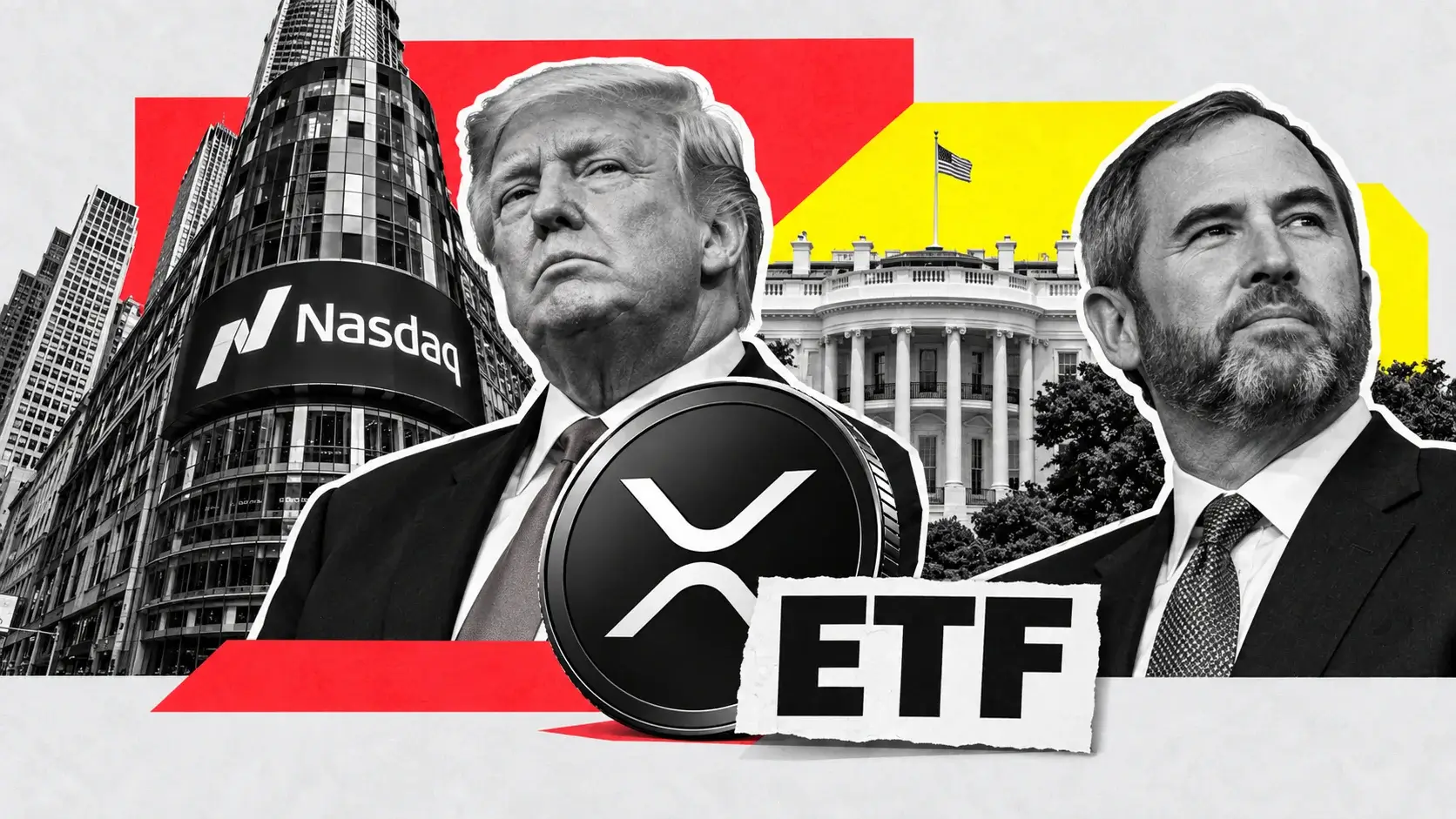
The token sits at the center of one of the most interesting tensions in crypto right now. On one side is a genuine, growing institutional bid: seven spot exchange-traded funds now trade in the US with combined assets above $1.2 billion, and they have been taking in money even as the funds tracking Bitcoin and Ethereum bleed. On the other side is a crypto-wide risk-off tape that has overwhelmed those token-specific positives all spring. Today's geopolitical relief is the first real test of whether XRP's idiosyncratic catalysts can finally get room to work — and the levels that will decide it are $1.10 below and $1.20 above.
The price picture: a volume-backed bounce in a deep downtrend
The intraday action shows buyers stepping in at the lows. The 24-hour trading range held between $1.10 and $1.15, with the rebound off $1.10 backed by volume — a sign that buyers defended the lower end of the range and pushed the price back toward resistance rather than the bounce being a thin, low-conviction move. XRP has reclaimed the $1.14 level, but it still trades below the larger descending trendline that has guided the market lower since early 2026, which is the crucial caveat: a short-term rebound is underway, but the longer-term downtrend remains intact.
The sentiment backdrop underscores how beaten-down the token is. A fear-and-greed reading sits at 12, deep in "extreme fear," and over the past 30 days XRP has managed green closes only about 30% of the time, with volatility above 8%. The 14-day momentum reading has been climbing out of oversold territory, and a widely watched sequential timing indicator flagged a buy signal earlier in the week, both of which support the short-term rebound case. But XRP is trading essentially on top of its 50-day and 200-day moving averages, which have converged tightly around $1.142 — the same knife's-edge setup seen across the major tokens, where the price is balanced between its trend references and the next decisive move carries outsized weight.
The catalyst: Iran de-escalation turns the macro tape
Friday's bounce owes everything to a shift in the macro environment rather than anything new from Ripple. A sudden de-escalation in the Iran conflict — with planned strikes called off and reports that a deal could be signed in Europe as soon as this weekend — reversed the risk-off mood that had pulled the entire crypto complex lower for weeks. Bitcoin pushed back above $63,000, Ethereum recovered toward $1,660, and XRP climbed off $1.10, each posting gains as risk appetite returned across global markets.
The mechanism matters because it identifies what has been holding XRP back. The token has been trading in lockstep with the broader complex, dragged down by the same forces hitting Bitcoin and Ethereum: the Iran tensions, a firm dollar, an elevated rate environment, and the broad derisking that left crypto out of the record-setting rally in equities and AI stocks. When that macro current reverses, even briefly, XRP benefits mechanically. The durability of the bounce therefore depends on whether the Iran de-escalation proves durable — a signed deal this weekend would extend the relief, while a collapse back into conflict would pull the token straight back toward its lows.
The ETF bid: institutions buying while the rest of crypto bleeds
The most important development separating XRP from the rest of crypto is the behavior of its exchange-traded funds. Seven spot XRP ETFs now trade in the United States, with combined assets under management above $1.2 billion and cumulative net inflows reaching roughly $1.44 billion. Crucially, these products have been attracting capital — or at minimum holding flat — during sessions when the much larger Bitcoin, Ethereum, and Solana funds were recording outflows. In one recent session the XRP funds logged zero outflows while the rest of the complex bled, and on another they pulled in net inflows as Bitcoin funds saw redemptions. That relative strength is a meaningful signal of institutional conviction.
The persistence of that bid is the heart of the idiosyncratic bull case. Steady ETF demand can support the price during weak market conditions, reducing the pressure that comes from spot selling even if it does not guarantee a breakout. The fact that institutions are accumulating XRP through regulated vehicles while the price grinds lower creates a divergence between the structural picture and the chart — buyers are building positions ahead of an expected adoption wave, even as short-term sentiment stays bearish. The roughly $1.2 billion ETF bid is real, but the question that has defined the spring is whether it is large enough to overcome the macro headwind. So far, it has been enough to keep the token off the floor but not enough to lift it.
Structural catalysts: the Clarity Act, RLUSD, and banking deals
Beyond the ETFs, the fundamental backdrop for XRP has been improving steadily. The single biggest regulatory catalyst is the pending US crypto legislation — the digital-asset market clarity framework — which, if it clears the Senate, would provide the legal certainty that has long been the missing piece for institutional adoption. That sits alongside the resolution of Ripple's long-running legal battle with regulators, which removed a major overhang, and a steady stream of business wins: new banking partnerships, the expansion of Ripple's dollar-backed stablecoin, and growing cross-border payment volume through the company's on-demand liquidity product.
The adoption story is concrete. Ripple's settlement infrastructure targets the cross-border payments market, which processes more than $150 trillion annually, and the company has been expanding its corridors in Asia-Pacific and Latin America, including the large US-Mexico remittance route. A major Asian central bank has been testing settlements on the XRP Ledger, and a newly launched developer toolkit enables autonomous AI agents to transact using XRP and the stablecoin on the ledger — extending the network's utility into the emerging AI-agent economy. The chief operating officer of Ripple has gone so far as to argue that building institutional demand across global payment corridors could eventually push XRP to $10, a target that reflects the scale of the opportunity even if it remains distant from current levels. The structural foundation is being built in real time; the price simply has not reflected it yet.
The central tension: idiosyncratic strength vs macro gravity
This is the defining dynamic for XRP right now, and it is worth stating plainly. The token has more genuine, token-specific positives than almost anything else in crypto: a resolved legal status, a real ETF bid, a major legislative catalyst, and tangible adoption momentum. In a risk-on environment, those catalysts would likely have XRP trending higher and outperforming. But in the risk-off tape that has prevailed, they have been swimming against a macro current strong enough to overwhelm them, leaving the token range-bound and down nearly half from its January high.
The macro is the swing factor. If broad crypto sentiment improves on a durable Iran de-escalation, a turn in ETF flows across the entire complex, and easing rate pressure, then XRP's idiosyncratic bull case finally gets room to work — and the token's relative strength could translate into outperformance. If the macro stays hostile, the structural catalysts remain enough to keep XRP off the floor but not enough to lift it, and the consolidation continues. Today's de-escalation is the first crack in that macro wall, which is precisely why the next few sessions matter so much: they will reveal whether the bounce is the start of XRP's catalysts asserting themselves or simply another relief rally to be sold.
Technical levels: $1.10 support, $1.20 the line to reclaim
On the charts, the levels are clearly defined. Immediate support sits near $1.10, the area buyers just defended, and a loss of that level would expose $1.04, where the lower regression band and recent support converge. Below that, the picture deteriorates toward the round $1.00 mark. The $1.10 zone has been described as a low-risk accumulation area within the channel the token has traded in since July 2025, which is why buyers have repeatedly stepped in there.
To the upside, XRP needs to clear $1.15 first — the immediate resistance it is testing — and then build momentum toward $1.20. A daily close above $1.20 would shift focus to $1.25, the level where earlier recovery attempts have repeatedly failed. The larger barrier is the descending trendline that has capped the market since early 2026; until the token breaks decisively above it, rallies are likely to stall. The 50-day and 200-day moving averages clustered around $1.142 add to the significance of the current zone — reclaiming and holding above them would be the first technical evidence that the downtrend is weakening.
How XRP got here: from $2.34 to sub-$1.15
The path to $1.15 has been a steady erosion. XRP started 2026 strong on optimism around spot-ETF approvals, climbing to $2.34 in January, before rolling over through a February consolidation and into a spring downtrend that dragged it to the $1.38 to $1.48 zone by May and then below $1.27 in early June. The token is now down roughly 49% from its January high and nearly 69% from its July 2025 record of $3.66 — a deep drawdown that mirrors the broader crypto unwind hitting Bitcoin and Ethereum rather than reflecting anything specific to Ripple's business, which has continued to deliver.
That divergence between deteriorating price and improving fundamentals is the crux of the XRP story. The token has been pinned at the lower edge of its range, with the descending channel keeping the technical structure bearish even as ETF inflows accumulate and adoption milestones stack up. The drawdown has been a function of macro derisking, not a verdict on Ripple's prospects — which is exactly why the structural bulls view the current levels as an accumulation opportunity rather than a breakdown.
Read More
-
Yen Stalls at 160 Despite a 3% JGB and Tokyo Core CPI at 2.0% — Intervention Sits at 164, Friday's Payrolls Decide
02.09.2026 · TradingNEWS ArchiveEnergy
-
VOO ETF at $705 as Record $13B Weekly Inflows Absorb the Rate Shock — $700 Floor Guards the Path to a New High
28.09.2026 · TradingNEWS ArchiveStocks
-
XRPR and XRPI Ride XRP's $1.50 Test as Bitwise Takes 78% of a $75.59M Week — October 1 Escrow and Bitget Hack Supply Cap the Upside
28.09.2026 · TradingNEWS ArchiveCrypto
-
Henry Hub ($3.11) Pulls Back From 13-Week High as 112.8 Bcf/d Output Meets Record LNG Pull — $3.10 Pivot Guards the Path to $3.529
28.09.2026 · TradingNEWS ArchiveCommodities
-
Dollar-Yen Trapped Between Carry and Intervention — 159.03 High Marks Where Tokyo Pushed Back Last Week
28.09.2026 · TradingNEWS ArchiveForex
Forecast scenarios
The outlook splits along the macro and the catalysts. In the bullish scenario, the Iran de-escalation holds, ETF flows across the complex turn positive, the legislative catalyst advances, and XRP clears $1.20 and then $1.25 — with scenario-weighted models pointing to a median target near $1.56 if the legislation clears and inflows maintain their trajectory, and top-decile outcomes pushing toward $2.20 if multiple catalysts align at once. In that case, XRP's idiosyncratic strength finally translates into outperformance, and the token's relative resilience during the downturn pays off.
In the base case — assigned the highest probability by scenario models — XRP remains range-bound, consolidating between roughly $1.10 and $1.46 as the market waits for a decisive macro signal, consistent with the historical tendency for crypto to consolidate for extended periods before making decisive moves. In the bearish scenario, the relief rally fades, the token loses $1.10 and slides toward $1.04 and potentially $1.00, with the most pessimistic full-year models pointing as low as $0.44 if the macro stays hostile and the catalysts fail to convert. The asymmetry is notable: downside support clusters near $1.10 to $1.12, while the upside potential stretches toward $2.20, defining a risk-reward profile skewed favorably for those willing to wait out the consolidation.
The longer-term case (and the bear case)
Over a multi-year horizon, the forecasts span an enormous range, reflecting XRP's binary, adoption-dependent nature. The bull case rests on Ripple's settlement product achieving meaningful scale in the $150 trillion cross-border payments market, with the most optimistic institutional projections pointing to $28 by 2030 and the company's own leadership floating $10 as institutional demand builds. These scenarios depend on the legislative clarity arriving, the ETF bid deepening, and Ripple's corridors capturing real share of global payment flows.
The bear case is equally stark. More conservative models see XRP declining toward $0.44 in 2026 if adoption stalls and the macro stays weak, with some long-range forecasts pointing even lower in 2027 and 2028. The token's heavy dependence on a single organization and its exposure to regulatory shifts make it a high-risk, high-reward proposition — capable of significant gains if global adoption materializes, but prone to long periods of consolidation and sharp, news-driven swings. The wide spread between these outcomes is the honest reflection of a token whose value hinges almost entirely on adoption milestones that have not yet fully arrived.
The Fed and what to watch ahead
The dominant near-term catalyst, beyond the Iran headlines, is the Federal Reserve meeting on June 16 to 17, with the decision and press conference on June 17. The market overwhelmingly expects rates to be held, so the focus falls on the guidance: a hawkish tone would pressure risk assets like XRP, while a dovish signal could fuel the relief rally and give the token's catalysts room to work. As a high-beta, macro-sensitive asset, XRP would feel either outcome acutely.
Three signposts will shape the next move. First is the Iran deal — a signed weekend agreement would extend the macro relief that is lifting the token. Second is the ETF flow data, where continued inflows into the XRP funds, particularly relative to the rest of the complex, would reinforce the idiosyncratic strength that distinguishes the token. Third is the Fed on June 17. Until those resolve, XRP is likely to trade in its $1.10 to $1.25 range, with the descending trendline the bigger barrier and extreme-fear sentiment setting up a forceful move once the catalyst arrives.
Bottom line
XRP is bouncing 3% to $1.15 on a macro turn, defending $1.10 on real volume as the Iran de-escalation lifts the whole crypto complex. But the token remains down roughly 49% on the year, trapped below a descending trendline, with extreme-fear sentiment and a price that has stubbornly ignored a genuinely improving fundamental backdrop. The distinguishing feature is the institutional ETF bid — more than $1.2 billion in assets accumulating while the rest of crypto bleeds — paired with a resolved legal status, a pending legislative catalyst, and tangible adoption momentum. Those positives have been swimming against the macro current all spring. Now, with the macro finally turning, the test is whether XRP can clear $1.20 and let its idiosyncratic bull case work, or whether this is another rally to be sold back toward $1.10. The catalysts are real; the macro decides whether they matter.